
In this guide
June is the month the rest of Colorado’s rivers turn to chocolate milk and the South Platte tailwaters quietly become the best game in the state. While the freestones are blown out and every guide in the Front Range is texting “is anything fishable,” the dam-controlled water is sitting there cold, clear-ish, and full of fish that are finally eating like it’s summer. If you only learn one thing about Colorado fly fishing, make it this: in June, you fish below a dam.
I’ve spent enough Junes standing in this river — and enough Junes driving home from blown-out freestones with my tail between my legs — to know exactly where to point the truck when the snow’s coming off the high country. Here’s how I work the South Platte through the whole month: what the flows are doing, what’s hatching and when, the flies I actually tie on, and where to stand.
A note for 2026. This is a record-low snowpack year — far less is coming off the high country than usual, and Denver Water has Antero closed and is drawing reservoirs down to manage the system. So this June is less about dodging a big runoff surge and more about reading managed releases: the tailwater can sit low and clear, then bump when they move water. The gauge habit below matters more than ever — pull it before you commit to the drive.
The short answer
In June, fish the South Platte tailwaters below dams — Deckers, Cheesman Canyon, the Dream Stream, and Eleven Mile (plus the Arkansas at Pueblo) — while the freestones are blown out. Pull the USGS gauge before you drive, then fish the softer, near-bank water as flows climb from a wadeable ~150 CFS toward 300–400: an Olsen’s Blowtorch on point with an RS2 dropper, a Barr’s Emerger in PMD dead-drifted through the midday emergence, and a tan elk-hair caddis at last light. Everything below is the week-by-week detail — but that’s the whole game.
Why the tailwater wins in June
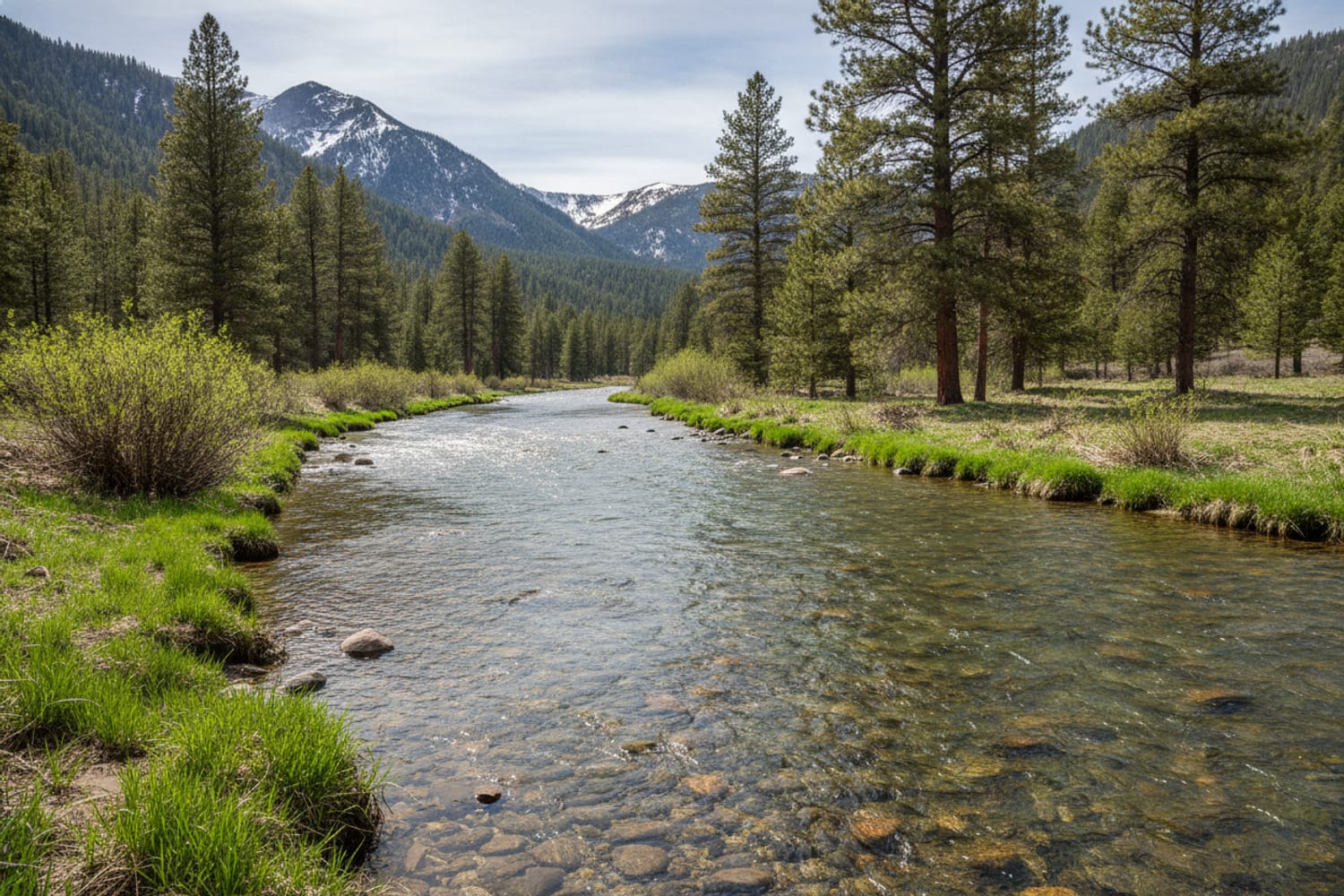
Every tailwater on the South Platte — Deckers below Cheesman Reservoir, Cheesman Canyon below the dam, the Dream Stream below Spinney, Eleven Mile Canyon below Eleven Mile — has a reservoir upstream buffering the snowmelt. That’s the whole trick. A free-flowing river takes the full hit of the melt and turns into an unfishable brown surge for weeks. A tailwater gets metered releases of cold, mostly-clear water out of the bottom of a reservoir, so it stays in play when nothing else is.
That doesn’t mean June is gentle. Flows climb. Denver Water and the reservoir operators push more water as the high country melts off, and depending on the year you can watch a tailwater go from a wadeable 150 CFS to 300, 400, sometimes higher. The fish don’t leave when it comes up — they just slide to the softer water, and your job is to go find them and adjust.
Read the gauge before you read the water
This is the single habit that separates a good June day from a wasted drive. Pull the USGS gauge before you commit to the hour-plus run up. Flows can jump on a release and clear within a day or two; an afternoon thunderstorm can throw a brief stain into the system. I’ve made the drive up from Colorado Springs only to find more water than I wanted and nobody to blame but the guy who didn’t check the gauge — and that guy was me. Don’t be that guy. Know the flow, know whether it’s rising or dropping, and you already know half of what the day’s going to ask of you.
What’s hatching in June, week by week
This is when the South Platte’s bug life gets generous, and the calendar matters:
- Pale Morning Duns (PMDs) are the headliner. They ramp up through June into a midday emergence you can nearly set your watch by on the warmer afternoons, and the fish key on the emerger hard — more on that below.
- Caddis are still going strong off the May push, best in the evenings. If you’ve never fished the South Platte caddis at last light in June, do it once and you’ll rearrange your summer around it.
- Midges never stop on this river. They’re the everyday currency, the bug that’s always there when nothing else is showing.
- Blue-Winged Olives taper off as a spring bug and go sporadic — you’ll still see them on a gray, drizzly afternoon.
- Golden stones show up in the mix on the Arkansas tailwater at Pueblo.
- Terrestrials start to matter in the back half of the month as the banks green up and the first ants and beetles end up in the water.
What I do not fish in June on the South Platte is a Green Drake. Those are a freestone hatch — think the Roaring Fork side of the state — not a South Platte tailwater bug, no matter what a generic hatch chart tries to tell you. Fish the river you’re standing in, not the one on the chart.
The flies I’m actually tying on
My June box doesn’t reinvent itself — it leans on the proven stuff, with the PMD and caddis layers turned up:
- Olsen’s Blowtorch — my point fly more often than not. Orange tag when the water’s carrying color from a release, green tag once it clears. First thing on, usually the last thing off.
- Barr’s Emerger in PMD — the single most important fly for the June emergence. Dead-drift it in the film during the midday hatch and hang on.
- An RS2 behind the Blowtorch as the all-purpose emerger.
- A small PMD nymph (a pheasant-tail-style bug) in the riffles before the duns show.
- Caddis pupa subsurface in the afternoon; a tan elk-hair caddis on top for the evening.
In the higher, off-color flows early in the month, I cheat bigger and brighter — a worm or an egg up top of the rig to get their attention in the stain — and downsize as the water clears toward the back half of June.
Where to be, and how to fish the higher water
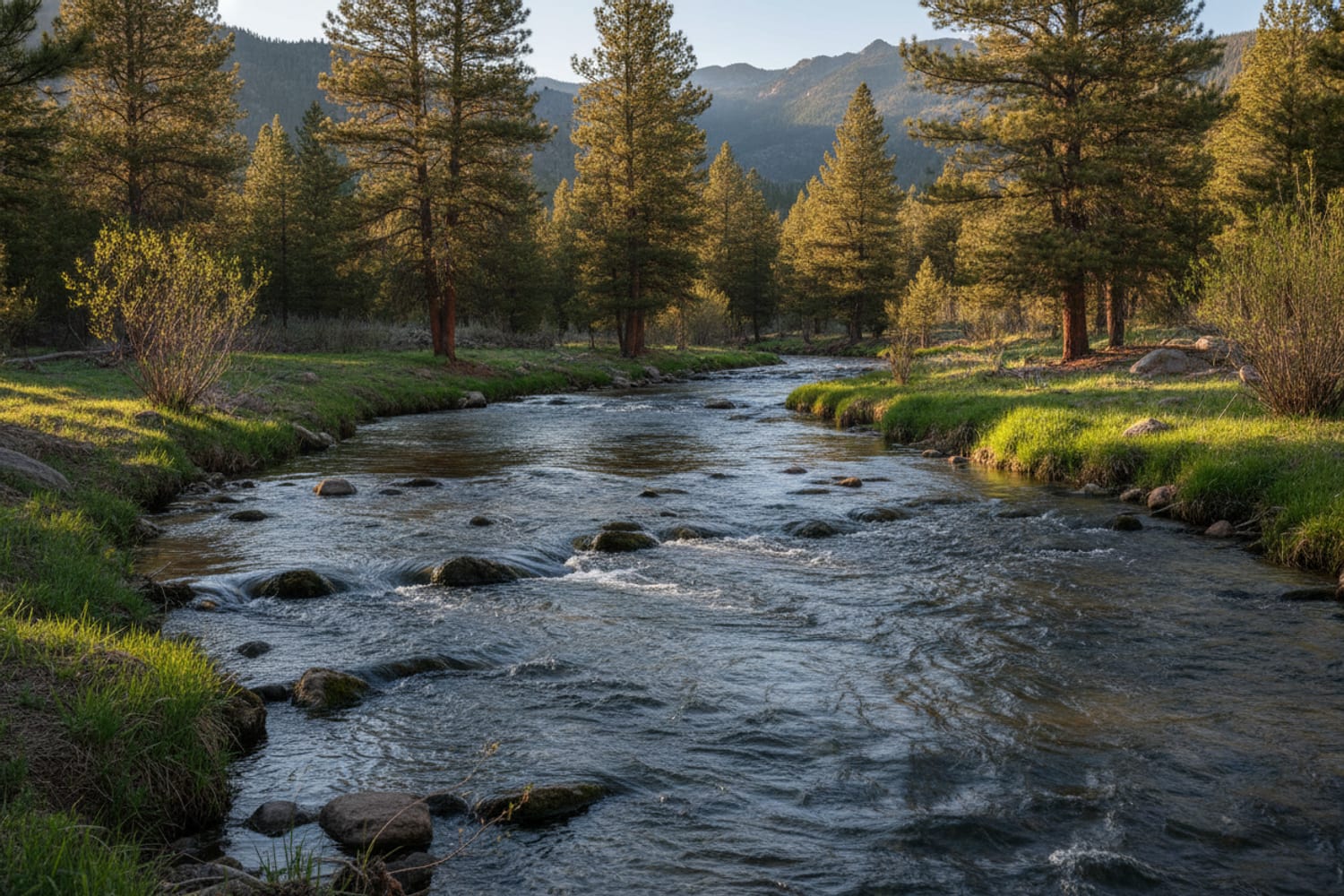
As the flows come up, the river rewrites itself. The wide flats that produced in May spread out and speed up, and the fish tuck into the softer water: inside seams, the slower edges, the cushion in front of a boulder, the slot along the bank. I spend June fishing closer to the bank than people expect, because that’s where a trout can hold without burning every calorie it owns.
Euro nymphing shines in this water — a tight-line rig gets a clean, deep drift through the faster, pushy current without fighting an indicator and a belly of slack line. When the flows settle into the back half of June and the PMDs are popping, that’s when I’ll switch some afternoons to a dry-dropper and fish the emergence up top. Match the rigging to the water: heavier and deeper when it’s up, lighter and more delicate as it drops.
River by river
- Deckers — the dependable June workhorse, close to the Front Range, fishes well across a wide range of flows.
- Cheesman Canyon — a hike in, but the water’s gorgeous and the fish are educated; June flows make the pocket water and granite-edge seams fish beautifully.
- The Dream Stream — fishes well, but it gets bumped hard on the bigger releases out of Spinney, so it’s the most flow-sensitive of the bunch.
- Eleven Mile Canyon — holds cold and clear, a good call when the lower river’s pushing.
- The Arkansas at Pueblo — the underrated one. Its tailwater shrugs off the melt the same way, with golden stones in the mix.
When is the best time to fish the South Platte in June?
Late morning into the afternoon, on the warmer days, when the PMDs emerge — that’s the window the fish feed hardest. Evenings belong to the caddis. Early mornings can be slow until the water warms a degree or two, which is the opposite of midsummer when you want to beat the heat. In June, you’re chasing the warm part of the day, not avoiding it. If you can only fish a few hours, fish the middle of the day.
My take
June is the month I stop apologizing for fishing the same tailwater over and over. The whole state wishes it had clear water right now, and we do — we just have to fish a little higher, a little tighter to the bank, and time the PMD window. Pull the gauge, bring the Blowtorch, and go while everyone else is sitting at home refreshing flow charts and waiting for the freestones to drop.
Next: if you want the full year, here’s the South Platte hatch calendar month by month — and when the water really jacks up, here’s how I fish Deckers during peak runoff.