
In this guide
Deckers is the most-fished stretch of the South Platte. On a summer Saturday you’ll see ten anglers in a hundred yards of water. The fish know. They’ve seen every fly in your box and they’ve broken off three of every leader brand you’ve ever bought. That’s the deal at Deckers — the fishing is incredible because the population is high, but the fishing is hard because everything in that population has a PhD in tippet detection.
I fish Deckers more than any other water on the South Platte — enough that the fish and I are practically on a first-name basis, and they still won’t eat. After enough days here, you stop trying to fish it like a normal trout stream and start fishing it like a problem you’re trying to solve.
What actually works at Deckers
Fish Deckers with light tippet, small flies, and a clean drift: 6X fluorocarbon down to 7X on hot days, a size 16–20 Olsen’s Blowtorch on point with a size 20 Zebra Midge dropper, and a tight-line euro rig (my Diamondback) to keep contact through the whole drift. Then walk past the obvious runs to the shallow tailouts, inside corners, and close-in water nobody fishes. Light tippet and a longer walk are the two edges that matter most — and both are free.
Everything below is why.
The Honest Truth About Pressured Water
Most articles tell you to “find unpressured water” if you want to catch fish at Deckers. That’s useful advice if you live in Wyoming. If you live in Colorado Springs like I do and Deckers is the South Platte tailwater you can hit and be back by dinner, you’re fishing pressured water. The question isn’t how to avoid it — it’s how to win at it.
What pressured water actually changes:
- Fish refuse standard presentations. A flawless drift with 5x and a size 18 Pheasant Tail will get ignored by a fish that’s already seen that exact rig twice this week.
- Tippet size matters more than fly choice. A perfect fly on 5x catches fewer fish than a mediocre fly on 7x. That ratio shifts the longer the season goes on.
- The fish move to the spots nobody fishes. Not the obvious runs. The shallow tailouts, the back-channel seams behind willows, the inside corner of every gravel bar.
- First light and last light double your catch rate. The water hasn’t been worked over yet at 5:30 AM. It has been by 10.
What I Actually Fish at Deckers
This isn’t a top-ten list scraped off a forum. It’s what’s actually tied to my rig when I park at the bridge — and what I’ll be re-tying after the first good fish breaks me off.
Tippet: 6x fluorocarbon down to 7x on hot days. Trouthunter and RIO Powerflex Plus both work — I’ve fished both for years and I don’t have a strong preference between them. What I do care about: don’t show up at Deckers with 4x tippet. The fish will see it from across the river.
Flies (nymph rig): Size 16–20 Olsen’s Blowtorch on point — orange-tag variant for stained water, green-tag for clear — with a size 20 Zebra Midge as the dropper. The Blowtorch is my favorite fly and it earns its place at Deckers more than anywhere else. When the BWO hatch is on, I swap the Blowtorch for a size 18 Perdigon and stay on the dropper. When neither is moving fish, the RS2 takes the dropper slot.
Dry-dropper: When the light is right and I can see them sipping in the slack water, I’ll throw a size 18 Parachute Adams with a size 20 emerger dropped 18 inches below. That’s a window — maybe two hours mid-morning and again at sunset. Outside that window the dry-dropper underperforms a straight nymph rig by a wide margin.
Streamer: Almost never. Deckers fish are picky enough on small bugs that throwing a Wooly Bugger at them feels like a different sport. I save the streamer rig for the Dream Stream and the Arkansas tailwater at Pueblo.
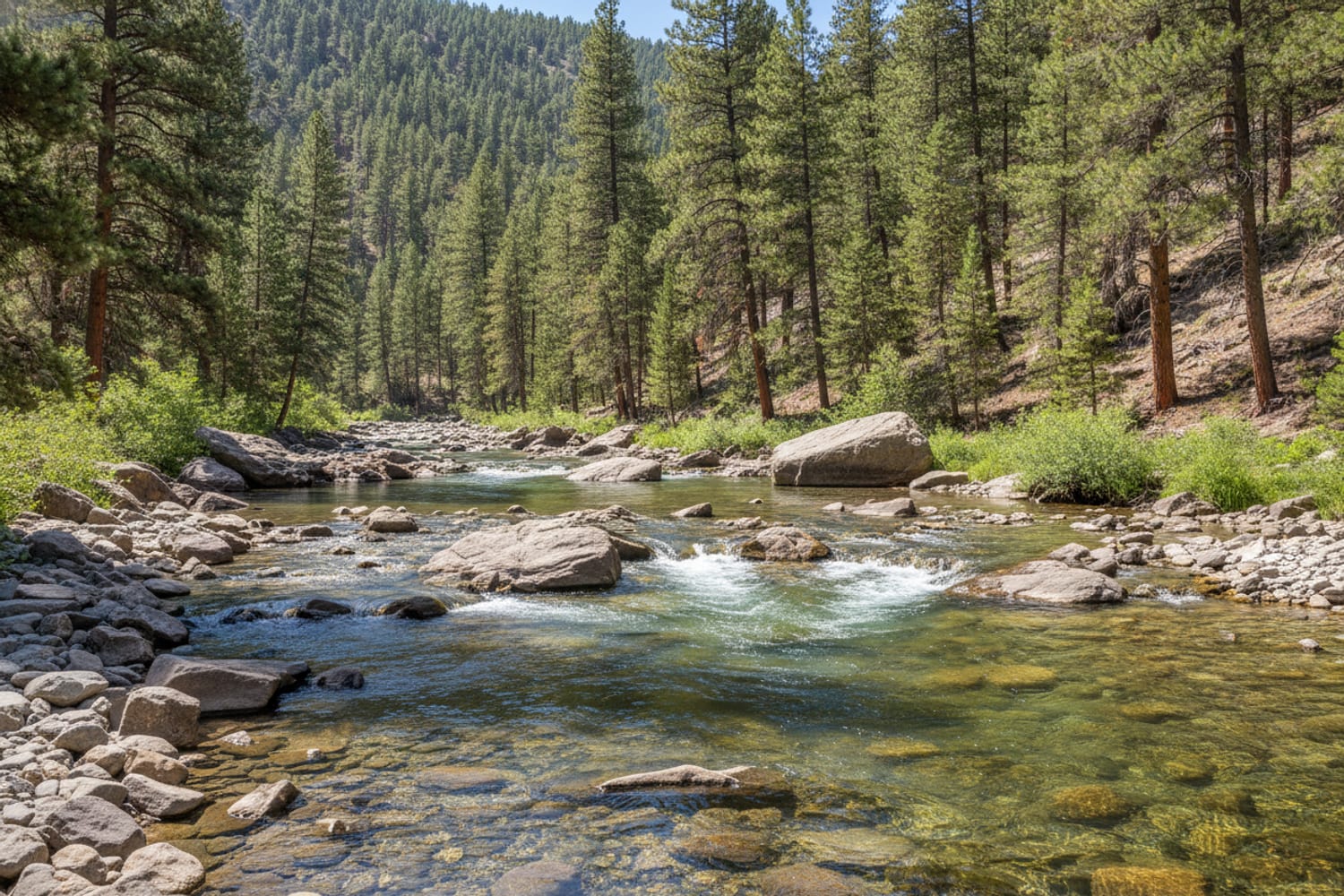
The Drift — Where Pressured Water Is Actually Won
Fly selection is the part everyone obsesses about. Drift is the part that actually matters.
The two things that ruin a drift at Deckers:
- Drag you can’t see. Your indicator looks fine but your nymphs are skating along the bottom because your tippet is too short or your weight is off. You think you’re getting a dead drift; the fish know you’re not.
- Splash from the cast. Deckers fish bolt at the entry of a fly line on the water. False cast somewhere else, then deliver clean. Roll casts and water loads work better than aerial casts in tight runs.
This is where euro nymphing destroys indicator fishing on pressured water. With a mono rig and a tight line, I’m in contact with the flies for the entire drift. I feel everything. I’m reading the take instead of watching for it. The Diamondback is the dedicated euro rod in my quiver — built for exactly this kind of tight-line, mono-rig work on pressured water.
The Spots Nobody Fishes
If you’re at Deckers and you see two anglers in the obvious run, walk past it. Walk further than feels reasonable. The good water at Deckers isn’t where it looks good — it’s where it doesn’t.
Three under-fished water types I always check:
- Shallow tailouts at the bottom of named runs. Fish slide there to feed when the deeper water gets pounded. Most anglers walk right past these to get to the next obvious bucket.
- Inside corners on gravel bars. Slow water tight against a gravel edge. Hard to fish well, easy to skip. The fish are there because the food is there.
- The first 30 feet of any pull-off. Anglers walk past the close water to get to the “good stuff.” The close water hasn’t been touched. Start there.
My take
If I could keep only two edges at Deckers, they’d be light tippet and a longer walk — in that order, and neither one is a fly. I love the Blowtorch as much as anyone can love a fly, but the honest accounting says my best fish here come from seams nobody else worked that morning, on 6x most people are too impatient to fish. Everything else on this page is refinement. Both of those edges are free, which I suspect is exactly why they’re so unpopular — we’d all rather buy a solution than walk to one.
Time of Day
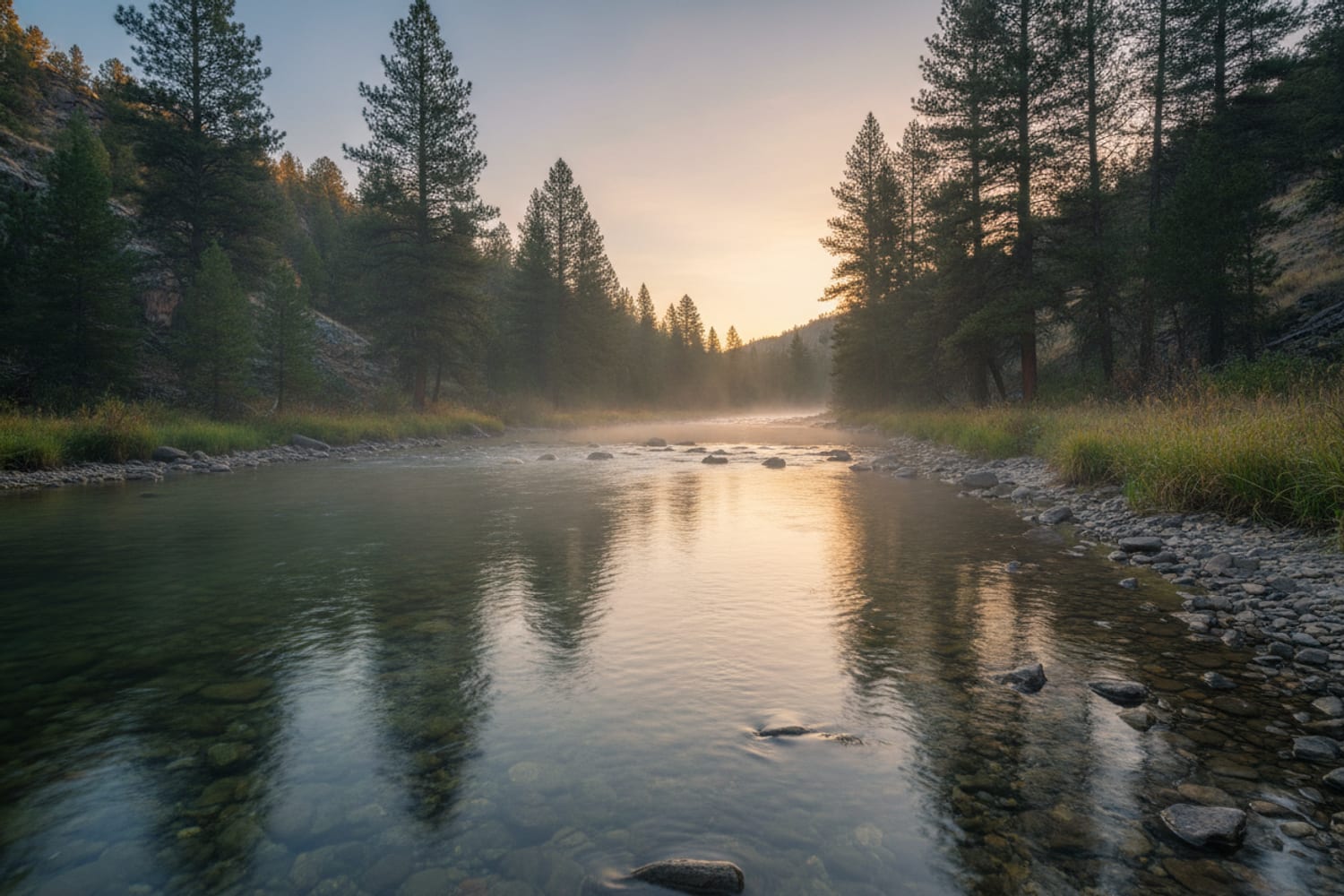
If you can only fish one window at Deckers, fish first light. 5:30 to 8:30 AM in June. The water hasn’t been pounded yet, the temperature is still climbing, and the BWOs come off before the wind picks up.
Second-best window: the last hour before dark. Crowds thin out, the light gets flat, the fish slide back to the soft water to feed.
The middle of the day at Deckers in summer can be brutally hot, brutally crowded, and brutally unproductive. That’s when I take a nap in the truck and wait for the evening window.
What Doesn’t Work at Deckers
Just as useful to know what to skip:
- Big attractor dries. Save the Chubby Chernobyl for the Eagle River.
- Heavy tippet. 4x is for streamer fishing in Montana.
- The same rig as last weekend. Deckers fish learn. Rotate flies even within a single day.
- Standing in the run. Wade carefully or don’t wade at all. You can see the fish at Deckers; they can see you.
What tippet should you use at Deckers?
6X fluorocarbon is the baseline, dropping to 7X on hot, low, clear days. Heavier than 6X and pressured Deckers fish refuse it — tippet diameter matters more here than the fly.
When is the best time to fish Deckers?
First light — roughly 5:30 to 8:30 AM in June — before the water gets worked over, and the last hour before dark. Midday in summer is hot, crowded, and slow.
The Reason This Matters
Deckers fishes hard. Deckers fishes great. Both are true at the same time and most of the difference is the angler, not the river. The anglers who consistently catch fish there aren’t the ones with the most expensive gear — they’re the ones who’ve slowed down enough to fish 7x without breaking off, and walked far enough to find the seam nobody else is on.
The fish are there. They’ve always been there. The water is good. You just have to fish it like a place that’s seen everything you’re about to show it.
And on the days it still doesn’t work? Welcome to Deckers. I’ll be the guy in the truck, re-rigging for the third time, insisting the evening bite is going to be different.
Next: dial in the rig that wins this water — my euro-nymphing setup for the South Platte.