
In this guide
Here’s the thing about the South Platte: you can blow the whole day before your fly ever touches the water, just by rigging wrong. I’ve done it. Too heavy a tippet and the fish turn up their noses. Too light and you’re donating flies to the river all afternoon. Wrong indicator size and you’re watching it bob along, blissfully unaware that a fish just inhaled and spat your nymph. So let me walk you through the exact setup I use out there, and how I tweak it for conditions.
Two systems, not one. Everything below is indicator nymphing — the standard South Platte rig I fish on my Scott Centric 9’5wt. For dedicated tight-line / euro nymphing I switch to my Diamondback Gen IV 10’7” 3wt with a completely different mono rig and no indicator. Two rigging systems for two different presentations; don’t try to combine them on the same setup.
The rig at a glance
My standard South Platte indicator rig on the Scott Centric 9’ 5wt: a 9-foot 3X or 4X tapered leader to a size 2–3 tippet ring, then 3–5 ft of 3X fluoro to a Thingamabobber, 5X or 6X fluorocarbon to a size 16–18 bead-head point fly, and an 8–10 inch dropper of 6X or 7X to a size 18–22 midge or emerger — 6X is the standard tippet, one small split shot at normal flows, all fluoro. For tight-line pocketwater I switch to the euro rig instead. Everything below is why each piece is there — but if you just came for the recipe, that’s it.
The Leader
I use a standard tapered leader for South Platte nymphing — nothing fancy. A 9-foot 3X or 4X knotted leader from any major brand works as the butt and mid section. The magic is in what you add at the end.
Tippet ring: The most underused tool in nymph fishing. I tie a size 2 or 3 tippet ring to the end of the leader. From the ring, I run the indicator tippet, the fly tippet, and add weight. When flies break off, I retie from the ring — the leader doesn’t shorten, the loop-to-loop connection stays clean, and the whole system maintains its drift characteristics.
If you’re not using a tippet ring, you’re shortening your leader every time you change flies — and then wondering, three fly changes later, why your once-perfect 9-foot leader fishes like a 6-footer. Ask me how I know.
Indicator tippet: From the ring to the indicator, I run 3X fluorocarbon — long enough to position the indicator at the appropriate depth. On a 2-foot Deckers flat, 3 feet of 3X is plenty. On a 4-foot canyon run at Cheesman, I’ll run 5 feet to get the right position.
Fly tippet: From the indicator to the first fly, 5X or 6X fluorocarbon depending on conditions. I default to 5X in most South Platte situations. 6X when fish are refusing and I’m convinced the issue is tippet diameter. 4X when I’m throwing large nymphs and split shot and need the extra strength for hooksets.
Dropper: 8–10 inches of 6X or 7X to the second fly. Shorter than most people fish — I’ve found that South Platte fish often prefer a dropper close to the point fly rather than far below it.

Choosing the Indicator
The indicator selection matters more than most people think on a technical tailwater. The wrong indicator won’t kill you but the right one helps significantly.
Thingamabobber (small or medium): My default for most South Platte fishing. Bright enough to see at 40 feet, resets its position cleanly when you pull it to cast, floats even with significant weight below. I use the medium for Deckers long-drift work, and switch to the small for tighter canyon seams where a big indicator creates drag in complex current.
New Zealand Indicator or yarn float: Better in technical flat-water presentations where drag control matters most. The yarn indicator has less surface contact and drag than the Thingamabobber in complex current. Harder to see at distance, requires more practice to position correctly. Worth learning for the Deckers flats on low-water days and for Dream Stream spring-creek presentations.
No indicator (tight-line): Already covered in the euro nymphing guide. For pocketwater, my first choice.
What to avoid: Very large indicators in technical situations. A golf-ball-sized indicator on a Deckers flat or a Cheesman seam creates enough drag to kill the drift over 10 feet. Use the smallest indicator you can see at your fishing distance.
Split Shot and Weight
The South Platte tailwater runs clear and the fish are spooky as cats. This is the great tug-of-war of nymphing: you need weight to get the fly down, but pile on too much and you’re plopping an anchor past wary trout. Here’s how I think about it:
At normal flows (150–250 CFS): A single small split shot (size B or BB) above the first fly is usually enough for runs 2–4 feet deep. Two split shot for deeper runs. Start lighter and add if you’re not getting strikes. I’ve watched anglers fish a 3-foot run with six split shot and wonder why they’re not touching bottom — the rig is so heavy it sinks straight down instead of drifting naturally.
At higher flows (250–400 CFS): Two to three split shot, heavier flies (size 12–14 bead-head point fly), shorter drifts from directly above.
Placement: I place split shot 8–10 inches above the tippet ring, not right on the fly. This keeps the weight out of the immediate drift zone of the fly and allows a more natural presentation.
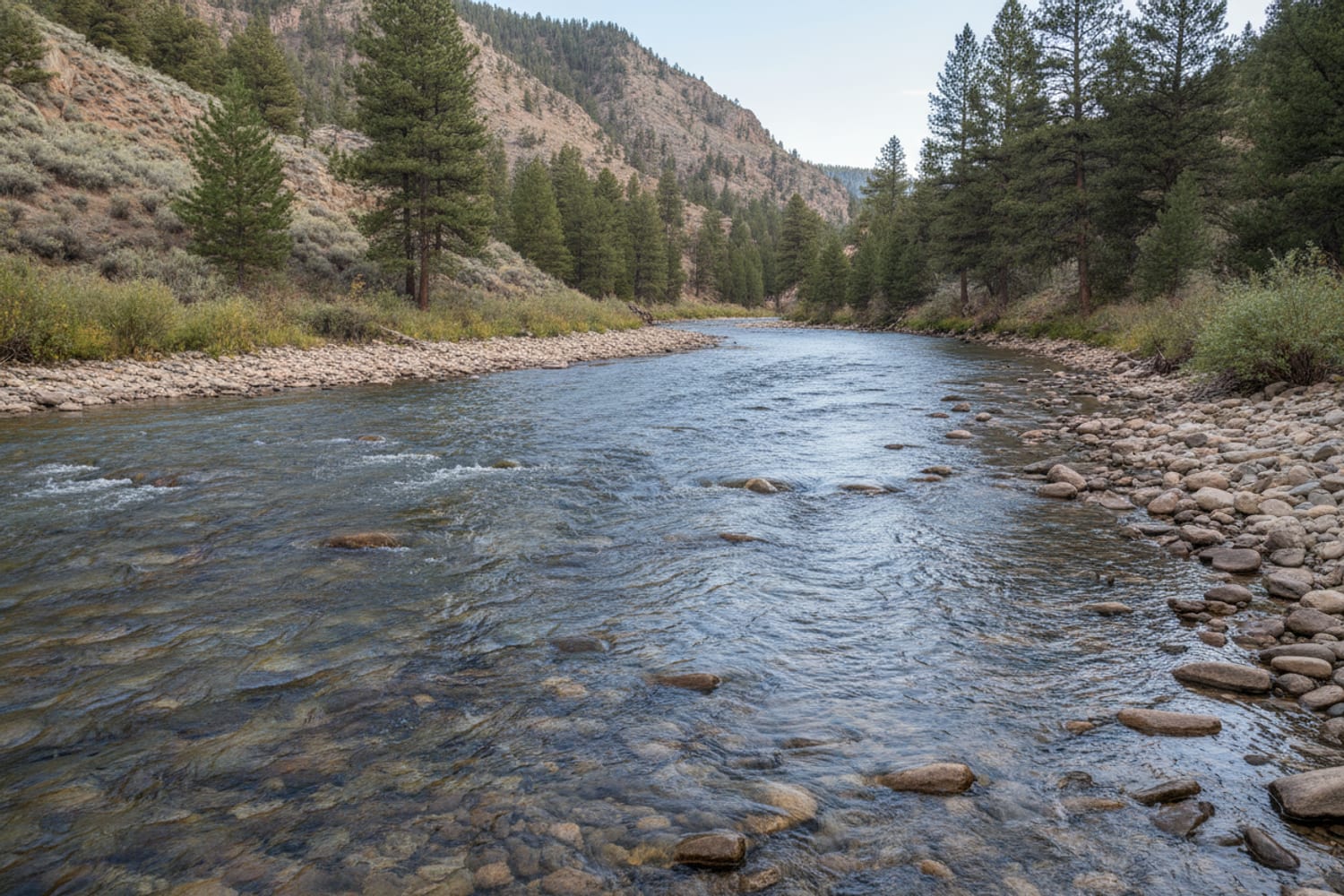
The Two-Fly Setup
Almost all my South Platte nymphing runs two flies — a point fly and a dropper. The logic:
Point fly: Heavy and deep. Gets the rig to the bottom. Size 16–18 bead-head nymph — hare’s ear, pheasant tail, bead-head Barr’s Emerger in appropriate sizes for the current hatch. In midge-dominated conditions, a size 18 zebra midge with a heavier tungsten bead as the point.
Dropper fly: Small and subtle. 6–10 inches above the point fly. Size 18–22 midge larva, RS2, or dry-dropper emerger. In PMD season, a size 16–18 PMD emerger or cripple. The dropper typically outfishes the point fly in selective tailwater conditions — it’s in the mid-column where feeding fish are positioned, not dragging bottom.
The dropper distance matters: at Deckers on longer flat-water drifts, I extend to 14–16 inches. In tighter Cheesman pocket water I shorten to 6–10 inches so both flies stay in the same current seam.
My take
The biggest rigging upgrade I ever made wasn’t a component — it was accepting that the rig is a draft, not a finished product. Mine gets rebuilt all day: indicator slides up a foot for the next run, a shot comes off for the shallow seam, the dropper shortens when the water tightens. The tippet ring is what makes all that fiddling cheap enough to actually do. Watch the water change, change with it, and re-rig without resentment — the angler who adjusts five times an hour quietly out-fishes the one who built something beautiful at the truck and married it.
Tippet Size for the South Platte
6X is the South Platte standard tippet. On Deckers in moderate flows, 5X is plenty. When water drops and clears — Deckers in low summer flows, Cheesman selective fish in low water — 7X is necessary to convert refusals. The rule I use: start on 6X, switch to 7X when I have a visible feeding fish refusing the fly despite a good drift.
Fluorocarbon vs. monofilament: For nymphing on the South Platte I fish fluorocarbon tippet exclusively. (On dries and the top half of a dry-dropper I switch to nylon for the turnover and the stretch — more on that in the leaders-and-tippet guide.) The lower visibility in water is meaningful in clear tailwater conditions. The added abrasion resistance matters on the cobble and granite of Deckers and Cheesman alike. The stiffer material also helps prevent micro-drag on the dropper.
Knots: Improved clinch for connecting flies to tippet. Triple surgeon’s for tippet connections. Both are fast to tie, reliable under the shock of a hard hookset on 7X, and well-tested in South Platte conditions.
Adjusting for Deckers vs. Cheesman
Deckers flats: Longer drifts, larger indicator for visibility at distance, more weight to hold bottom across a longer drift. The flat water allows 20–30 foot drifts if the indicator is correctly positioned. A standard mend halfway through the drift extends the productive zone. This is the rig I’m using most days.
Cheesman: Shorter drifts, smaller indicator, lighter tippet, more precision on fly placement. The current complexity in the canyon means your drift is accurate for 3–6 feet before drag sets in. Fish that zone aggressively, then recast.
Dream Stream: Minimal weight, small indicator, lightest possible tippet. The spring creek conditions mean slow-moving water and extremely spooky fish. Less is more in every category.
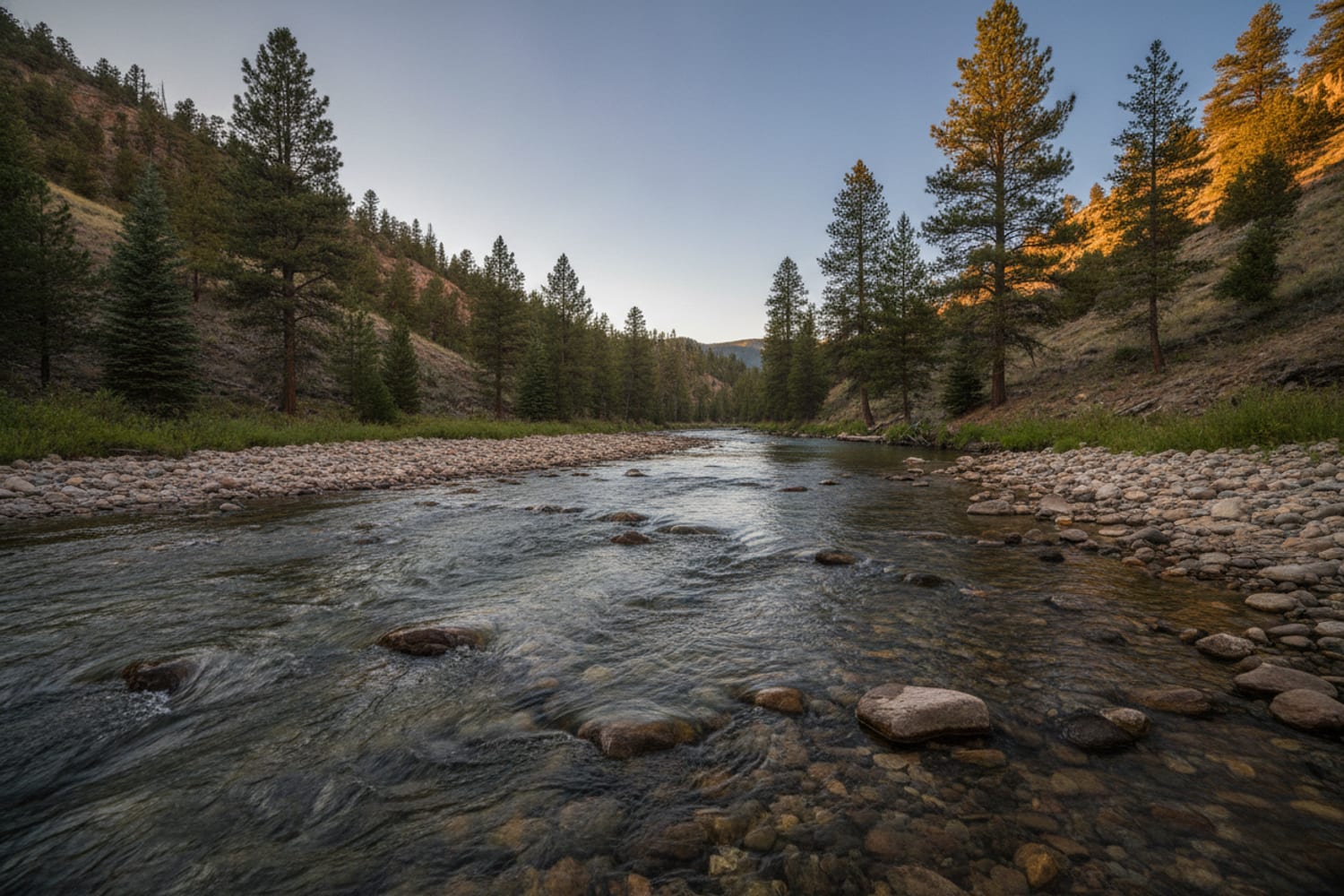
At the end of the day, the rig is only as good as the drift. You can build the most beautiful, perfectly tapered, fluorocarbon-everything setup on the river and still get skunked if that indicator is dragging like it’s water-skiing. The fish don’t care how nice your rig is. So practice the mend before you practice the cast — that’s the part that actually catches fish, and it’s free.
Once the rig is dialed, the next question is what to hang off it. Here’s my South Platte fly box if you want to see what’s actually riding on that tippet.