
In this review
I didn’t set out to own five fly rods. Nobody does. It happens the way these things always happen — one problem, one solution, and then the next problem is different enough that the first solution doesn’t quite fit. Five rods later, here we are. I preach buying once and owning less. My rod tube did not get the memo.
Here’s what’s in the truck, what each rod is for, and which reel lives on it. No filler. I’ll also tell you which two I’d keep if I had to give the rest away, because that’s the more useful answer.
The quiver, in one line
My South Platte quiver is five rods, five jobs, no overlap: a Scott Centric 9’ 5wt (do-everything), a Diamondback Gen IV 10’7” 3wt (dedicated euro nymphing), a Headwaters Madison 8’ 4wt bamboo (technical dry fly), a Scott F Series 7’2” 3wt glass (small creeks), and a Redington Vice 9’6” 7wt (October streamers). If I had to cut it to two, it’d be the Diamondback and the Centric, and it wouldn’t take me ten seconds to decide.
How many fly rods do you really need?
Honestly? One good 9-foot 5-weight covers most of the South Platte, and if you’re standing in a shop right now with one rod’s worth of money, buy that and spend the difference on a better line and more time on the water. I ended up with five because each one solves a job the others genuinely can’t — tight-line nymphing, technical dries, tight creeks, October streamers. Five rods, five jobs, no overlap. That’s the defence. It’s also, I’m aware, exactly what a man with five fly rods would say.
Quick summary — the five-rod quiver:
- Scott Centric 9’ 5wt + Ross LTX — the do-everything rod: dries, dry-dropper, indicator, wind
- Diamondback Gen IV 10’7” 3wt + Ideal Nymph Reel — dedicated euro nymphing
- Headwaters Madison 8’ 4wt cane + Ross Coors Banquet Cimarron Creek — technical dry fly, flat water, spotted fish
- Scott F Series 7’2” 3wt glass + Ross Colorado — small creeks and blue lines
- Redington Vice 9’6” 7wt + Lamson Liquid S — streamers, October
Scott Centric 9’ 5wt + Ross LTX
The do-everything rod

If I’m heading to Deckers or the Arkansas and I don’t know exactly what I’ll find, this is what I grab. Dries, dry-dropper, indicator nymphing, the occasional streamer — it does all of it without complaint. My season splits about evenly between this rod and the Diamondback below, and which one comes out of the truck says far more about the water than about a favourite.
The Centric replaced Scott’s Radian after an eight-year run, and the difference is immediately obvious: more feel, without giving up any speed. The Radian was fast. The Centric is fast and alive in your hand. It loads deeper into the blank than you’d expect from a rod this quick, then recovers instantly. That combination — deep load, fast recovery — is what makes it feel effortless at distances where a lot of fast rods start to fight you.
On the Deckers flat I’m casting 50 to 60 feet across the current to fish rising on the far bank, and the Centric handles it without a double haul if I don’t need one. What matters more on the South Platte is that it stack-mends all the way to the indicator at that distance. Most fast-action rods hesitate on a roll cast. This one doesn’t, and that’s the difference between a clean drift and watching your fly drag across the seam.
In the tight slots of Eleven Mile the story flips — short stroke, 25 feet, no room behind you. It works there too. Rock the rod through a compressed stroke and it responds. That isn’t something you get from a rod that only wakes up at distance.
The hardware matches the blank: flor-grade cork that feels broken in from the first cast, titanium guides that don’t grab in the cold, a machined seat that locks the reel without ceremony. The whole rod is 3.0 ounces and I forget it’s there by hour three.
And the part that means something to me — the Centric and the Ross LTX are both built in Montrose, Colorado. Not assembled. Built. When I fish this setup on the South Platte it’s a Colorado rod catching Colorado fish.
The Scott Centric retails for $995. → Full review
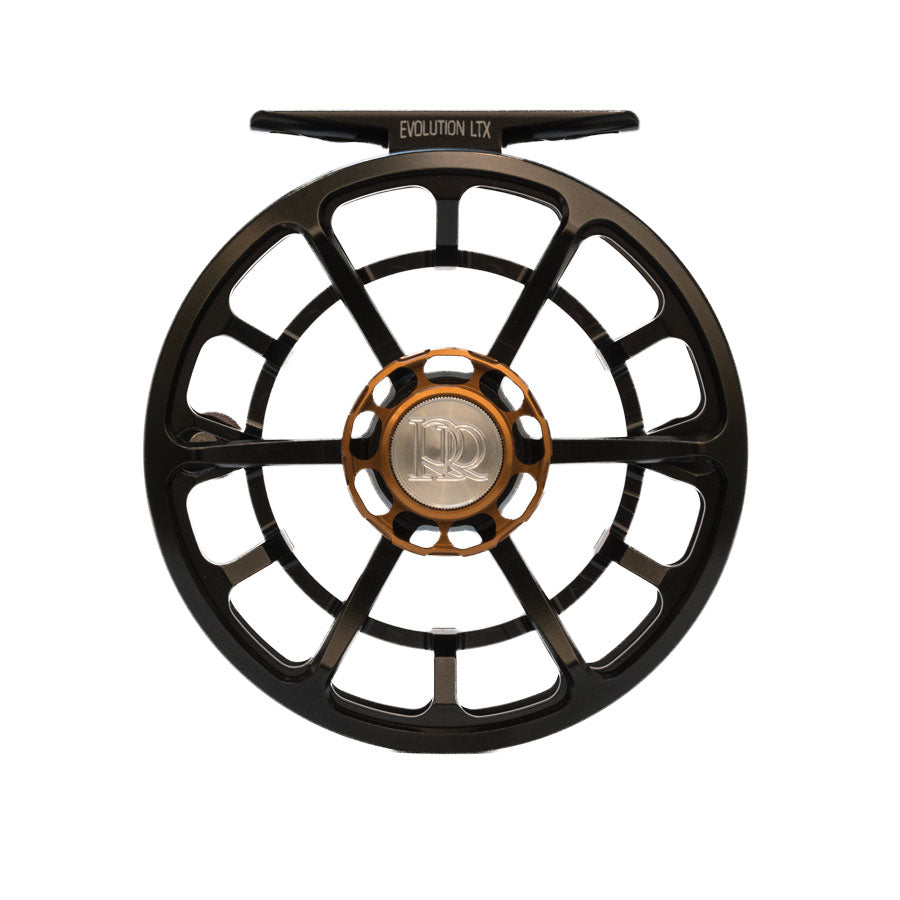
The Ross LTX pairs with it properly — a fast, precise drag, the kind you don’t think about when a fish runs. It fits the Centric in the hand and in every other way.
Diamondback Gen IV 10’7” 3wt + Ideal Nymph Reel
Euro nymphing, full stop

There is no way to euro nymph with the Centric. To do it properly you need a long rod, a light line weight, and a genuinely sensitive tip, and the Gen IV is all three.
Joe Goodspeed designed it specifically for tight-line nymphing, and the first time I dropped a jig into a seam at Cheesman I understood what that means in practice. Everything about the build — how the tip is tuned, where the guides sit, how close the stripping guide is to the handle — adds up to one thing: there is no slack anywhere in the system.
What that buys you is information. I can feel the fly tick a rock at 40 feet. I can feel the current change under the sighter. And when a fish takes — before it moves, before an indicator would have twitched — it registers as a pulse in the tip. That’s the whole argument for the method, and this rod is why I stopped treating it as a novelty.
It fishes a 6X micro leader with a size 22 midge the same way it fishes a heavy jig, and that range matters, because South Platte fish don’t always tell you what they’re doing.

The Gen IV Nymph and the Ideal Nymph Reel were designed together and fish together. → Rod review · Reel review
The other half of my season belongs to a regular line, and I’d rather have both than argue about which is better. But if you fish the South Platte and you’ve never tried tight-lining a seam, there’s a whole category of takes you currently aren’t seeing.
Headwaters Madison 8’ 4wt + Ross Coors Banquet Cimarron Creek
When the presentation has to be perfect

The Madison is the rod quietly rearranging how I think about all the others. Eight feet of hand-planed cane on the Payne 200L taper, and from the first session it cast like a dream — it lands a fly soft, loads deep, and turns a leader over with an ease I wasn’t ready for. I keep saying it and it keeps being true: I fall a little more in love with bamboo every time I pick this thing up.
It’s a medium action that bends progressively into the blank, so you slow the stroke down and feel the whole rod work. That’s the gap it fills: a technical dry-fly rod for flat water and spotted fish, where the fly has to land like it fell there on its own.
I’ve fished it enough now to trust it. A couple of rainbows to hand, and over a long session the weight I half-expected from cane never once showed up — it handled like a champ start to finish. It’s the rod that has me eyeing my carbon sticks and wondering, which is not a sentence I ever thought I’d write. A buddy who threw it for an afternoon walked away saying his next rod is going to be bamboo. The stuff’s contagious.

It now runs a Ross Reels Coors Banquet Cimarron Creek — a click-and-pawl, no drag to spike a fine tippet, which is exactly what a soft cane dry rod wants. It’s a Colorado piece to its core: machined in Montrose, anodized in Coors-gold with the red bottle-cap dot in the center, one of a serialized run of a thousand, a slice of proceeds going to Trout Unlimited. A Colorado reel on a cane rod I only ever fish Colorado water with — that suits me fine.
Scott F Series 7’2” 3wt + Ross Colorado
Blue lines and E-glass

This one comes out for the blue lines — small unnamed creeks where you’re making 15-foot casts through overhanging brush and a six-inch trout feels like eighteen.
It’s E-glass, not graphite, and that’s not a marketing angle. Scott calls it elastic glass, and elastic is exactly right: the blank loads at distances where a graphite rod barely notices the line. Under 20 feet, which is where the small-creek game actually happens, it’s more accurate and more forgiving than anything I’ve thrown that’s made of carbon. You’re not forcing the cast. You’re responding to the rod.
The action is genuinely slow — not slow by fast-rod standards, actually slow. Scott publishes a grain window rather than a taper for this model: 94 to 106 grains, which is a true-to-weight 3. I run a DT3 inside that window because the long belly suits a rod I’m loading at fifteen feet, though that part is my preference and not Scott’s instruction. You feel everything — the load, the stop, the transfer.
The five-piece design is what makes it make sense for how I use it. Scott engineered internal ferrules — four of them in the 7’2” — and it’s one of the cleanest solutions I’ve seen in glass. The rod packs into an 18-inch tube that slides into a carry-on, which matters when you’re walking to water nobody else is bothering with.
The Scott F Series retails for $695. → Full review

The Ross Colorado is click-pawl, and on a rod this light the reel’s real job is balance rather than drag. It suits the F Series like it was made for it.
Redington Vice 9’6” 7wt + Lamson Liquid S
October. Streamer season.
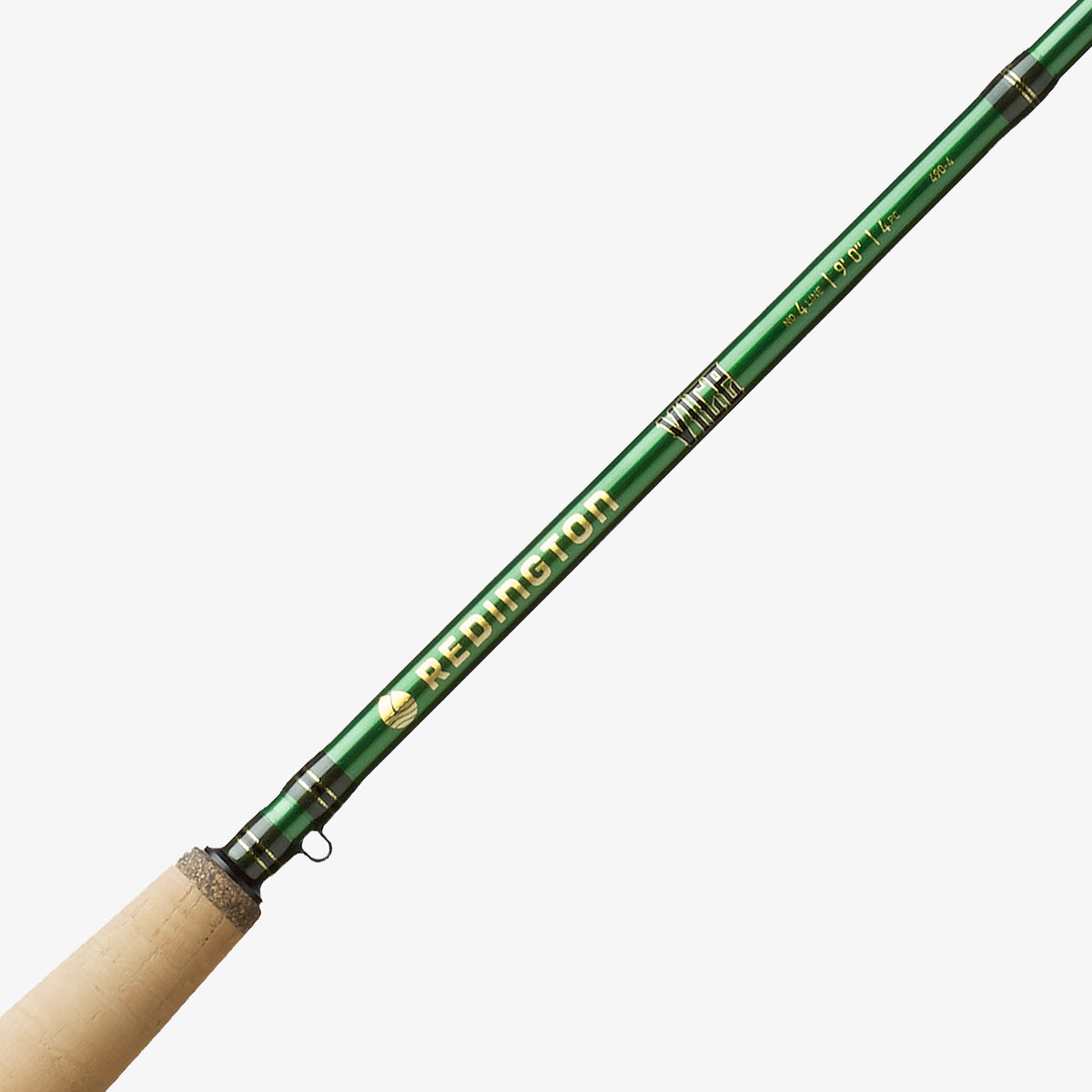
This comes out in October, when brown trout go pre-spawn — aggressive, territorial, and willing to move for a big fly. Big water, heavy streamers thrown tight to the banks. That’s what it was bought for.
Here’s what nobody tells you upfront: don’t try to fish it at 30 feet. It’s too stiff to load there and it feels clunky in your hand. That isn’t a defect, it’s how it’s built. Get out to 40 or 45 feet, throw a bank shot on a big October river, and it becomes a different rod — tight loops, repeatable accuracy, and it turns over a 5-inch articulated streamer without complaint.
I’ll be honest about what it is. It’s the cheapest rod here by a wide margin, and I bought it to mess around with streamers rather than because I’d planned to take streamers seriously. It does the job. It’s also heavier in the hand than I’d like, and after a few hours of throwing weighted flies you feel it. I’ve been thinking about replacing it with something that does the same work without the fatigue. I don’t know what yet.
Who should skip it: if streamers are most of your fishing rather than a month of it, buy something lighter and better and don’t look back — the fatigue compounds. As an entry into a season you fish four or five times a year, it’s hard to argue with the price.
One thing Redington does right: lifetime warranty. And the money I didn’t spend on a premium streamer rod went into better lines, which on a big river with a 7-weight makes more difference than most people think.
The Redington Vice retails for $279.99. → Full review

The Lamson Liquid S handles drag duty without asking you to think about it — which is what you want when a big October brown is running for the far bank.
My take
If this shrank to two slots the decision would take seconds: the Diamondback and the Centric. The Diamondback goes first because it does a job nothing else here can do at all, and the Centric second because it covers everything the tight line can’t — wind, indicator water, a hatch that won’t sit still. Not long ago that second slot would have been the Winston, and typing this feels faintly like betraying an old friend. The other three are luxuries. Well-reasoned, genuinely useful luxuries, and I know exactly what they are.
The honest answer
Five rods sounds like a lot until you spend a day with the wrong one. I’ve fished a 9-foot 5-weight on tight creek water and it’s an exercise in frustration. I’ve fished a soft rod in 20mph wind at Deckers and come close to throwing it in the river.
The right tool matters, and these five cover what I actually run into without overlapping. That’s the quiver as it stands — and yes, I hear how “I only need five” sounds coming from a man who once owned three. Ask me again next October, when something with a backbone for streamers catches my eye.
Individual reviews: Scott Centric · Ross LTX · Scott F Series · Ross Colorado · Redington Vice · Lamson Liquid S · Diamondback Gen IV · Ideal Nymph Reel