
In this guide
Here’s the good news: you don’t need to memorize every bug ever pulled from a drift sample to crack the South Platte. You need to know what’s happening right now, what’s about to happen, and what to tie on when you can’t see a single rise to save your life. That’s the whole point of this calendar.
I’ve fished Deckers, the Dream Stream, and Cheesman Canyon across every season for more years than I’ll admit in writing. The hatch timing here is real — not lifted from a book written about a different tailwater in a different state. These are bugs I’ve watched come off the water and flies I’ve personally thrown at fish that, more often than I’d like, ignored me anyway.
One non-negotiable before we start: midges are always on the South Platte. Every single month. If you build a fly box for this river and forget midges in #18–22, you’re in for a long, humbling day no matter the season. Zebra Midges, Mercury Midges, Brassies — carry all of them, always.
The South Platte hatch year, in one breath
Midges (#18–22) hatch every single month on the South Platte — never leave them home. Beyond that: BWOs peak in April and again in the September–October fall window, PMDs peak in June from 10am–2pm, caddis carry the summer, and Tricos own the 7–10am mornings from mid-July into September before terrestrials (ants, beetles, hoppers) take over the afternoons. June is the best dry-fly month if you only get one. Everything below is the month-by-month breakdown across Deckers, Cheesman, and the Dream Stream — but if you just needed the shape of the year, that’s it.
Winter: January – February
January and February on the South Platte are midge-only months. Full stop. The Baetis are dormant, PMDs won’t show for months, and caddis are a memory. But midges? They’re coming off from ice-up to ice-out, every day, in numbers that can produce legitimate surface feeding on the right afternoon.
What’s happening: Midges all day, every day. On warmer afternoons — and “warm” in January means 40°F and sunny — you’ll occasionally see a sparse BWO hatch, but don’t bank on it.
The flies:
- Zebra Midge #18–22
- Mercury Midge #18–22
- Brassie #18–20
Fish subsurface the majority of the time. Double nymph rigs — a Copper John up top with a midge dropper — are about as reliable as anything on this river in January. Keep your eyes open for any surface activity in the mid-afternoon window. If fish are sipping, they’re eating midges.
Winter crowds are thin and the fishing is underrated. The South Platte doesn’t shut down in the cold — and neither do the fish. They’re still there, and they still have to eat. Whether you do too, in 20-degree wind, is between you and your waders.
Early Spring: March – April
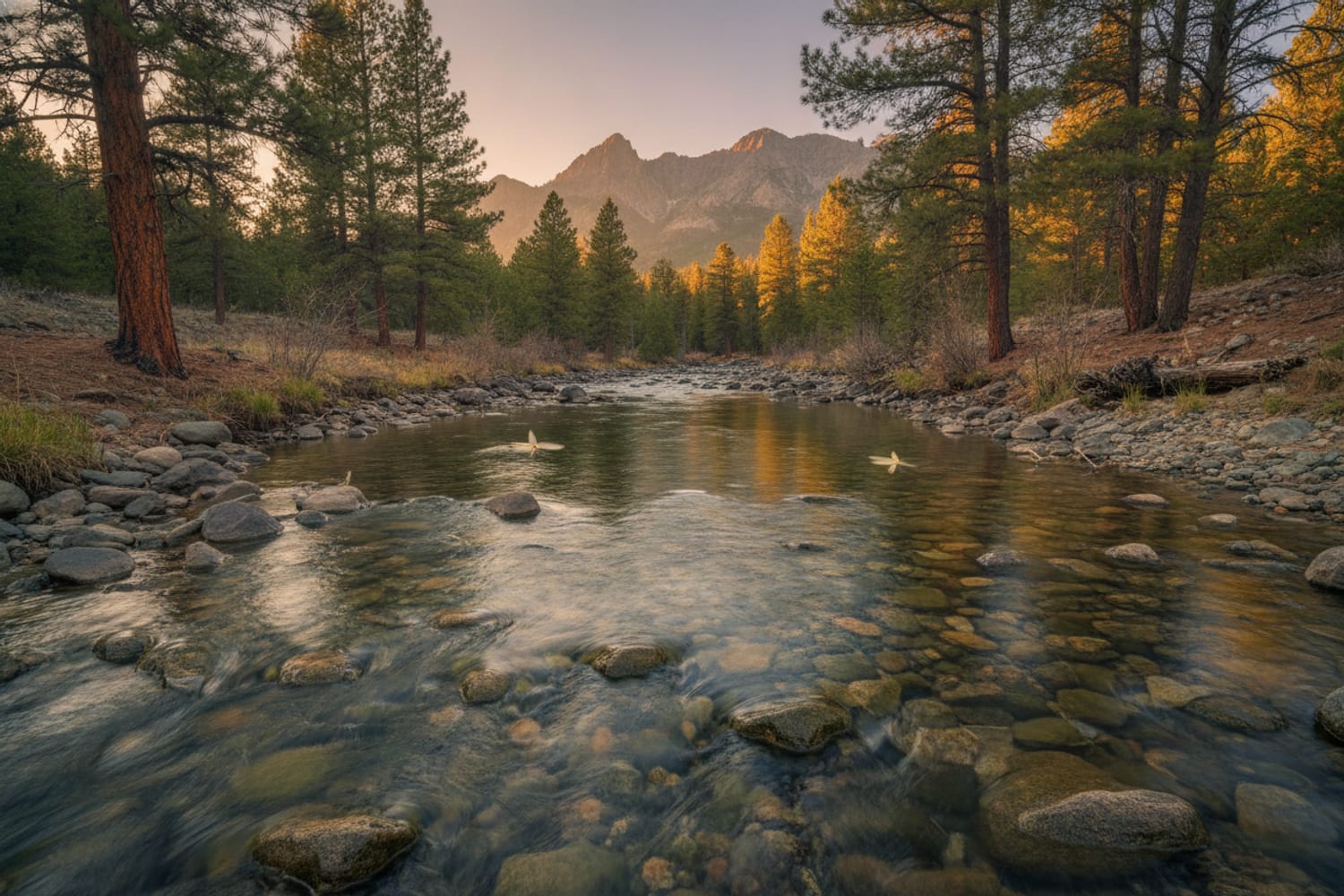
March and April are my favorite months on the South Platte. The winter crowds haven’t given way to summer pressure yet, and the BWO hatches are building toward their annual peak. If you care about dry-fly fishing, you need to be on the water in April.
March: Midges continue alongside early BWOs. Watch for afternoon BWO hatches when it’s overcast and temperatures push past 45°F. The gray, drizzly days that send most people back to the couch are the days I’m grabbing my rod. Baetis love low-light conditions — flat-lit, cloudy afternoons consistently produce better surface activity than bluebird days.
April: BWOs peak. This is the best month of the year for dry-fly BWO fishing on the South Platte. Fish mornings with midge rigs, then transition to BWO patterns as the afternoon hatch builds. When fish are actively feeding on Baetis emergers, an RS2 or WD-40 in the film will frequently outperform the dry.
The flies:
- BWO Sparkle Dun #20–22
- Parachute Adams #18–20
- RS2 #20–22
- WD-40 #20–22
- Zebra Midge #18–22 (mornings, always)
April flows start rising as snowmelt kicks in on the upper drainage. Watch the gauge at Deckers — the fish don’t leave when flows increase, but your presentation needs to adjust. Heavier nymph rigs, slower inside seams, structure near the bank.
Late Spring: May – June
May is the volatile month. As the snowmelt ramps, the downstream stretches color up first — Deckers and the water below it pick up unregulated side creeks dumping snowmelt, so they blow out before the canyon does. Cheesman, the canyon sitting right under the dam’s cold, clear bottom-release, holds fishable conditions the longest — it often keeps fishing at a couple hundred CFS while Deckers is off-color, and it’s worth checking the gauge before you drive out. Don’t let a bad gauge reading turn you around entirely; conditions on Colorado tailwaters can change fast. My full May on the South Platte playbook covers how to fish around the runoff.
May: PMDs begin mid-to-late month. This is the first appearance of the bugs that will dominate June, and the fish are dialed in on them immediately. Caddis start showing late May in smaller numbers. Fish are opportunistic and the variety of options on the water makes reading the hatch genuinely interesting.
June: The best dry-fly month of the year, especially once the early-June runoff drops into shape. PMDs peak from 10am to 2pm. Caddis builds through the afternoon. On the larger water stretches, stonefly activity begins. June is when I spend the most time on the South Platte — the fish are active, the hatches are reliable, and the timing is tight enough that matching the hatch actually matters.
The flies:
- Barr’s Emerger #16–18
- PMD Sparkle Dun #16
- PMD Comparadun #16
- Elk Hair Caddis #14–16
- Yellow Sally #14
- Elk Hair Caddis #16 (late May, building)
The 10am–2pm PMD window in June is the kind of fishing you put on the calendar months in advance. If you can only pick one month on the South Platte, June is the answer.
Summer: July – August
July is the month most anglers overlook. PMDs fade, the crowds thin slightly, and the river shifts into a pattern that rewards early risers and anglers willing to think beyond the midge-and-BWO playbook.
July: Tricos begin, and they are early — the spinner fall runs roughly 7–10am and is over by about half past ten. Sleep in and you miss it; ask me how I know. PMDs are fading but not gone entirely. Caddis continues through July. By mid-month, ants and beetles start producing takes where you’d least expect them. Terrestrials are underutilized on the South Platte; the fish see enough PMD and midge patterns to become selective, and a well-placed ant can break through that selectivity.
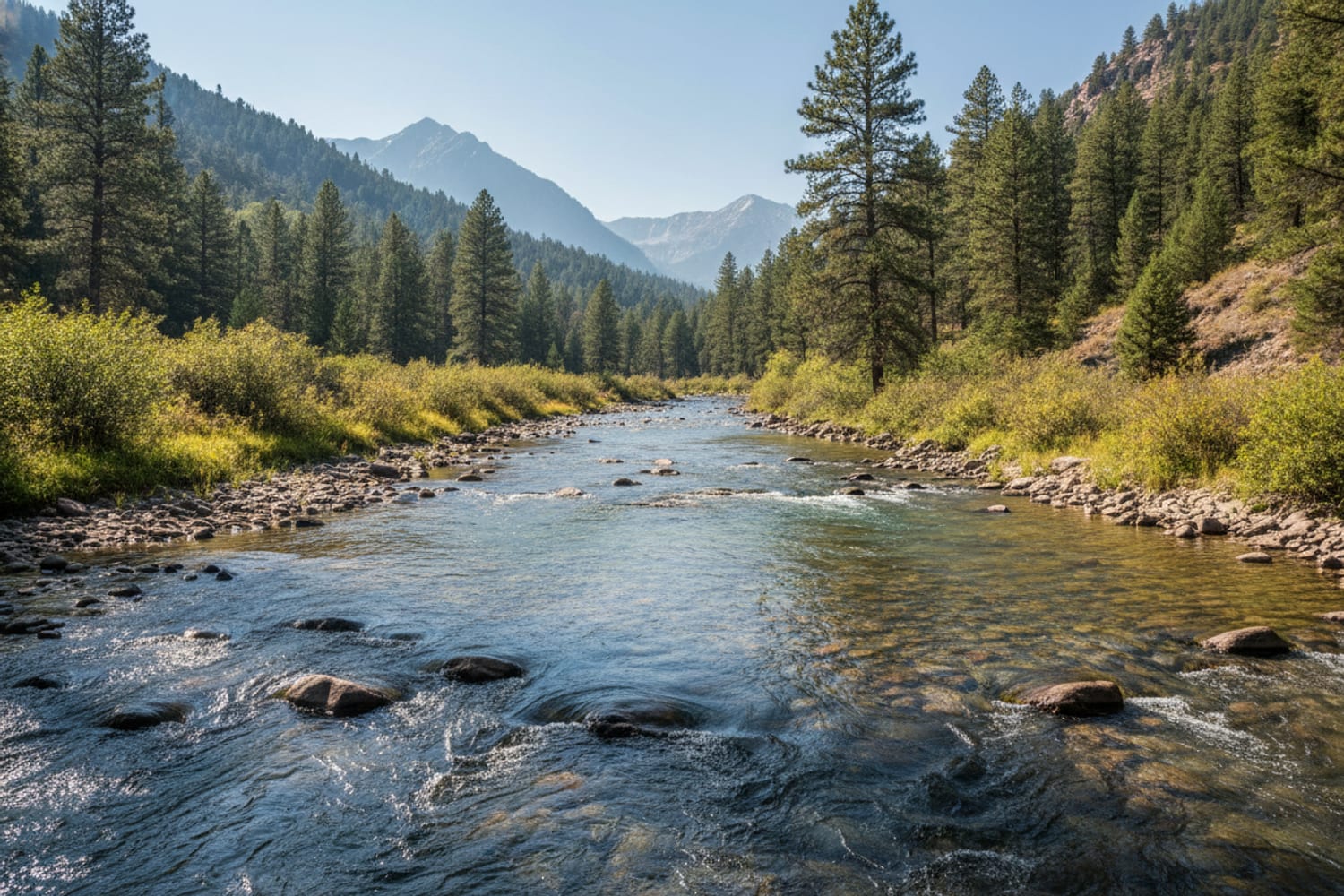
August: Trico hatch peaks. August mornings on the South Platte — early, before the light hits the water — can produce some of the best dry-fly fishing of the year if you’re willing to set the alarm. After the trico window closes, terrestrials carry the afternoon. Hopper-dropper rigs come into their own this month: a visible hopper on top, a small nymph or midge dropper below, covering both the surface-feeding and subsurface fish.
The flies:
- Trico Sparkle Dun #20–22
- PMD Black Beetle #16–18
- Dave’s Hopper #10–14
- Elk Hair Caddis #14–16
- Parachute Ant #16–18
- Foam Beetle #16
August midday heat pushes fish to shaded water and deeper holds. Fish the early window hard, then either take a break at midday or work the deeper water with nymph rigs. The evening can produce a second wind of caddis activity.
My take
The famous months book themselves — June doesn’t need my endorsement. The calendar’s real value to me is the off-peak windows it talks me into: a gray, drizzly April afternoon, a July Trico morning that’s over before most people park, a Tuesday in November. That’s where I’ve had the river closest to myself, and the alarm-clock grumbling fades by the second fish every single time. If your days are limited, spend fewer of them on the obvious weeks and more on the edges of them — the fish eat all twelve months; the crowds only show up for three or four.
Fall: September – October
September and October are the most underrated months on the South Platte. The summer crowds are gone. Flows have normalized from the runoff-to-low-summer swing. The fish are feeding aggressively, building condition before winter. And the BWOs are back.
Don’t pack the Trico box away yet, either. The morning spinner fall carries through September and tapers into early October, so first light on Deckers and the Dream Stream is still a #22–24 mayfly game even as the afternoon belongs to the returning BWOs. September is a genuine two-hatch month: Tricos early, Baetis late.
Fall Baetis hatches can be as good as the April peak — sometimes better, because the fish haven’t seen BWO patterns in months and they’re less educated on the emerger silhouettes. Overcast days in September and October regularly produce multiple-hour BWO hatches. Don’t skip those gray October mornings.
Fall caddis adds a second option. X-Caddis and Elk Hair in #16 covering the afternoon caddis activity alongside the morning BWO window means two legitimate dry-fly opportunities per day.
The flies:
- Trico Spinner #22–24 (early mornings, into early October)
- BWO Emerger #20
- BWO Sparkle Dun #20–22
- X-Caddis #16
- Elk Hair Caddis #16
- RS2 #20–22
One thing I’ve noticed in fall: fish are bigger and more visible in lower, clearer flows. The larger browns that tucked into structure all summer start moving more actively. Sight-fishing opportunities improve in the crystalline September water. It’s worth slowing down, watching, and targeting specific fish rather than blind-covering runs.
Late Fall and Winter: November – December
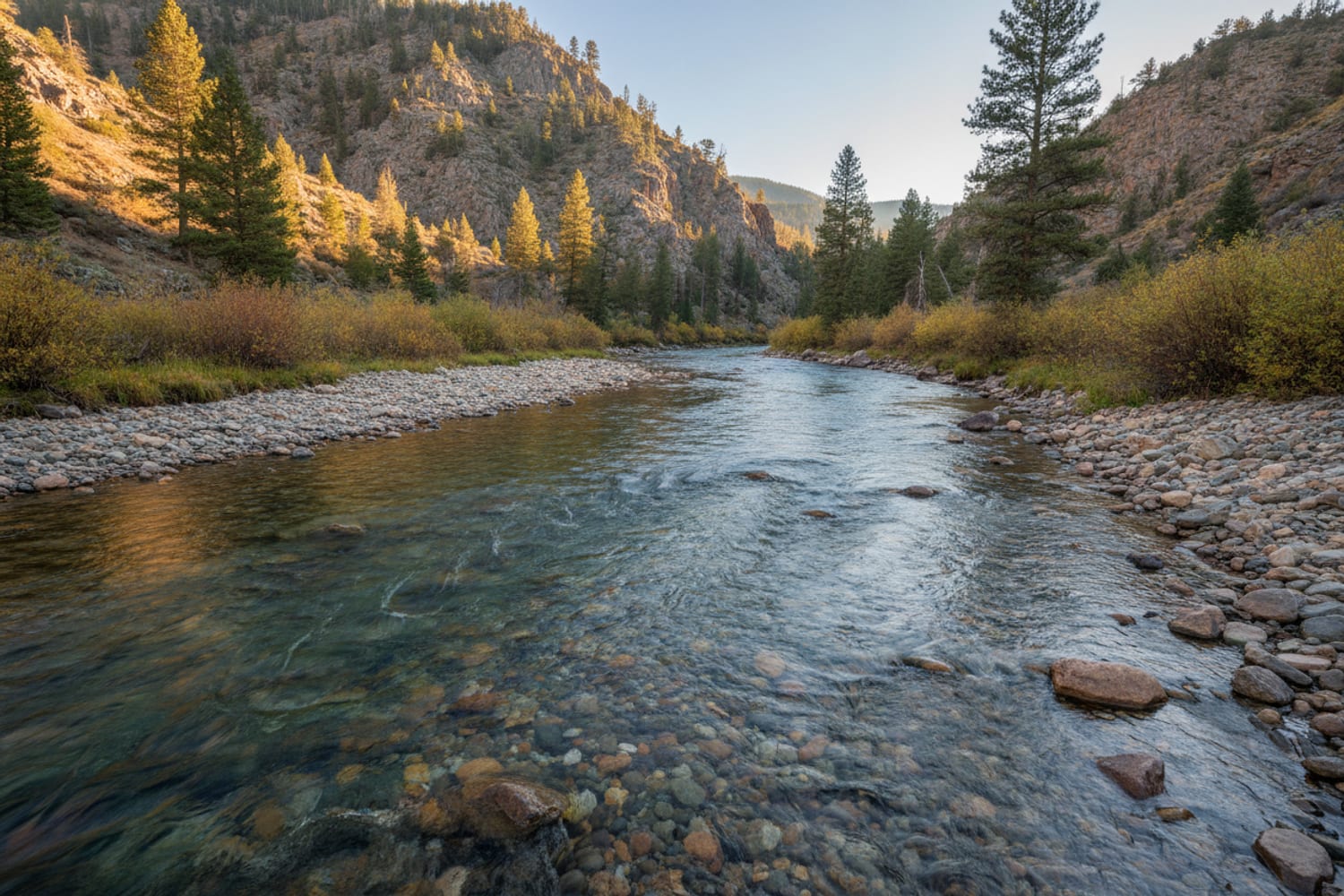
November brings the reset. BWOs show on occasional warm afternoons — if it gets above 45°F and clouds over, check the slower edges for risers — but the dominant pattern is midges, all day. By December, you’re fully back into winter mode, and the calendar has come full circle.
Fish the sheltered runs in late fall and winter: slower water on the inside of bends, eddies behind boulders, deep slots where fish can hold without fighting current. Cold-water fish conserve energy. You need to put the fly in the right seam, on their level, with a dead-drift presentation.
The flies:
- Zebra Midge #18–22
- Mercury Midge #18–22
- Brassie #18–20
- RS2 #20–22 (on warmer days with BWO activity)
November and December see some of the lowest angling pressure of the year on the South Platte. The fish are still there. They’re catchable. The only thing that changed is the air temperature and the bug life — both of which you’re now prepared for.
The Year-Round Principle
The South Platte is a technical river on any given day, but the hatch calendar makes it readable. Midges anchor every season. BWOs bookend the year with two strong windows — spring and fall. PMDs and caddis carry the summer dry-fly season. Tricos and terrestrials reward the angler who gets creative from July into September.
The mistake most visiting anglers make is bringing flies for the season they expect rather than the season they find. Always carry midges. Always check the gauge before you drive. Always watch the sky — the best BWO hatches in April and September come on the days that look worst from your living room window.
The South Platte is one of the most consistent dry-fly tailwaters in the country. This calendar is how I read it. Fish it accordingly — and if a hatch makes a liar out of me on any given day, well, that’s tailwater fishing, and that’s half the reason we keep coming back. For current conditions at each section, check the weekly hatch reports: Deckers, Cheesman Canyon, Dream Stream, and Eleven Mile Canyon.