
In this guide
Ask ten South Platte anglers what belongs in the box and you’ll get eleven opinions and one fistfight. I won’t pretend mine is gospel — but after years of fishing Cheesman Canyon, Deckers, the Dream Stream, and Eleven Mile Canyon, these are the flies I actually reach for. Not the aspirational ones I bought in a fit of optimism and never tied on. The ones that catch fish here, more consistently than anything else.
Twelve patterns. All twelve are available at any quality fly shop, and all twelve are worth carrying every time you fish this system. No secret handshake, no $14 special you have to know a guy for.
The 12 flies, in one breath
The South Platte tailwater box comes down to twelve patterns: three midges (Zebra Midge 20/22/24, RS2 22/24, Griffith’s Gnat 18/20/22), three dries (Sparkle Dun PMD 18/20, Parachute BWO 20/22, Elk Hair Caddis 14/16), three nymphs (Copper John 16/18, Pheasant Tail 16/18/20, Hare’s Ear 14/16), two streamers (Woolly Bugger 8/10, articulated 4/6), plus a Mercury Midge 22/24. The Zebra Midge is the single most important — carry two or three of every size.
The heavy lifting on this river happens under the surface, so the small midges and nymphs go in the cart in multiples; everything else you buy as you lose it.
Midges (3 Flies)
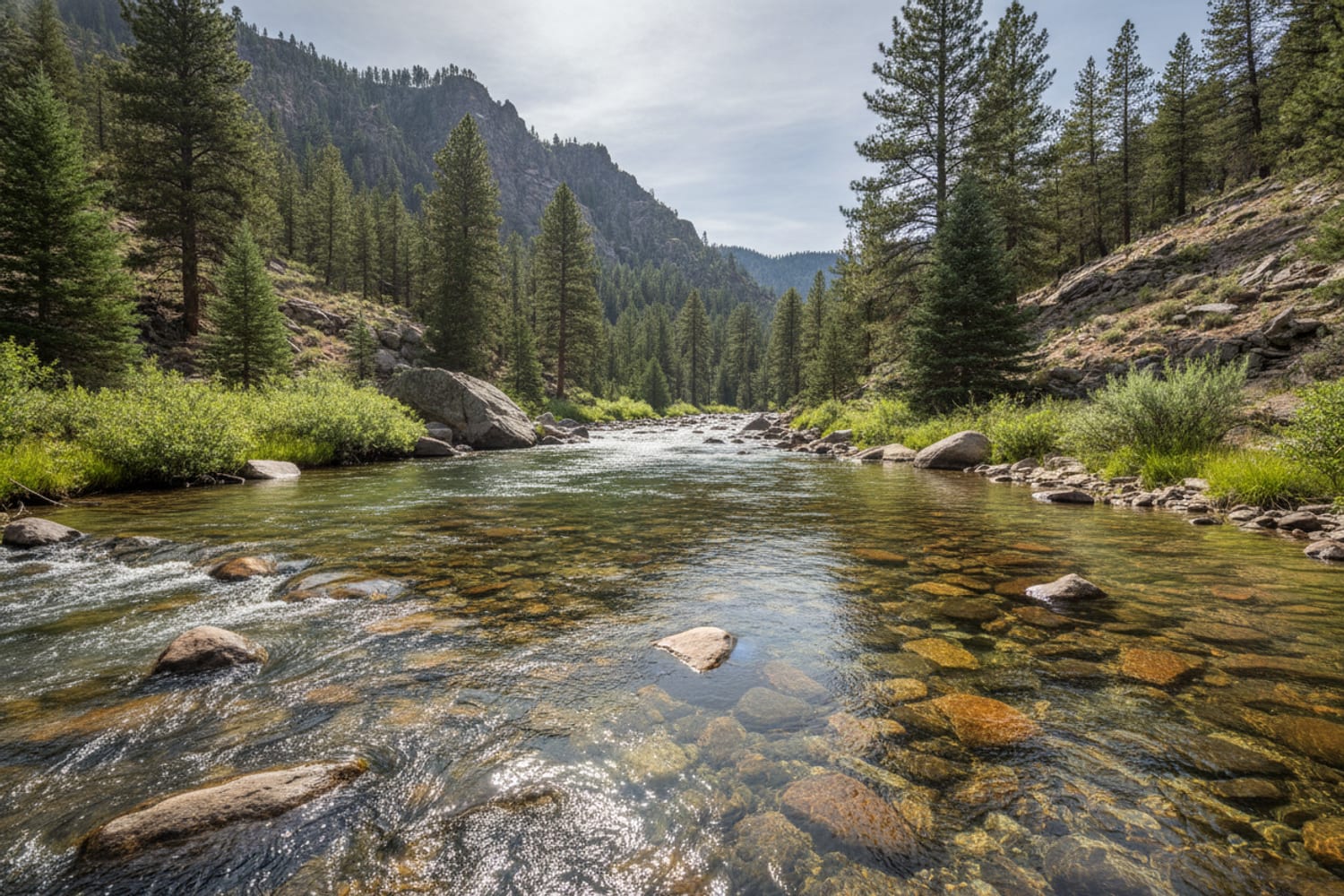
Midges are the foundation of South Platte fishing. They hatch year-round, they’re present in every section, and the trout key on them even when other insects are active. If you show up here without midges, you didn’t forget your flies — you forgot the whole river.
1. Zebra Midge — Size 20, 22, 24
The single most important fly in this box. Black thread body, silver wire ribbing, small tungsten bead in silver. Simple, fast-sinking, and effective in every season and every water condition on the South Platte.
Carry it in all three sizes. Use size 20 as your lead fly — it gets down quickly and catches fish that are holding deep. Drop to 22 or 24 when fish are being selective about size. This fly has accounted for more South Platte trout than any other pattern I know of.
When: Year-round. Morning and midday before hatches establish.
2. RS2 — Size 22, 24
Rim Chung developed the RS2 on the South Platte specifically, and it shows. Gray or olive dubbing body, sparse fiber tail, small wing stub of Antron or Z-lon. It’s an emerger pattern that imitates both midge pupae and small mayfly emergers — versatile enough to cover multiple hatch situations with one fly.
Fish it as a dropper below the Zebra Midge, or alone when fish appear to be feeding in the film rather than subsurface. The RS2 produces when nothing else is working. That’s its reputation and it’s earned.
When: Year-round. Especially effective during BWO and midge hatches.
3. Griffith’s Gnat — Size 18, 20, 22
A peacock herl body palmered with grizzly hackle — it looks like a clump of midge adults on the surface, which is exactly what it imitates. The standard midge cluster dry fly for the South Platte.
Use it when you see consistent risers in slow water and can’t identify a specific pattern they’re eating. The Griffith’s Gnat covers midge cluster activity reliably and it floats well. In winter, on calm days when midges are hatching on the flat water at Deckers, a size 20 Griffith’s Gnat over a feeding fish is as satisfying as fly fishing gets.
When: Winter and early spring primarily. Any time midge adults are clustering on the surface.
Dry Flies (3 Flies)
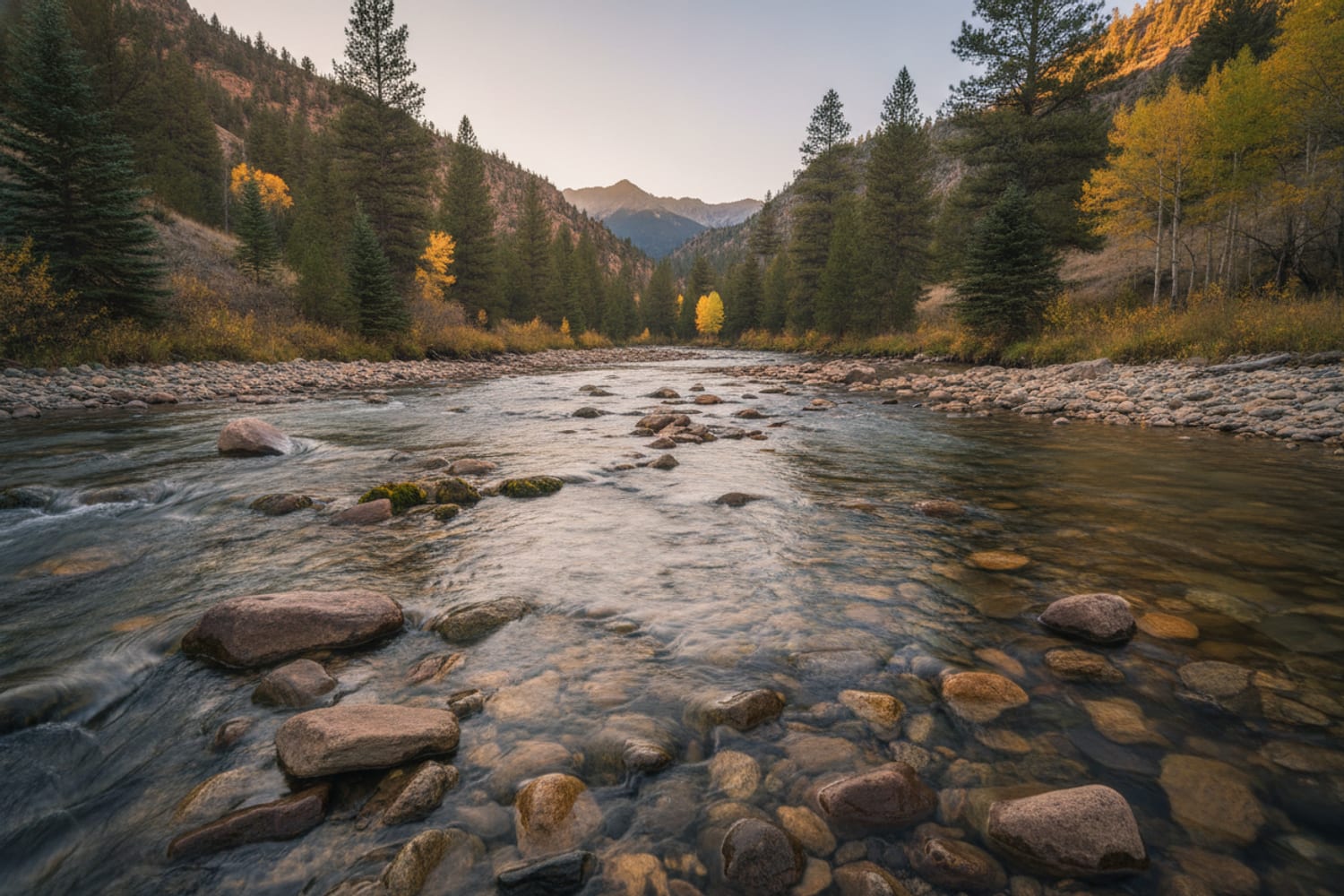
4. Sparkle Dun PMD — Size 18, 20
The South Platte PMD hatch runs from mid-May through June, and the Sparkle Dun is the pattern that catches the most fish during it. Pale yellow dubbed body, CDC or deer hair wing tied upright and slightly forward, a trailing shuck of Antron or Z-lon to suggest the nymphal case.
The trailing shuck is the key detail. Trout on technical tailwaters key on crippled or hatching duns — flies that haven’t fully emerged from their shuck — as much as or more than the adult. The Sparkle Dun’s trailing element gives it a realistic cripple profile that catches fish that refuse a standard parachute pattern.
Carry it in size 18 for normal conditions and size 20 when fish are refusing the larger version. See the Cheesman Canyon guide for specific PMD beat recommendations.
When: Mid-May through June. 10 AM–2 PM during the PMD window.
5. Parachute BWO — Size 20, 22
Blue-Winged Olives hatch on the South Platte in two windows — March through May and September through October — and consistently on overcast days throughout the summer. The parachute style (white or pink post, olive or gray body) is the most reliable BWO dry fly because the post gives you visibility on the water that a standard comparadun doesn’t.
Carry both sizes. Start with 20; drop to 22 if you’re getting refusals from fish that are clearly eating BWOs. The Parachute BWO also works during the early season PMD hatch when the fish are confused between the two insects — a gray-bodied 20 bridges the gap.
When: March–May, September–October primarily. Overcast days in any season.
6. Elk Hair Caddis — Size 14, 16
Caddis hatches on the South Platte run from May through September, building through June and peaking in the summer months. The Elk Hair Caddis is the standard adult caddis pattern — elk hair wing, dubbed body in tan or olive, palmered hackle — and it floats well even in choppy water.
At Deckers and Eleven Mile Canyon, caddis evenings from 5–7 PM in June and July can produce fast and aggressive dry-fly fishing. The Elk Hair Caddis in size 16, dead-drifted or skated across current seams, gets eaten. At the Pueblo tailwater, size 14 covers the larger Spotted Sedge species that dominate there.
When: May through September. Evening primarily.
Nymphs (3 Flies)

7. Copper John — Size 16, 18
The Copper John is a weight-forward attractor nymph — copper wire body, tungsten bead, Flashback wing case — that serves double duty as a strike indicator for a smaller dropper and as a fish-catcher in its own right. It doesn’t imitate any one insect specifically but suggests stonefly and mayfly nymphs broadly.
Use it as the lead fly in a two-nymph indicator rig when you’re fishing through varied water and don’t know exactly what the fish are eating. The copper wire body catches light in current and triggers strikes from fish that are opportunistically feeding rather than locked onto a specific hatch.
When: Year-round. Good searching pattern in pocket water.
8. Pheasant Tail — Size 16, 18, 20
The Pheasant Tail Nymph imitates PMD and BWO nymphs credibly, and it does it in a profile that fish on technical tailwaters accept. Pheasant tail fibers twisted around the hook shank for the body, copper wire ribbing, pheasant tail wing case. Add a bead for weight or fish it unweighted as a dropper in slow water.
During the PMD hatch window, fish a Pheasant Tail #18 as a dropper below your dry-fly indicator. Fish feeding on PMD nymphs ascending to the surface eat this fly. It’s also effective during BWO hatches and as a general searching nymph in spring. This is the nymph that closes out a day when the hatch is on the way but not yet started.
When: Year-round. Best during PMD and BWO hatch windows.
9. Hare’s Ear — Size 14, 16
The Gold-Ribbed Hare’s Ear is the most versatile searching nymph in existence. Dubbed hare’s ear body with guard hairs left in for a scruffy, buggy profile, gold wire ribbing, hare’s ear wing case. It suggests caddis larvae, stonefly nymphs, and mayfly nymphs all at once.
In Cheesman Canyon’s pocket water and Eleven Mile’s riffle sections, a size 14 Hare’s Ear fished deep produces fish that don’t respond to more specific patterns. It works when you don’t know exactly what’s happening subsurface and need a fly that covers multiple possibilities. Fish it with a split shot to get it into the strike zone in faster water.
When: Year-round. Best in faster pocket water and riffle sections.
My take
If this box went into the river tomorrow — and the way I wade, that’s not entirely hypothetical — the midges and small nymphs are what I’d replace on the drive home. The dries and streamers are the fun half of the list, but the heavy lifting on this river happens under the surface, on flies smaller than your thumbnail. So when I restock, the 20s and 22s go in the cart in multiples and everything else gets bought as it’s lost. Losing your last Sparkle Dun stings; losing your last Zebra Midge ends the day.
Streamers (2 Flies)
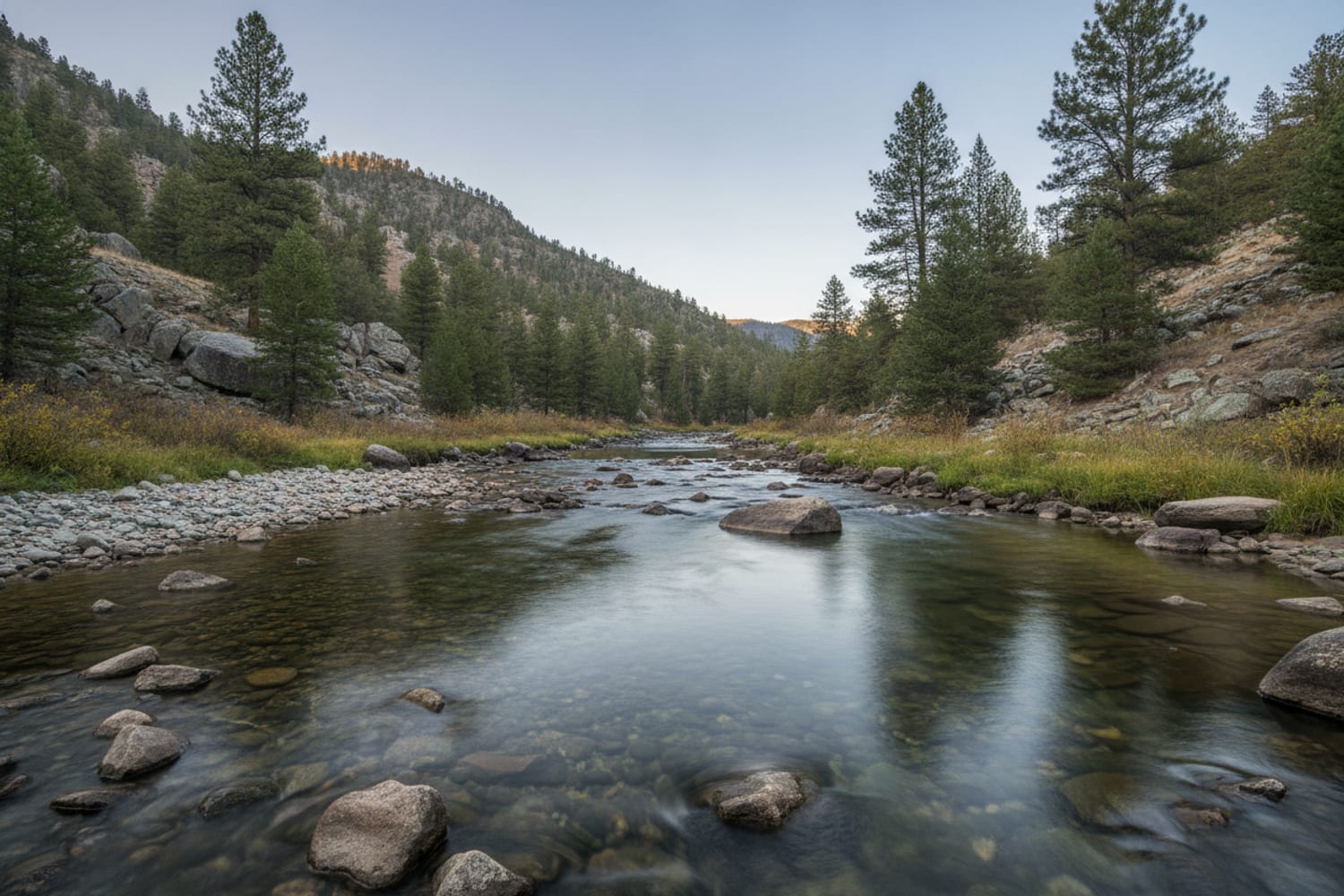
10. Woolly Bugger — Size 8, 10
Black or olive, tungsten cone or bead head, marabou tail, palmered hackle. The Woolly Bugger is the standard South Platte streamer and it’s standard for a reason — it catches large trout consistently.
In Eleven Mile Canyon’s lower section, the aggressive browns in the deep pocket water will eat a size 8 black Woolly Bugger swung on a downstream cast in low light. At Cheesman, streamers produce during the low-light windows when technical nymph fishing slows. Don’t over-think it: black in off-color water, olive in clear water.
When: Morning and evening year-round. Best September through November and February through March.
11. Articulated Streamer — Size 4, 6
The big fly. A two-hook articulated pattern — Sculpzilla, Sex Dungeon, or Circus Peanut style — tied in tan, rust, or black. This is what you throw when you’re specifically targeting the largest trout in the system.
The lower Eleven Mile Canyon and the deep slots of the Dream Stream corridor hold brown trout in the 18–24” range that respond to large articulated streamers stripped aggressively. This is not subtle fishing — it’s predator fishing. Strip hard, vary the cadence, and expect explosive takes from fish that mean it.
When: Early morning, before hatch windows. September–November peak.
The Bonus Pattern
12. Mercury Midge — Size 22, 24
A glass bead variation of the standard midge pupa. The glass bead creates a luminescent bubble effect that matches a midge pupa trapped in its shuck, ascending toward the surface. It’s not always the most-productive fly in the box, but it consistently catches fish that refuse every other midge pattern.
Fish it as the dropper in a two-fly midge rig. When the Zebra Midge is producing refusals, switch the dropper to a Mercury Midge and see if the response changes. Frequently, it does. This fly earns its spot in the box not by producing the most fish, but by catching the specific fish that nothing else will.
When: Year-round. Specifically when fish are refusing the Zebra Midge.
The Box Summary
| Pattern | Sizes | Season | Role |
|---|---|---|---|
| Zebra Midge | 20, 22, 24 | Year-round | Primary nymph |
| RS2 | 22, 24 | Year-round | Midge/BWO emerger |
| Griffith’s Gnat | 18, 20, 22 | Winter/Spring | Midge dry cluster |
| Sparkle Dun PMD | 18, 20 | May–June | PMD dry fly |
| Parachute BWO | 20, 22 | Spring/Fall | BWO dry fly |
| Elk Hair Caddis | 14, 16 | May–Sept | Caddis dry |
| Copper John | 16, 18 | Year-round | Searching nymph |
| Pheasant Tail | 16, 18, 20 | Year-round | PMD/BWO nymph |
| Hare’s Ear | 14, 16 | Year-round | Searching nymph |
| Woolly Bugger | 8, 10 | Year-round | Standard streamer |
| Articulated | 4, 6 | Sept–Nov | Trophy streamer |
| Mercury Midge | 22, 24 | Year-round | Selective midge dropper |
Twelve flies. Two or three of each size. That’s enough to fish every hatch, every section, and every condition on the South Platte system. Will I still walk into the fly shop and walk out with a dozen patterns I “needed”? Of course. But if I’m being honest, it’s these twelve that do the work. For a deeper dive into tying the key patterns yourself, the South Platte fly tying guide covers eight essential patterns with full recipes. The South Platte hatch calendar shows exactly when each of these fly categories is most relevant throughout the year.
Some links in this article are affiliate links. Read our full disclosure.