
In this guide
Deckers at a glance
Deckers is a year-round Gold Medal tailwater on the South Platte below Cheesman Reservoir, about an hour from Colorado Springs and an hour and a half from Denver — fish it by nymphing small midges, BWOs, and PMDs (#18–24 on 5X–6X) with a 9-foot 5-weight, ideally when flows run 150–400 CFS (USGS gauge 06701900). It’s flies and lures only, and the best public water runs from Deckers Bridge down to Trumbull.
That’s the recipe. Everything below is why it works and which months lie to you.
Why Deckers Is My Home Water
I fish a lot of rivers. The Arkansas at Pueblo, the Dream Stream, Eleven Mile, Cheesman. All worth your time. But when someone asks me where I actually go — where I keep coming back to, where I’ve put in more days than I’d care to admit to my wife — the answer is Deckers.
It’s about an hour from Colorado Springs, an hour and a half from Denver. The drive down County Road 126 from Pine Junction is one of those approaches that lets you decompress before you even wet a line. By the time you see the South Platte carving through the canyon, you’ve already talked yourself out of the bad day at work and into a good one on the water.
Deckers sits below Cheesman Reservoir, and that tailwater influence is what makes this stretch work year-round. The reservoir regulates temperature and flow in ways that hold fish through conditions that would shut down a freestone river entirely. Fifteen-plus miles of Gold Medal water. Wild rainbows and browns that see a lot of pressure and respond accordingly — this isn’t a river where sloppy casts get rewarded.
That’s exactly why I keep coming back.
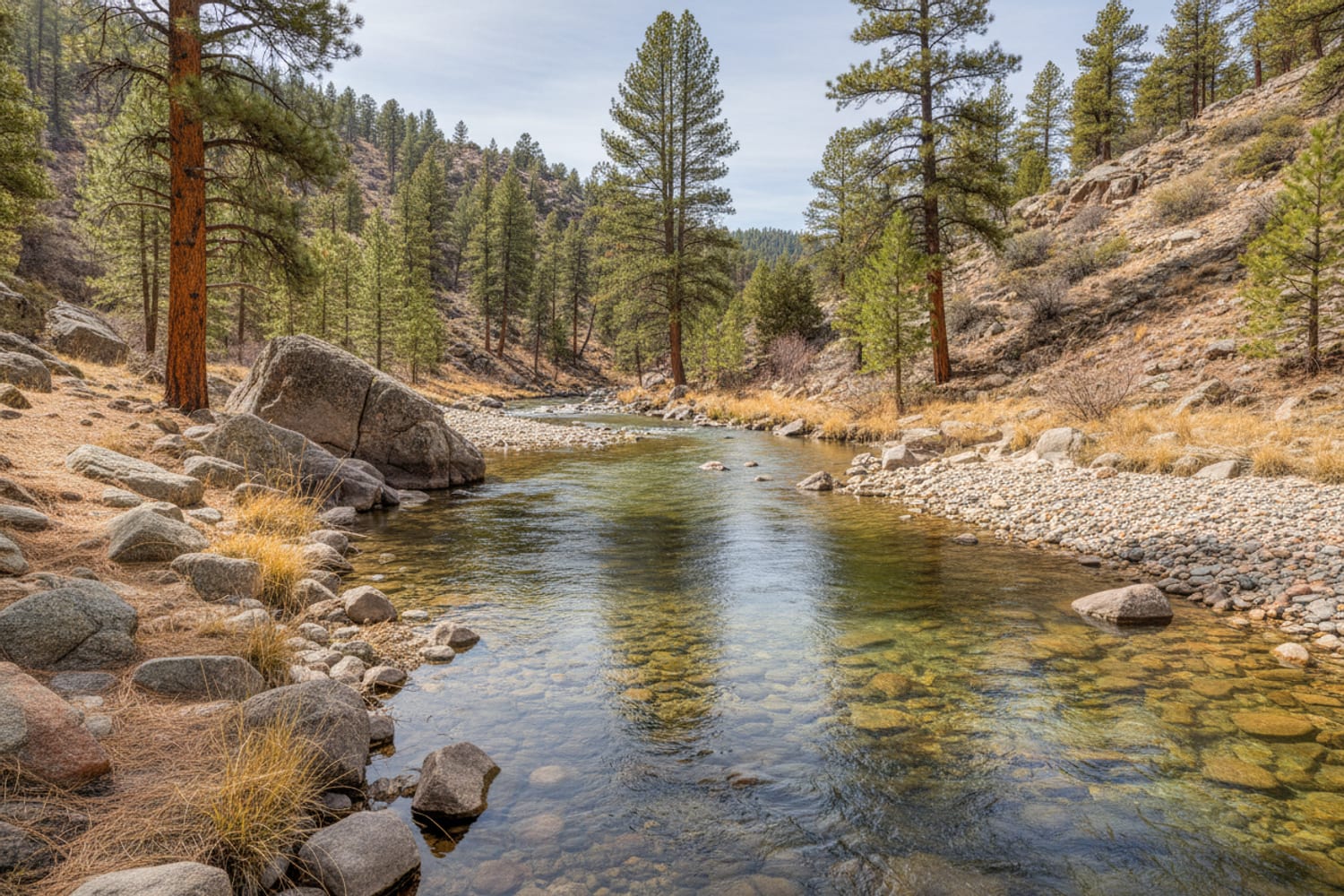
How do you fish Deckers?
Nymph it. Deckers is a year-round tailwater below Cheesman Reservoir, and the pressured wild trout eat small — midges, BWOs, and PMDs in the #18–24 range on 5X–6X, drifted clean through the deeper runs and seams. The margins here are technical: a drag-free drift outfishes a pretty cast every day. Best public water runs from Deckers Bridge down to Trumbull.
Getting There
From Colorado Springs: Take US-24 west through Woodland Park, then north on CO-67. Roughly 50 miles and a little under an hour — you do not need to go up to Denver or out to US-285.
From Denver: Take US-285 southwest. At Pine Junction, turn south onto County Road 126.
Either way, follow CR-126 down into the canyon — the road parallels the river for most of the run, which makes access straightforward once you know the pull-offs.
The three main access points are Deckers Bridge, Trumbull, and Scraggy View. Each gives you different water.
Deckers Bridge is the most accessible and the most crowded on weekends. The parking fills fast in summer. Get there early or fish a weekday. The water right at the bridge gets hammered, but walk upstream or downstream a quarter mile and the crowds thin — most folks won’t wander far from the truck, and I have quietly built a fishing life on that fact.
Trumbull is the middle stretch and my preferred starting point when I want space. The walk in keeps the casual crowd away. Deeper runs and more defined seams — this is where I’ve had some of my best dry fly afternoons in late summer.
Scraggy View is the downstream end of the special-regulation water — the picnic ground is the boundary itself, and it’s the farthest point in the reach from Cheesman Dam. Below it the rules change, so know which side of the sign you’re standing on.
Reading the Water
Deckers isn’t complicated to read, but it rewards precision over coverage. The fish sit in specific places — where trout hold and feed — and don’t move much for a bad drift.
The Lone Rock bends are classic tailwater structure — outside current deflecting into deep, oxygenated holding water. Work the seam where fast water meets slow. The Bridge Crossing cliffs create a channel that concentrates fish in the inside bend — reach the far bank if you can do it cleanly.
The deeper runs above Deckers are where I look when flows are on the higher end. Fish spread out into slower, deeper water when flows push up. At lower flows, tight against the banks and in shallow riffles is often where they’re feeding.
Flow and Conditions
The USGS gauge for Deckers is 06701900 — South Platte River below Brush Creek near Trumbull (the closest gauge to Deckers). Bookmark it and check it before every trip.
My ideal range is 150–400 CFS. In that window the wading is manageable, fish are in predictable spots, and you can reach all the water you want.
Below 100 CFS the river goes low and gin clear. Fish are spooky and harder to approach. You can still catch them — you just have to earn it with long leaders, fine tippet, and an upstream approach.
Above 600 CFS, I don’t bother. Fish are displaced, wading gets dangerous in stretches, and your fly is fighting too much current. Wait it out or drive to Pueblo. There’s no medal for swimming.
Flows typically peak with snowmelt in May and June. By July the reservoir manages releases more tightly and you get into consistent 150–300 CFS through September.
Regulations
From the lower boundary of the Wigwam Club down to Scraggy View Picnic Ground, Deckers is flies and lures only (no bait), with a 2-fish bag limit and a 16-inch minimum. That limit is this stretch’s own regulation. Gold Medal is a designation for the quality of the fishery, and it doesn’t set limits by itself. Upstream, Cheesman Canyon is catch-and-release only. Check current CPW regulations before you go — the boundary markers are posted but the regs are worth reading in detail before your first visit.
In practice, most serious anglers here release everything. These fish are too good to keep.
Hatches
Deckers fishes year-round, and understanding the hatch calendar is the difference between a good day and a blank one.
Midges are the constant. Every month, every condition, there are midges. Size 20–24 in gray, olive, red, and black. When nothing else is happening, a midge cluster or a double midge nymph rig is your baseline.
Baetis (Blue-Winged Olives) shine in spring and fall on overcast days. March through May and September through November are the prime windows. A size 18–22 BWO nymph fished just below the surface during a hatch is as reliable as anything I fish here. The fall BWO season guide covers why October on the South Platte is the best dry-fly fishing of the year.
PMDs come on in May and June — one of the best events of the year on this stretch. Fish actively looking up, predictable afternoon timing, manageable fly selection. Size 16–18 PMD emergers and comparaduns.
Caddis run late May through July. Elk hair caddis at dusk. If you’re on the river during this window in the evening and not fishing caddis, you’re leaving fish on the table.
Tricos are a late summer specialty — mid-July through September, early morning only. On the water before 7 AM, clouds of tiny Trico spinners, fish sipping in the flats. Size 22–24. When it’s happening it’s some of the most visual fishing Deckers offers.
Stoneflies make an appearance in late spring. Not the defining hatch here that it is on some Colorado rivers, but worth having a size 8–10 golden stone in the box.
My take
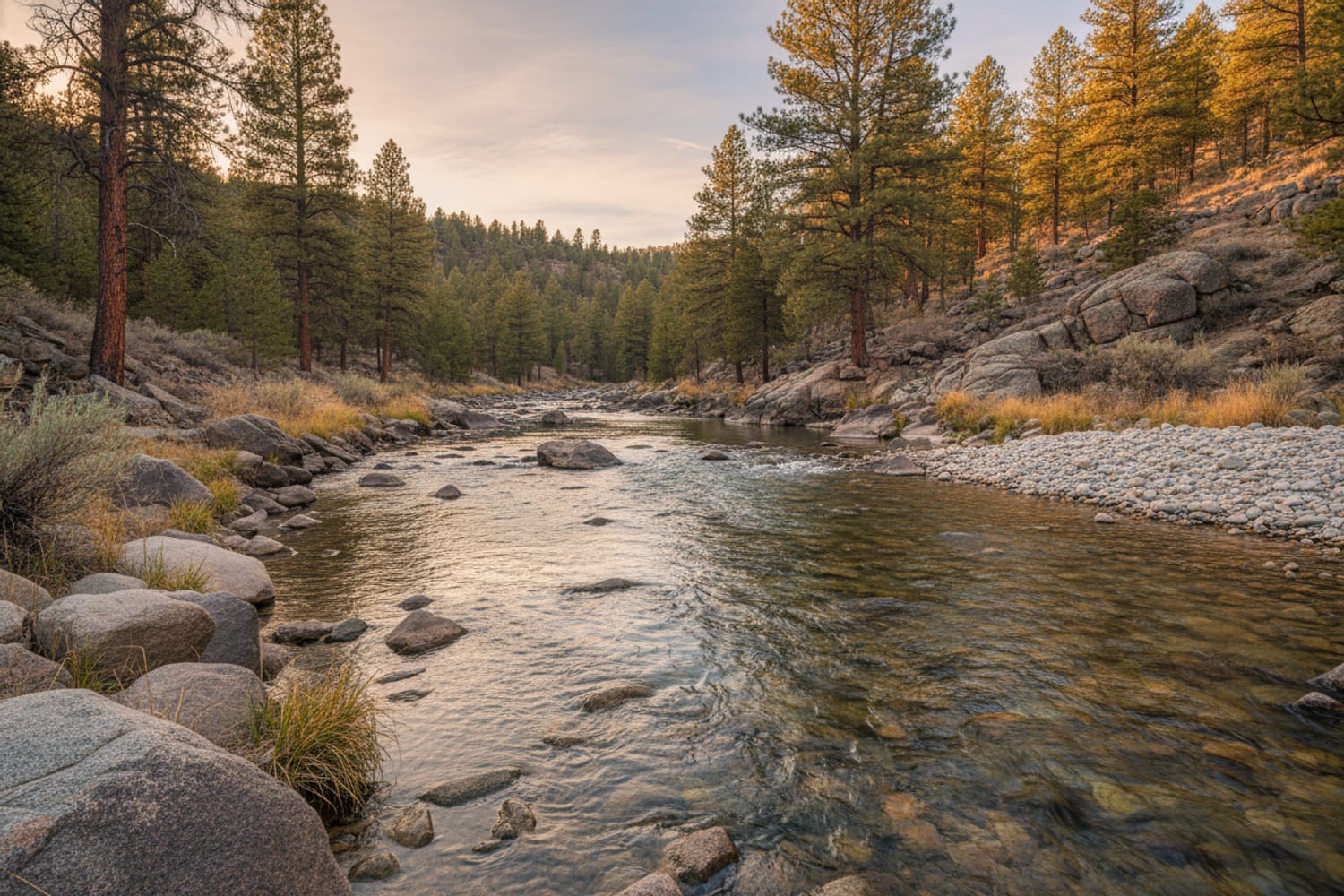
The hatch calendar above is honest, but it buries the lede: Deckers pays you back for showing up between the headline events. Midges hatch every month of the year, which means a gray midwinter morning here is a fishing day, not a consolation prize — and most anglers only believe in May. I’ve put in more days on this stretch than I’d care to itemize for my wife, and the ones I replay weren’t all famous windows. Pick a hatch from the list if you can. If you can’t, bring the midge box and come anyway. The fish never learned which months are off-season.
Fly Selection
My Deckers box is built around nymphs first. The fish feed subsurface the majority of the time, and a well-presented double nymph rig is the most consistent producer across all conditions.
Standard nymph rig:
- Point fly: RS2 or Jujubee midge, #20–22
- Dropper: Pheasant tail or WD-40, #18–20
- Indicator or tightline depending on depth and speed
- 5X or 6X fluorocarbon tippet
When flows are off-color or higher, I’ll swap in a larger anchor — a #14 scud (pink or olive) or a San Juan Worm. Not glamorous, but effective. Egg patterns in early spring and late fall can be the trigger when nothing else produces.
For dries, a comparadun or Sparkle Dun in whatever size matches the hatch. The fish at Deckers are educated — pattern quality matters more than having fifteen variations of the same fly. Need to restock on the way down? The best fly shops near the South Platte will set you up with the bugs that are working right now.
Flies I don’t leave home without:
- RS2 — gray and olive, #20–22
- Jujubee midge — black, #22–24
- WD-40 — tan, #18–20
- Pheasant tail nymph — #16–20
- Pink scud — #14
- Elk hair caddis — #14–16
- BWO comparadun — #18–20
- PMD emerger — #16–18
- Trico spinner — #22–24
Gear Notes
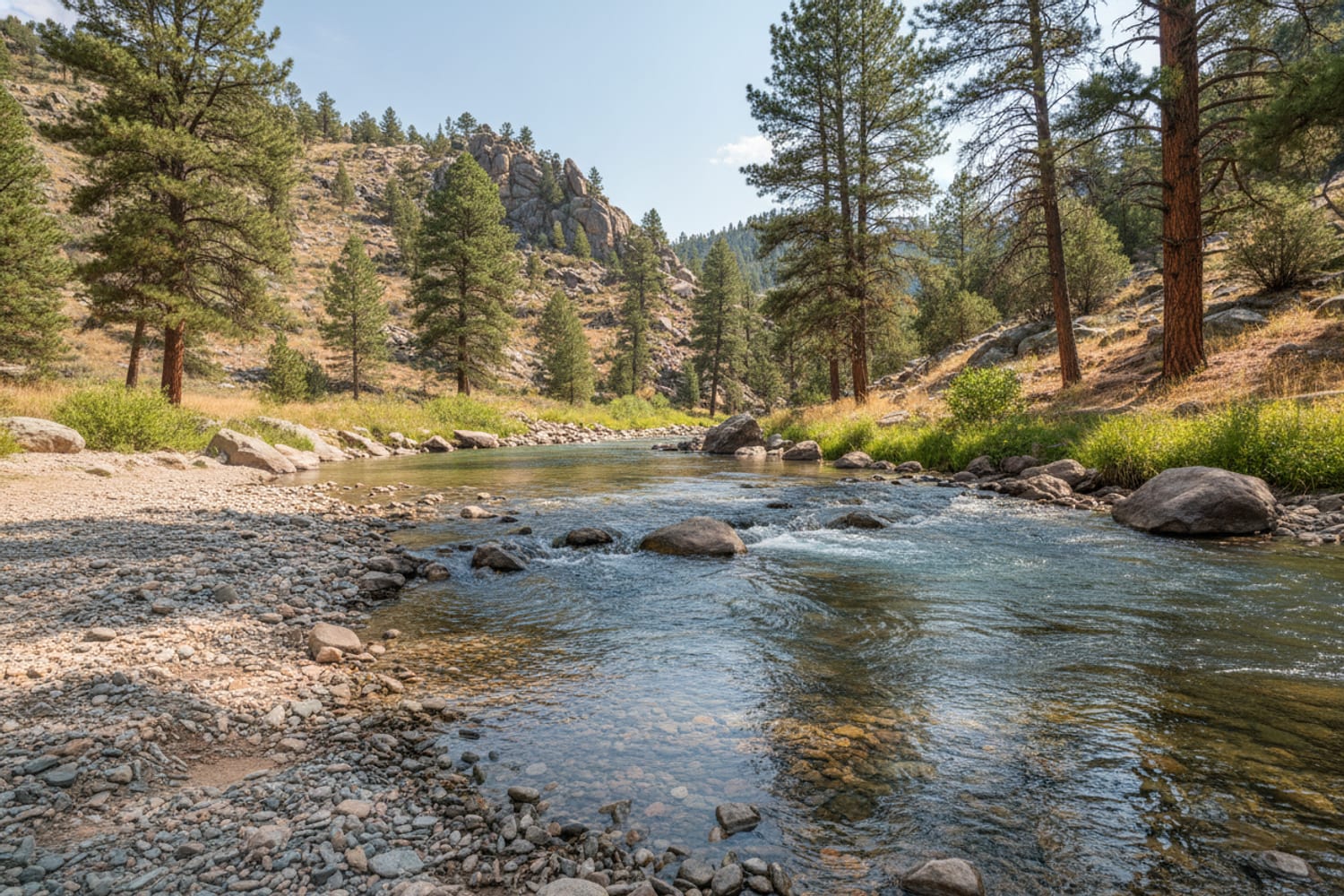
A 9-foot 5-weight covers most situations at Deckers — enough rod to mend line on the longer runs and light enough to fish fine tippet without breaking off fish. For tight technical nymphing I’ll sometimes drop to a 10’7” 3-weight, but the 5-weight is the everyday answer. If you’re considering euro nymphing the South Platte, the Deckers flat water sections are a good place to get comfortable with the technique before tackling the Cheesman pocketwater.
Wading: Deckers is rocky and slippery, especially in the canyon sections. Felt or rubber soles — whatever you wear needs grip. The cobbled bottom accumulates algae in summer and fall. I fish rubber soles without studs and just wade carefully on the slick stretches.
Polarized glasses are mandatory. Sight-fishing is part of how you fish this river well. If you can’t see fish, you’re guessing at where to present.
It’s the river I keep coming back to when I want to share what fly fishing actually feels like at its best — technical enough to stay interesting, productive enough to stay motivated, and close enough to home that a weekday morning is a real option. For a full picture of insect activity throughout the year, the South Platte hatch calendar shows the seasonal progression across all the sections.
When to Go
The honest answer is any time you can go. Deckers is open year-round.
Best overall: September through November. Flows are stable, crowds thin out, baetis hatches are reliable, and fish are feeding aggressively heading into fall. This is the window I protect on my calendar.
Best for hatches: May through July. Multiple hatches overlapping, fish at the surface, long evenings on the water.
Hardest conditions: Spring runoff (late April through mid-May depending on snowpack) and summer weekends when the parking lot turns into a social event. Both are fishable — just know what you’re getting into.
Deckers is worth every trip. An hour from the city, Gold Medal water, and fish that will make you better if you let them — and humble you on the days you don’t. I keep going back anyway. That should tell you something.