
In this guide
Here’s the thing about the caddis hatch on the South Platte: when it’s good, it’s chaos, and that’s exactly why I love it. This isn’t the PMD or BWO hatch. The fish feeding on caddis aren’t the subtle, selective risers of midge season — they chase, they splash, they miss, they eat again. All the calm technical precision you’ve been practicing goes out the window and you’re just running a dry fly as fast as you can keep it floating.
I look forward to caddis season more than any other hatch on the river. I’ll happily trade a month of squinting at size-24 midges for a few weeks of trout that act like they’ve never seen a meal before. So here’s when it happens, what to throw, and where to stand.
The short answer
The South Platte caddis hatch runs mid-May through late July, peaking in June, with the best surface action in the late afternoon (be on the water by 2 PM, prime window 4–6 PM). The main bug is the Spotted Sedge, sizes 14–18 — fish an Elk Hair Caddis, X-Caddis, Parachute Caddis, or a caddis larva/pupa, and set up on the Deckers main flat, the Cheesman Canyon riffles, or the tailwater below Elevenmile Canyon Dam.
That’s the recipe. Everything below is when, what, and where in detail — but if you just came to know whether to clear your June evenings, clear them.
When the Caddis Hatch Runs
The South Platte caddis starts in mid-May and runs through late July, with the peak typically falling in June. Timing varies by elevation — the Deckers stretch sees caddis activity before Cheesman Canyon, which is slightly higher and cooler. The Dream Stream gets caddis activity later than both. The South Platte hatch calendar shows exactly how caddis timing stacks up against the PMD and BWO windows at each section.
The hatch is most intense in the late afternoon. Plan to be on the water by 2 PM during peak caddis season. The fish know what’s coming and start showing interest an hour before the flies actually appear. By 4–6 PM on a warm June day, the surface can be alive from bank to bank.
Evening hatches continue until dark during the best weeks of June. If you’ve never fished the South Platte in the last hour of light during a caddis hatch, put it on the list.
The Species and the Look
The workhorse caddis on the South Platte is the Spotted Sedge (Hydropsyche) — the summer bug that drives most of the surface action here, sizes 14–18, olive to tan body, gray wing. Brachycentrus (the famous Mother’s Day caddis) is present too, but the blanket Mother’s Day hatch that fly fishers chase belongs to the Arkansas around Pueblo and Cañon City in late April and early May, not the South Platte. Down here, think Spotted Sedge first. Fish the smaller end of that range at Cheesman where selective trout have been educated by pressure; fish the larger end at Deckers where fish are willing to move for a bigger target.
The adults skitter across the surface when they emerge, which is what drives the violent surface feeding. Fish are chasing moving targets. A dry fly that drags slightly is not always a problem during a caddis hatch — sometimes the movement triggers the strike. This is one of the few situations on the South Platte where a perfect dead drift isn’t mandatory.
Flies That Work
Elk Hair Caddis (size 14–18): The standard. Tan or olive body, elk hair wing, hackle collar. Dead-drift it, skitter it, fish it wet in the surface film as an emerger. Versatile enough to cover most caddis situations on the South Platte.
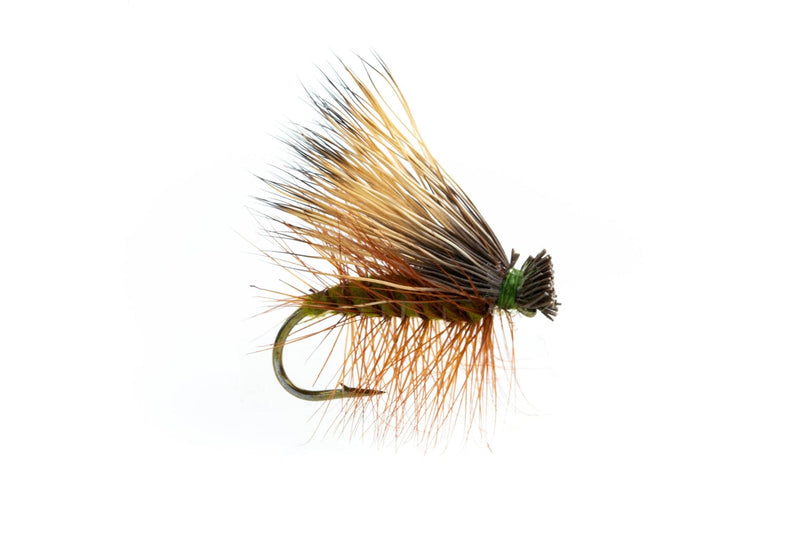
X-Caddis (size 16–18): Better emerger imitation. The trailing shuck gives it a specific look that selective Cheesman fish key on when they’re eating cripples in the film rather than adults on the surface. I keep both the X-Caddis and Elk Hair Caddis in my box and rotate based on what the fish seem to be eating.
Parachute Caddis (size 16): High visibility on rough water. The parachute post lets you track the fly in fast current where the Elk Hair disappears. Good for the riffled sections of Deckers where the fish are crashing emergers.
Caddis larva/pupa (size 16–18): Before and after the hatch, fish are on the subsurface stage. A soft-hackle wet fly in olive or tan fished on a downstream swing through the head of a pool catches fish before the adults appear and after the main hatch winds down.
All four patterns are available pre-tied at The Fly Fishing Place — grab the Elk Hair Caddis #16 and X-Caddis #16 to cover both situations. Our link gets you 15% off.
My take
If someone I cared about wanted to fall in love with dry-fly fishing, I wouldn’t start them on a technical midge morning — I’d hand them an Elk Hair Caddis on a June evening and let the river do the recruiting. This is the most forgiving surface fishing of the year: fish on the move, a little drag forgiven, enthusiasm counting for more than precision for once. I spend most of the season being careful and exact. These few weeks are when I get to just fish — which is probably why I guard them the way I do.
Where to Be on the South Platte
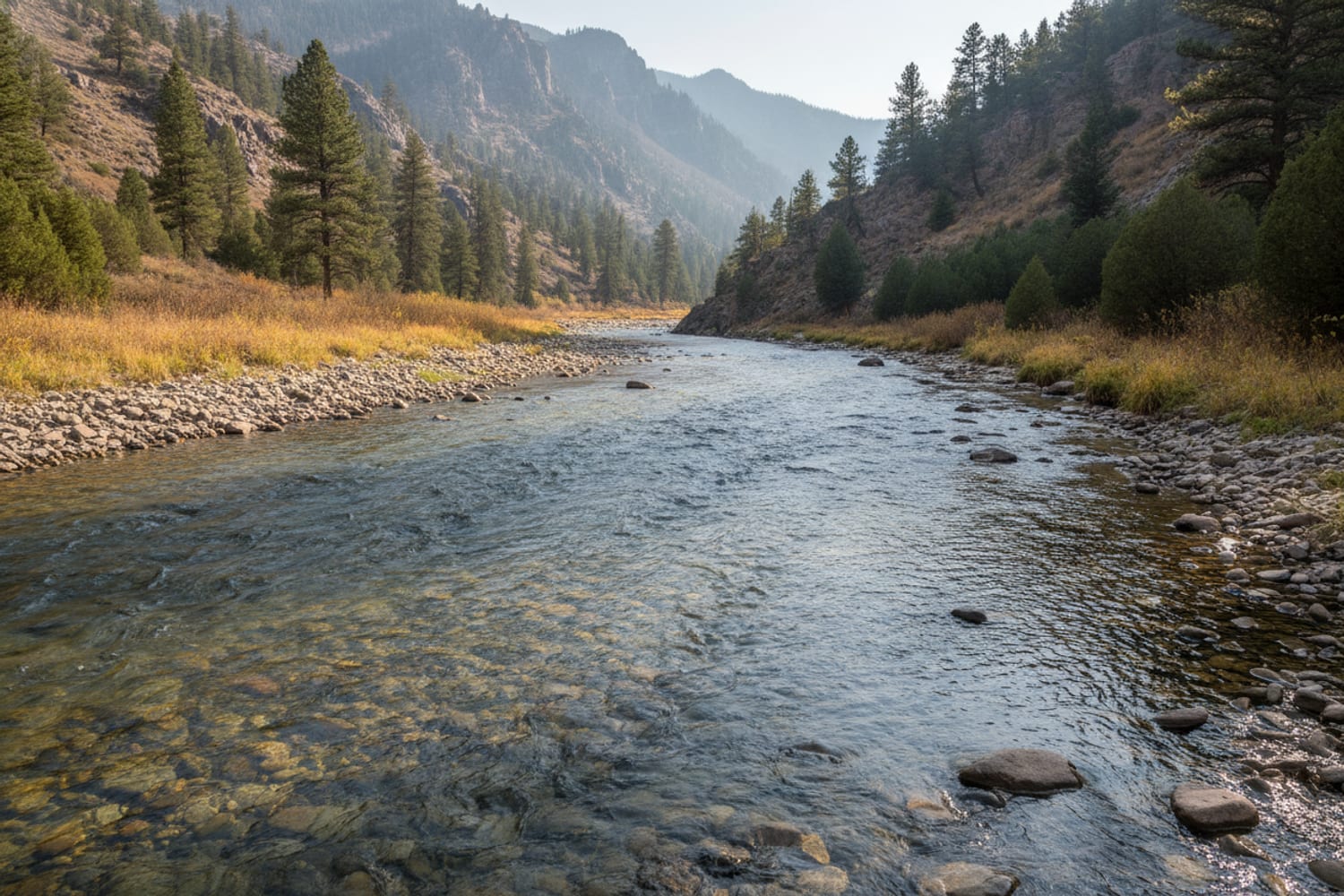
Deckers main flat: The wide open water at Deckers is the best caddis dry-fly water on the South Platte. The flat gives you room to cast, fish concentrate in feeding lanes, and the fish are aggressive enough during a caddis hatch to eat a well-presented dry without the extreme selectivity of Cheesman. Work the Deckers flat from upstream down during the hatch, covering each lane methodically.
Cheesman Canyon riffles: The broken water at the top of the canyon is prime caddis country. Fish stack in the foam lines and along the seam edges. The riffle water is forgiving of minor drag and the fish can’t see the leader as clearly. Easier caddis fishing than the Cheesman flat water.
Below Elevenmile Canyon Dam: The tailwater below Elevenmile sees good caddis activity in June. Less pressure than the Deckers stretch and fish that haven’t seen as many elk hair caddis flies. Worth the drive during peak hatch weeks.
Reading the Rise Forms
During a caddis hatch, not all rises are the same. The splash-and-crash rises are adults being chased across the surface. The subtle sip rises near the bank are crippled emergers stuck in the film. Fish both differently.
For the splashy chasers, cast upstream of a rising fish and let the fly drift through its cone — or skitter it gently to imitate the moving adult. For the film feeders, a dead-drift X-Caddis or wet fly in the film at the specific rise location is the right approach.
When fish are crashing caddis in every direction, the instinct is to cast everywhere at once. I know it well — I’ve spent whole evenings firing at the whole river and catching nothing but my own backing. Resist it. Pick one rising fish, present to it specifically, and catch it. Then pick another. The chaos of a good caddis hatch rewards methodical presentation over frantic random casting, every time.

The caddis hatch is the one time I tell friends to clear their schedule, and the one time I’m a little ashamed of how good I’ve gotten at finding excuses to do the same. When it’s good on the Deckers flat in June, everything else can wait — the lawn, the inbox, the better judgment. For a complete breakdown of what’s in the fly box from spring through fall, the South Platte fly box guide covers the caddis patterns alongside everything else the system demands. See you on the flat.