
In this guide
I resisted euro nymphing for two seasons, and I’ll be honest about why: stubbornness. I grew up fishing an indicator, I knew how to read one, and I didn’t see why I needed a 10-foot leader, a sighter, and a whole new way of thinking about the presentation. Then I watched a guy work the pocketwater in Cheesman Canyon with a tight-line setup and pull five fish out of a run I’d blanked on twice that same morning.
That was enough. Pride is a luxury you can’t afford when someone’s catching fish 20 feet upstream of you. I went home and built a euro rig.
The short answer
To euro nymph the South Platte, fish a 10-foot-or-longer rod with a sensitive tip — I run a Diamondback Gen IV 10’7” 3wt — on a mono rig tied to the fly line (30 feet of level 3X mono, a tri-color sighter, a tippet ring, then 5X/6X fluorocarbon tippet), with two flies: a heavier point (size 16–18 Czech nymph or bead-head hare’s ear) and a lighter dropper 14–18 inches above (size 20–22 midge or zebra midge). It wins on drift control at 15–35 feet in complex water like Cheesman pocketwater; switch back to an indicator for long flat lanes at Deckers or heavy split-shot in high water.
Everything below is why each piece matters — but that’s the rig.
Why Euro Nymphing Works on the South Platte
The South Platte is a technical tailwater. The fish are pressured, they’ve seen more indicators float over their heads than you’ve had hot dinners, and they’re picky about what they eat and where. The advantage of euro nymphing isn’t the fly — it’s the drift control.
With an indicator rig, your strike indicator sits on the surface and drags through conflicting currents. You mend to control it, but the window between a good mend and a dead drift is narrow and brief. In Cheesman Canyon’s pocketwater — where you’re fishing a 3-foot slot between two micro-eddies — an indicator is fighting you.
With a tight-line setup, the line from rod tip to nymph is controlled entirely by you. There’s no surface current pulling your indicator off course. The sighter tells you what the fly is doing; you control speed by how fast you advance the rod downstream. A good tight-line drift in Cheesman pocketwater is dramatically better than anything you can do with a float.
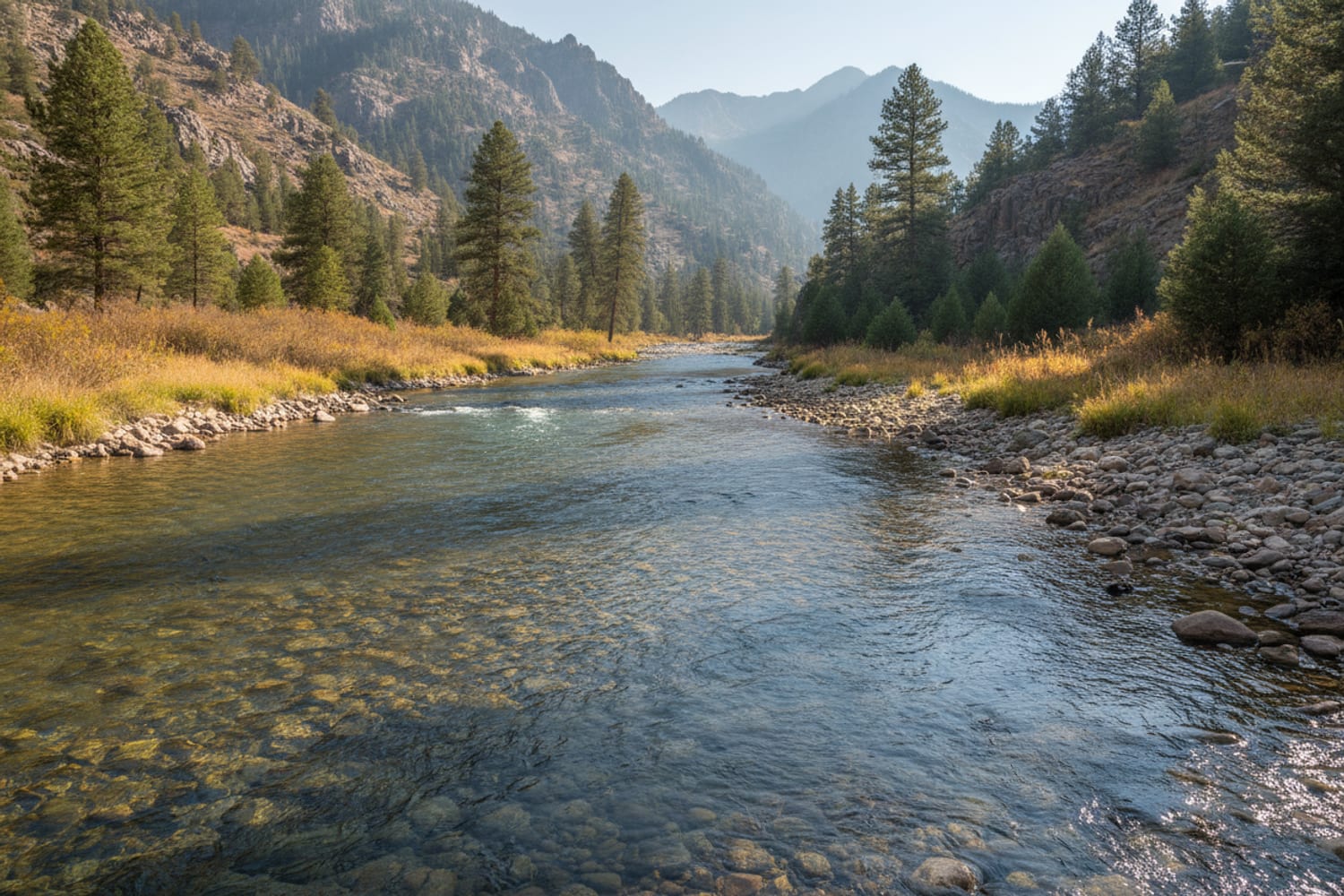
The Setup
To do euro nymphing right, you want a rod that’s 10 feet or longer with a genuinely sensitive tip — a dedicated euro rod, not a standard trout rod. The length gives you the reach to control the drift without your arm doing the work. The softer tip transmits everything: the fly ticking bottom, the current change under the sighter, the hesitation of a take before it becomes anything you’d see. I fish the Diamondback Gen IV 10’7” 3wt and the difference between it and a standard 9’ rod is not subtle.
Leader: I fish a mono rig, and it’s a simple one. From the fly line down:
- 30 feet of Adams Euro Nymph Mono in 3X (level, one diameter, about .008 inch per Adams)
- 24-inch section of tricolor sighter material (I run Umpqua Perform X Tri-Color, red/black/green)
- A tippet ring
- 4 to 6 feet of 5X or 6X fluorocarbon tippet to the flies
The sighter sits above the water. You watch it, not a float. The color bands make micro-movements visible at 30 feet. The full build, piece by piece, is in building a euro nymphing rig from scratch.
Flies: I run two flies in Cheesman 90% of the time — a heavier point fly (size 16–18 Czech nymph or bead-head hare’s ear) with a lighter, smaller dropper 14–18 inches above (size 20–22 midge larva or zebra midge). The point fly gets to the bottom and keeps the dropper in the feeding zone. The euro nymph box I actually fish on the South Platte breaks down every pattern, size, and which one earns the point.
Reading Current Seams for Tight-Line Fishing
The read changes slightly with tight-line. You’re not placing an indicator over a lane and letting it drift — you’re following the current seam with your rod tip and maintaining tension in the leader.
Look for:
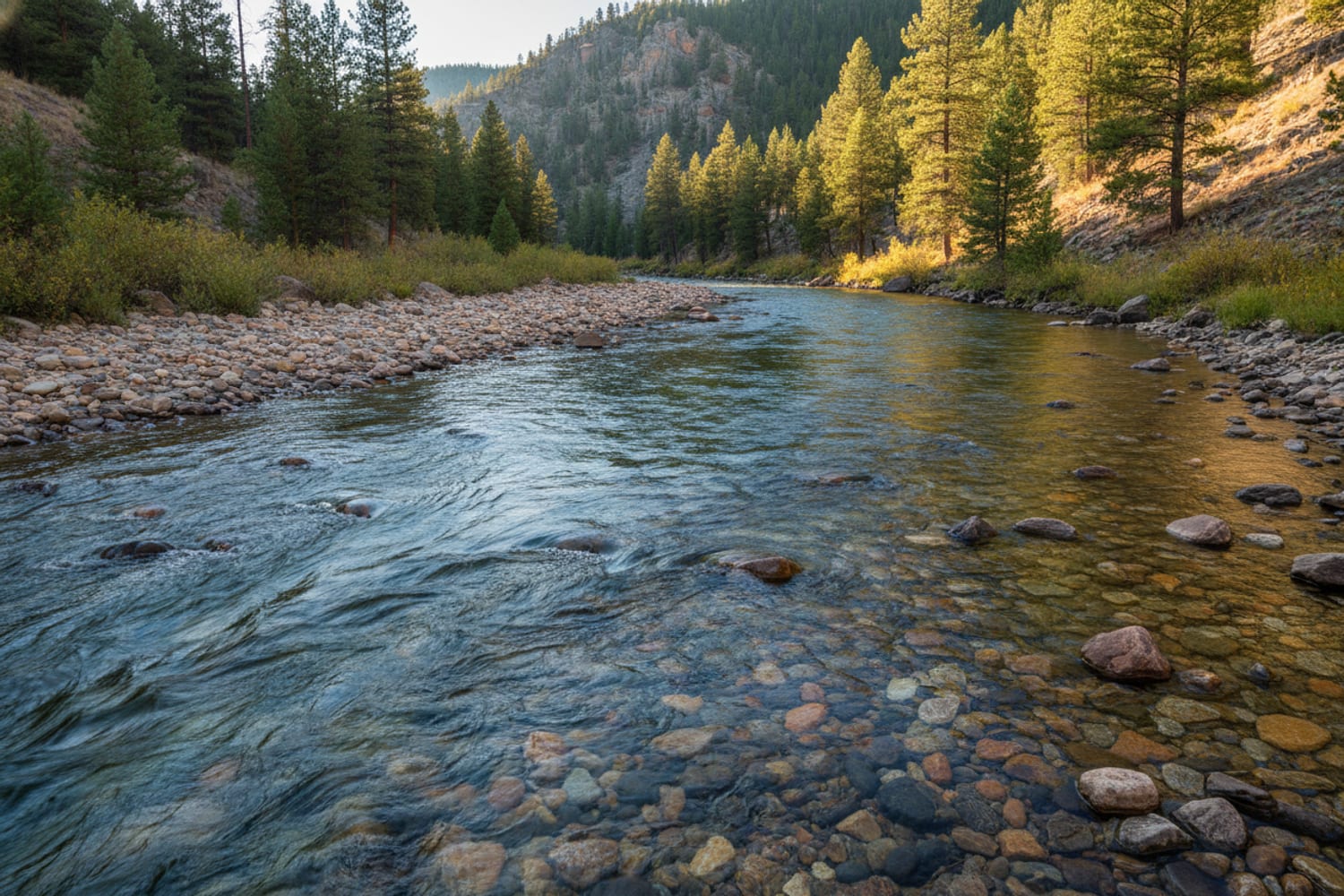
Soft water adjacent to fast water. The seam where fast current meets a slower pocket is where fish stack in Cheesman. The tight-line setup lets you work a 6-foot drift through that seam with complete control, then lift, recast, and repeat without the float crossing into the fast lane and dragging.
Undercut banks. The South Platte’s canyon sections have undercut granite banks where fish hold out of current. A tight-line presentation lets you run a nymph directly along the edge with your rod high — something impossible with an indicator because the float won’t hold position there.
The back end of boulders. The hydraulic pocket behind a boulder has soft water 6 inches behind it that transitions to fast current 2 feet back. You have maybe 4 feet of productive drift in that zone. Tight-line nymphing gives you 4 clean feet; an indicator gives you one decent foot before drag sets in.
When the Strike Happens
Takes on a tight-line setup look different than float fishing. The sighter hesitates, ticks sideways, or subtly lifts. There’s no sudden plunge of a float. You develop a feel for it over time, but it comes faster than most people expect.
What trips people up initially: you’re taught that a strike indicator drop means fish, and the instinct is to wait for that. On a tight-line rig, the take is a hesitation, not a drop. React immediately. The fish will spit the fly in under a second.
My take
My verdict, a few seasons past the conversion: in the kind of broken, seam-stitched water this river is made of, tight-line isn’t the alternative anymore — it’s the default, and the indicator has to argue its way back onto the leader. What sold me wasn’t theory. It was standing in Cheesman doing the quiet arithmetic on that run I’d blanked twice — five fish I’d walked past, times every run like it, times two stubborn seasons. That number still bothers me. Build the leader on a weeknight; it’s five sections and four knots, and it costs less than the pride I was protecting.
When Indicator Fishing Wins
I still fish an indicator when conditions favor it. Long flat runs at Deckers where the fish are feeding in a consistent lane 50 feet out — a standard indicator rig covers that efficiently. The South Platte nymph rigging guide covers how to set up both approaches and when to switch between them. The strike indicator is also better when fishing with a significant amount of split shot on deeply sunk flies in high-water conditions.
The tight-line setup excels at 15–35 foot distances in complex current. Past 40 feet, the leader setup gets harder to control and the advantage narrows. In tight water like Cheesman Canyon, where most casts are under 30 feet, tight-line wins almost every time.
The Two-Week Learning Curve
Give euro nymphing two full days on the water before you judge it. The first half-day is disorienting — you’re not reading a float, the sighter does things you don’t expect, and you’ll feel like you’ve never held a fly rod in your life. I sure did. By the end of day two, the system clicks and you start catching fish you were walking right past.
The most common beginner mistake is fishing too long a leader at too great a distance. Start at 20–25 feet, close range, slow current, and build from there. Once you can feel the fly ticking bottom through your sighter at 20 feet, extend to 30, then 35. The distances come naturally after the technique is set.
When I’m warming up, I’ll sometimes start by tight-lining through pocketwater before switching techniques. The mercury midge is my go-to point fly for tight-line work — the glass bead provides enough weight for a natural drift on a short leader without needing split shot. This works at Deckers, Cheesman, and the Arkansas depending on the day.
Two seasons I spent telling myself I didn’t need this. Don’t be me. Build the rig, stick out the awkward first day, and let the canyon teach you the rest.