
In this guide
Eleven Mile Canyon gets overshadowed by Cheesman and Deckers in most South Platte conversations. That’s not entirely fair — it’s a different river, with a different personality, and at the right time of year it fishes better than either of them.
The key is understanding what kind of river it is. Eleven Mile is reservoir-fed, running cold and clear year-round out of Eleven Mile Reservoir. That changes everything about how you approach it.
Eleven Mile Canyon in one paragraph
Eleven Mile Canyon is a reservoir-fed stretch of the South Platte that runs 38–45°F and clear year-round, so it fishes 365 days on midges (Griffith’s Gnats #20–24, Mercury and Palomino Midges #22), with the best all-around window late May through June for PMDs and caddis. Fish a 9-foot 5-weight for dries and nymphs, step up to a 6-weight for the browns-on-streamers game the lower canyon is known for, and bring full chest waders — the slots get deep. Lean on BWOs in spring and fall, and swing Woolly Buggers and Sculpzillas anytime the light’s low. One thing to remember: don’t stop at the first busy pullout — the road follows the river the whole way.
The River
The canyon runs roughly 11 miles from the reservoir outlet to the town of Lake George on US 24. The upper 6 miles are the most productive and most often fished — this is where the USFS road (CR 96) parallels the river and gives direct access to the water.
Character: Unlike Cheesman Canyon, which has a single dominant character, Eleven Mile shifts through multiple moods in its run. The upper section near the dam outlet is a wide, shallow tailout — long riffles, exposed gravel bars, and very clear water. As you move downstream the canyon tightens, the gradient increases, and you get pocket water and deeper plunge pools. By the lower canyon you’re in classic technical freestone character: fast runs, undercut banks, and boulders.
Water source: Eleven Mile Reservoir is deep and cold. The outlet water stays around 38–45°F year-round, which means two things: no temperature stress on fish at any season, and a very consistent — if technical — midge fishery 365 days a year.
Fish: Brown trout dominate the canyon, with some rainbow mix depending on which section you fish. The upper 3 miles tend to run larger browns — fish in the 14–18” range are not uncommon. The lower canyon has higher fish density but smaller average size.
When is the best time to fish Eleven Mile Canyon?
Late May through June is the best all-around window: PMDs start mid-May, caddis ramp up through June, BWOs hang on overcast days, and the streamer fishing holds in the mornings. Spring (March–April) and fall (September–October) bring the most consistent BWO hatches with the fewest crowds. The midges go year-round, so there’s no truly dead month.
Access
Getting there: From Colorado Springs, take US-24 west through Woodland Park to Lake George, then turn south on CR 96 (Eleven Mile Canyon Road) — about 45 minutes. From Denver, take US-285 south to Lake George. The drive runs alongside the river for most of the canyon — you can stop and scout water from the car before committing.
From Colorado Springs: take US 24 west through Florissant, turn south at Lake George onto CR 96.
Parking: Multiple pullouts along CR 96, marked with standard USFS parking signs. There is a day-use fee to enter the canyon — $11 per vehicle, collected at the entrance station, or $100 for an annual pass to this site. It’s a Forest Service fee, not a State Parks one, so a CPW pass won’t get you in. The most popular pullout (upper canyon, near the dam outlet) fills early on weekends. The lower canyon pullouts — particularly the ones 4–6 miles from the dam — are consistently less crowded.
Regulations: Eleven Mile Canyon is under standard Colorado state regulations for the South Platte — check Colorado Parks and Wildlife for current rules. Several sections upstream near the reservoir boundary are under special regulations. Know exactly where you are before you fish.
Private water: Unlike Deckers, Eleven Mile Canyon doesn’t have the same patchwork private/public access complexity. The sections along CR 96 are public. Some areas near private inholdings exist — watch for posting.
What’s Hatching
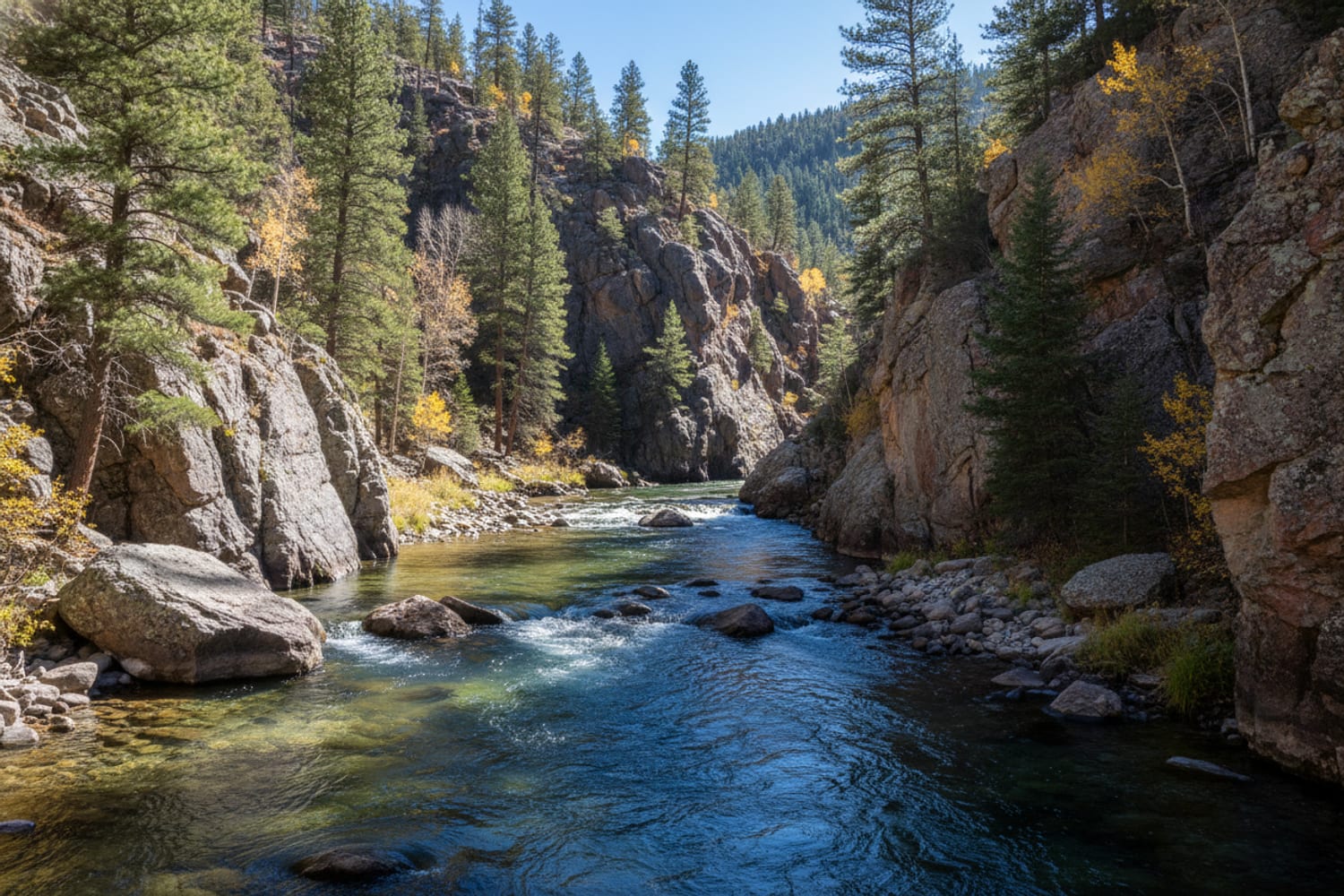
Midges (year-round) — the single most important hatch in the canyon, and the one that defines winter and early spring fishing. Griffith’s Gnats #20–24, Mercury Midges #22, and Palomino Midges #22 are non-negotiable. The lower canyon runs a heavier midge density in the slower water. Fish two-nymph midge rigs below a thingamabobber in the deep slots throughout the winter months.
Blue-Winged Olives (March–April, September–October) — Eleven Mile gets strong BWO hatches in both spring and fall. The canyon topography — steep walls, cold water, frequent overcast — creates ideal BWO conditions. Size 22–24 Vis-A-Duns and CDC Comparaduns are the go-to dry patterns. Fish these hatches on cloudy afternoons; bluebird days suppress the emergence.
Pale Morning Duns (late May–June) — PMDs arrive later at Eleven Mile than at Cheesman, pushed later by the reservoir-cooled water. Late May marks the beginning of the hatch rather than the peak. Expect the main PMD window to carry through mid-June. Same patterns as elsewhere on the South Platte: Sparkle Duns and Parachute PMDs, size 18–20.
Caddis (June–August) — summer brings reliable caddis activity in the canyon, particularly in the faster riffle sections. The canyon character creates ideal caddis habitat. Elk Hair Caddis #14–16 and LaFontaine Sparkle Pupae #14 are the reliable standards.
Trico (July–September) — the flat water in the upper canyon near the dam outlet produces Trico hatches through the summer and into fall. Small stuff — #24 Trico Spinner falls in the mornings. This is demanding fishing but the fish density in the upper flat makes it worth learning.
Streamer Fishing
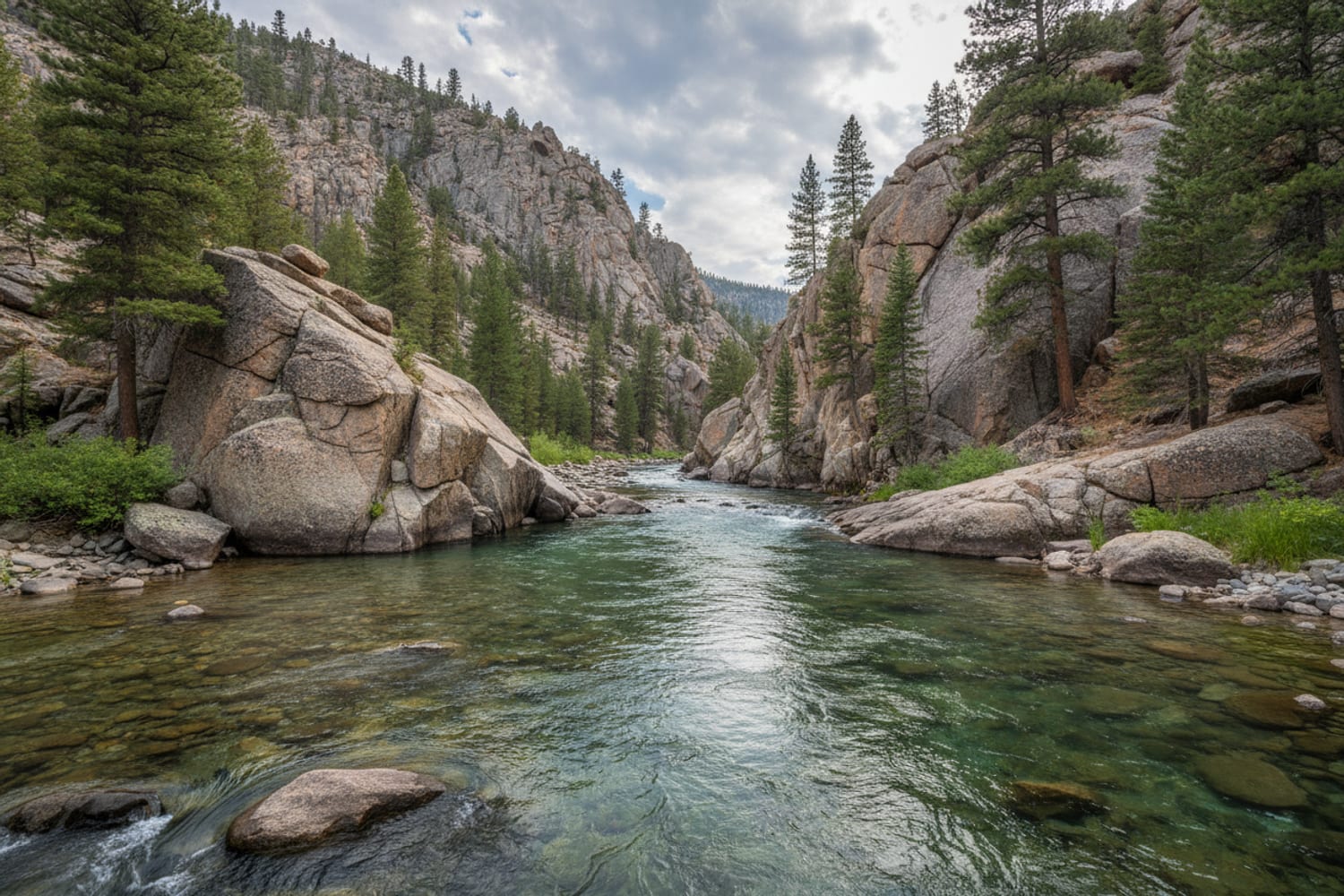
Eleven Mile Canyon is a streamer destination in a way that Cheesman and Deckers are not. The cold reservoir water creates a population of aggressive, well-fed browns that respond to streamers throughout the year — including during low-light conditions in summer when the dry-fly fishing is slow.
Best conditions: overcast days, morning and evening, slight color in the water from recent rain events. These fish don’t need off-color water to eat streamers — they’ll take them in gin-clear conditions — but turbidity helps.
Patterns: Woolly Buggers #8–10 in olive, black, and brown. Sculpzilla #6 in tan or rust. Double bunnies and big articulated patterns for the larger browns in the deep slots. Streamers can run big here compared to what you’d throw at Cheesman.
Technique: Swing and strip, not the dead-drift approach you’d use on slower water. Cast across and slightly downstream, let the fly swing into the current, then strip back with 6-inch pulls. The takes are usually aggressive — no subtlety required.
Best streamer water: the pocket water and plunge pools in the mid and lower canyon sections. The upper flat is more of a dry-fly and nymph zone. Work the bankside structure — undercuts, submerged logs, boulders with shadows on the downstream face.
My take
The canyon earns the drive for me on variety alone. One day here can run midges at first light, a BWO window if the clouds cooperate, and a streamer swung at dusk on the way out — no other stretch of the South Platte hands you that menu so reliably. So I fish it uncommitted: both boxes, no plan, and let the day call the shots. And I drive past the first busy pullout on principle — the road follows the river the whole way, and three more minutes of windshield scouting buys water with nobody standing in it.
Seasonal Overview
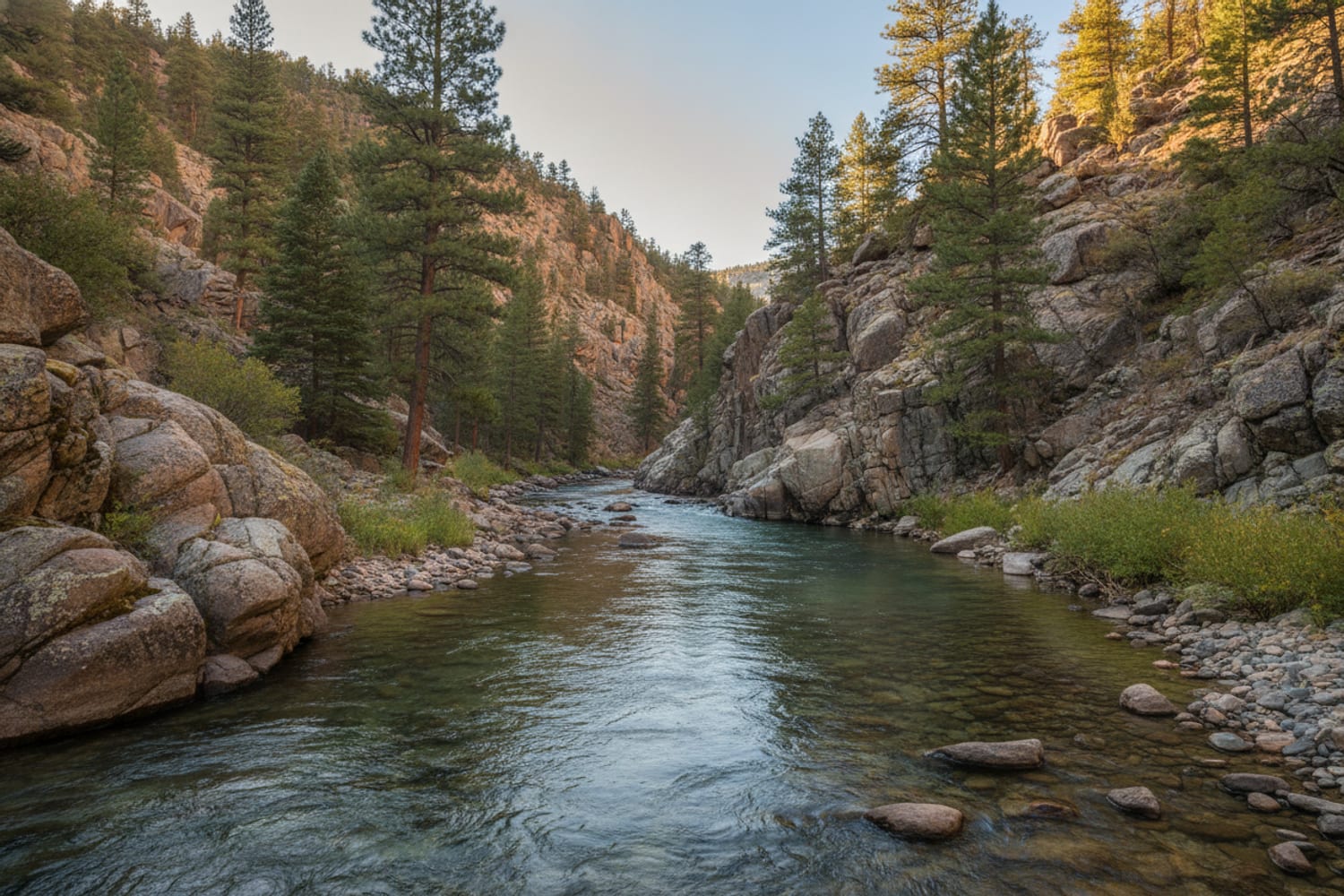
January–February: midge fishing in the deep slots. Cold, technical, worth it if you have the right gear and good dry-to-sunlight ratio on the day. Fish stack up in the protected water behind larger boulders.
March–April: BWO hatches begin. This is one of the better times to fish the canyon — hatches are consistent, crowds are minimal, and the fish are actively feeding on the surface for the first time since fall.
May–June: the best all-around window. PMDs start mid-May, caddis ramp up through June, BWOs persist on overcast days, and streamer fishing remains productive in the mornings. Flows from the reservoir are usually controlled and stable.
July–August: summer heat is less relevant in the canyon than on open stretches — the walls provide shade and the reservoir water stays cold. Trico hatches in the morning, caddis evenings, streamers when the light is low. Crowds peak in July.
September–October: fall BWO hatches are some of the best of the year. Fewer anglers, cooler weather, actively feeding fish. Browns start going into pre-spawn behavior in October and streamer fishing picks up significantly.
November–December: back to midges. Repeat.
Gear Recommendations
Rods: 9-foot 5-weight for dry fly and nymph work. Step up to a 9-foot 6-weight when you’re throwing streamers in the lower canyon — the wind in the canyon can be significant and bigger flies need the extra power.
Leaders: 9-foot 5X as a starting point for most dry-fly work, dropping to 6X or 7X tippet for the technical upper flat. For midge fishing, go longer — a 12-foot leader with 7X is not overkill in the clear upper section.
Waders: the canyon has some chest-deep slots. Full chest waders are not optional here — waist-highs will leave you standing on the bank in several of the better beats. The rocky substrate is sharp; reinforced knees matter.
Footwear: felt or rubber-soled wading boots, not sandals. The canyon bottom is uneven and the rocks are slick. This is one of the few South Platte sections where a wading staff makes real sense.
Compared to Cheesman and Deckers
Difficulty: Eleven Mile is more forgiving than Cheesman for access and wading, but the technical fishing in the flat upper section is comparable. The pocket water in the mid-canyon is actually easier to fish — the broken currents hide leader drag. The South Platte hatch calendar shows how Eleven Mile’s hatches typically run two to three weeks behind Cheesman due to the colder reservoir water.
Crowds: less crowded than Deckers on weekends, significantly less crowded than Cheesman on weekdays. The drive through the canyon road spreads anglers out more effectively than the Cheesman parking lot.
Fish size: average size at Eleven Mile is slightly smaller than Cheesman due to higher fish density and different habitat. The trophy browns in the deep lower-canyon slots are the exception — those fish can be large.
Character: the most diverse of the three sections. One day can include morning midge nymphing, a BWO or PMD hatch, a caddis evening, and streamer work at dusk. It’s the section most worth fishing if you’re trying to cover multiple techniques in a single trip.
For current flow and temperature data, use the USGS gauge at South Platte River below Eleven Mile Reservoir (search USGS NWIS for the current station). Reservoir releases are controlled by the water authority — flow swings can happen with little warning. Check before you go.
If you’re planning a canyon day, the South Platte hatch calendar will tell you what’s coming off when you get there — and if Eleven Mile’s flows aren’t cooperating, Deckers and Cheesman are both an easy pivot.