
In this guide
There’s a three-week window in late May on the South Platte where the dry-dropper rig outfishes everything else I know how to do — which, if I’m honest, is a list that grows shorter the longer I fish. The PMDs are hatching, fish are showing interest in the surface, but most of the feeding is still subsurface. A CDC comparadun with a midge dropper 14 inches below covers both zones at once. It’s the right tool for that specific condition, and once it clicks, you’ll reach for it more than you expect. For a full breakdown of where PMDs fall in the season at each section, see the South Platte hatch calendar.
The dry-dropper rig in one shot
Build it with a buoyant size 14–16 CDC comparadun or Parachute Adams as the dry, then clinch-knot a bead-head nymph or midge to the bend of the hook on 12–16 inches of tippet — 5X to the dry, 6X or 7X fluorocarbon to the dropper — so the dry doubles as your indicator and covers the subsurface zone at the same time. At Cheesman during PMD season I run a size 16 sparkle dun or CDC comparadun over a size 18 PMD nymph on a 14-inch dropper. That’s the whole recipe; everything below is when to reach for it and how to fish it without tangling.
What the Dry-Dropper Does
The dry fly serves two purposes: it’s a fly and it’s an indicator. When a fish takes the nymph dropper, the dry fly goes under — just like a conventional strike indicator, but the “indicator” is also a fly that’s catching fish on its own.
The elegance is that you’re presenting two different food items in two different water columns at the same time with one cast — twice the coverage for the same effort, which is about the only place in my life that math works out. On a day when fish are keyed somewhere between the surface and the mid-column — classic PMD and caddis emergence behavior — the dry-dropper covers that transition zone better than either a straight dry-fly rig or a standard nymph setup.
Building the Rig
The dry fly: Needs to be buoyant enough to support the dropper. A size 14–16 CDC comparadun or Parachute Adams floats well. A size 20 midge dry sinks under the weight of a dropper — don’t try it. I use a size 16 or 14 dry fly as the platform for the dropper in most conditions. The dry fly also needs to be visible at distance; parachute designs with bright posts work better than flush-floating comparaduns for dry-dropper use.
Dropper connection: Tie the dropper directly to the bend of the dry fly hook using an improved clinch knot. Length varies — I fish 12–16 inches in most South Platte conditions. Shorter dropper (10–12 inches) in shallow water under 2.5 feet; longer dropper (16–20 inches) in deeper water where I need to get the nymph to the feeding zone.
The dropper fly: A bead-head nymph or midge that matches whatever subsurface food is active. During PMD season: a size 16–18 PMD nymph or soft hackle. During midge-dominant conditions: a size 20–22 zebra midge or mercury midge. During caddis: a size 16 soft-hackle wet fly in tan or olive. The dropper choice is just nymph selection — match what you’d be fishing under a conventional indicator.
Tippet: 5X to the dry fly, 6X or 7X fluorocarbon for the dropper. The thin dropper tippet hangs more naturally below the dry and presents the nymph with less drag than heavier material.

When to Use It vs. a Straight Nymph Rig
Use the dry-dropper when:
- Fish are showing subsurface interest (subtle swirls, bulging rises) during a hatch
- Water is 2–4 feet deep — the optimal range for this rig
- You want to cover multiple feeding zones simultaneously
- You’re fishing moderate current where a conventional indicator would drag
- Visibility is good enough to track a dry fly at distance
Stick with a conventional indicator when:
- Water is deeper than 4–5 feet — the dry fly can’t float the dropper far enough down
- Flows are high and fast — the dry fly gets submerged immediately
- Fish are deeply nymphing with no surface activity
- Wind is significant — a dry fly indicator gets pushed around by wind more than a conventional float
Go straight dry fly when:
- Fish are actively rising and you can see them eating on top
- You don’t want the dropper spooking fish in very low, clear, slow water
My take
On the water my version of those rules is simpler: once the first ambiguous swirls of PMD season show up, the dry-dropper goes on and stays on until fish are unmistakably eating on top. The weeks I used to spend toggling between rigs — nymphing, seeing a swirl, re-rigging for dries, watching the surface go quiet again — taught me the re-rigging itself was costing me the window. One setup that covers the ambiguity beats two setups that each need the fish to commit. It’s the rare rig that profits from my indecision, which may be why we get along so well.
The PMD Window at Cheesman
Late May through mid-June at Cheesman Canyon is the ideal dry-dropper situation. PMDs hatch from mid-morning through early afternoon. Fish are transitioning from mid-column nymphing to surface feeding and back throughout the day. The dry-dropper covers that transition.
I run a size 16 sparkle dun or CDC comparadun as the dry, with a size 18 PMD nymph (soft hackle or bead-head) on a 14-inch fluorocarbon dropper. Cast upstream to feeding fish in the Cheesman flats, mend once, let it drift through the feeding lane. When the dry dips or the fish’s head breaks the surface, set the hook.
The strike on a dry-dropper isn’t always the dry disappearing — sometimes the fish takes the nymph and the only sign is the dry sliding sideways. Set on anything unusual.
The Deckers Flat Water Version
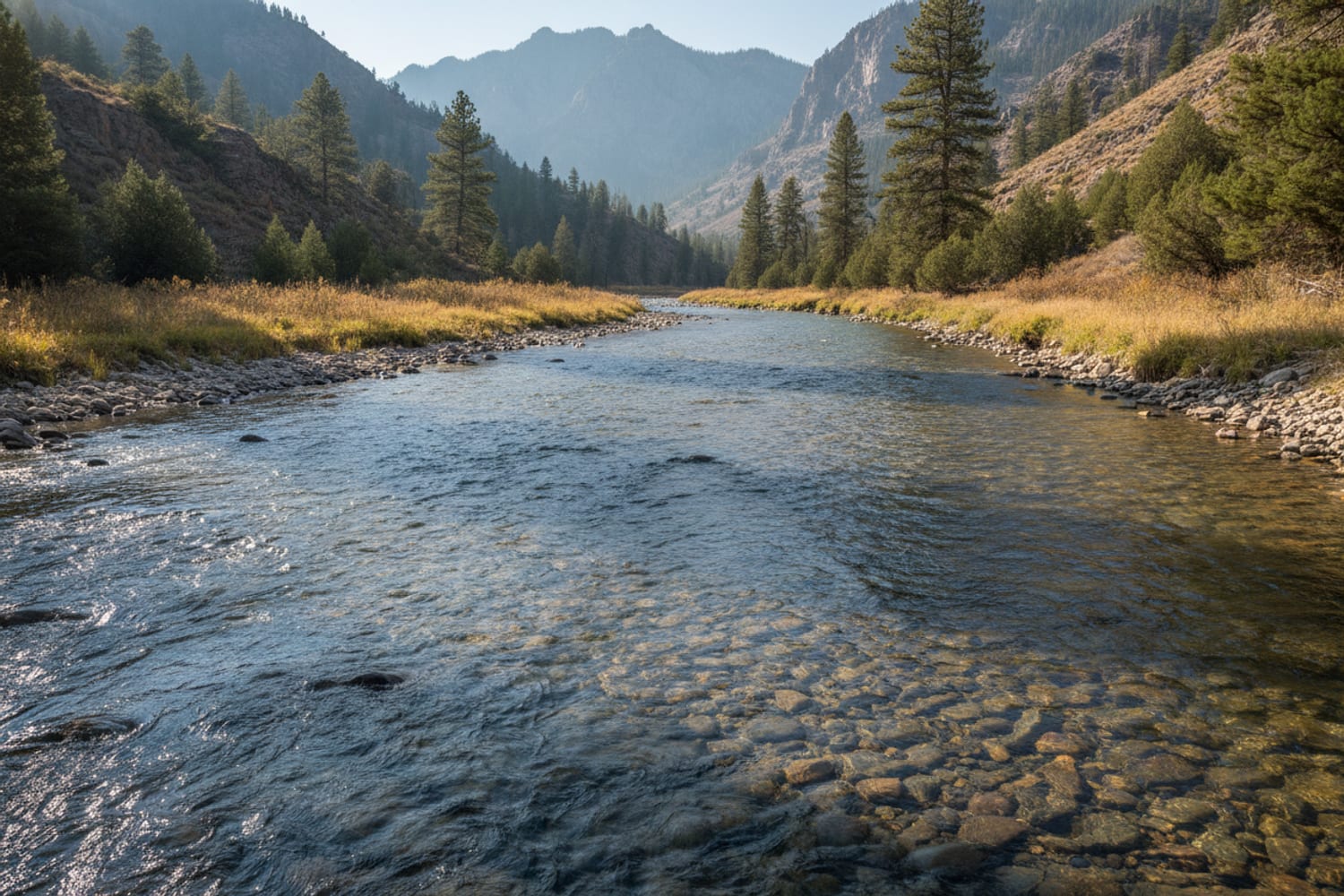
On the Deckers flat at normal flows, the dry-dropper fishes at longer range than at Cheesman — 40–50 foot presentations to visible fish. The longer tippet and extended drift require attention to mending to prevent the dry from dragging.
I false cast once to extend, shoot the cast upstream and across from the target, immediately mend 1–2 feet upstream to buy drift time, and follow the drift downstream with the rod tip. At 40 feet in flat water, a good drift is 15–20 feet of dead drift before the current catches the line. The dry-dropper rewards careful line management in these conditions.
Casting the Rig
The dropper turns casting more complex — you’re managing extra tippet and a hanging fly below your dry. Open loops cast better than tight loops with a dropper attached. Slow the stroke slightly, open the loop, and let the leader turn over fully before the flies land. A tight-loop cast with a dropper often results in the dropper tangling in the dry fly or the leader.
Check the dropper every third cast for tangling. It’s the most common problem and the most easily solved by checking frequently rather than fishing a tangled rig for 20 minutes.
The dry-dropper rig has been in my fly box since the first May I fished Cheesman during a PMD hatch, and it hasn’t left since. Once it clicks, you’ll look at the South Platte surface differently — not as a choice between dry fly or nymph, but as a zone where both can happen at once. Tangles and all, it’s still the most fun I have with two flies on. For times when you want to go fully subsurface, the South Platte nymph rigging guide covers indicator and tight-line setups for deeper presentations.