
In this guide
Two anglers set an alarm for 4:30 on the same August morning. One drives to a boulder garden and casts a #22 spinner into whitewater for three hours. The other drives forty minutes further, stands at the tail of a flat, and watches twenty fish eat off the surface on a four-second beat. Same river. Same bugs. Same alarm. The only variable was where they parked.
That’s what this page is for. The South Platte grows Tricos in quantity from mid-July through late September, peaking in August, but the hatch is only fishable in a fraction of the river, and the fraction is not the pretty part. This is the map — which sections hold it, which water inside those sections holds it, and where to walk past.
The short answer
The Trico spinner fall needs slow water to be fishable. On the South Platte that means the Dream Stream flat first, the upper Deckers flat second, and the lower Cheesman Canyon tailouts third — flats, tailouts, and the soft edges of deep pools, never the pocket water. Pick the section by how far you’re willing to drive in the dark, then pick the water inside it by where the surface goes glassy.
The rest of this hatch splits into two more jobs, each with its own page:
- When it happens and how to read the morning — the clock, the mating swarm, and telling a spinner rise from an emerger rise.
- Which fly and what size — the six patterns worth carrying and why #22–24 beats #20.
Everything below is about the standing.
The one rule that decides everything
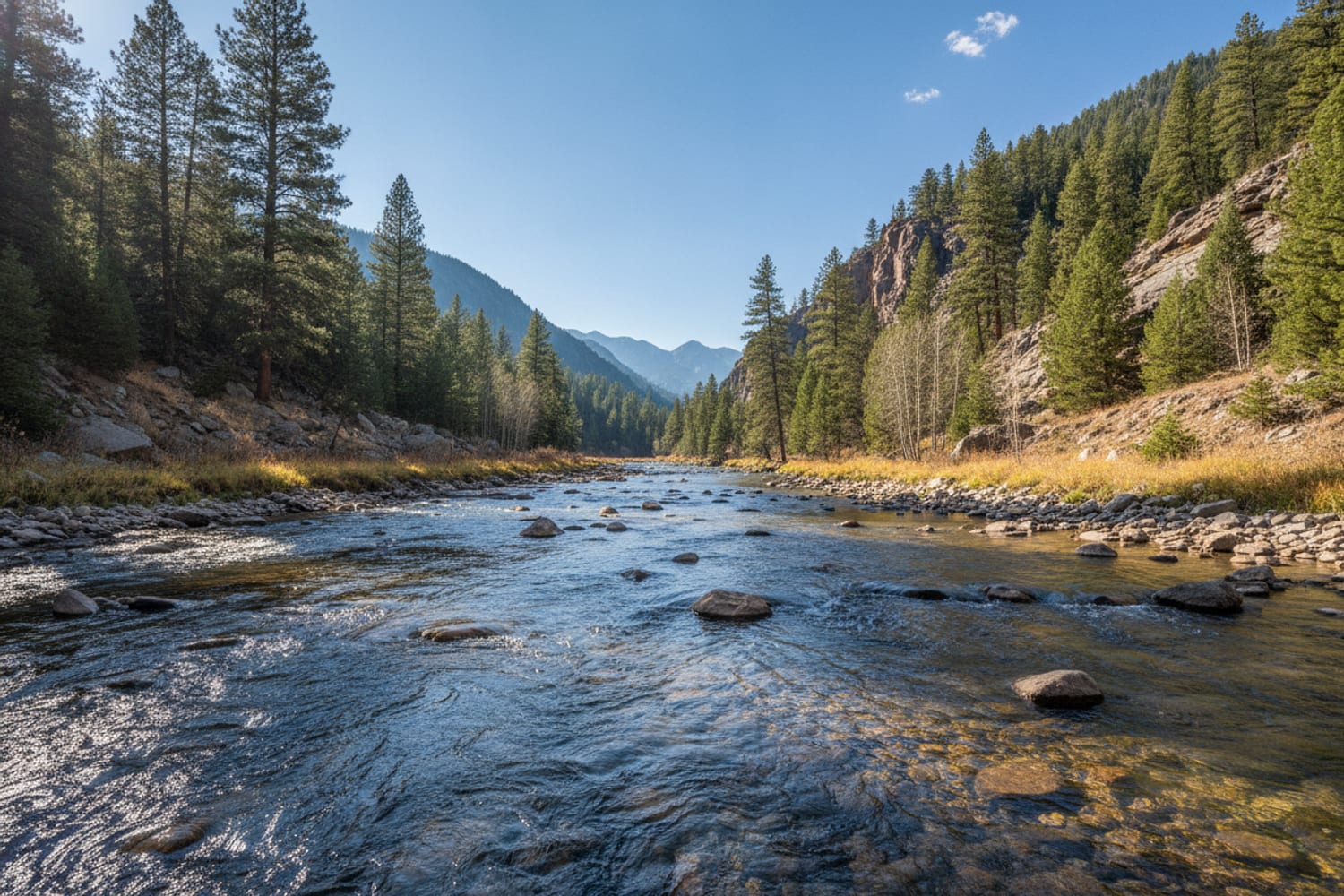
A spent Trico spinner has no engine. It has completed mating, it has fallen, and it is lying flat in the surface film with its wings out to the sides, going wherever the water goes. That is the entire biology you need to know to choose a parking spot.
Spent wings need somewhere still to collect. In slow water they gather — a hundred, two hundred per square foot on a good August morning — into a film dense enough that a trout can hold in one lane, tip up, and eat on a metronome without burning a calorie. In fast water they scatter into the current and go by too fast and too spread out for a fish to bother. The bugs are in both places. The meal is only in one.
So the sorting rule isn’t “which canyon.” It’s flat, slow, and glassy versus broken and pushy — and every section of this river has some of both. A Trico spinner fall in pocket water is a rumor. The insects are genuinely there; they’re just going past at highway speed with nobody buying.
I have stood in beautiful water at the perfect hour with the correct fly on the correct tippet and caught nothing, because the water was wrong and everything else was right. That’s a specific flavor of stupid and I don’t recommend it.
Section by section
The Dream Stream flat — the best Trico water in the system
The wide, slow meadow section between Spinney Mountain and Eleven Mile Reservoirs. Low gradient, heavy aquatic vegetation, spring-creek character, and current soft enough that the spinner film concentrates instead of washing out. In August, on a calm morning, you can stand on that bank and count twenty or thirty fish feeding at once.
Nothing else on the river does that. It also means the fish are as exposed as the anglers are — this is water where you can be spotted from forty feet in low light, and where three bad casts shut down a whole pod.
Access details live in the Spinney Mountain Reservoir and Dream Stream guide. The practical cost is the drive: from most of the Front Range you are leaving in genuine darkness, and there’s a stretch around Wilkerson Pass where the whole plan starts to feel like a bad idea. Keep driving. This is the section that pays for the alarm.
Upper Deckers flat — the one you can actually get to
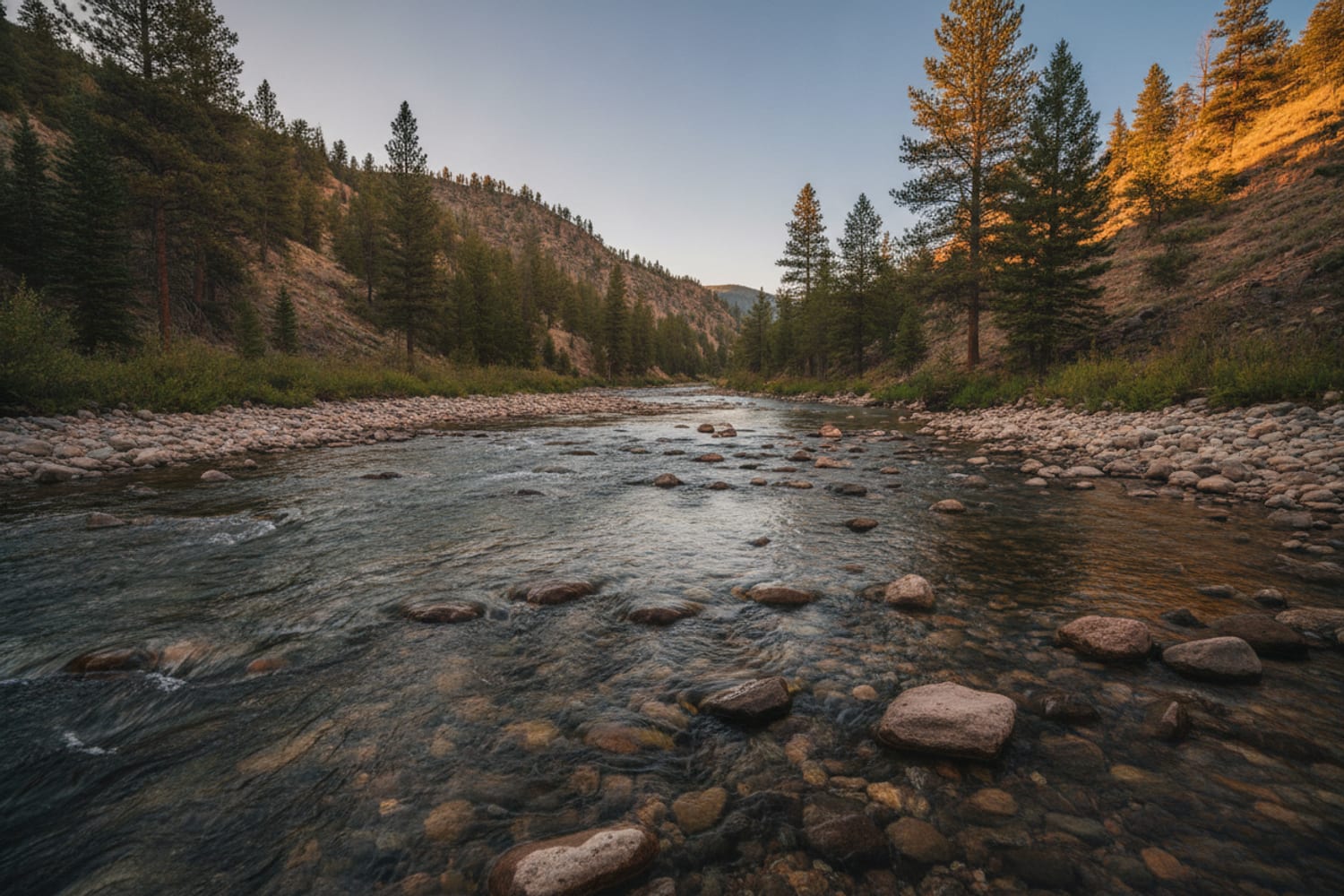
The long, glassy run above the Trumbull Road bridge, plus the slower water along the near bank and the broad pools downstream toward Trumbull. It holds real Trico populations and produces genuine spinner-fall fishing.
It is less dramatic than the Dream Stream and it sees more people. What it has instead is proximity — no South Park drive, no pass, and you can be standing in it while the Dream Stream crowd is still on the road. Deckers is the section you fish when the alarm and the odometer have to negotiate.
The water is wide and open enough to spot risers from a distance and pick a target before you commit, which is a real advantage on a hatch this short. Full access breakdown in the Deckers complete guide. Confirm the current public-access boundaries with CPW before you wade — they are not the same everywhere along that stretch and they do change.
Lower Cheesman Canyon — good water, on somebody else’s word
Cheesman gets written off for Tricos because of its reputation as a boulder garden, and the write-off is half right. The upper pocket water will not hold a spinner fall, for the reason above.
The lower canyon is a different animal: slow tailouts and deep pools where the gradient relaxes. Pat Dorsey rates those the best Trico water of the season from mid-August into late September. I’m passing that along as his call, not mine — my Cheesman days have never lined up with a fishable fall in there, so I’m not going to tell you what it looks like. What I can tell you is the logistics, which are the reason it isn’t my default: the hike in runs 25–35 minutes, so being in position by 7 a.m. means leaving the trailhead in the dark, and the further you walk the less pressure the fish have seen. Access and trail detail in the Cheesman Canyon guide.
Eleven Mile Canyon — the section you drive to at ten in the morning
Eleven Mile runs on a different clock entirely. The release out of Eleven Mile Reservoir is cold enough to push the whole sequence hours later than the flats upstream, which makes it the place you go when the Dream Stream has gone quiet and you’re not ready to go home. That’s a timing decision rather than a water-choice one — the timing page has the reach-by-reach version.
Where not to stand
Fast, turbulent pocket water anywhere on the river. That includes the boulder gardens at Cheesman, the pushy runs at Deckers, and any riffle with a broken surface. There are fish in all of it, and in August most of them are eating below the surface where you can’t see them do it, which is a different day and a different rig.
Standing in pocket water waiting for a spinner fall is an excellent way to get several hours of casting practice.
Reading the water inside a section
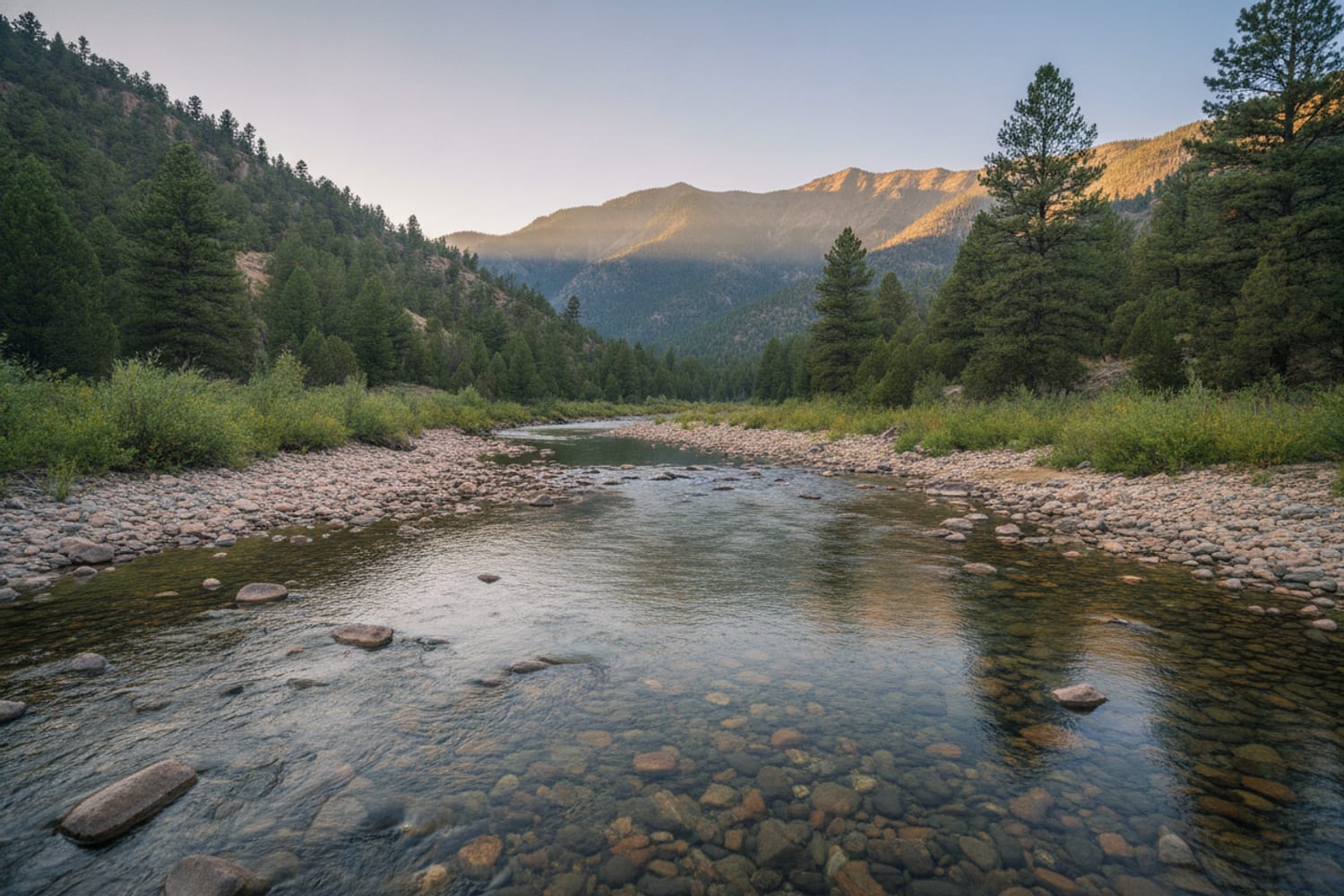
Getting to the right section is half of it. The other half happens in the last hundred yards, and it’s the half most people skip because by then they’re excited.
Fish the tail of the pool, not the head. Spent wings ride down the pool and pile up where the water slows and shallows before the next drop. That’s the concentration point and it’s where the fish set up. The head of the pool has more oxygen, better structure, and almost no spinners in the film.
Find the seam where flat meets slightly faster. Surface debris collects along those edges — pine needles, cottonwood fluff, and spent Tricos all do the same thing. If you can see a line of litter on the water, you have found the feeding lane without having to guess.
Look for the glassy strips, not the whole flat. Even inside slow water there are lanes moving a hair faster and lanes moving a hair slower, and the film gathers in the slow ones. A fly six inches outside the spinner lane gets ignored by a fish that is otherwise eating everything in sight.
Then pick one fish. Not the pod. One. Casting at all of them is how you end up with none of them and a very nice view of some water. Watch it rise several times, learn where it’s parked, and work that fish until it eats or you spook it.
Approach from downstream, low and slow. On flat water in low morning light you are the tallest thing for a hundred yards. Wading straight into the middle of a flat turns twenty rising fish into a quiet pool in about four seconds, and it does not un-happen.
My take
The mistake I made for two summers was treating this as a hatch problem when it’s a real-estate problem. I’d get the fly right, get the tippet right, get up at an hour I’d rather not put in writing — and stand in water that could never have worked, because it looked like good trout water. It is good trout water. It’s just not good Trico water, and those are different questions with different answers.
If I get one section per morning now, I take the Dream Stream flat, drive time and all, and I don’t rig until I’ve walked the bank and found the film. The rigging can happen anywhere. The film only happens in a few places.
Why most anglers miss it
The Trico hatch asks for three things at once and most people opt out at the first one.
It asks you to be standing in the right water by 7 a.m., which for the Dream Stream means a departure most reasonable people won’t make. It asks for 7X tippet and #22–24 flies, which most boxes don’t contain — if yours stops at #18, The Fly Fishing Place is where I’d fill the gap, and our link takes 15% off. And it asks for a water-reading habit that runs against everything a summer of hopper fishing teaches you, because for once the featureless glassy nothing is the spot and the good-looking run is not.
The payoff is dry-fly mornings in the warmest weeks of summer, in the exact weeks when everyone else has decided the South Platte is off. It isn’t off. It’s happening at seven and they’re asleep.
Where the window sits against the rest of the season — and what to fish before and after it — is on the South Platte hatch calendar. Once you’ve picked your water, the morning timing and the fly box are the next two decisions, in that order.
Frequently Asked Questions
Q: What’s the best section of the South Platte for Trico fishing? The Dream Stream flat between Spinney and Eleven Mile Reservoirs, by a clear margin — the low gradient and heavy vegetation give it both the bug density and the slow current a spinner fall needs. The upper Deckers flat is the accessible second choice and produces well. Pat Dorsey rates the lower Cheesman Canyon tailouts the best of the season from mid-August into late September, which is his assessment rather than mine. Verify current access and regulations with CPW before you go.
Q: Can you fish Tricos in Cheesman Canyon? Not in the pocket water — the boulder gardens break the surface film up before spent wings can collect, and that’s a rule about water type rather than about the canyon. The lower canyon’s slow tailouts and deep pools are a different story and are well regarded for Tricos in late summer. Plan on a 25–35 minute hike to reach them, which means a dark trailhead if you want to be fishing by 7.
Q: What kind of water do Trico spinner falls happen in? Flat, slow, glassy water: pool tailouts, meadow flats, and the soft edges of deep pools. Spent spinners have no ability to swim or hold position, so they only accumulate into a fishable density where the current is slow enough to let them gather. Riffles and pocket water hold plenty of trout in August, but those fish are feeding subsurface.
Q: How far do I have to drive to fish this? That’s the real decision. The Dream Stream is the best water and the longest drive — for most Front Range anglers, a departure in full darkness. Deckers is closer, more pressured, and genuinely good. Given a choice with no time pressure I take the Dream Stream; given a weekday and an actual bedtime, Deckers earns its keep.
Some links in this article are affiliate links. Read our full disclosure.