
In this guide
The Zebra Midge is the first fly most people tie and the last one they stop fishing. Two materials, a bead, and a wire rib — it’s about as simple as a trout fly gets. It’s also one of the most effective midge patterns on any tailwater in the country. Which is annoying, because I’ve spent good money on flies far fancier than this one that the trout couldn’t be bothered to eat.
I fished the standard version for years. Silver bead, black body, silver wire. It works. But I’m constitutionally incapable of leaving a working fly alone, so somewhere along the line I started tinkering, and the version I tie now — the one I actually reach for on the South Platte — outfishes the original for me by a wide enough margin that it’s the only Zebra Midge in my box. I call it the Torch.
The short answer
The Zebra Midge I actually fish on the South Platte is the Torch: a standard Zebra Midge tied on a Fulling Mill FM50 45 Jig Force barbless jig hook in #18 and #20, but with a black slotted tungsten bead instead of silver and a bright orange tag at the bend — two small changes that outfish the original for me on pressured Deckers and Cheesman fish. I dead-drift it deep and small, usually as a dropper 8–10 inches off a heavier point fly on 6X (7X when they get picky).
Everything below is why those two changes matter, the full recipe, and how I fish it.
What Makes It a Torch
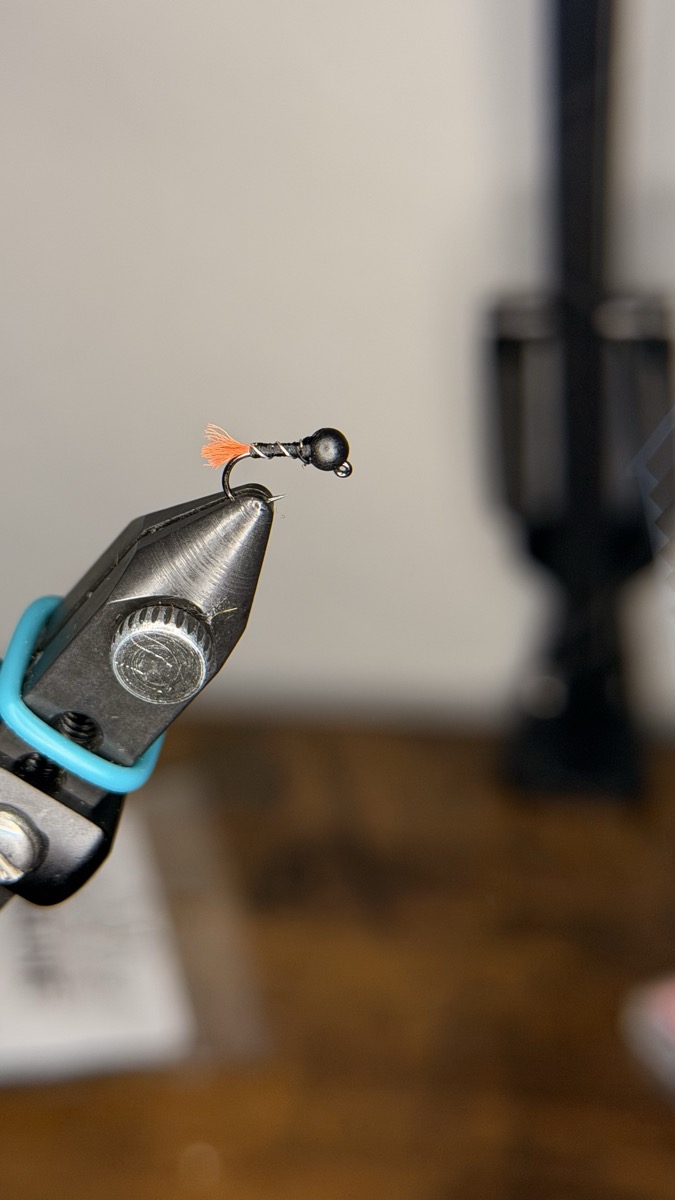
Two changes from the standard recipe, and they matter more than they look:
- A black tungsten bead instead of silver. Less flash, faster sink, and a darker overall profile that pressured fish seem to commit to more readily in clear water.
- A bright orange tag at the tail. This is the “torch.” It’s a small hot spot — a trigger — and on the technical, heavily-fished water I fish, that little spark of color is the difference between a follow and an eat.
Silver-bead versions still earn their keep in faster or off-color water, but in the low, clear flows at Deckers and Cheesman the darker profile gets refused less.
I tie it on a Fulling Mill FM50 45 Jig Force barbless jig hook, which rides point-up off a slotted bead and hooks fish in the top of the jaw instead of the soft tissue. Fewer lost fish, cleaner releases.
That’s it. No secret handshake, no exotic materials. It’s still a Zebra Midge — it’s just the one that’s been earning its keep in my box while the fancier flies sit in the corner thinking about what they’ve done.
The Recipe
| Component | What I use |
|---|---|
| Hook | Fulling Mill FM50 45 Jig Force, black nickel, barbless — #18 and #20 |
| Bead | Matte black slotted tungsten, 2.8 mm |
| Thread | Semperfli Nano Silk 50D 12/0, black |
| Body | Black thread, tapered |
| Rib | Semperfli wire, 0.5 mm, counter-wrapped |
| Tag | Glo-Brite floss No. 5 (orange) — I also tie it in No. 4 (red) |
I fish it small — #18 and #20 cover almost everything on the South Platte. The fish here see a lot of flies, and a smaller, cleaner profile gets refused less.
How I Tie It
Nothing about this is hard, which is part of the appeal — you can tie a dozen in an evening.
- Slide the black tungsten bead onto the jig hook, big hole forward, and seat it behind the eye.
- Start the thread behind the bead and lay down a smooth base back to the bend.
- Tie in the orange tag material at the bend — keep it short and tidy. This is the only spot of color on the whole fly, so it should read clean.
- Tie in your wire, then build a slim, slightly tapered black body forward to the bead.
- Counter-wrap the wire forward in open turns for the rib and segmentation. Tie off and helicopter to break it.
- Whip finish behind the bead. Done.
Tie them in batches. You’ll lose them in the rocks and leave them in fish, and you’ll want a row of them when the midges are thick.
When and Where I Fish It
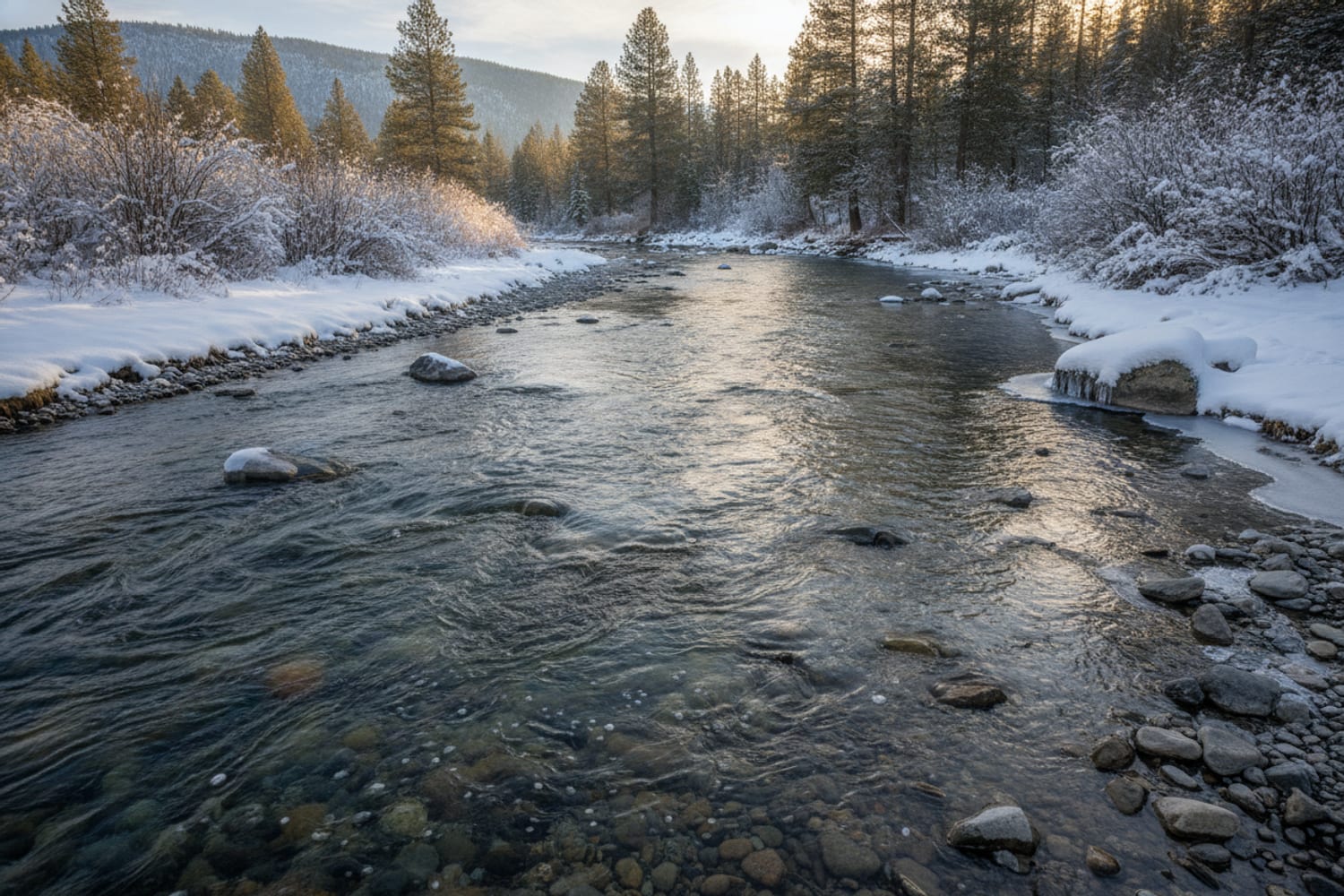
Midges hatch every day of the year on the South Platte, which makes a good midge pattern the most reliable fly in the box. The Torch is a year-round producer, but it earns its place in the cold months — November through March — when midges are the only game in town at Deckers, Cheesman, and the Dream Stream.
It’s a nymph, so I fish it dead-drift and deep:
- As the dropper under a heavier point fly — usually an Olsen’s Blowtorch — with the Torch trailing 8–10 inches off the bend.
- Under an indicator in the slow, deep winter runs where fish stack up and feed in the bottom third of the column.
- On a euro rig when I’m covering pocket water and want the fly down fast — the tungsten bead gets it there.
Fish it in the soft, slow water: the tailouts, the deep slots, the seams where the current slows enough that a trout can sip midges all day without burning energy. That’s where the Torch does its work.
Rigging
Long leaders and light tippet on this water. I run 6X fluorocarbon as my default and drop to 7X when the fish are refusing in low, clear conditions. A 9-to-12-foot leader keeps the bulk of the rig out of the feeding lane. If you’re not getting eats on a dead drift, the problem is almost always depth or drag — not the fly.
My take
The standard Zebra Midge is a great fly, and if all you have is the silver-bead version, fish it with confidence — no need to take tying advice from a guy who can’t leave well enough alone. But if you tie your own, try the Torch — black bead, orange tag, small jig hook. On pressured Colorado tailwater fish, those two small changes have put more trout in my net than any other midge I’ve fished.
If you carry one midge on the South Platte, make it a midge you trust. After years of fiddling with a fly that didn’t need fixing, this is the one I trust. Tie a row, lose half of them in the rocks, and let the orange tag do the talking.
More of what’s in my box: the South Platte fly box — 12 patterns I actually carry.