
In this guide
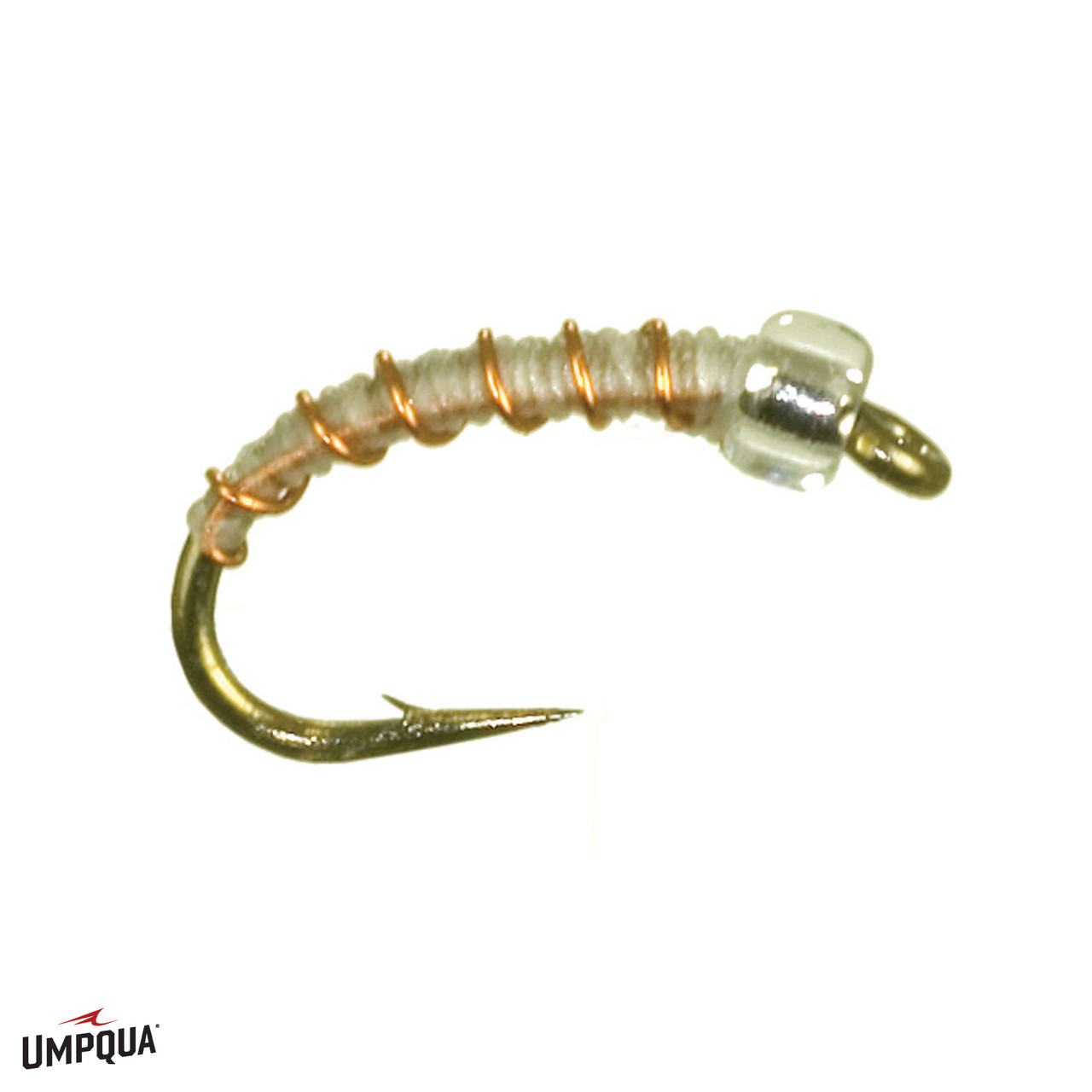
Pat Dorsey has fished more tailwater miles on the South Platte than almost anyone. The Mercury Midge is one of his patterns — a midge larva imitation built around a single material choice that separates it from every other midge in the box: a clear glass bead head that mimics the gas bubble trapped in a midge shuck at the moment of emergence. It’s a staple at Deckers and Cheesman Canyon year-round.
It’s simple to tie. Deceptively simple. The difficulty isn’t in the pattern — it’s in fishing it at the right depth, at the right speed, at the right moment in the hatch cycle. I’ve fished a perfectly good Mercury Midge straight past a pod of feeding trout more times than I’d like to admit, then blamed the fly. The fly was fine. I was the problem. Here’s how to not be the problem.
The short answer
Pat Dorsey’s Mercury Midge is a South Platte midge-larva pattern tied on a TMC 2487 curved scud hook (#18–22) with a clear silver-lined glass bead — mimicking the emergence gas bubble — a thin thread body, and a reverse-wrapped copper Ultra Wire rib; #20 is the workhorse. Fish it sub-surface on a dead drift under an indicator set at 1.5x the water depth (or 6–12 inches below a dry during active hatches), on 6X tippet — 7X on glass-clear days.
The bead does the flash so you don’t have to. Change depth twice before you change flies once.
Why It Works
Midge larvae don’t emerge straight to the surface. Before they break through the meniscus, they often hang in the water column with a small gas bubble visible through the shuck — the beginning of the emergence process. That bubble is what the glass bead imitates. The silver-lined bead catches light the way the gas bubble does, and selective trout feeding on sub-surface emergers key in on that flash.
On heavily pressured water like Deckers or any tailwater where fish have seen thousands of midges, the trigger detail often matters more than overall pattern accuracy. These fish have seen every fly in the shop and turned their noses up at most of them. The Mercury Midge gives them a trigger that most other midges don’t provide.
The Recipe
Hook: TMC 2487 (curved scud hook), #18–22
Bead: Extra-small clear silver-lined glass bead
Thread: Black Danville 6/0 (or color-matched to body variant)
Rib: Small copper Ultra Wire, reverse-wrapped
Body: Thread wraps
That’s the whole fly. Pinch the barb, slide the bead, start thread behind the bead. Tie in a short section of copper wire at the bend, wrap thread to the bead to form the body, then counter-wrap the wire rib four to five times forward. Tie off, build a small thorax behind the bead, whip finish.
The body is thin. Don’t stack too many thread wraps or you lose the slim profile that makes this pattern work. A midge larva is a thin creature — the fly should look like one.
Variants
The standard Mercury Midge uses black thread. It matches the most common midge coloration on South Platte tailwaters and is what I reach for first.
Mercury Blood Midge: Red thread body. When there’s a blood midge hatch — identifiable by the reddish tinge to the naturals — this version outperforms the standard. Dorsey ties both and carries both.
Olive Mercury: Olive thread body. Effective during BWO-and-midge overlap periods in spring and fall when fish are eating both and it’s not entirely clear which.
Black with red rib: Small red Ultra Wire instead of copper. Subtle distinction, but on glass-clear water and ultra-selective fish sometimes the small detail is the difference.
Sizes
I carry #18, #20, and #22. On most South Platte tailwaters, #20 is the workhorse. When midges are particularly small — which happens in winter and during flat-calm conditions when fish are sipping tiny naturals — drop to #22 or even #24 if you can tie them that small.
The glass bead limits your minimum size somewhat — you need a bead that fits the hook eye properly. Extra-small beads work down to about #22. Below that you’re fishing a pattern without the bead, which is a different fly.

How to Fish It
The Mercury Midge is a sub-surface pattern. It fishes in the water column from just below the surface down to within a few inches of the bottom depending on your setup.
Standard nymph rig: Mercury Midge as the point fly or dropper, two-fly setup with a small indicator set at 1.5x the depth of the water. Dead drift. The bead sinks the fly fast — you don’t need split shot with a #18, though in deeper water a small split shot 12 inches above the fly helps pin it in the zone.
Near-surface during active hatches: When fish are feeding near the film, fish the Mercury Midge 6–12 inches below a dry fly or small indicator, very short leader between them. The fly should ride just below the surface. This is where the glass bead earns its keep — you’re showing fish the exact stage they’re feeding on.
Tight-line: The Mercury Midge works well on a tight-line rig. The bead provides enough weight for a natural drift without additional weight, and the flash from the bead shows up well on a short line. Fish it point fly off a tungsten bead anchor if you need to get deeper.
Where It Works
Pat Dorsey developed this pattern on the South Platte, but it works on any tailwater or spring creek where midges are present. That means virtually every cold-water fishery in the country.
I fish it at Deckers year-round. In January when nothing else is happening and midges are the only insects moving, the Mercury Midge in #20 under a small indicator is the most reliable setup I have. In summer during the morning before hatches develop, same story.
On spring creeks where midge fishing gets technical — fine tippet, precise presentation, slow-feeding fish — this pattern’s subtle flash trigger is more reliable than an all-thread pattern that lacks that visual distinction.
My take
The rule this fly taught me, and it now runs half my fishing: when the Mercury isn’t producing, I change depth twice before I let myself change patterns once. Depth corrections have rescued more of my midge days than any inspired fly swap ever has — the trout I’ve fished this thing straight past weren’t refusing it, they were feeding in a lane I never entered. So the fly stays on and the rigging moves. It’s a humbling way to operate, since the villain is almost always me, but the net doesn’t lie.
Tippet
6X minimum on the South Platte. On glass-clear days when fish are being difficult, 7X. The bead adds enough visual element that you don’t need flash to get attention — which means you can drop tippet size without giving up strike triggers.
Connect the Mercury Midge to a dropper loop rather than directly off the bend of a larger fly when running a tandem rig. The curved hook swings better off a loop than a clinch-to-bend connection.
In the Box
I carry the standard black version in #18, #20, and #22, plus the blood midge variant in #20 and #22. That’s ten flies — enough to fish a full season without restocking unless you’re fishing a lot.
The Mercury Midge is not a secret. It’s sold at every shop in Colorado and you can find it pre-tied at The Fly Fishing Place (use our link for 15% off) and anywhere that stocks Dorsey’s patterns. If you tie your own, a dozen takes less than an hour once you have the materials.
Put it in the box. Fish it when midges are on — which on a tailwater is nearly always. The South Platte hatch calendar shows the midge windows at each section, though on a tailwater the honest answer is that midges are relevant every month of the year. It’s not a flashy fly, and it won’t get a single double-tap on Instagram. It’ll just quietly out-fish the pretty ones in your box all winter long. That’s the trade I’ll take every time.