
In this guide
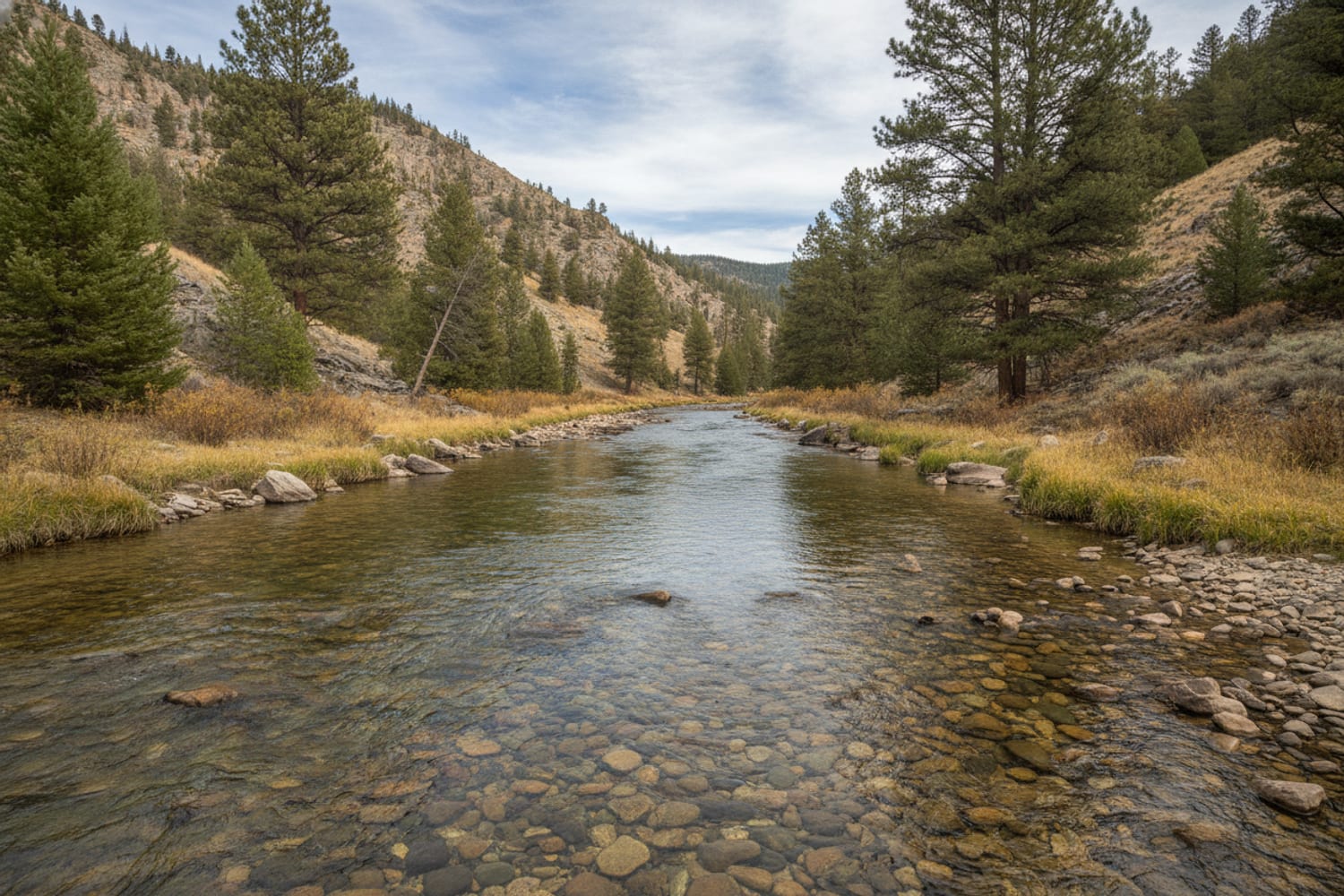
Here’s the good news: late May is about as easy as dry fly fishing gets. Hatches are consistent, fish are actively looking up, and a well-presented Elk Hair Caddis in sizes #14–#18 will catch trout from tailwaters to freestones across most of the country. The catch — there’s always a catch — is that the best of it happens during the evening egg-laying flights, which means you’ll be standing in a river squinting at a fly you can no longer see. Those flights typically start 30–60 minutes before dark and run until you genuinely can’t tell your caddis from a passing gnat.
The short answer
For late-May caddis, fish an Elk Hair Caddis in #14–#18 — a natural tan #16 is the baseline — on a 9-foot 5-weight with 5X tippet, dropping to 6X for #18s and flat, clear tailwater. The best action is the evening egg-laying flight, which starts 30–60 minutes before dark, so clear your evenings and dead-drift the fly, adding a twitch or skate when fish are chasing. That’s the recipe. Everything below is fly-by-fly selection, how to read the rise, and when to abandon the dead drift.
Why Late May Is the Pivot Point for Caddis Dry Fly Fishing
Caddisflies make up a larger portion of a trout’s diet than most people realize — more than mayflies in many river systems. Late May is when that reality starts showing up on the surface. Water temperatures are climbing into the 50–60°F range, which is the sweet spot for Hydropsyche and Brachycentrus activity. Runoff complicates things on some freestones, but tailwaters — where flows are regulated — tend to come into their own right around this window.
On the South Platte, caddis activity starts building in late April and peaks through May and into June — see the South Platte hatch calendar for the full month-by-month breakdown. The same is true on rivers like the Madison, the Deschutes, the Housatonic, and dozens of others across the country. The timing shifts by latitude and elevation, but the pattern holds: late May is when you should have a box full of caddis dry flies and your evenings cleared.
Fly Selection: What to Carry for a Caddis Hatch
You don’t need twenty patterns. You need the right three or four, in the right sizes. (Yes, I own the twenty. No, they don’t catch more fish. Learn from my fly bins.)
| Pattern | Best Use | Sizes |
|---|---|---|
| Elk Hair Caddis | Fast water, broken surface, general searching | #14, #16, #18 |
| X-Caddis | Slow water, selective fish, flush in the film | #16, #18 |
| Goddard Caddis | Choppy riffles, low light, big water | #12, #14, #16 |
| Peacock Caddis | Clear water, post-hatch mop-up | #16, #18 |
| CDC Caddis | Ultra-selective fish, flat tailwater conditions | #18, #20 |
Elk Hair Caddis is the baseline. Tied with a dubbed body, palmered hackle, and an elk hair wing, it sits high on the water and is visible in broken current. Natural tan/cream in #16 is my most-used caddis pattern — period. In green body versions it covers Brachycentrus — the Mother’s Day caddis, which is a bigger event on the Arkansas and the freestones than on the South Platte. Brown or olive body covers Hydropsyche, the spotted sedge that’s the real workhorse caddis on this tailwater. Keep both. You can grab the Elk Hair Caddis #16 and X-Caddis #16 at The Fly Fishing Place — use our link for 15% off.
X-Caddis is what I reach for when fish are rising consistently but refusing the Elk Hair. It’s a trailing-shuck pattern — it sits flush in the film and imitates an emerger that hasn’t quite broken free. On slow tailwater flats where fish have time to look, this pattern outproduces the Elk Hair regularly.
Goddard Caddis is carved from deer hair and sits on top of the water like a bobber. It’s almost unsinkable, which makes it useful in choppy water and during low-light egg-laying flights when you’re guessing at your fly’s position. In a fast riffle during an evening hatch, it’s my first choice.

Reading Rising Fish During an Egg-Laying Flight
Evening caddis rises are not all the same. Understanding what the fish are doing tells you which pattern to throw.
Splashy, aggressive rises — Fish are chasing active adults on the surface or just below. Caddis skitter when they hit the water to deposit eggs, and trout respond with slashing takes. This is when a skating or twitched presentation works. Throw the Elk Hair or Goddard, and don’t be afraid to give it a slight pull to make it move.
Subtle sips in flat water — Fish are taking emergers or spent adults just in the film. The rise form looks small and deliberate, almost like a mayfly rise. This is X-Caddis or CDC Caddis territory. Go to a longer, finer tippet. Dead drift. Any drag kills you here.
Porpoising fish — The fish is coming up in a slow, rolling motion that exposes its dorsal and sometimes its tail. It’s eating just subsurface. Try a wet fly swing with a soft hackle — Partridge and Orange, or a Sparkle Pupa — before you assume it’s a dry fly situation.
During an active egg-laying flight, adults are diving to the streambed and rising back up — the trout aren’t just at the surface. Watch where fish are positioned, not just where they’re rising. A fish feeding mid-column in a seam is a different problem than one sipping in six inches of water along a bank.
Leader and Tippet Setup for Caddis Dry Flies
This is not a complicated setup, but getting it right matters, especially on pressured fish.
Standard setup: 9-foot leader tapered to 4X, with 18–24 inches of 5X fluorocarbon tippet added to the end. This gives you turnover on bigger flies and enough finesse for #16s and #18s.
Technical tailwater setup: 12-foot leader or 9-foot leader with a 3–4 foot 5X or 6X tippet. Longer tippet gives more drift, which matters on flat water where fish have a long look at the fly.
X-Caddis and CDC patterns: Go to 6X on these. Those flies are designed for spooky fish in clear water, and if you’re throwing them on 4X, you’re fighting the fly. The tippet is too stiff to let the fly sit naturally in the film.
Fluorocarbon tippet is my default for dry flies in low, clear conditions. Some people swear by mono for surface presentation because it floats higher — I’ve thrown both and the difference is marginal. What’s not marginal is tippet diameter. In clear water at low flows, dropping from 5X to 6X is frequently the difference between refusals and eats.
How to Present a Caddis Dry Fly: Drift vs. Skate
Most trout anglers know the dead drift. Fewer know when to abandon it.
Dead drift is the default for caddis hatches, especially during emergence. Cast upstream or across, mend immediately to get slack in the line, and let the fly ride the current without drag. This works best when fish are taking emergers or spent adults that aren’t moving.
The skate is what separates caddis fishing from mayfly fishing. During egg-laying flights, adult caddis are moving — they touch down, kick off, skitter across the surface. A fly that drags during a mayfly hatch kills the presentation. A fly that drags during a caddis flight sometimes triggers strikes.
To skate a caddis dry fly: cast across and slightly downstream, hold the rod tip high, and let the current pull the fly across the surface in a controlled arc. You can also give short strips or a single downstream mend to reposition. A Goddard Caddis handles this better than an Elk Hair because it doesn’t dig in and sink when it drags.
When to switch tactics: If you’ve dead-drifted a good pattern through rising fish multiple times without a strike, try adding movement. One slight twitch at the end of the drift has saved a lot of blank evenings.
South Platte Caddis: What the Tailwater Teaches You
The South Platte through Cheesman Canyon and Deckers is a clinic in technical dry fly fishing. The flows are typically in the 50–150 CFS range, the water is clear, and the fish see every pattern known to man on a daily basis. If you can catch trout on a dry fly there during a caddis hatch, you can do it anywhere.
A few things the South Platte has hammered into me:
Leader length and tippet matter more than pattern choice. I’ve had fish eat a #16 Elk Hair on 6X that refused the same fly on 5X five minutes earlier. Go lighter before you change flies.
Position matters. On flat water, getting within 25 feet of a rising fish and presenting from directly downstream — with the fly arriving before the leader — produces more fish than any pattern switch.
Evening timing is tight. The window on a tailwater caddis hatch can be 45 minutes. The South Platte caddis hatch guide has the section-by-section timing detail. If you’re still rigging when it starts, you’ve already burned 20% of your opportunity.
The same principles apply on the Deschutes, the Green, the Madison, or any tailwater or freestone with consistent caddis activity. The fish are different sizes, the pressures different, but rising fish eating caddis respond to the same inputs.
My take
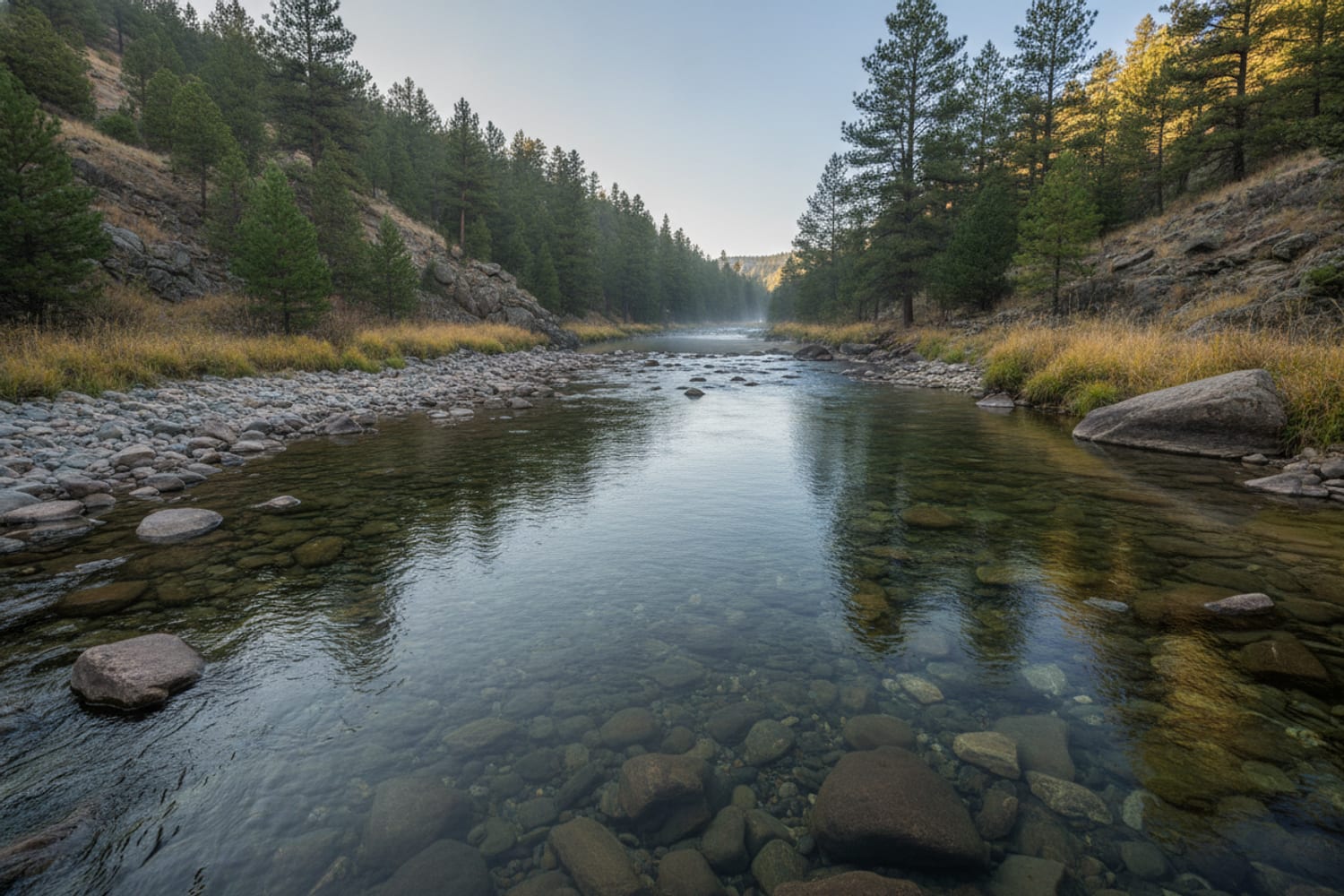
The famous caddis event in Colorado is the Mother’s Day hatch, and I’ve made my peace with skipping it — that’s an Arkansas-and-freestone show. My caddis season is quieter and, I’d argue, better: spotted sedges coming off a South Platte flat on an ordinary evening, a tan #16 at the end of a long tippet, fish eating until I genuinely can’t see. I own the twenty patterns and fish about three, a ratio my fly bins take personally. Late May asks very little of you — clear your evenings, watch the rise forms, and let the boring fly work.
Equipment Notes for Evening Caddis Fishing
You don’t need a specialized rod. A 9-foot 5-weight handles everything in this article — dry fly presentation on flat water, skating in riffles, and the occasional larger #12 Goddard in fast current. If you’re fishing small streams with short casts, a 7’2” 3-weight is more enjoyable. But for most situations, a 9-foot 5-weight is the answer.
Reel doesn’t matter much for trout fishing. Drag system matters a bit on larger fish, but most caddis fishing with dry flies doesn’t stress a reel.
Floatant — carry two types. Gel floatant (Loon Aquel or similar) for initial treatment on Elk Hair and Goddard patterns. Dry shake powder (Loon Top Ride or equivalent) for re-treating a waterlogged fly mid-session. An X-Caddis that’s riding flush in the film doesn’t need floatant — that’s the point. Adding gel to it defeats the purpose.
Headlamp — evening caddis hatches end after dark. Carry one. The number of times I’ve rigged a new fly by headlamp next to a river at 9:30pm is not small.
Frequently Asked Questions
Q: What is the best caddis dry fly for trout? The Elk Hair Caddis in sizes #14–#18 is the most versatile caddis dry fly for trout across nearly any river system. Natural tan body in #16 covers most situations. For selective fish on flat water, the X-Caddis or CDC Caddis in #16–#18 outperforms it.
Q: What time of day do caddis hatch? Caddis hatches and egg-laying flights concentrate in the evening, typically from 1–2 hours before sunset until dark. Some species emerge in the morning, but the heaviest dry fly action — when adults are on the surface and trout are visibly rising — happens in the evening window.
Q: What size tippet should I use for caddis dry flies? Use 5X for standard caddis dry flies in #14–#16 on moving water. Drop to 6X for #18 and smaller, or any time you’re fishing flat, clear tailwater with pressured fish. Fluorocarbon in 5X or 6X is a reliable default.
Q: When does caddis season peak? Late May through June is peak caddis dry fly season across most of the country, with activity continuing into summer depending on elevation and latitude. On Rocky Mountain tailwaters, strong caddis activity typically runs from late April through early July.
Late May gives you a legitimate shot at some of the best dry fly fishing of the year. The fish are up, the insects are active, and an evening on the right stretch of water with a box of caddis patterns and the right tippet is as good as trout fishing gets. Don’t overcomplicate the fly selection. Get your position right, match the behavior of the rise, and be ready when the light drops. And when you find yourself tying on the next fly by headlamp at 9:30, no idea where the last hour went — that’s not a problem to fix. That’s the whole point.