
In this guide
Ask any South Platte regular for their favorite month and you’ll get an answer with the conviction of a religious belief. Mine is May, and I’ll fight you on it — gently, with a coffee in hand, from the comfort of the truck. It’s not that summer is bad (it isn’t), and it’s not that spring is reliable (it absolutely is not). It’s that in May, all the things that have to line up for great South Platte fishing actually bother to show up on the same day.
Here’s what May looks like on the water, and why I keep clearing my calendar for it.
What’s the best month to fish the South Platte?
May. It’s the one month where the spring BWOs, the building PMDs, the year-round midges, and the first evening caddis all show up on the same day — with comfortable 45–65°F weather and lighter crowds than June and July.
Why May Is Different
In May, three things happen simultaneously that don’t overlap reliably in any other month:
1. Multiple hatches active at once. Blue-Winged Olives are finishing their spring run. Pale Morning Duns are arriving and building. Midges continue year-round but are most active in the cool morning hours before the PMD window opens. In the final week of May, early caddis begin showing in the evenings. A single May day at Cheesman can involve BWO fishing at 9 AM, PMD fishing from 10:30 AM to 1 PM, midge nymphing in between, and caddis dry-fly fishing after 5 PM.
2. Comfortable conditions. May weather on the South Platte corridor — the canyon and valley sections sit at 6,000–7,000 feet — runs 45–65°F during fishing hours. Cool enough that you don’t overheat on the Cheesman approach; warm enough that you’re not numb. Water temperatures in the 48–56°F range keep trout metabolically active and feeding throughout the day.
3. Manageable crowds. The PMD hatch is known, so May is not empty. But it’s significantly less crowded than June and July, when summer vacation schedules and the high-season reputation of the South Platte bring anglers from across Colorado. In May, particularly midweek, you’ll find fishable water without fighting for the best beats.
Week by Week
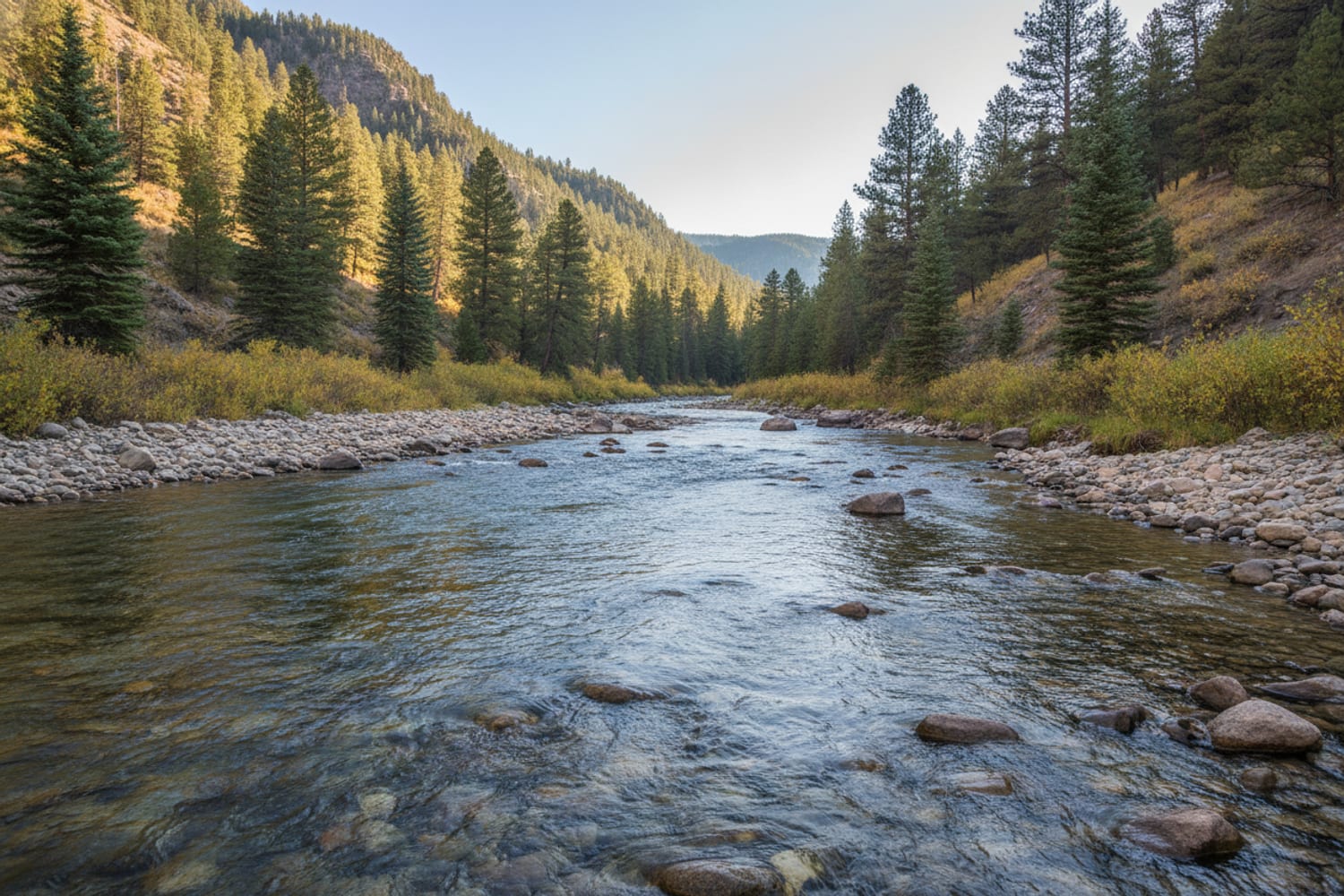
Early May (May 1–10)
The first week of May is an extension of late April at Cheesman and Deckers. BWOs are still the dominant surface fly on overcast mornings; midges dominate subsurface and on clear days. PMD nymphs are starting to appear in fish stomachs but the dun hatch hasn’t established.
The fishing is good — consistent midge nymphing, sporadic BWO days that can be excellent. But it’s the shoulder of the peak, not the peak.
What to fish: two-nymph midge rigs as the baseline, Parachute BWOs on overcast days, RS2 dropper during the BWO transition hours.
Gauge to watch: Deckers (USGS 06701900); for Cheesman, use the DWR-fed flow on the Cheesman river page — there’s no live USGS feed on that stretch. Flows in early May are stable unless there’s a significant snowstorm in the upper watershed — rare but possible. Target flows of 100–180 CFS for the best wading.
Mid-May (May 11–20)
This is the transition week. PMD duns start showing at Cheesman Canyon — sporadic at first, then building to a reliable daily emergence by the end of the week. Fish that have been nymph-feeding all spring start rising in earnest.
This is the week to “work from home.” The PMDs are establishing, the fish haven’t been pounded all season on the hatch, and the BWOs are still filling the mornings. You can have a two-hatch day — BWOs from 9–10 AM, PMDs from 10:30 AM to 1 PM — that covers both of spring’s best dry-fly opportunities in a single session. The PMD hatch guide breaks down the specific patterns and timing for catching fish on the surface during this window. For the full seasonal picture across all hatches, the South Platte hatch calendar shows how each emergence stacks up week by week.
What to fish: Sparkle Dun PMD #18, Parachute BWO #20, Pheasant Tail dropper under the dry during the PMD transition.
Late May (May 20–31)
Peak PMD season at Cheesman and Deckers. The hatch runs reliably from 10:30 AM to 1 PM, sometimes pushing past 2 PM on cool overcast days. Fish are locked onto PMDs and refusing everything that doesn’t match the profile.
This is also when Deckers tends to be at its best — the warmer open-valley water is fully into the PMD window, and the beats along the Trumbull section are as productive as any point in the year.
Meanwhile, at the higher-elevation sections — the Dream Stream and Eleven Mile Canyon — PMDs are just beginning. Late May gives you an extension opportunity: fish Cheesman and Deckers for the peak PMD window, then shift upstream to the Dream Stream for another two weeks of early-hatch PMD fishing into June.
What to fish: Sparkle Dun PMD #18, #20 when needed, CDC Comparadun as an alternative, Pheasant Tail dropper. In evenings, Elk Hair Caddis #16.
The Complete May Fly List

One box, everything you need for May:
Dry Flies:
- Sparkle Dun PMD — #18, #20
- CDC Comparadun PMD — #18, #20
- Parachute BWO — #20, #22
- Griffith’s Gnat — #20 (morning midge activity)
- Elk Hair Caddis — #16 (evenings, late May)
Nymphs/Emergers:
- Zebra Midge — #22, #24
- RS2 — #22, #24
- Pheasant Tail — #16, #18
- PMD Cripple — #18 (mid-hatch when refusals start)
Streamers:
- Woolly Bugger — #8, #10 (early morning before hatches)
My take
If I could only defend one week of fishing a year to my calendar, it’s the May transition week — the one where I’m suspiciously “working from home.” Not peak PMD, the week before it: fish that haven’t been pounded yet, mornings that still belong to the BWOs, and a real shot at two hatches in one session. Everyone else waits for the famous window; I’d rather fish the rehearsal. June will be more crowded and not noticeably better, and the gentle truck-side arguments about the best month can carry on without me — I’ll be mid-river.
Section Comparison in May
| Section | PMD Peak | Access | Crowds |
|---|---|---|---|
| Cheesman Canyon | Mid-May | Hike required | Heavy weekends |
| Deckers | Late May | Roadside | Moderate |
| Dream Stream | Late May–June | Easy drive | Light |
| Eleven Mile Canyon | Late May–June | Roadside | Light |
For a first trip of the season: Cheesman or Deckers for peak PMD timing. For extending the PMD season into June: Dream Stream.
What Changes If Runoff Hits
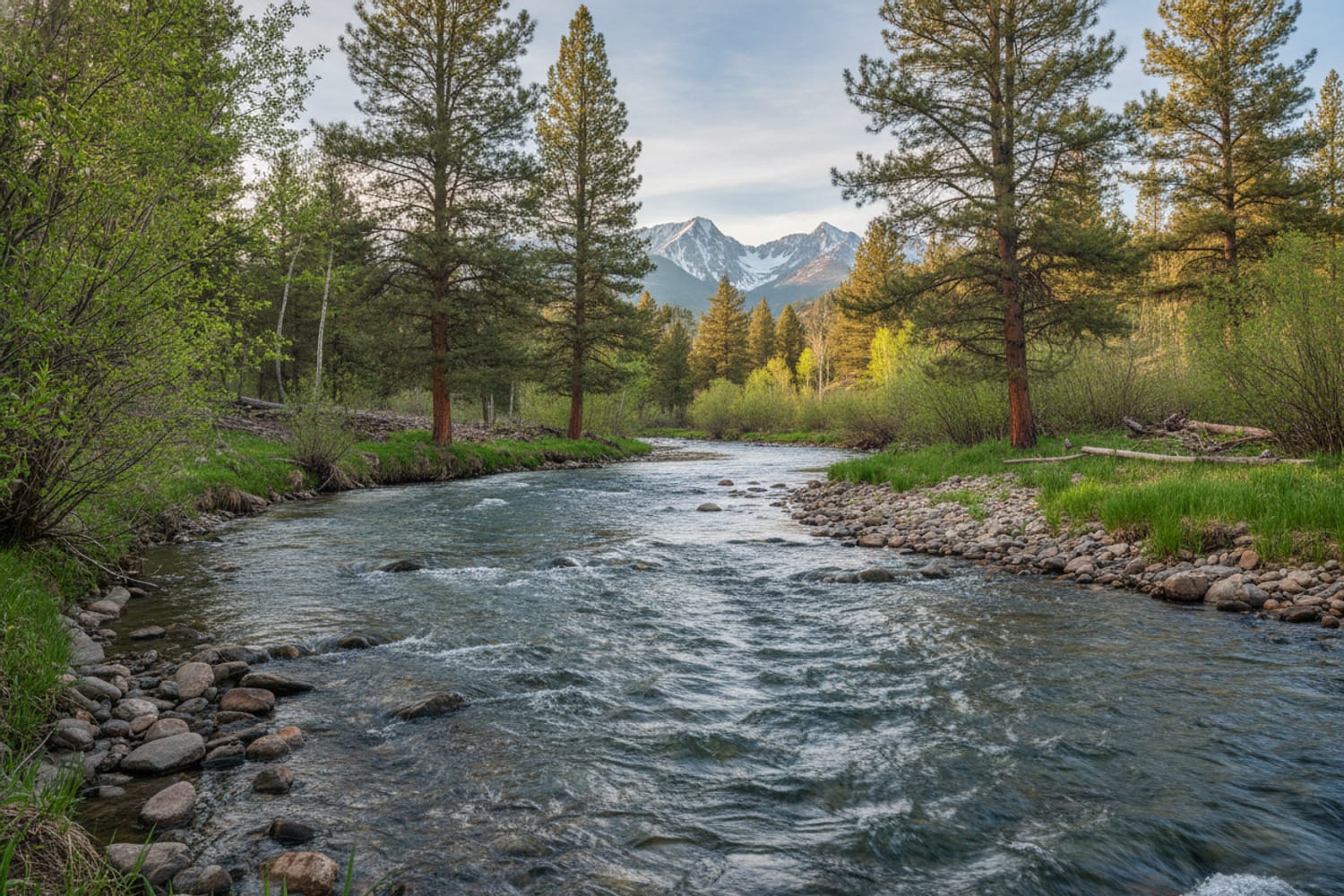
May occasionally brings runoff events — a late snowstorm in the upper watershed or a warm week that accelerates snowmelt from the upper South Platte basin. When this happens:
The open-valley sections (Deckers, Dream Stream) are affected first. Flows can spike from 150 CFS to 600+ CFS in 24 hours. The fishing goes from excellent to unfishable overnight.
The canyon sections — Cheesman and Eleven Mile — are buffered by their upstream reservoirs. Cheesman Reservoir regulates the flow downstream; a runoff event in the watershed gets absorbed by the reservoir before reaching the canyon. During a runoff event that blows out Deckers, Cheesman often continues fishing at stable flows.
Check the gauges before every May trip. Cheesman live flow is on the Cheesman river page (DWR data — no live USGS feed on that stretch); Deckers on USGS gauge 06701900 (near Trumbull), which updates every 15 minutes. A spike to 300+ CFS at Deckers is a warning sign; a spike to 200+ at Cheesman is a signal to call it off.
Practical Planning
Lodging: The closest lodging to Cheesman Canyon is in Bailey (30 minutes) or Conifer (40 minutes). Deckers itself has no services. Plan for a commute.
Timing: For Cheesman, the PMD hatch runs 10:30 AM–1 PM. There’s no reason to be on the water before 7 AM (approach takes 35 minutes), and the best beats benefit from low light before the hatch. A 7:30 AM water time, nymph fishing until the hatch, then dry-fly through the PMD window, then midge fishing the afternoon — that’s a complete and productive May day.
License: Colorado fishing license is required. Available online at cpw.state.co.us or at most Front Range outdoor retailers. Don’t assume you can buy it on the road.
May crowds: If you only have one available weekend day in May, go Saturday rather than Sunday. Sunday afternoon crowds on Cheesman are at their highest as weekend visitors squeeze in a final session before the drive back. Saturday morning crowds are heavy but disperse faster.
Pick your week, watch the gauges, and don’t talk yourself out of a midweek day because of “responsibilities.” The PMDs aren’t going to wait on your inbox, and neither am I — see you out there.
Some links in this article are affiliate links. Read our full disclosure.