

In this review
Scott makes their rods in Montrose, Colorado — about five hours southwest of the South Platte tailwater system where I fish most of my days. There’s something appropriate about that. The Centric is the flagship of a company that builds equipment specifically for the kind of fishing we’re doing here, and it shows.
After two seasons of regular use on Cheesman Canyon and Deckers, the Centric 905/4 is the rod I reach for when the conditions matter and I can’t afford to leave performance on the table. Here’s the full field report.
The verdict up front
The Scott Centric 9’0” 5wt (905/4) is the best all-around tailwater 5-weight I’ve cast for South Platte conditions — a 3.0 oz, fast, Colorado-built rod (Montrose) that handles heavy nymphing in Cheesman wind and technical dry-fly work on the Deckers flat, right down to a size 22 on 7X. It runs $995, and if you fish the South Platte 20+ days a year, I rate it 5/5 and think the money is earned.
If you mostly fish calm-water dries, a mid-flex Winston or Sage X makes more sense; if price is the wall, the Redington Predator is a different category, not a step-down. Everything below is the two-season field report.
Background: Why the Centric Exists
Scott redesigned their upper-tier lineup in recent years, replacing the Radian — which had a cult following — with the Centric. The transition wasn’t without controversy; Radian loyalists are vocal. But the Centric isn’t a replacement in the sense of “same rod, new name.” It’s a genuinely different design with a different character.
The Radian was celebrated for its smooth, progressive feel. The Centric is faster and more directive. Scott describes it as having been built around loop control — the ability to form tight, precise loops under variable conditions, wind resistance, weighted flies, and the accuracy demands of technical tailwater fishing.
That’s a South Platte problem statement.

Construction

The Centric is built with Scott’s X-Core construction. The blank construction uses longitudinally aligned fibers alongside the standard hoop-wrapped structure, which Scott claims increases strength-to-weight ratio and improves recovery speed. In practice: it’s a light rod that doesn’t feel fragile, and it recovers from a cast cycle faster than most comparable blanks.
Weight: The 905/4 comes in at 3.0 oz. It doesn’t feel like nothing — you’re aware you’re holding a rod — but it disappears over the course of an 8-hour day in a way that heavier rods don’t. A long July day at Deckers is a lot of casting. The Centric doesn’t add fatigue.
Hardware: Single-foot guides throughout except the stripper, titanium frames, REC recoil inserts. The guides are practical, not decorative. The cork handle is a full wells grip — standard for a 5wt — and the quality is consistent. No soft spots, no filler patches on the grip I’ve used for two seasons.
Warranty: Scott offers a lifetime warranty against defects and a repair program for damage. They’re based in Montrose; if something happens to the rod, you’re dealing with a small Colorado company that actually cares about their product reputation. I’ve called Scott’s service line once. It was handled correctly.
The Action: What “Fast” Means on a Tailwater
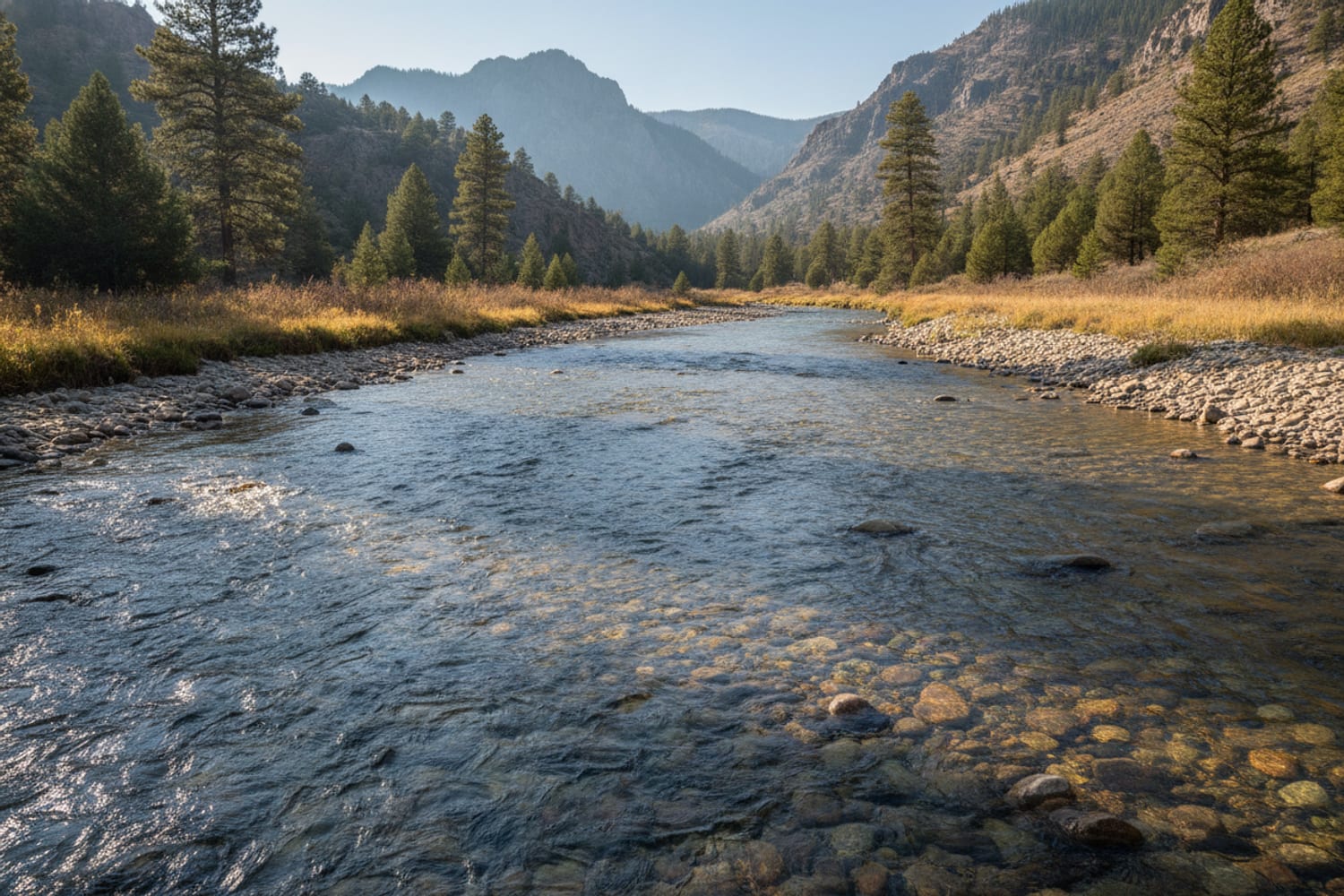
Fast-action fly rods are often described in ways that make them sound punishing — stiff, tip-heavy, unforgiving. The Centric is fast but it doesn’t fish that way. The key is where the flex is: the Centric loads through the upper third of the blank, which creates a tight loop with less input than a softer rod, but the tip isn’t dead. You feel the cast.
For South Platte fishing, this matters in three specific scenarios:
1. Nymphing with weight in wind. The Cheesman approach runs exposed for 0.5 miles and the canyon itself funnels crosswind in the afternoons. Getting a 3-bead Czech-style nymph rig to turn over cleanly in 12 mph crosswind requires authority. The Centric delivers it. A softer mid-flex rod gives you the wind and a pile of fly line at your feet.
2. Mending and managing slack on long nymph drifts. The Centric’s recovery speed lets you make quick roll-cast mends without disrupting your indicator. On the long flat at Deckers, where you’re managing 40 feet of drift on a feeding fish, this is the difference between a good drift and a dragged fly.
3. Protecting 6X and 7X tippet on hard-fighting fish. This is where fast-action rods have historically gotten a bad reputation — they can break off fish on the strike if the tip doesn’t absorb the shock. The Centric is fast but it’s not crispy. The tip has enough give to protect the fine end of the leader when a Cheesman rainbow erupts on a size 22 midge. I’ve landed fish in the 18–20” range on 7X on this rod without incident.
On the Water
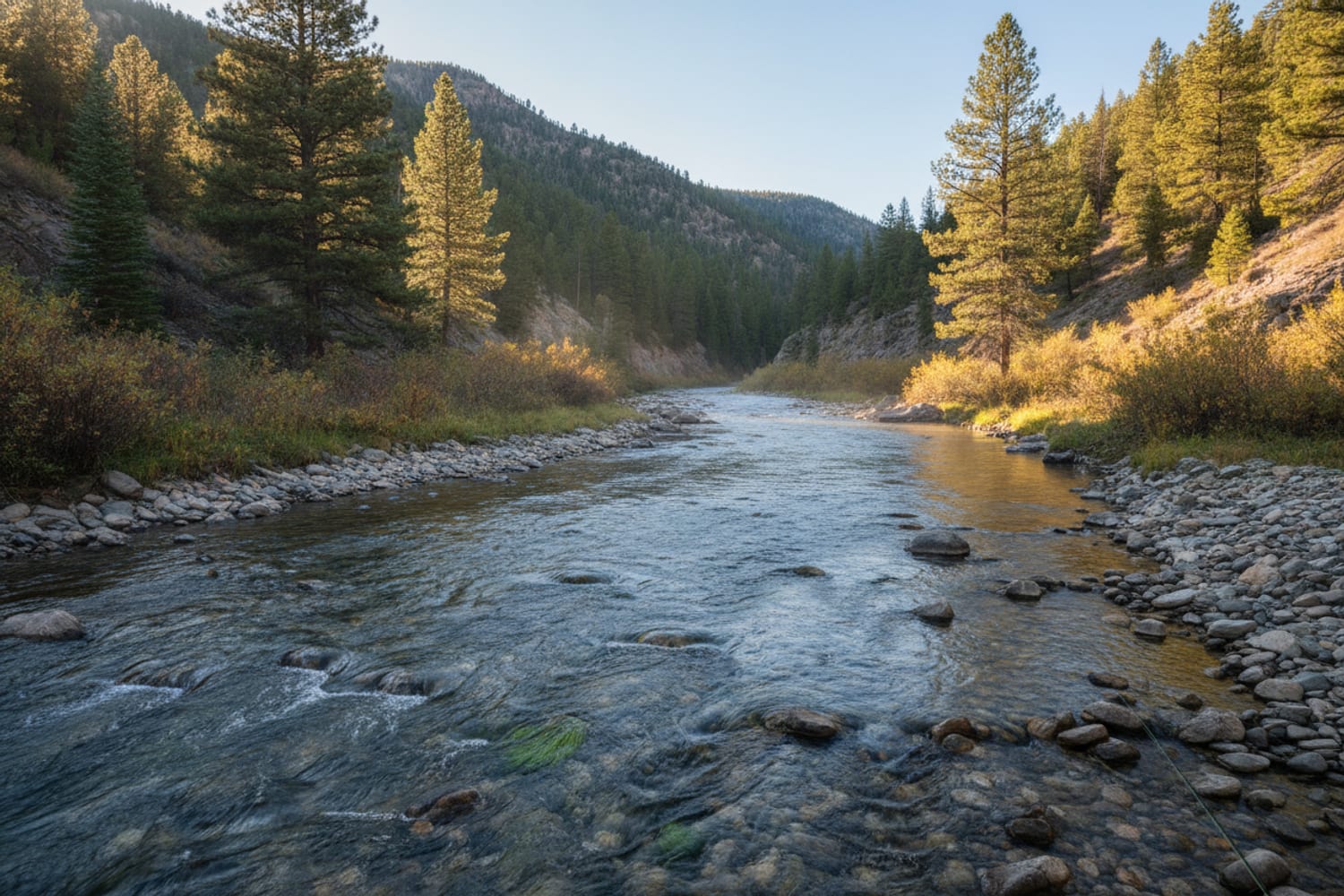
Dry fly fishing — the Centric handles dry flies better than its action specification suggests it should. On the flat water at Deckers with a 14-foot leader and 7X tippet, it places a size 22 CDC comparadun exactly where I ask it to go. The loop is tight enough to control in a breeze but not so tight that you’re fighting the rod. False casting is minimal; the line speed means you’re shooting distance, not aerializing it.
The one limitation: in very tight Cheesman pocket water — 15-foot casts between canyon walls into a 12-inch pocket — the Centric is more rod than you need. A softer 4-weight would be more fun for that specific application. But most Cheesman fishing isn’t that fishing; it’s 35–50 foot presentations across the main runs, and there the Centric is excellent.
Nymph fishing — this is the rod’s primary strength on the South Platte. Euro-nymphing, indicator nymphing, tight-line — the Centric does all of it well. The sensitivity in the tip translates subtle takes into visible information. The lifting power means you’re not wrestling to pick up a heavy rig in the wind.
Two-fly dry-dropper rigs — the South Platte standard setup for the PMD window. A size 18 Sparkle Dun with a midge dropper 14 inches below. The Centric turns this rig over cleanly at 40 feet in a modest crosswind. It’s not the first application most people think of for a fast rod, but the line speed actually helps the dropper system turn over rather than collapsing in a heap.
My take
Two seasons in, the thing I value most isn’t any single performance trait — it’s that this rod ended my pre-trip agonizing. Wind at Cheesman, weighted rigs, a 14-foot leader on the Deckers flat: one rod covers the spread, so the decision is made before the alarm goes off. The moment it earned permanent trust was a Cheesman rainbow in the 18-inch class eating a size 22 on 7X — fast rod, fine tippet, no break-off, no drama. A 5-weight that lets you stop hedging is worth more than anything else on the spec sheet.
Compared to the Competition
Sage R8 Core ($1,100): The closest competitor and the most common alternative conversation. The R8 is slightly faster and more demanding — it rewards good technique more and punishes bad technique harder. On a technical day at Cheesman when everything is working, the R8 and Centric are nearly indistinguishable. On a difficult day when you’re fighting wind, bad light, and tired arms, the Centric is more forgiving.
Winston Pure 2 ($995): Softer action, mid-flex, slower feel. Better for delicate dry-fly-only days. Less authoritative with weight in wind. A different tool for a different fishing style. If you primarily fish dry flies in calm conditions, the Winston is worth serious consideration.
Orvis Helios 4 ($1,098): Excellent rod at a premium price. Lighter than the Centric, similar action profile. The price-to-performance ratio doesn’t clearly favor the Helios over the Scott.
Redington Predator ($299): If you’re considering the Centric from a budget perspective, the Predator is not a step-down alternative — it’s a different category of rod. Buy it if the Centric price is prohibitive. Don’t expect the same performance.
The Colorado-Made Factor
I’ll acknowledge this: buying a rod made in Colorado for fishing in Colorado is meaningful to me. The Scott factory in Montrose employs people in our state, builds rods by hand, and stands behind them with real service. The Centric costs $995. Comparable imported rods are available for $400–$600. The gap is real money. Whether it’s worth it depends on your fishing frequency and what you value in the purchase.
For an angler who fishes 30+ days per year on technical Colorado water, I think it is. The rod will last indefinitely with normal care; the warranty is genuine; the Colorado origin matters. For an angler who fishes 8 days per year, the math is different.
Pros and cons
Pros
- Turns a 3-bead Czech rig over cleanly in a 12 mph Cheesman crosswind, where a mid-flex rod hands you a pile of line at your feet
- Recovery speed lets you roll-cast a mend without moving the indicator on a 40-foot drift
- Fast, but not crispy — I’ve landed fish in the 18–20” class on 7X without a break-off
- 3.0 oz, and it disappears over an 8-hour day
- Titanium-frame guides, REC recoil inserts, and cork that still has no soft spots after two seasons
- Lifetime warranty and repair handled by a small company in Montrose. I’ve called them once; it was handled correctly
Cons
- $995, when comparable imported rods run $400–$600
- More rod than you need for 15-foot casts into a 12-inch pocket — a softer 4-weight is more fun in that water
- The math stops working at 8 days a year. This rod earns its price on frequency
Who Should Buy the Centric 905/4
Buy this rod if you fish the South Platte system more than 20 days per year and want one rod that handles everything from heavy nymphing in wind to technical dry-fly presentations on flat water. It’s the most versatile 5-weight I’ve cast for Colorado tailwater conditions, and it’s built in the state where you’ll use it.
If you fish primarily calm-water dry fly and don’t nymph much, consider a mid-flex rod in the Winston or Sage X category first. If the price is the deciding factor, the Redington Predator is a capable rod at a third of the cost. The Scott Centric vs. Sage R8 comparison puts these two top-tier options side by side for South Platte-specific conditions.
Rating: 5 / 5 — the best all-around tailwater 5-weight available for South Platte conditions. The $995 is earned.
The Scott Centric 905/4 is available from Trident Fly Fishing and local Colorado fly shops. Trident carries the full Scott lineup with free shipping and a satisfaction guarantee.
Rocky Drift Co. is an affiliate partner with Trident Fly Fishing. If you purchase through our links, we may earn a commission at no extra cost to you. Read our disclosure.