
In this guide
Part 4 of The Tight Line — my series on fishing a tight-line rig on South Platte tailwaters. Start with Part 1.
I’m not going to tell you how to build a two-fly leader here. I’ve already done that — the lengths, the tippet ring, the tag, all of it lives in building a euro nymphing rig from scratch, and the indicator-side version is in the South Platte nymph rigging guide. Go there for the mechanics.
This post is about the part those guides don’t cover: the strategy. Once you can tie two flies onto a tight-line rig, you have a decision to make on every run — which fly goes on point, which goes up top, how far apart they ride, and whether the fish even want two flies at all. That decision is worth more than the knots. I’ve been the guy with the flawless rig, leader measured to the inch, fishing the wrong fly at the wrong depth while a buddy out-fished me on a rig he tied in the truck. The leader was never the problem. So let’s talk about the spots.
For context, when I fish a tight line it’s almost always on South Platte tailwaters — Deckers, the Dream Stream, Cheesman when I want to be humbled, the Arkansas at Pueblo when the high country’s locked up — on the Diamondback 10’7” 3wt, the only rod I tight-line with. The other half of my season belongs to the Centric and a real fly line, doing all the things this post isn’t about. I’ve never picked a favorite and I’ve stopped pretending I will. Tailwater flow is a release schedule, not weather, and it repositions fish in ways a freestone never does, so every call below bends to what the water’s doing.
Point vs. dropper — two different jobs
On a tight line, the two flies are not equals. They do completely different work, and once you see them that way the whole rig makes sense. It took me an embarrassingly long time — I spent my first euro season treating both flies like lottery tickets and hoping one hit. They’re not lottery tickets; they’re a crew with two assigned jobs.
The point fly is the anchor. It’s the heaviest fly in the rig, tied to the end of the tippet, and its job is to get the whole system to the bottom and keep it there. Almost everything I anchor with is tied on a jig hook with a slotted tungsten bead, so it rides hook-point-up: fewer snags ticking the bottom, and a better hook angle into the upper jaw — the difference between a clean corner-of-the-mouth set and a fly that pings off and ruins the run. The point fly is also what gives you contact: without enough weight down there the sighter goes limp, you lose the read, and you’re just dragging two flies through the upper column hoping. I’ve done plenty of hoping; it does not catch fish.
The dropper is the lighter fly, riding up the leader on a tag, roughly 16 to 20 inches above the point. It does none of the anchoring; its only job is to ride at a slightly higher level with a different look. Because it’s not carrying the weight it can be smaller, sparser, more imitative — the fly you’d love to fish but can’t on its own: a #20 baetis that’d never sink, hung in the zone for free because the heavy guy below does the work.
That’s the whole framework. Anchor on point, lighter look on the dropper. Everything else is just deciding which flies fill those two roles — which I’ve made harder than it needs to be more times than I’ll admit on a public website.
Which fly goes where
Here’s how I actually assign the two slots. I spent a long time treating this like a puzzle with a hidden right answer; it’s really just two questions — how clear is the water, and which fly do I trust most today.
The Blowtorch is my point fly more often than not. It’s heavy enough to anchor and it’s my highest-confidence pattern by a mile, so when the river’s off-color I want it down where the fish are holding tightest. I almost never tie it exactly the way Olsen does — the body and the collar have wandered over the years, the way anything does once you own a vise — but the tag color is the whole decision: in stained water I run the orange tag, because the hot spot does the attracting when visibility is short. Up top I’ll hang something small with flash — a bit of tinsel, a hot-spot collar, a flashback — for a second trigger in the murk. Two attractors, both shouting, when the fish can’t see far. After a flow bump at Deckers, gauge jumped and worms washing loose, this is the exact rig I want in the water yesterday.
When the water’s low and clear, I flip the logic. Clear water means inspection, and inspection turns the attractor look against you. I’ll go to the green tag Blowtorch — closer to imitation — and run a small, sparse dropper above it: an RS2, a WD-40, a tiny Juju Baetis in #18 or #20. Pressured Deckers fish that have refused everything bright will often eat that quiet fly up top — the trout equivalent of ignoring the billboard and buying the thing your neighbor mentioned once.
“The South Platte” is really three different fish, and the rig follows. Deckers is my workhorse — accessible, forgiving enough that an attractor point fly and a reasonable drift get eaten, and where I run a true two-fly searching rig. Cheesman, up the canyon, is graduate school: gin-clear, heavily pressured, full of trout that refuse any tippet they can see, so it’s green-tag territory before you rig — and a lot of Cheesman days end with one fly, because the dropper tag is one more thing those fish hate. The Dream Stream is its own animal: a meadow stretch of big cruising run fish, where I’m picking apart specific seams instead of searching blind. Same mono rig, three different conversations.
The rule underneath all of it: put your confidence fly where it gets the most water. On point it rides deepest and longest in the zone, so when one fly clearly out-produces, that fly belongs on point and the experiment rides the dropper. I’ve blown whole mornings fishing the Blowtorch as a dropper because I liked how the rig looked while the fish ate nothing of mine. Looking good and catching fish are two different goals; pick the second one.
One fly or two? When each wins
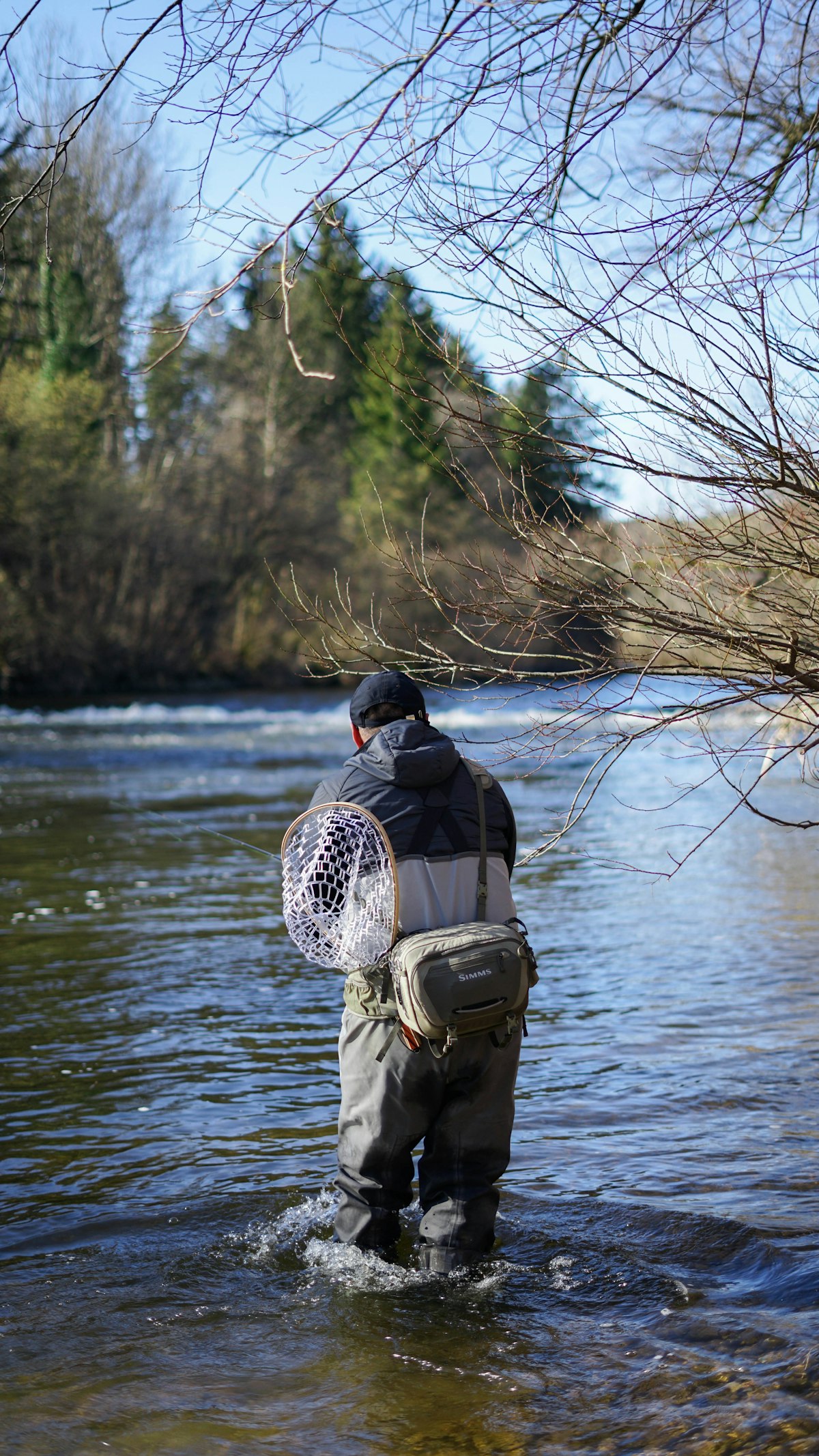
Two flies isn’t automatically better, and there are days I cut down to one on purpose. This surprises people — there’s a loud corner of the internet that treats “more flies” as “more better,” like the rig’s a slot machine. It isn’t.
Two flies win when you’re searching — covering unfamiliar water, prospecting a run blind, figuring out what they want. Two flies is two questions per drift, and on a fresh stretch I want to ask as many as I can before the fish stop answering. They also win in off-color water, where a second trigger helps fish find the rig.
One fly wins more often than the rabbit-hole crowd admits. In tight pocket water and around heavy structure, a second fly is just a second thing to snag — I’ll fish a single point fly to keep the rig clean and my drift time up. (How the whole rig changes between fast pocket water and slow flats gets its own post later in this series — Part 7.) On glassy, pressured flats — Cheesman on a bright, low day — a lone nymph on long light tippet can be the only thing technical fish tolerate. And any time I’m tangling more than I’m fishing, I drop to one without a second thought — I’ve watched a feeding pod go cold while I picked at a bird’s nest, and the second fly was not worth it.
I won’t hand you a ratio. I’ve never kept score, and any percentage would be one I invented on the spot to sound like a man with records. What I can tell you is that the one-fly days are reliably the technical ones, and the rule isn’t “two is better,” it’s “match the rig to the water.”
How far apart should the point fly and the dropper be?
The 16-to-20-inch gap is a starting point, not a law — and yes, I used to fish the same gap in six inches of riffle and four feet of slot and wonder why the dropper never moved.
In shallow water — a foot or two of riffle — I tighten up. Sixteen inches, sometimes less. The physics are blunt: fourteen inches of water and flies eighteen inches apart means your dropper is fishing the air, and trout famously do not hold in the air.
In deeper slots and runs, I open it up — 20 inches, occasionally more — so the flies sample genuinely different levels of the column: anchor near the bottom, dropper in the holding zone above it. Flow plays in too — when a release bumps and fish slide up into softer mid-column seams, a wider gap with a lighter point follows them; when it drops and they pin to the floor, I tighten up and get heavy. The gap follows the fish, and on a tailwater the fish follow the dam.
The bigger point is that spacing is a read, not a default you set and forget. If every fish is eating the point, they’re pinned to the bottom and the dropper’s too high — shorten the tag or go single. If they’re all on the dropper, the point is plowing below them — lengthen the tag, or take weight off and fish shallower. The flies are reporting where the fish are; the trick is listening instead of admiring your leader, which I’m very good at doing.
Keeping two flies from becoming a knot
The honest downside of a two-fly rig is tangles, and on a tight line you can manage most of them before they happen. Note I said “most” — there’s no rig on earth that hasn’t tied itself into modern art in my hands at some point, usually right as a fish starts rising. A tangle is almost always a casting problem, not a rigging problem, which is good news because casting is fixable. The fixes:
- Open your loop. Two flies need a wider, slower stroke than one; tight snappy loops fold the dropper back over the leader. You’re lobbing weighted flies anyway, so let the weight swing and stop being precious.
- Pause and let it turn over. Most tangles happen on the forward stroke before the flies straighten. Wait the extra beat. It feels too long. It is not too long. (Source: the dozen wind knots I tied learning this.)
- Keep the tag stiff, and don’t let it grow. A long, limp tag wraps the main leader constantly. Stiff fluorocarbon tags far better than soft nylon, and I hold it to the tag length in the rig build — every extra inch past that is borrowed against a tangle. (The knot matters less than tying it well does.) A floppy tag is a tangle with a countdown timer on it.
- Re-set after a fish or a snag. Two flies come out of a trout’s mouth twisted, and you’ll re-cast that twist into a wind knot. I skip this when I’m excited and pay for it on the very next cast, every time.
And when it does tangle into a bird’s nest — it will — that’s usually my cue to fish one fly rather than re-rig streamside with cold hands and a pod working in front of me. Clip the dropper, fish the point, rebuild at the vise later. Drift time beats perfect rigging in the parking lot.
The real decision: change the fly, or change the depth?
This is the judgment call I got wrong for two solid seasons, so I want to end on it. I’m not handing down a rule here — I’m reporting from the wrong side of it.
Part 1 makes the whole case: on a tailwater, a refusal is far more often a depth problem than a pattern problem. I’m not going to re-argue it here. What I’ll add is the two-fly wrinkle, because a second fly makes that same mistake twice as easy to commit. You don’t have one fly to change, you have two, plus a gap between them — three satisfying things to fiddle with instead of the one boring thing that would help. And opening the fly box always feels like doing something. The box is full of little promises.
So my order of operations on a two-fly rig, before I open the box: am I deep enough? I read the sighter for contact and speed, and if the flies aren’t ticking the zone I add weight — a heavier point, more tippet, or just leading the rig lower and slower through the slot so it sinks before the fish see it. (Where in the run that zone actually sits is Part 2.)
Only once I’m sure the rig is in the zone and still refused do I touch a pattern — and here’s the part that belongs to two flies specifically: change the dropper first. The point fly is carrying your depth. Pull it off and you’ve moved two variables at once, so whatever happens next tells you nothing. Swap the dropper and the anchor stays exactly where you dialed it, which means the experiment is actually an experiment. I’ve lost count of the mornings I ripped the point fly off in frustration, went shallower without noticing, and then let a fresh dropper take credit it hadn’t earned.
Change depth first. Change the fly second — and when you do, start with the dropper. The two-fly rig hands you a lot of buttons; the discipline is pushing them in that order.
My take
The two-fly tight-line rig is less about the flies than people want it to be. My point fly is the Blowtorch most days — orange tag off-color, green tag when it’s low and clear — and the dropper is wherever I park the day’s experiment. What moves my catch rate isn’t the pattern in either slot; it’s getting the point heavy enough to anchor, reading which fly’s getting bit, and resisting the urge to re-tie when the honest problem is depth. Two flies is a great tool. It’s also a great way to overthink a fish that just wanted your anchor six inches lower.
Should the dropper go above or below the point fly on a euro rig?
Above. On a tight-line rig the weighted point fly rides at the end of the tippet — the anchor that gets everything down — and the dropper sits on a short tag 16 to 20 inches up the leader. Hanging the lighter fly below your anchor defeats the purpose: the heavy fly is what reaches the strike zone, so it goes deepest, with the dropper suspended above it. (Indicator rigs sometimes drop a second fly below the point off the bend; that’s a different system. On a tight line, anchor low, dropper high.)
Bottom line
Building the leader is the easy part — the strategy is the rig. Put your weight and your confidence fly on point as the anchor, hang a lighter or flashier dropper 16 to 20 inches above it, and let the water tell you the rest: orange tag and a flashy trailer off-color, green tag and a sparse one when it’s low and clear, tighter spacing shallow and wider deep. Fish two flies when you’re searching, one when it’s technical or tangling. And when a run goes quiet, reach for weight before a new pattern — most of the time the fly was fine and the depth wasn’t.
Next in The Tight Line → Part 5: Detecting the Take You Can’t Feel — you’ve got two flies in the zone; now learn to read the take that never reaches your hand.