
In this review
It’s the first of October. Back in May I wrote that you should ask me again next October, when something with a backbone for streamers caught my eye. Nobody asked, so I’m answering anyway.
My streamer rod is a Redington Vice 796-4: 9’6”, 7-weight, four pieces, balanced with a Lamson Liquid S. It’s the heavy end of my quiver, and it comes out for about a month each fall, when the browns on the South Platte and the Arkansas below Pueblo go pre-spawn and start hitting things out of spite. This is the list I’d shop from, sorted by what our water actually asks of a streamer rod.
One thing up front. The Vice is the only rod here I own. For the other five I’m working from what each maker publishes, what the build and taper suit, and who I’d point at it. I haven’t cast them.
The short answer
Buy a fast 9’ or 9’6” rod, a 6- or 7-weight depending on the flies and lines you’ll throw (the split is just below). Under $300, the Redington Vice 9’6” 7wt ($279.99) still does the job. The best value is the TFO Legacy ($399.95). The rod I’d upgrade to is the Colorado-built Scott Centric 9’6” 6wt ($995), but only after trying the two cheaper fixes in the Vice section.
What weight rod do you need for streamers on Colorado tailwaters?
A 6-weight covers most of it, and a 7-weight covers the rest. That sounds like a dodge, so here is the split.
The streamer that catches the most browns on these rivers is smaller than the one in the magazine photos. This site has been making that point for a while. In the fall streamer guide a #10–12 olive bugger catches browns that ignore the big articulated stuff, and the Slumpbuster guide drops to a #8–10 natural for educated tailwater fish. A 6-weight throws a #6–10 single-hook fly on a floating line or a poly-leader all day, and a 14-inch brown still bends it.
The 7-weight is for three jobs: articulated flies, integrated sink-tip lines, and wind. Each gets its own section below.
If you can own only one and you fish South Park or throw the big flies on a stained Arkansas bump, buy the 7. If you mostly fish Deckers and the canyons with smaller flies, buy the 6 and enjoy the extra feel.
What else a Colorado streamer rod has to handle
Beyond line weight, five things decide whether a rod suits these rivers: lifting a sunk line, throwing the occasional big fly, holding a loop in wind, loading at short range from a wading position, and staying light enough in the hand for a long session.
Sink-tips and poly-leaders
There are two common ways to get a fly down. A poly-leader clips onto a floating line and sinks at roughly 1.5 to 7 inches per second, depending on which one you buy, and it asks very little of the rod. An integrated sink-tip line carries a heavier head, and lifting that sunk head off the bottom and back into the air is a job for the butt section. My own preference is the integrated tip, which is exactly why a 7-weight’s lower third matters to me. The fly lines explainer covers densities and lines that run heavy. For shopping, match the rod to the heaviest line you’ll actually carry.
Articulated flies, and the size you’ll really fish
The Vice turns over a five-inch articulated fly without complaint once there’s enough line out. That’s useful a few days a fall. The big articulated fly is mostly a statement of hope, and the fish on clear, pressured tailwater tend to read it that way. Buy the rod for the fly you’ll tie on most days, then check that it can handle the big one when the water’s off-color.
Wind on South Park
The Dream Stream is open meadow with nothing to stop the wind, and the river page puts it plainly: South Park mornings are frequently calm and the afternoons frequently are not. A rod that recovers fast holds a tight loop, and a tight loop is what carries a weighted fly into a headwind. My usual fall routine is streamers in the cold morning and dries once the Baetis come off around 11, so the wind case for a 7-weight is really the afternoon the wind takes the dry game away and the streamer comes back out. Three makers on this list name wind in their copy: Hardy and TFO for rivers, Scott for lakes. One October note: portions of the Dream Stream can be posted closed in autumn for spawning kokanee, so check the river page before you drive. South Park wind is the one problem on this list that money doesn’t fix, though a few of these price tags look like they’d like to try.
Pocket water versus the meadow
In Cheesman’s boulder pockets you’re standing in current close to the fish, often with a wall or a boulder right behind you. The cast is short, frequently a roll or a water-loaded flip with a sunk fly. (Broad, readable Deckers is rarely streamer water for me at all; the streamer rig goes to the Dream Stream and the Arkansas.) Short range is where the Vice struggles: it’s too stiff to load at 30 feet and doesn’t wake up until 40 or 45. Out on the meadow you get distance, and a 9’6” rod helps you hold line off the current and mend. Even there, the river page’s advice in a hard wind is to wade in and present close. For the short game, how to cast 20 feet is the drill.
Swing weight on an all-day session
Static weight is what the scale says. Swing weight is what your wrist feels after three hours of throwing a weighted fly, and it’s covered properly in are expensive fly rods worth it. Of the six makers here, only Echo and TFO print rod weights on their pages, and even those numbers can’t tell you where the mass sits. Balance counts too. The Liquid S keeps the Vice from feeling tip-heavy, and the heavier spool on Hardy’s Averon Streamer helps balance a 7-weight as well. Cast any candidate with your own reel and line on it for a solid twenty minutes. Two minutes in a parking lot tells you how a rod feels; twenty tells you how it fishes.
The rods
Redington Vice 9’6” 7wt ($279.99), the one I own
Redington calls the Vice a fast, easy-casting action and lists the 796 under boat, big-indicator and streamer work. It has a fighting butt handle, four pieces and a lifetime warranty. I bought it to learn streamers without spending premium money, and it does that job. It’s the cheapest rod I own, and this site has heard about its shortcomings more than once.
Before spending $995 to fix the Vice, try the two cheap fixes. First, overline it. A line one size heavier loads a stiff fast rod deeper at short range, and the fly lines explainer suggests trying exactly that before deciding you hate a rod. Second, for the small-fly days, use the rod you already have. My Centric 5-weight is my do-everything rod, streamers included, and a #10 bugger doesn’t need more. What neither fix touches is the weight of a 9’6” 7-weight in your hand by mid-afternoon. That’s the problem an upgrade actually solves. Scheels doesn’t list the Vice right now, though its fly rod section carries other Redington rods. Specs are on Redington’s page.
Where it wins: bank shots at 40–45 feet, big articulated flies, and a price that’s easy to justify for a seasonal rod. Where it costs you: heavy in the hand after a few hours, and dead at 30 feet, where pocket water lives.
TFO Legacy 9’ 7wt ($399.95)
TFO rates the Legacy extra fast and builds the blank with a Kevlar weave to stop it ovaling under load, plus graphene for recovery. TFO pitches it for driving streamers into the wind on big western rivers. The 9’ 7-weight (TF 07 90 4 LE) is listed at 3.6 oz with a fighting butt. The 9’ 6-weight comes at 3.3 oz, or 3.6 oz with the beefier C handle. That’s the lightest published weight among the six, at the second-lowest price. Full table on TFO’s Legacy page.
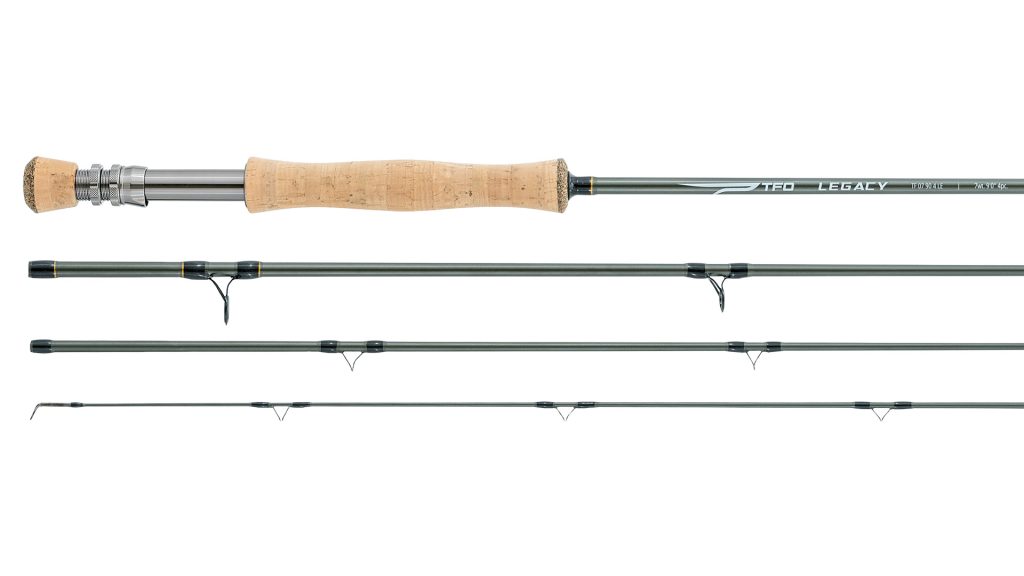
Where it wins: wind, price, and a published weight that suggests it won’t wear you out. Where it costs you: extra fast is the least forgiving action up close. The complaint I have about the Vice at 30 feet could follow you here, so cast it before you buy. Then again, before I blame any rod for a short cast, I check who was holding it. Usually me. The rod action explainer covers why.
Echo Streamer X 9’ 6wt or 7wt ($574.99)
The only rod here built purely for streamers. Echo developed it from a blueprint by Kelly Galloup, the same Galloup behind Hardy’s streamer reel. Echo describes a fast-loading top section, a powerful bottom section and Galloup’s own handle shape, all aimed at delivering a big fly with as few false casts as possible. Galloup made his name on streamers roughly the size of a small mammal, so recommending his rod for a #10 olive bugger probably undersells it. The Deckers browns vote for the bugger anyway. The 6-weight is Echo’s pick for small to mid-sized streamers at 4.1 oz; the 7-weight is the in-between for larger flies at 4.3 oz; there’s an 8 at 4.5 oz. Specs on Echo’s Streamer X page.
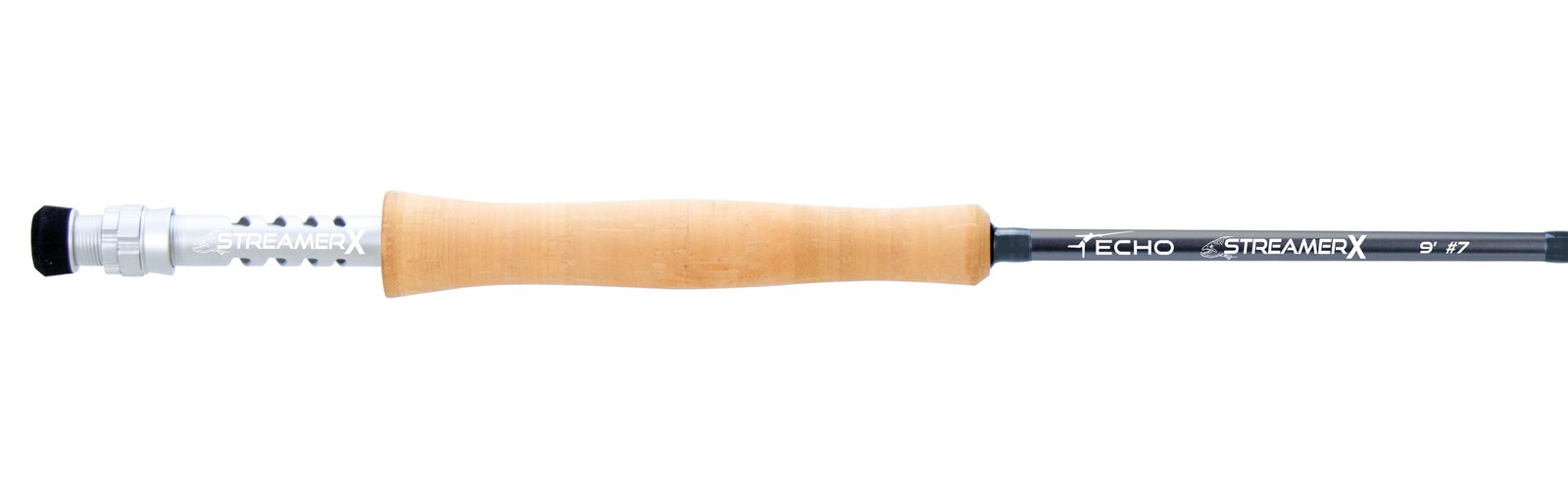
If you want a cheaper 6-weight for the small-fly game, Echo’s Boost Fresh 9’ 6wt has a $349.99 list price (retailers vary) and weighs 3.2 oz, and Echo pitches it for big dries, hoppers and moderate-sized streamers. Scheels carries the Boost Fresh 9’ 6-weight.
Where it wins: every design choice points at streamers, and the 6-weight suits the fly sizes these rivers reward. Where it costs you: the heaviest published weights in the group, and it does one job.
Scott Centric 9’6” 6wt ($995)
Built in Montrose. Scott calls the Centric fast and calls the 9’6” 6-weight its favorite multi-discipline six: streamers on rivers, wind-blown lakes, big indicators. The 9’ 7-weight is Scott’s out-and-out streamer model, and there’s a 9’ 6-weight with a fighting butt option. I fish the Centric 9’ 5-weight as my do-everything rod. It’s fast, but the tip isn’t dead, and it recovers faster than most blanks. That’s the thing the Vice lacks at 30 feet. I haven’t cast the 6-weight, so treat that as an educated guess about a family resemblance. Full disclosure, too: the rod I end up recommending is from the family I already fish, so weigh my enthusiasm accordingly. Models on Scott’s Centric page.

Where it wins: if the family resemblance holds, short-range life in the pocket water, plus 9’6” of line control on the meadow and a Colorado shop behind it. Where it costs you: $995, and no published weight to compare.
Hardy Firecrest 9’ 7wt ($995)
Hardy developed the Firecrest on windblown Northern Rockies rivers. That’s a fair description of a lot of South Park afternoons. The blank is fast-action Sintrix FLT with a high recovery rate, and Hardy says the butt is built to lift sinking lines and turn over big flies. It runs ceramic-lined Fuji titanium stripping guides and is tuned for aggressive tapers and lines that run a half to a full size heavy. Lengths are 9’ in 5 through 8 and 10’ in 7 and 8, all four-piece. Details on Hardy’s Firecrest page.
Where it wins: the most explicit wind-and-sinking-line brief of anything here. If you fish an integrated tip on the Dream Stream, this is the one built around your problem. Where it costs you: no published weight, and if you fish a true-to-weight floating line with small flies, you may be buying more rod than you’ll use.
Winston Air 2 9’6” 6wt ($1,195)
Winston rates the Air 2 fast and builds it in Twin Bridges, Montana. Winston’s own copy says the 5- and 6-weights do everything from small dries to double nymphs to streamers. The 9’6” 6-weight has a full wells grip and a box elder seat, and that extra half-foot over the 9’ model is what I’d want on the meadow. Winston also lists a 9’6” 7-weight Air 2 at the same price, with a wells grip and an aluminum seat, even though its own copy talks about 3- through 6-weights. The heavier-hitting Air 2 Max is very fast, $1,295, and aimed at saltwater, warmwater and large freshwater fish. Details on Winston’s Air 2 page.

Where it wins: by its maker’s own description the most all-around rod here, as happy with a double nymph rig as with a streamer, so it can see the water outside October. Where it costs you: the price, and by Winston’s own description this is an all-around 6-weight, so the biggest articulated flies and integrated tips still belong on the 7-weight version or the Air 2 Max. Also, $1,195 for a rod I’d fish a month a year is the kind of math I usually get around to after the purchase.
Streamer rods compared
| Rod | Streamer models | Action (maker’s word) | Published weight | Price | Best for |
|---|---|---|---|---|---|
| Redington Vice | 9’6” 7wt | Fast | Not listed | $279.99 | Bank shots at 40+ feet on a budget |
| TFO Legacy | 9’ 6wt, 9’ 7wt | Extra fast | 3.3–3.6 oz | $399.95 | Wind and value |
| Echo Streamer X | 9’ 6wt, 7wt, 8wt | Fast tip, powerful butt | 4.1–4.5 oz | $574.99 | Streamers and nothing else |
| Scott Centric | 9’ 6wt, 9’ 7wt, 9’6” 6wt | Fast | Not listed | $995 | Meadow line control; pocket water if the family resemblance holds |
| Hardy Firecrest | 9’ 6wt, 9’ 7wt, 10’ 7wt | Fast | Not listed | $995 | South Park wind, integrated sink-tips |
| Winston Air 2 | 9’ 6wt, 9’6” 6wt, 9’6” 7wt | Fast | Not listed | $1,195 | One rod for streamers and double nymph rigs |
My take
If I were buying one today, it would be the Scott Centric 9’6” 6-weight, built in Montrose. A 6-weight throws the Slumpbuster I tie on first every fall all day, the extra length handles the meadow, and my 5-weight has shown me a fast Centric tip that isn’t dead up close, which is exactly where the Vice goes quiet. The Vice stays for the heavy days: an articulated fly and an integrated sink-tip on a windy South Park day. If streamers are a handful of days a year for you, and some years that’s me, overline the $279.99 rod and buy a good sink-tip first.
FAQ
Q: What do these warranties actually cover if you break a rod? Mostly, with paperwork and sometimes a fee. (Warranty value is part of the case in are expensive fly rods worth it.) Hardy repairs or replaces broken sections for the life of the rod if you register within 60 days, at $75 a claim. Scott covers the original owner if the rod is registered within 30 days. Winston’s lifetime guarantee needs a warranty card or online registration. Echo’s lifetime coverage is for manufacturing defects, and accidental breaks get replacement parts you pay for. TFO repairs accident damage for a fee and sells replacement sections. Redington lists a lifetime warranty on the Vice.
Q: Is a 10-foot streamer rod worth it here? Hardy makes the Firecrest in a 10’ 7-weight, and Scott pitches its 10’ 6-weight Centric for stillwater and lines of every density. The extra foot buys mending reach and line control, and it also adds swing weight that tires the hand faster. For wading the Platte and the Arkansas, 9’ to 9’6” is the better trade.
Fish it before the spawn
Whatever you buy, the window it’s for is pre-spawn. Once browns pair up over clean gravel, leave them to it. The fall streamer guide covers how to tell, and the Arkansas at Pueblo page has the spawn timing and the live flow chart.
Next: if you’re weighing whether one more rod is a need or a want, run it through how many fly rods you really need, then see how the 7-weight fits with everything else in how to choose a fly rod for tailwater.