
In this guide
Most fly fishing instruction has you tying eight different knots — clinch, improved clinch, Orvis, Davy, double Davy, blood, triple surgeon’s, perfection loop, non-slip loop, nail knot, needle knot. It’s a lot.
You don’t need eight. After enough days on the South Platte, the rig collapses down to three connections: fly line to leader, leader/tippet section to leader/tippet section, and tippet to fly (or to tippet ring). Three connections, three knots. That’s the whole system.
Here are the three I actually fish.

The three knots, up front
Three knots cover 95% of South Platte fishing: the improved clinch (tippet to fly, tippet to ring), the triple surgeon’s (leader to tippet, section to section, and dropper tags), and the perfection loop (the in-line loop at the top of the rig for loop-to-loop to the fly line). Learn those three cold and the blood knot and non-slip loop knot handle the last 5% — custom leaders and streamers.
Everything below is why each one earns its spot. But if you came for the list, that’s the list.
1. Improved Clinch Knot — Fly to Tippet, Tippet to Ring
The improved clinch is the workhorse. Every fly I tie on gets a clinch. Every tippet ring I attach gets a clinch. Probably 80% of the knots I tie on a given day are clinches.
The mechanics:
- Thread the tippet through the eye of the fly (or ring), leaving 6 inches of tag
- Wrap the tag end around the standing line five times
- Thread the tag back through the small loop near the eye
- Then thread it back through the big loop you just formed — that’s the “improved” part
- Wet the knot, pull it tight slowly, trim the tag
Why it works for the South Platte: It’s strong enough for 5X–7X fluorocarbon, fast enough to retie a hundred times a day without thinking, and small enough that it doesn’t telegraph through the eye of a size 22 midge. The “improved” version (the extra pass through the big loop) gives you about 95% breaking strength on fine tippet, which is the difference between landing a fish and watching your fly disappear.
Where it fails: On heavy mono, the clinch slips before it breaks. Anything bigger than about 12 lb mono needs a different knot. On a tailwater you’ll never see tippet that heavy, so this isn’t a problem for South Platte work.
2. Triple Surgeon’s Knot — Tippet to Tippet, Section to Section
The triple surgeon’s is how I join everything that’s line to line — leader to tippet, tippet to a dropper tag, mono section to mono section in a euro rig. Anywhere two pieces of monofilament meet and aren’t connected through a hook eye, it’s a triple surgeon’s.
The mechanics:
- Lay the two lines parallel, overlapping by about 6 inches
- Form a loop with both lines together
- Pass both ends through the loop three times
- Wet it, pull all four ends slowly until it cinches down
- Trim the tags, leaving one 6-inch tag if you want a dropper
Why three wraps, not two: The standard surgeon’s knot (two wraps) slips on small-diameter fluorocarbon. The triple surgeon’s holds tight, even on 7X to 6X transitions. I’ve never had a triple surgeon’s fail.
Where it shines on the South Platte: Tag-dropper rigs. The 6-inch tag left over from the triple surgeon’s becomes a dropper for a second fly. That’s how I rig a Zebra Midge behind a Blowtorch — surgeon’s knot, tag out, second fly clinched on. No tippet rings needed if you don’t want them.
Where it fails: Joining very different diameters (say, 12 lb butt to 5X tippet). The taper is too aggressive. Use a tippet ring + clinch for that, or build the leader in stepped surgeon’s transitions instead of one big jump.
3. Perfection Loop — Loops at the Top of the Rig
The Perfection Loop is how I put a loop in anything. The loop at the butt of my euro mono rig that connects to the fly line via loop-to-loop. Loops in the leader if I want a quick-change tippet section. Anywhere a clean, in-line loop is needed, this is the knot.
The mechanics:
- Form a loop in the line, bringing the tag end back over the standing line
- Form a second loop in front of the first, with the tag end behind
- Pass the front loop up through the back loop
- Wet it, pull it tight, trim
- The finished loop sits perfectly in-line with the standing line — that’s why it’s called “perfection”
Why it matters: A loop that sits in-line with the line doesn’t add drag or kink your rig. Other loop knots (figure-eight, surgeon’s loop) sit at an angle and create torque. The Perfection Loop is the only loop I trust at the front of a euro rig because it preserves the straight-line transmission of every take.
Where you’d use it: Once at the top of every rig I tie. After that, it doesn’t come back into play during a fishing day — it’s a setup knot, not a fishing knot. Tie it well once and forget about it.
Why These Three Cover 95%
Every connection in a typical South Platte rig falls into one of three categories:
- Fly line to leader → loop-to-loop using a Perfection Loop on the leader side
- Leader to tippet, tippet section to tippet section, dropper tag → triple surgeon’s
- Tippet to fly, tippet to tippet ring → improved clinch
That’s it. From fly line all the way down to the fly hanging in front of a trout, three knots build the whole system.
My take
Knot anxiety is one of the quietest confidence-killers in fly fishing — and it’s completely fixable. Pick three, tie them until your hands do them in the dark, and you stop thinking about knots entirely. The angler juggling eight half-remembered knots loses more fish to second-guessing on the bank than to any actual failure.
Two More Worth Knowing
The three above cover 95% of fishing days. The last 5% — and the days that turn into the best fishing memories — is where these two earn their keep. Not required, but worth having in the hands.
Blood Knot — When Building a Custom Tapered Leader
The blood knot does the same job as the triple surgeon’s (joining two pieces of monofilament) but produces a cleaner, in-line connection that sits flat. The trade-off: it’s harder to tie, especially in cold weather with stiff fingers.
When it’s worth it: Building a custom tapered leader from spools of straight mono. The blood knot transitions between diameters more elegantly than the surgeon’s — a 12 lb section into 8 lb into 4X into 5X glides through the guides without the bump a surgeon’s leaves behind. If you ever decide to skip pre-tapered factory leaders and build your own (most serious anglers do, eventually), the blood knot is the connection that makes a hand-built leader feel as smooth as a store-bought one.
The mechanics:
- Cross the two lines, leaving 6 inches of tag on each
- Wrap one tag around the other line five times, then thread the tag back through the X where the lines cross
- Repeat in reverse with the other tag (wrap five times, thread back through the same X from the opposite side)
- Wet it, pull all four ends slowly, trim the tags
It takes practice. The first dozen blood knots will be ugly. The hundredth will be perfect.
Non-Slip Loop Knot (Kreh Loop) — For Streamers
The non-slip loop is a loop knot at the fly’s eye. Instead of cinching the tippet tight against the eye (like a clinch does), it leaves a small loop that lets the fly pivot freely. The result: a streamer with more action. The fly jigs and swims rather than tracking stiffly behind the leader.
When it’s worth it: Anytime you’re fishing a streamer or any fly that benefits from independent motion. On the Redington Vice 7wt with a Wooly Bugger, I’ll tie a non-slip loop instead of a clinch — the swing and strip both look better and the takes are more aggressive.
The mechanics:
- Tie a simple overhand knot in the tippet 6 inches from the end (don’t tighten it)
- Pass the tag through the fly’s eye, then back through the overhand knot
- Wrap the tag around the standing line three or four times
- Pass the tag back through the overhand knot from the same side it entered
- Wet, pull slowly, leave a 3/8-inch loop at the eye
Don’t use this on nymphs — you actually want a clinch’s tight connection there so the takes telegraph cleanly through the rod tip.
What You Don’t Need
If you’re new to fly fishing, you’ll see content telling you to learn another five or six knots. Skim that content and move on.
- Nail knot / needle knot: Connects leader directly to fly line without a loop. Only useful if your fly line doesn’t have a welded loop at the end, which every modern line does. Skip.
- Davy knot: Smaller profile than a clinch, faster to tie. Worth learning later if you’re tying on size 24 midges in low light, but for 90% of fishing the clinch is fine.
- Orvis knot: Marginal improvement on a clinch. Not worth the muscle memory swap once you’ve got the clinch down.
- Albright knot: Joins very different diameters (braid to mono, mostly). Saltwater problem, not a tailwater problem.
Learn the three above, add the two bonus knots as you grow, and you’ll never lose a fish to a knot failure on the South Platte.
What’s the strongest knot for light tippet?
For 6X and 7X, the improved clinch is the one I trust — but the detail that actually saves fish isn’t the knot, it’s the wet. Fluorocarbon generates friction heat when you cinch it dry, and on hair-thin tippet that heat is enough to weaken the line before the fish ever pulls. Wet every knot with saliva and draw it down slowly and you’ll hold roughly 90–95% of the tippet’s rated strength; cinch it dry and fast and you can lose a third of that. If you want a marginally stronger, lower-profile option for size 22–24 midges in low light, the Davy knot edges out the clinch and uses less line — but it’s fussier to tie cold, so I only reach for it when the clinch’s bulk is genuinely costing me eats. For everything down to 5X, a properly wetted improved clinch is stronger than the tippet itself, which is all you need.
The Practice Drill
If knots aren’t automatic for you yet, here’s the drill: tie all three blindfolded. Sit on the couch with a few feet of 5X tippet and a tippet ring, close your eyes, and tie an improved clinch. Then a triple surgeon’s. Then a Perfection Loop.
Do this until your hands know what to do without your eyes watching. Because on the water, you’re going to tie these in the dark before sunrise, in the rain at noon, in the wind at sunset — and you don’t want to be looking at YouTube on a riverbank trying to remember how the loop folds.
Three knots. Tied a thousand times each. That’s the whole game.
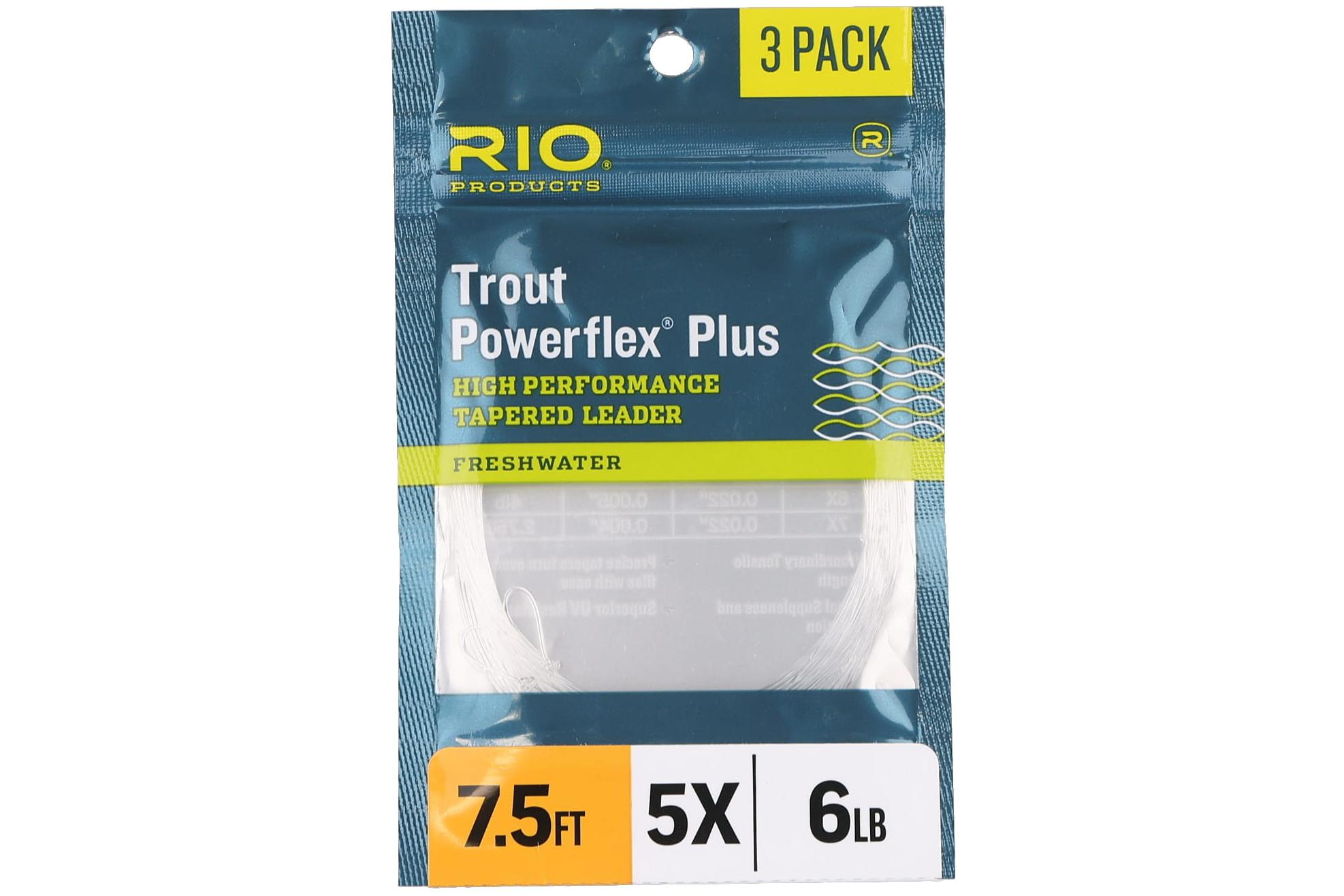
You can stock the tippet and leader to practice on through The Fly Fishing Place — use code RDC at checkout. RIO Powerflex Plus and Trouthunter both work for the practice drill, and either will be in your kit anyway.
Three knots, tied a thousand times each. Learn them cold and you’ll never lose a fish to a knot again.