
In this guide
John Barr designed the Slumpbuster when he wanted a streamer that wasn’t a Woolly Bugger. That’s a narrow brief — “make me a Bugger that isn’t a Bugger” — but the result is one of the most versatile streamers in Colorado fly fishing: weighted to get deep fast, built with a pine squirrel strip that moves like nothing else in the water column, and effective in more presentations than most of us actually use it for.
I’ve fished it on the South Platte and the Dream Stream for fall browns. I’ve dead-drifted it under an indicator. I’ve swung it through slow tailouts at Deckers. And I’ve spent more afternoons than I’d like to admit stripping a Bugger that just sat there looking average while a guy two pools down was bent over a fish on a Slumpbuster. Eventually you learn. Here’s the full breakdown so you can skip my version of learning.
Barr’s Slumpbuster, the short version
Barr’s Slumpbuster is a front-heavy pine-squirrel streamer that shines for South Platte browns — fish olive most days, black in low light, and rust in the October pre-spawn on the Dream Stream, in sizes #4–6 (drop to #8–10 natural for educated tailwater fish). Strip it slow with pauses, dead-drift a #6–8 under an indicator, or swing it in fall, and expect to pay $3.50–4.50 per fly.
If you only remember one thing: it’s usually your retrieve that’s too fast, not the fly.
What the Slumpbuster Is
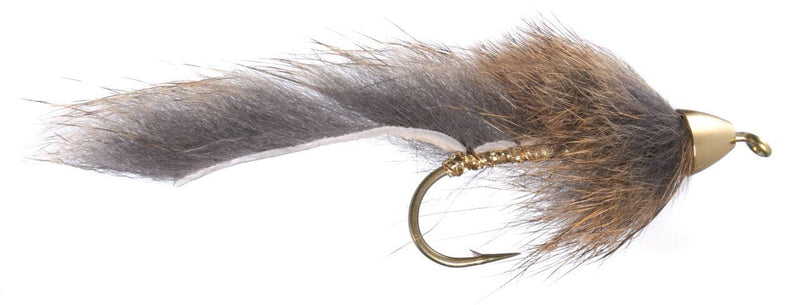
The Slumpbuster is a front-heavy streamer tied on a 2X-long nymph hook with a tungsten cone and lead wire wraps behind it. The body is gold mini-flat braid with a wire rib. The wing and collar are pine squirrel Zonker strip — the material that makes this fly different from everything else at the same price point.
Pine squirrel does something rabbit doesn’t: the individual guard hairs are fine enough that they breathe in the water without collapsing. When the fly stops, the fibers pulsate. When you strip, they push water. The matuka-style mount runs the strip along the top of the hook, which prevents it from fouling around the bend — a problem that plagues a lot of squirrel-strip streamers tied in the round.
The cone sits at the head and pulls the front of the fly down, which produces the jigging action that defines how the Slumpbuster moves. Strip, pause. Strip, pause. The head dips, the tail rises. Trout see that movement and eat.
Standard pattern specs:
- Hook: TMC 5262, sizes #2–10
- Cone: Tungsten (silver, gold, or black)
- Weight: Lead wire wraps, .025”
- Body: Gold mini-flat braid
- Rib: Brassie wire, color-matched
- Wing/collar: Pine squirrel Zonker strip
Color Variations
Three colors cover 95% of the situations you’ll run into:
Olive is the first choice for most South Platte applications. The olive squirrel in clear water imitates sculpin and small brown trout in a way that the fish recognize and eat without hesitation. If there’s any tint to the water, olive is the starting point.
Black is the low-light option. Early mornings before the sun hits the canyon walls, overcast days when browns are willing to move, and late evening when you’re stripping back to the bank — black shows up as a silhouette and triggers reaction strikes. I carry it in #4 and #6.
Rust/brown is underutilized. It reads as crayfish. The Dream Stream and Eleven Mile both hold crayfish in the margins, and a rust Slumpbuster swung slowly through a slow pool in September or October is one of the more effective presentations you can make on a big fall brown.
Smaller sizes — #8 and #10 — in natural squirrel work as leeches in flat water. A lot of anglers skip the small Slumpbusters. That’s a mistake on the South Platte, where tailwater fish are educated and a natural-colored #10 on a slow sink will produce fish that never touch a full-size streamer.
How to Fish It
Strip retrieve is the most common presentation. Cast across or quartering downstream, let the fly sink — the cone gets it down fast — and then strip with varied cadence. Don’t be afraid to let it hang. The dangle at the end of the swing, when the fly holds position directly downstream in the current, is often when browns eat. Two or three slow strips, then let it hang for a count of five before picking up.
The retrieve cadence matters more than most people give it credit for. Fast, short strips cover water and produce reaction strikes from active fish. Long, slow draws with extended pauses work on reluctant fish — especially in cold water when metabolisms are down. In winter on the South Platte, when water temps drop into the low 40s, I fish the Slumpbuster slower than feels right. Give the fish time to decide.
Dead drift under an indicator is the technique that surprises most people. A #6 or #8 Slumpbuster fished below a large foam indicator like a sculpin imitation covers water that a standard nymph rig ignores. Cast it into the deep bucket at the head of a pool, mend to keep it tracking straight, and let it fish through the slot. Browns that are sitting deep don’t want to move for a midge — but they’ll tip up for a sculpin drifting over them.
The swing is the fall presentation. Quartering casts upstream, mend to get depth, then let the fly swing across the current on a tight line. The Slumpbuster’s weight keeps it down during the swing — a problem for lightly-dressed streamers that blow up in the water column. Browns in fall are pre-spawn and territorial. The swing through their holding water produces strikes that feel like the bottom before you realize it’s a fish.
Streamer tandem — trailing a Slumpbuster 18–24 inches behind a larger streamer — is worth knowing. The lead fly moves water and draws attention; the Slumpbuster follows as the meal. This rig is most productive on days when browns are chasing but not committing to a single fly.
My take
The Slumpbuster taught me my retrieve is usually the problem, not the fly. All those afternoons stripping a Bugger that sat there looking average — while a guy two pools down stayed bent over fish — I was fishing too fast for water that wanted patience. So my verdict is boring: olive most days, rust when October comes and the browns turn territorial, and more patience between strips than I think I need. If I’m rushing the retrieve, I’m casting, not fishing. The fly’s whole design is an invitation to slow down; the sooner you accept it, the sooner you stop being the guy watching.
Where It Works on the South Platte
Cheesman Canyon — The Slumpbuster fishes best in the deep plunge pools and the rocky tailouts. The undercut banks on the canyon walls hold large resident browns that don’t show themselves to a nymph angler all day. A #4 black Slumpbuster stripped along those walls at dusk, or dead-drifted through the plunge pool in October, will find fish other presentations don’t reach.
Access to Cheesman limits this to wade fishing from the trail — you can’t effectively fish some of the biggest pools from one bank. A Slumpbuster cast from the inside of a bend and swung through the deep water on the far bank is one of the few presentations that covers that water.
Deckers — The long flats and the riffles below the Wigwam Club boundary both hold fish. In fall, when browns are moving pre-spawn, a stripped Slumpbuster through the tail of a riffle at Deckers can produce the largest fish of the day. This section sees heavy pressure from nymph anglers; moving fish with a streamer reaches the ones that have stopped cooperating.
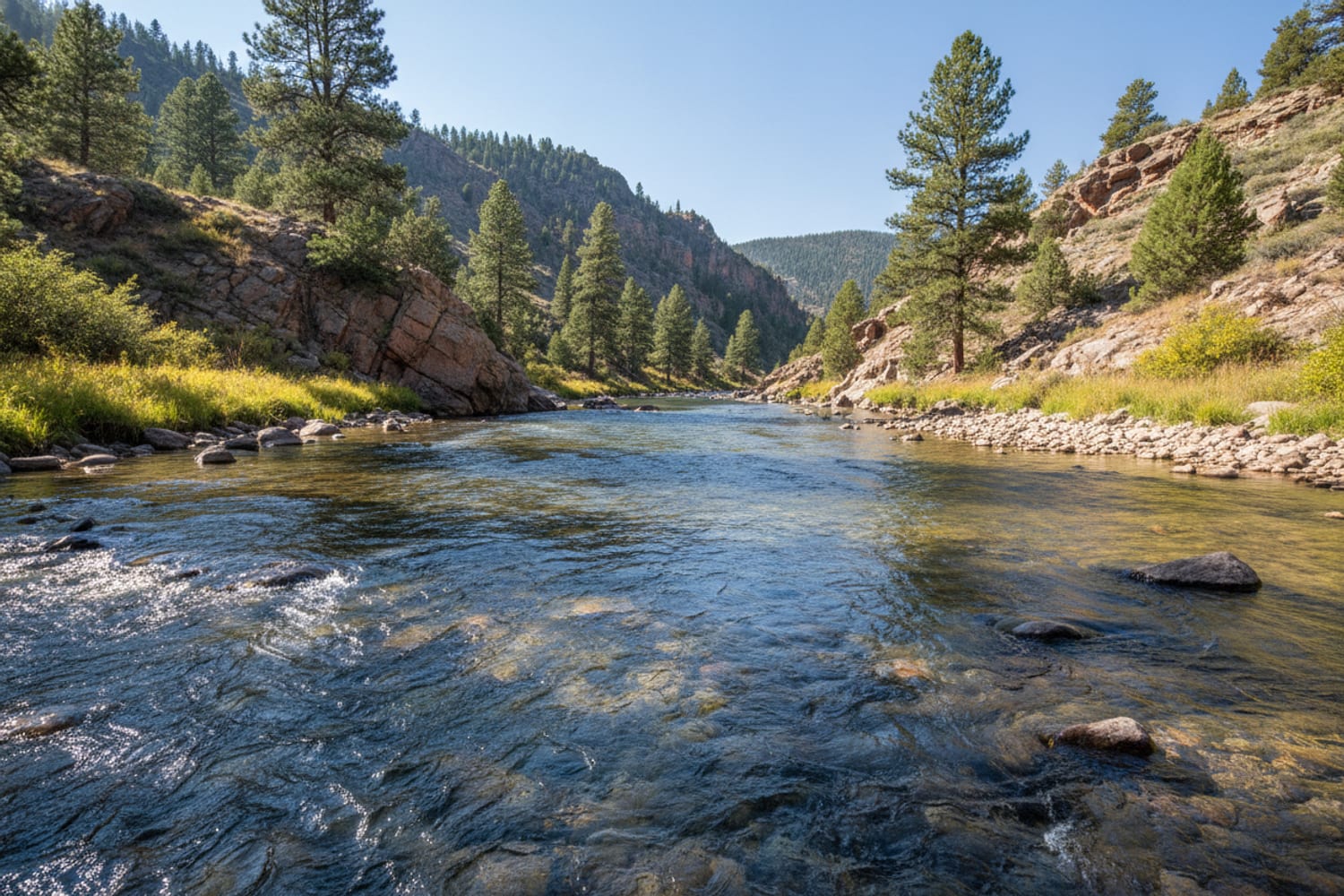
Dream Stream — Fall on the Dream Stream, from Spinney Mountain Reservoir to Eleven Mile Reservoir, is the best big-brown streamer fishing in the South Platte system. The fish here run large and they eat streamers aggressively in the pre-spawn window — October into early November. A rust Slumpbuster swung through the wide flat pools, particularly in the lower third of the section near Eleven Mile, produces browns in the 20-inch-plus range with regularity.
The spring creek nature of the Dream Stream means the Slumpbuster has to fish clean. No drag. Long leaders — at least 9 feet, often 12. The fish there will track a fly for 20 feet and turn off it before the eat if anything looks wrong.
Tying vs. Buying
The Slumpbuster is one of the easier production streamers to find commercially. Umpqua Feather Merchants ties them as part of the John Barr signature series. Most Colorado fly shops carry them in olive, black, and brown in sizes #4–10 — The Fly Fishing Place has a Slumpbuster assortment online (15% off through our link). Expect to pay $3.50–4.50 per fly.
If you tie your own, the pine squirrel Zonker strip is the key material. Natural gray squirrel, dyed olive, and dyed black cover all three major colorways. The tungsten cone makes the front-heavy action — don’t substitute a bead. The body braid and wire rib are available at any fly shop.
Tie it on a 2XL nymph hook rather than a streamer hook. The shorter shank keeps the tail proportion right and limits the leverage the fish have on the hook bend — the number-one reason people lose big fish on streamers. A tungsten cone on a 2XL hook in size #4 is a heavy fly. It casts differently than a midge. Use a 9- or 10-foot rod with a sink-tip line for serious streamer fishing, or a floating line with an extended head for most tailwater presentations.
When to Fish It
Fall is the season — October and early November on any of the South Platte sections. Browns are pre-spawn, aggressive, and willing to move for a streamer. The Slumpbuster is the first fly I tie on when the leaves are turning and the water temps are dropping toward 50°F. For the full picture of fall streamer tactics on the South Platte, the fall streamer fishing guide covers retrieve cadence, reading structure, and which sections fish best in September and October.
Early morning — before the nymph anglers are in position and before the fish have been worked over. Brown trout feed actively in low light. A black Slumpbuster stripped through the first pool of the day catches fish that haven’t seen pressure yet.
High water — when flows push above 200–300 CFS and the nymph game gets complicated, a heavy Slumpbuster gets down fast and moves through the current without being blown off course. This isn’t a finesse presentation; it’s a search pattern for conditions that reward aggression.
Year-round — on the right day, in the right water. I’ve caught browns on the Slumpbuster in February on the South Platte by fishing it slowly and deep in the warmest part of the day. It’s not the first choice in January, but it’s not off the table either.
The Copper John gets John Barr the most recognition. The Slumpbuster earns him the most fish on the big-water days. Tie one on, strip it slow, and let the pine squirrel do the talking — it’s better at it than either of us.
Rocky Drift Co. may earn a commission through affiliate links. Read our disclosure.