
In this review
For about a decade now, the standard fly-shop answer to “what reel should I run on my streamer rod?” has been a little shrug and the words whatever you’ve got. I’ve said it myself. A buddy asks what to hang on his new 7-weight and I tell him it barely matters — the reel’s just a line holder, throw your spare disc on there and go chuck bugs. Streamer fishing isn’t trout-on-the-reel fishing, so who cares.
Then Hardy went and built a reel specifically for streamer fishing, did it with Kelly Galloup, and I had to sit with the uncomfortable possibility that the shrug answer was lazy. Because here’s the thing — I fish streamers every fall for big browns, and if I’m honest about what actually happens out there with my reel, “it doesn’t matter” starts to fall apart fast. So let’s talk about the Hardy Averon Streamer, what it is, and the bigger question it pokes at: does a streamer reel actually need anything different, or is this clever marketing wearing waders?
The short answer
The Hardy Averon Streamer is the first fly reel built specifically for streamer fishing — a large-arbor reel Hardy designed with Kelly Galloup, sold in a single size (the 7000, rated 6/7/8-weight) for $500 ($250 for a spare spool). Its whole trick is line management, not braking power: a wide arbor and a near-frictionless spool that whips up a slack pile with one slap of the rim, plus a big grabby handle and a heavier spool that keeps spinning. This is a first look, not a review — I haven’t fished it yet. But on paper Hardy ignored the spec everyone brags about (max drag) and obsessed over the ones that actually bite a streamer angler.
What is the Hardy Averon Streamer reel?
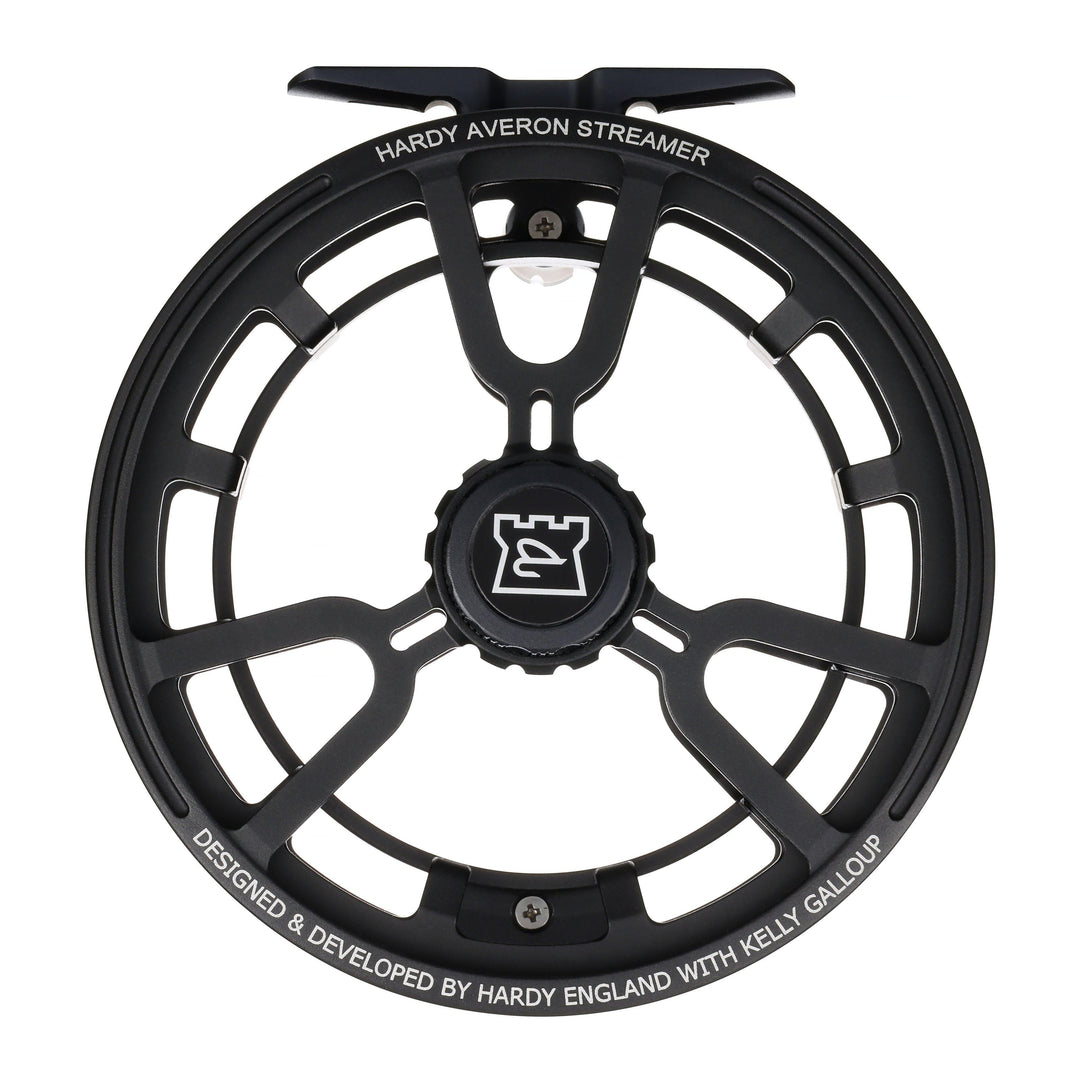
The Averon Streamer is a large-arbor fly reel that Hardy designed from the ground up for streamer fishing, in collaboration with streamer guru Kelly Galloup. It’s built on Hardy’s existing Averon platform but re-tuned for the way streamer anglers actually use a reel: it comes in a single size — the 7000, rated for 6/7/8-weight lines — runs $500 (a spare spool is $250), and wears a no-nonsense bead-blasted matte black anodized finish. Hardy is calling it the industry’s first reel engineered specifically for streamer fishing, and as far as I can tell, that claim holds — nobody else has built one for this job.
The headline pitch, from Galloup himself: “Nobody has ever built a reel specifically for streamer fishing.” That’s the whole reason this thing exists. And when the guy who wrote Modern Streamers for Trophy Trout — the book that basically invented modern trout streamer fishing — says he wanted a tool that didn’t exist, I lean in. (More on Galloup in a second, because his fingerprints are all over the design choices.)
A disclaimer up front, since I believe in being straight with you: I have not fished this reel. It’s brand new and I haven’t had one in hand. So this isn’t a review — it’s a first look, plus an honest analysis of what a streamer reel actually needs, drawn from the streamer fishing I do a lot of. I’ll tell you what’s smart about the design and where I’m reserving judgment until I can put one on the Redington Vice and go find a mean October brown.
Who is Kelly Galloup, and why does his name matter here?
Kelly Galloup is the angler most responsible for modern trout streamer fishing — he runs the Slide Inn on Montana’s Madison River, wrote Modern Streamers for Trophy Trout in 1999, and invented the articulated patterns (the Sex Dungeon, the Boogie Man) that fill streamer boxes everywhere. If you’ve ever stripped a big, ugly, articulated fly through a run hunting one giant brown, you’re fishing in Galloup’s wake whether you know it or not.
That pedigree matters because streamer fishing has its own physics, and Galloup has spent more days than almost anyone living inside them. He fishes big flies on sinking lines with aggressive retrieves to predatory fish — fast, violent, hands-on fishing that has almost nothing in common with dead-drifting a #20 midge on 6X. So when he tells Hardy what a reel is doing wrong on his river, that feedback is worth more than a spec sheet. Every design choice on the Averon Streamer is supposedly an answer to a specific frustration he’s had on the Madison. That’s the part I find genuinely interesting.
What does a streamer reel actually need to do?
Here’s where I have to be honest about my own fishing, because it’s the only way to judge whether this reel solves a real problem. When I’m throwing streamers in October — Redington Vice 796-4, 9’6” 7-weight, a Lamson Liquid S loaded with a sink-tip — the reel is doing a lot more work than it does when I’m nymphing. And almost none of that work is “fighting a fish on the drag.” Let me break down what a streamer reel actually gets asked to do, because it’s not what the marketing for most trout reels obsesses over.
1. Pick up stripped line fast — a big arbor earns its keep
Streamer fishing is a stripping game. You cast, you strip the fly back in hard, and at the end of every retrieve you’ve got a big pile of loose line at your feet (or in the bottom of the boat, or wrapped around a rock, or — in my case — under my own boot, but we’ll get to that). To recast, you have to manage that slack. And when you hook a fish on the strip, you often want to get it on the reel in a hurry so the slack doesn’t bite you.
This is where a large arbor stops being a nicety and becomes the point. As the tackle-craft fundamentals go, a big-diameter hub means more line comes in per turn of the handle and the line carries way less memory — fewer of those annoying coils. The base Averon picks up around nine inches of line per crank; the Streamer version goes bigger on the arbor still. More importantly, Hardy widened the spool. A wider spool with a bigger arbor clears that slack pile fast, which is exactly the variable a nymphing reel never has to care about. On an indicator rig you’re not stripping line all day. On streamers you never stop.
2. Spin nearly free on the retrieve — the friction-free trick
This is the design choice that made me go “huh, that’s actually clever.” Most reels have a one-way clutch that adds a little drag even on the incoming turn — you feel a faint resistance as you reel in. Doesn’t matter when you’re slowly cranking a trout to the net. Matters a lot when you need to clear forty feet of slack in two seconds because a fish just ate at the hang-down and you need to come tight now.
Hardy says they pulled nearly all of that incoming resistance out, so the spool spins almost freely — the marketing line is that you can clear slack “with a slap of the handle or the rim.” Picture it: fish eats, you give the spool a backhand slap, the loose line whips up onto the reel, and you’re tight to the fish before it spits the fly. For a reel that lives in the chaos of a streamer eat, near-frictionless retrieve is a legitimately smart, streamer-specific feature. I’ve lost fish to slack-line fumbling — the eat happens, I’ve got line everywhere, and by the time I sort it out the fish is gone. If the reel helps me beat that, that’s real.
3. Have enough spool mass to keep spinning
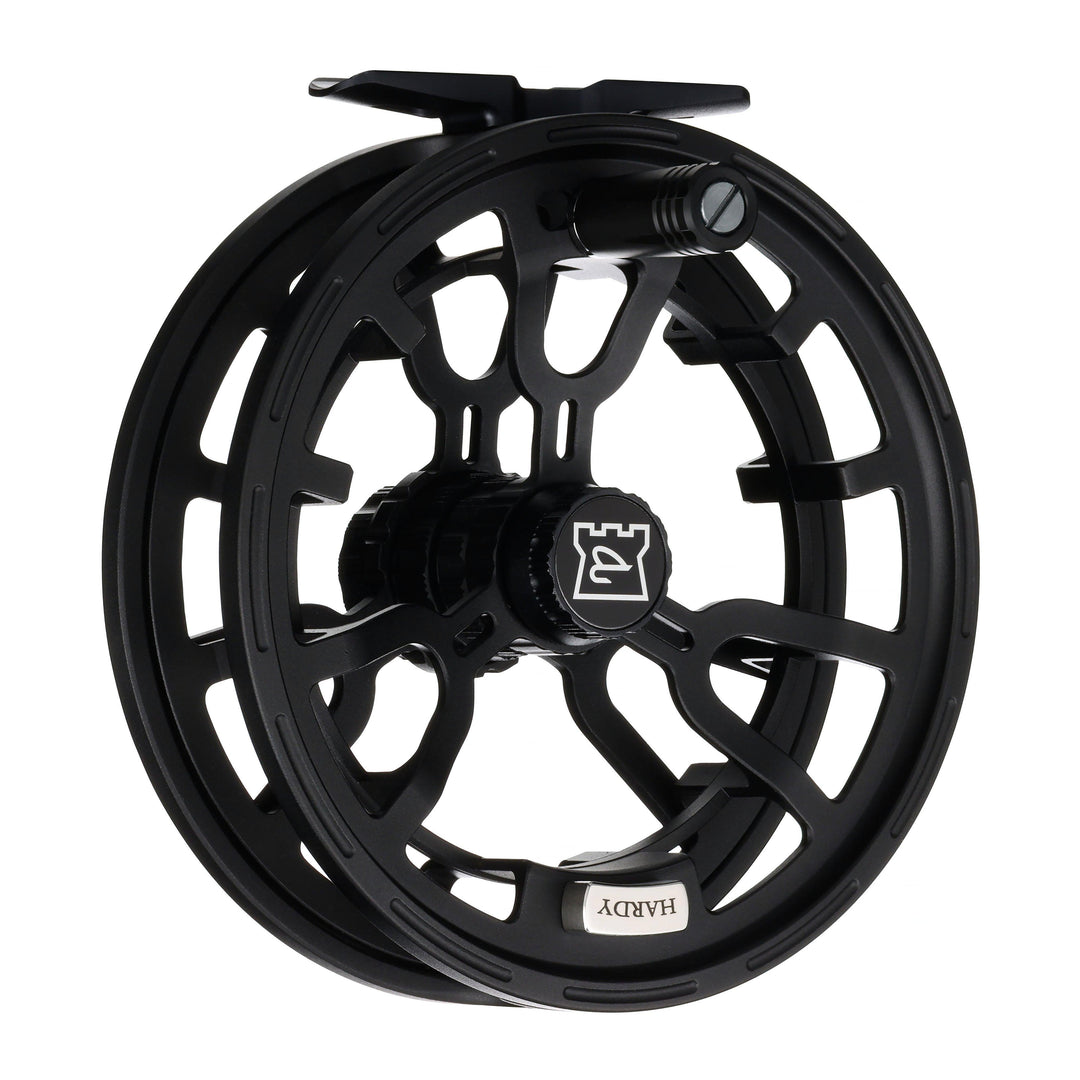
There’s a subtle one buried in the specs: Hardy increased the spool mass for “rotational momentum.” At first that sounds backwards — didn’t I just praise less friction? But it’s the same idea from the other side. A near-frictionless spool with a little extra mass behaves like a flywheel: give it that slap and it keeps spinning long enough to reel up the slack instead of stalling halfway. Light + frictionless would stop too soon; a touch heavier + frictionless keeps gathering line. It’s a deliberate tradeoff that only makes sense once you accept that this reel’s main job is eating slack, not braking fish. The heavier spool also helps balance a beefy 7-weight streamer stick, which tends to be tip-heavy with a sink-tip line and a fistful of articulated fly hanging off the end.
4. Give you a handle you can actually grab fast
Small detail, real payoff: Hardy fitted a larger handle and counterbalance. When a fish eats and you’re scrambling to get on the reel with cold, wet October fingers, a bigger handle is easier to find and grab without looking. Counterbalanced so it spins true when you let it rip. It’s a streamer-specific ergonomic call — you don’t need a grabby handle to slowly retrieve a dry-fly trout, but you absolutely want one when you’re trying to come tight to a hot brown before it wraps you in a logjam.
Does the “drag” matter on a streamer reel?
Mostly no — and that’s the most interesting thing about this whole reel. Notice what I haven’t led with: maximum drag, sealed-vs-unsealed, pounds of stopping power. On a trout streamer reel, those are mostly theater, same as they are on a trout reel generally. (I went deep on why the startup-inertia number beats the max-drag number and why you rarely need much drag at all for trout — both apply double here.)
Think about how a streamer eat actually goes. The fish doesn’t sip your fly forty feet out and make a long, screaming run into your backing. It crushes the fly on a tight, fast strip, usually close, and the first fight happens with you holding the line — strip-setting, then hand-fighting it with the line pinched against the cork. You’re not playing a big brown off a featherlight drag setting the way you’d baby a rainbow on 7X. You set hard, you keep its head turned, and the drag is almost an afterthought until the fish is close and thrashing. What a streamer reel needs from its drag is smooth and adequate — not enormous. The base Averon platform runs a multi-pad disc with a couple pounds of usable, smooth braking, which is plenty for trout. Hardy didn’t chase a huge drag number on the Streamer, and they were right not to. The innovation here isn’t the brake — it’s everything around the brake that handles line. That’s the tell that they actually understood the assignment.
The Hardy click — yes, it still sings
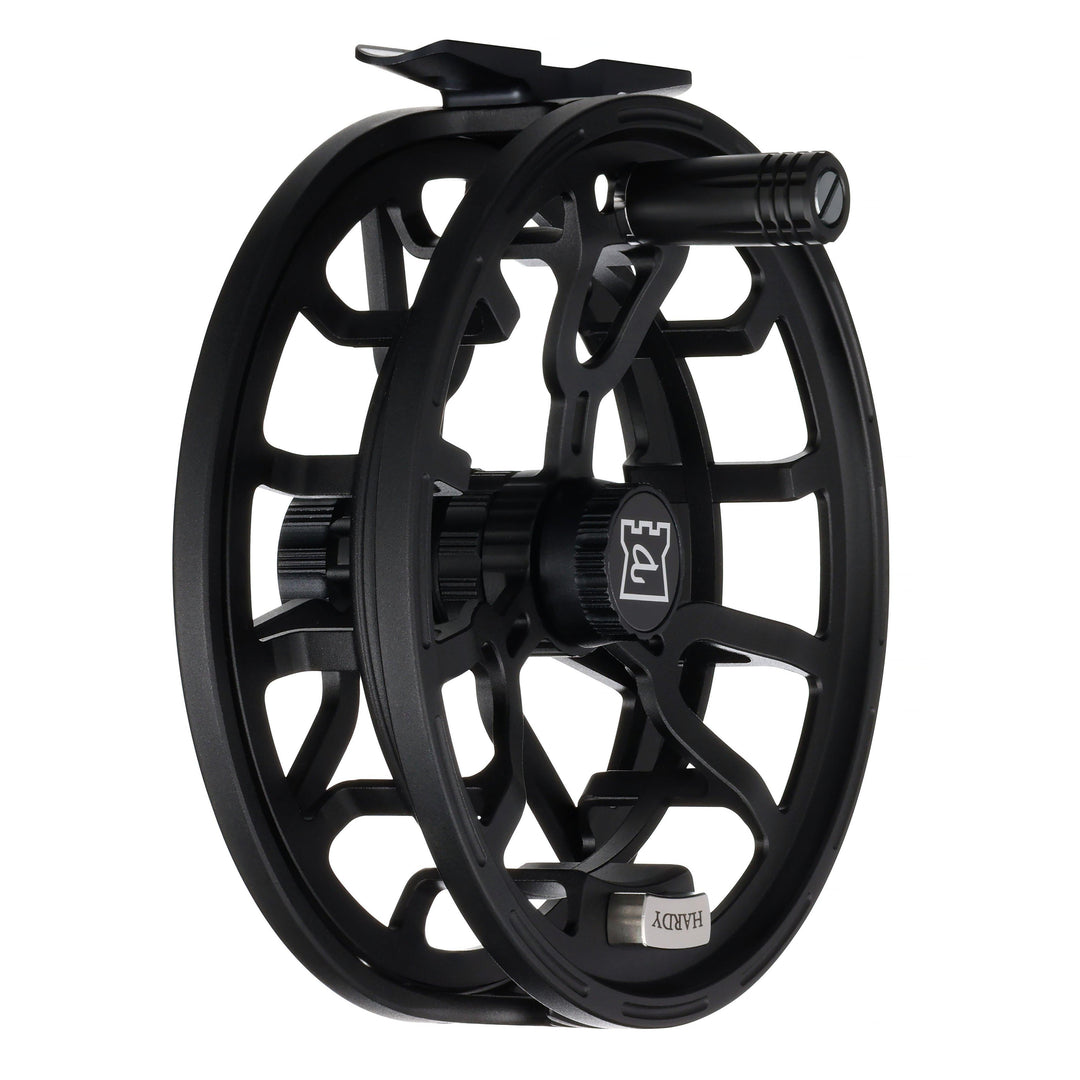
Hardy is Hardy, so the Averon Streamer keeps an audible outgoing click — that classic Hardy sound on the run. Is it functional? Barely. Does it matter? To me, a little, yeah. When a good fish finally does take line, that click is the most satisfying noise in the sport, and a brand with Hardy’s history leaving it off would be like Fender shipping a guitar that didn’t ring. It’s heritage, not engineering, and I’m fine with that. Streamer fishing is loud, fast, and a little crazy; a reel that yells when a trophy brown bolts fits the mood.
Where I’m reserving judgment
I’m not going to pretend a press release is the same as a fishing day. A few honest question marks I’ll be carrying into the fall:
- The single size. One reel, the 7000, rated 6/7/8wt. That’s a sensible streamer window, and it’ll balance my 7-weight fine. But if you throw a big 8-weight with a heavy 300-grain sink-tip for the truly mean stuff, you might want more reel. One size keeps it focused; it also means it isn’t for everyone.
- The $500 question. Five hundred bucks is real money for a reel whose headline features are “spins freely” and “picks up line fast.” Worth it if the slack-management genuinely changes how many fish you land. A tougher sell if your current disc reel already does the job and you’ve made peace with the shrug.
- Where it’s made. The Averon platform is produced outside the USA and UK. That’s not a knock — plenty of excellent reels are — but Hardy buyers chasing the old made-in-England romance should know what they’re getting. This is a modern, value-positioned Hardy, not a hand-built Perfect.
- Does the friction-free spool actually save fish? This is the whole ballgame, and it’s the one thing I genuinely can’t know until I’m standing in the Madison’s — okay, the South Platte’s — current with a fish eating on the hang-down. The theory is excellent. The proof is on the water.
My take
I came into this ready to roll my eyes — a streamer-specific reel smelled like a marketing invention solving a problem that didn’t exist, and the fly industry has sold us plenty of those. But the more I look at the actual design choices, the more I think Hardy and Galloup found a real gap. They ignored the spec everyone brags about (max drag, which doesn’t matter much for trout) and obsessed over the specs that actually bite a streamer angler — slack management, retrieve speed, a grabby handle, a spool that keeps spinning. That’s not marketing wearing waders. That’s a reel built by people who actually strip flies for big fish and got tired of fighting their own gear.
Here’s the self-deprecating truth that sealed it for me: I have, more than once, hooked a good fish on the strip, gone to come tight, and discovered I was standing on my own line. Every fall I lose a fish or two to a slack-line circus of my own making. A reel that whips that slack up with one slap of the rim is aimed directly at the exact dumb thing I keep doing. So no, I’m not buying the shrug answer anymore. “Use whatever reel you have” was always a little lazy, and the Averon Streamer is the first reel honest enough to say so out loud. I want to fish it. I’ll report back when I do — preferably with a hook-jawed brown and zero line under my boot.
Next up: start with the reel spec the marketing hides — what reel startup inertia is and why it matters — then settle the click-and-pawl vs disc drag question for trout, and see how every reel pairs to its rod in my six-rod quiver.