
In this guide
A rising fish hands you free information, and most anglers throw it away. You see a ring on the water, cast whatever dry is already on the tippet, then spend twenty minutes wondering why a fish that is obviously eating won’t eat your fly.
The fish was telling you what it wanted the whole time. You just weren’t reading it.
A riseform — the shape and sound of the disturbance a trout makes when it feeds at or near the surface — is the closest thing fly fishing has to a cheat sheet. It tells you roughly what the fish is eating and, more importantly, where in the water column it’s eating. Get that second part wrong and you can fish a perfect imitation all afternoon to a fish that never had a prayer of seeing it. On the South Platte, where the fish at Cheesman have seen every fly in the catalog and refuse most of them, that distinction decides the day.
So before you cast, watch. Here’s how to read what you’re watching.
The most common miss on a Colorado tailwater: throwing a high-floating dun at fish that are eating emergers just under the surface. Read the rise first and that one stops happening to you.
Why the riseform matters more than the bug
Here’s the thing nobody tells you when you start: matching the insect is only half the job. Matching the stage is the other half, and it’s the half that gets ignored.
A mayfly doesn’t go from nymph to adult in one clean step. It crawls up the water column, hangs in the surface film while it splits its shuck, struggles out as a cripple, rides as a dun, then comes back as a spent spinner — hours later if it’s a Trico, a day or two for the bigger mayflies. Trout key on whatever stage is most abundant and easiest to eat, and on a pressured tailwater that’s often something stuck in or just under the film rather than a high-floating dun. Not always, though. On a good caddis evening or the fat middle of a PMD hatch, the adult on top is exactly what they want. The rise is how you tell which day you’re having.
The riseform is your read on which stage. Same hatch, same bug, same fifty yards of river — and three fish eating three different stages will show you three different shapes on the water. The rise tells you which one you’re dealing with before you spend an hour finding out the hard way.
That’s why ten minutes spent watching a pod of risers beats a cast fired in the first ten seconds. Ten minutes of watching will save you more fish than any fly in your box.
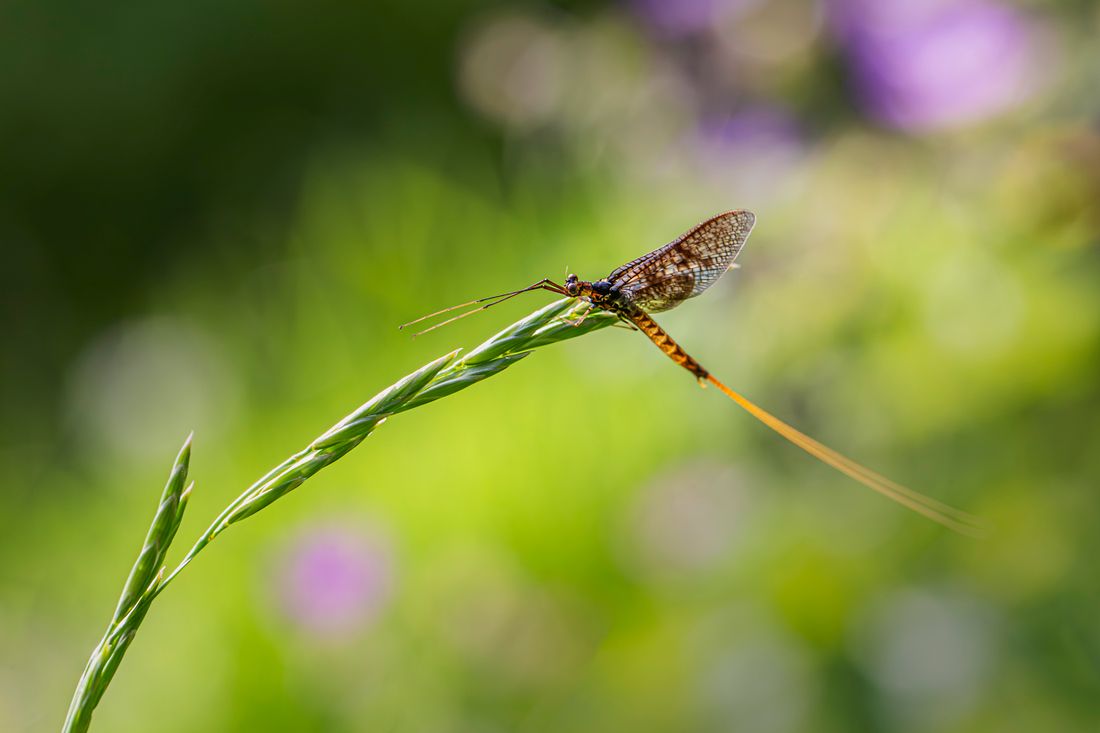
The sip / dimple rise — small, in or under the film
This is the quietest rise there is, and the one that humbles the most anglers. You see a soft dimple, a little ring, maybe the trout’s nose just barely breaking through. No splash. No noise. The fish looks almost lazy about it.
It is not being lazy. A fish sipping is a fish feeding with total efficiency on something small and abundant — midges, Trico spinners, or mayfly emergers hanging in the film. There’s so much food that the trout has set up a rhythm and is eating one tiny bug after another without spending a calorie more than it has to.
What it means: small food, in or just under the surface film. Spinners lying spent and flush. Midge adults and clusters. Mayfly emergers stuck in the meniscus.
What to tie on: go small and go low. A spent-spinner pattern, a midge adult or cluster, an RS2 or Barr’s Emerger fished in or just under the film. If they’re on midges, think #20–24 and don’t be surprised when you need to go smaller. The mistake here is fishing a high-floating dun over a sipping fish — that dun rides on top of the film and the fish is feeding in it. Different addresses.
This is the South Platte’s signature rise. The morning Trico spinner fall on the Dream Stream flat is wall-to-wall sippers — mid-July through late September, peaking in August, and mostly done by 10:30 — and they are some of the hardest fish on the river all year. Twenty rings on the water and not one of them wants what you’ve got is a specific kind of morning.
The splashy / slashing rise — active adults on the move
The opposite end of the spectrum. You hear it before you fully see it — a splash, a slash, sometimes the whole fish leaving the water. There’s bubbles, there’s commitment, there’s drama.
A splashy rise means the trout is chasing something that’s moving — fluttering, skittering, or trying to escape. That’s almost always caddis. Adult caddis don’t sit politely on the surface; they dance, hop, and run across the film, and the trout has to commit hard and fast to catch one before it’s gone. The splash is the cost of chasing a moving target.
What it means: active adult insects, usually caddis. Egg-laying females bouncing on the surface, or adults skittering to take off.
What to tie on: an adult caddis — an Elk Hair Caddis or a low-riding X-Caddis works on the South Platte — and don’t be afraid to give it life. A short twitch or a skitter on a tight line can trigger a fish that’s already in chase mode. Dead-drift it first, but if they’re slashing, a little motion is often the difference. Summer evenings at Deckers bring this rise on strong, especially the last hour of light when the egg-layers come back to the water.
A splashy rise is also occasionally a small, aggressive fish or a fish missing its target — but on a caddis evening, take the splash at face value and fish the adult. Plenty of anglers spend a whole evening dead-drifting a perfect caddis past slashing fish, too proud to twitch it, and get nothing for it. The twitch is not cheating. The twitch is the point.
What does a porpoising rise mean — head, dorsal, then tail?
A head-and-tail (porpoise) rise usually means the trout is eating emergers or cripples hanging in or just beneath the surface film. The smooth nose-then-tail roll, or a bulge with no break at all, says the fish doesn’t need to break the surface to reach its food. Start with an emerger. It isn’t an absolute rule — in genuinely slow water a fish will porpoise on duns and spent spinners too — but on a pressured tailwater, emerger first.
This is the most commonly misread rise, and it’s the one to learn first if you’re new to a tailwater.
You see the nose come up, then the dorsal fin, then the tail — a smooth rolling motion, like the fish is turning a slow somersault just under the surface. Sometimes you don’t even see the fish break through at all; you just see a bulge, a swelling hump of water where a trout tipped up and ate something an inch below the film without ever showing itself.
That’s usually a fish eating emergers. It’s intercepting the bug at the moment it’s hanging in or just beneath the surface tension, trying to break through and hatch — one of the most vulnerable stages a mayfly has, and the reason a trailing shuck is such a reliable trigger. The trout doesn’t need to break the surface, so it doesn’t. All that energy stays underwater.
Now the honest part, because the books aren’t unanimous on this one. Most riseform writing treats the head-and-tail as an emerger tell, and on a tailwater that’s the safer bet. But plenty of experienced anglers read a clean head-and-tail in slow, flat water as a fish eating duns or spent spinners, and reach for a Comparadun instead. Both readings are right often enough to keep the argument alive, which should tell you the shape of the roll isn’t actually the deciding evidence. The tiebreaker is whether the mouth breaks through: a nose that clearly punctures the surface and leaves a bubble is a fish eating something on top; a back and tail with no mouth showing is a fish eating something below it. If you can’t tell from where you’re standing, get lower and closer before you get more clever.
What it means: most likely emergers or cripples just under the film — with duns and spent spinners still in play on genuinely slow water.
What to tie on: an emerger or a cripple, fished in the film or barely subsurface. A soft-hackle, a Barr’s Emerger, an unweighted RS2, a CDC cripple sitting low. If there’s a PMD hatch on and fish are porpoising, it’s easy to stand there with a pretty, upright dun on the end of your line while the fish eat the emerger eighteen inches in front of it. Drop a foot. Fish the stage, not the prettiest fly in the box.
My take
Most riseform arguments on the bank are really arguments about whether the mouth actually broke through. So keep the rule blunt: if you can’t say for certain you saw a nose puncture the film, fish the emerger. I’d rather be a foot too deep than a stage too high — a low fly still gets eaten by a fish looking up, and a high fly is invisible to a fish that isn’t. Fish it the other way around and you collect blank afternoons, which are free but not much fun.
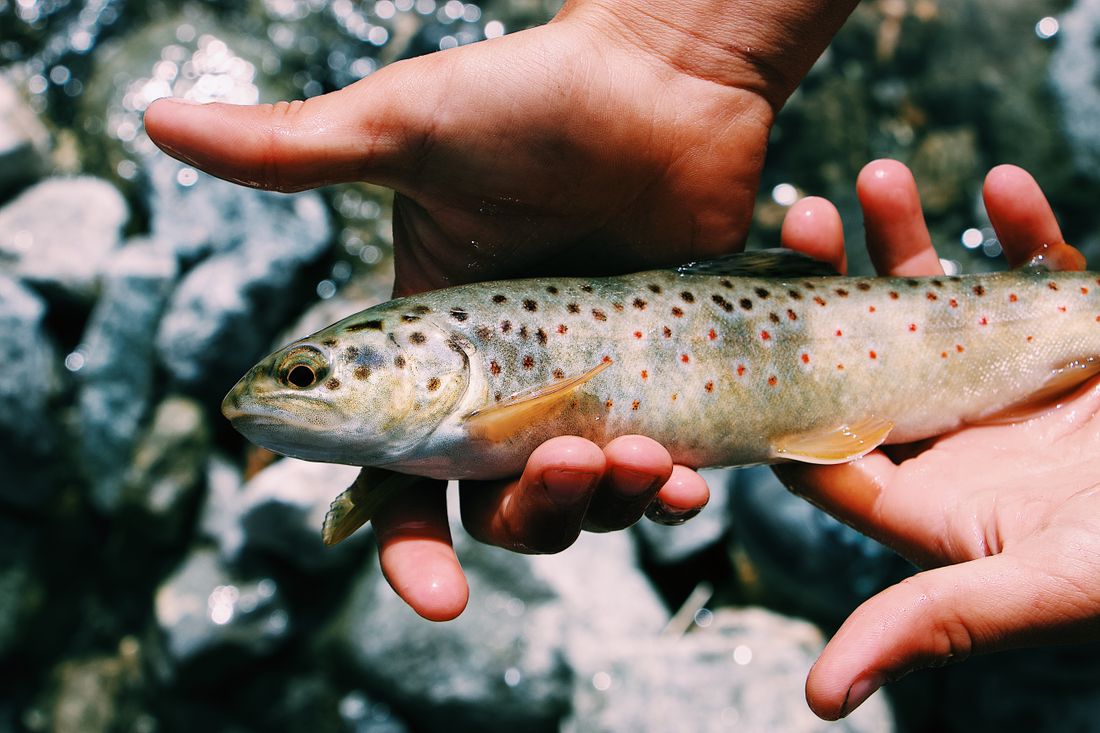
The gulp / confident eat — something big and worth the trip
Sometimes a fish eats with total confidence and a real, audible gulp — a deliberate, head-up take that pulls the bug down with a little pop. This isn’t a frantic splash and it isn’t a delicate sip. It’s a fish that has decided a single mouthful is worth coming up for, and it means business.
That’s the rise to a big meal: a terrestrial that blew onto the water — a hopper, an ant, a beetle — or a large mayfly the fish doesn’t want to miss. Where the sipper is eating dozens of tiny bugs, the gulper is willing to move for one good one.
What it means: a big, worthwhile food item. Terrestrials in summer, or a large mayfly dun.
What to tie on: match the meal. A hopper or a Chubby Chernobyl along a grassy bank on a hot, windy afternoon, an ant or beetle pattern, or a big visible dun if there’s a heavy mayfly hatch. This is the most fun rise to fish to because the fish is committed — get a clean drift over it and the eat is usually decisive. The usual way to blow it is setting too soon out of sheer excitement, which is its own kind of skill. Summer afternoons along the banks at Deckers, when the wind is putting terrestrials on the water, are prime gulp-rise territory. The dry-dropper shines here too — that confident fish will eat the foam hopper on top half the time.
The boil and the refusal — read these two carefully
Not every disturbance is an eat, and these two are the ones anglers misfile most — always in the optimistic direction.
A boil is a swirl of displaced water with no visible take. Most of the time it is a fish eating perfectly well underneath the surface — an emerger or a nymph grabbed an inch or two down, with the boil just the turbulence left by the turn. That’s a fish you can catch; you’re simply fishing the wrong depth. The narrower case is a boil that appears directly under your dry on the drift: that one usually means the fish came up, looked, and pulled off at the last second. Same shape on the water, two very different messages, and the difference is whether your fly was in the middle of it.
A refusal is the heartbreaker: the fish drifts up under your fly, follows it, inspects it, and drops back down without eating. You’ll see the whole thing on clear tailwater, in high definition, at a distance close enough to feel personally evaluated. It means your fly is close — close enough to draw the fish — but something’s off. Usually it’s drag, or the fly’s a touch too big, or it’s the wrong stage.
What to do: don’t keep hammering the same fly at a refusing fish — you’ll only put it down. Go smaller, go to an emerger, lengthen your tippet to kill drag, or rest the fish a few minutes and change something real. And when the boils are happening away from your fly rather than under it, take the hint: that fish is eating below the film, which loops you right back to the porpoise read. Drop a tiny emerger off the back and you’ll frequently solve it.
The tailing fish — the one that isn’t a rise at all
Every so often you’ll see a tail waving above the surface, or a wagging shape in shallow water with nothing that looks like a ring. That is not a rise. That’s a fish standing on its nose, head down on the bottom, rooting nymphs and scuds and cased caddis out of the gravel and weed. The tail is showing because the front end is buried, not because the fish came up for anything.
It belongs here precisely because it looks like surface activity from thirty feet away. You can spend the better part of an hour changing dries for a fish that is, the entire time, facing directly away from everything you throw at it. The tailing fish has told you as clearly as a fish can that the food is on the bottom. Nothing you float over it is relevant.
What it means: the trout is feeding on the substrate — nymphs, scuds, midge larvae — with its head down.
What to tie on: nothing that floats. Put a nymph or a scud in front of it, drifted right on the bottom, or leave it and go find one that’s actually looking up. On a shallow flat, a tailing fish is usually catchable and often big, so it’s rarely a wasted stop — it’s just a completely different cast than the one you were about to make.
Quick reference: rise → bug → fly
| Riseform | What it looks like | Likely insect | Tie on |
|---|---|---|---|
| Sip / dimple | Soft ring, nose barely shows, rhythmic | Midges, Trico spinners, emergers in film | Spinner, midge adult, RS2, low emerger (#20–24) |
| Splashy / slashing | Splash, bubbles, fish moving | Active adult caddis | Elk Hair / X-Caddis — twitch it |
| Head-and-tail / porpoise / bulge | Nose-then-tail roll, or a hump with no break | Emergers / cripples under the film (duns possible in slow water) | Soft-hackle, Barr’s Emerger, CDC cripple, in the film |
| Gulp / confident | Deliberate head-up take, audible pop | Terrestrials, big mayflies | Hopper, Chubby, ant/beetle, big dun |
| Boil / refusal | Swirl with no eat, or a follow-and-drop | Fish eating subsurface, or refusing | Drop an emerger, downsize, kill drag |
| Tailing | Tail above water, head down, no ring | Nymphs, scuds, larvae on the bottom | A nymph or scud on the bottom — no dry |
Where it plays out on the South Platte
The South Platte hands you every one of these in a season, and on a good day it’ll run you through most of them before lunch.
Trico spinner falls — mid-July through late September, peaking in August, in the 7–10 AM window — are sip city. The Dream Stream flat and the upper flat at Deckers fill with dimpling fish at first light. Tiny spent-spinner patterns, long fine tippet, and patience. See the Trico hatch timing guide for the morning window, and where to fish it for the water.
PMD emergences — roughly late May through August, with the daily peak in a tight window from about 10:30 to noon — are where the porpoise read pays off most. Fish key hard on the emerger, and it’s easy to burn an entire morning fishing a dun because it’s already tied on and you don’t want to admit what you’re seeing. Fish the cripple in the film. The PMD hatch guide breaks down the windows.
Caddis — mid-May through late July, peaking in June, best from mid-afternoon until dark — brings the slash. The last hour of light at Deckers, egg-layers back on the water, splashy aggressive rises: tie on an adult and don’t be afraid to move it. The caddis hatch guide covers it.
And all summer long, on warm windy afternoons, the gulp rise shows up along grassy banks as hoppers and ants get blown into the current. That’s a hopper or a dry-dropper situation, and it’s the one time on a technical tailwater you get to fish something big and obvious.
If you want to know what I actually keep on hand to cover these, it’s in the fly box I carry.
Watch before you cast
The single best thing you can do for your dry-fly fishing costs nothing and requires no new gear: stand still and watch the fish eat before you make a cast. Same way you’d read the water before wading in — read the rise before tying on.
Two or three rises usually tells you everything. Is the nose breaking through, or is it a roll? Is it a splash or a sip? Is it the same fish in a rhythm, or a fish that came up once and quit? Answer those and you’ve narrowed your fly box from a hundred patterns to about three, and you’ve figured out the part that matters most — whether to fish on top of the film or in it.
The fish are talking the whole time. Most of us take an embarrassing number of seasons to stop casting long enough to listen.
Frequently asked questions
How long should I watch a rising fish before casting? Long enough to see the rise repeat two or three times — usually a couple of minutes. You’re trying to read the type of rise and find its rhythm, not just confirm a fish is there. On pressured tailwater fish, those couple of minutes of watching beat any fly change you could make.
If trout are rising but ignoring my dry fly, what’s the most likely problem? You’re probably fishing the wrong stage. The classic miss is throwing a high-floating dun at fish that are porpoising on emergers just under the film. Drop to an emerger or a cripple fished in the surface, and check that drag isn’t dragging your fly off a natural drift.
Can you really tell a caddis rise from a mayfly rise by the splash? Often, yes. Caddis adults move, flutter, and try to escape, so trout chase them with a splashy, committed rise. Mayfly duns and spinners sit still, so trout sip or roll on them quietly. A splash usually means something’s moving — think caddis; a soft sip or a porpoise roll usually means mayflies or midges.
Read the rise, then cast. Your fly box just got a lot smaller.