
In this guide
The Pale Morning Dun hatch is the most anticipated event of the South Platte summer. From roughly late May and June into August, trout in the tailwater sections shift their feeding to PMD duns and emergers in a way that produces some of the most technical and rewarding dry-fly fishing in Colorado. (April down here still belongs to BWOs and midges — the PMDs come later.) If you planned a South Platte summer trip, let’s be honest — you planned it for this.
I’ll also be honest about the other side of it: a good PMD day can leave you feeling like a genius, and the very next morning the same fish in the same seam will refuse you forty times in a row and make you question every life choice that led you to the bank. That’s the deal with these bugs. This guide covers everything I’ve learned the hard way — the biology, the timing by section, the patterns, the rigging, and what to actually do when the fish start telling you no.
The short answer: PMDs on the South Platte
PMDs hatch on the South Platte from roughly late May through August, with the daily peak in a tight 90-minute window around 10:30 AM to noon. Fish a Sparkle Dun in size 18, drop to a 20 when they refuse, switch to a cripple for the stubborn middle of the hatch, and hang a Pheasant Tail underneath early — and when a fish says no, adjust size first, tippet (6X down to 7X) second, pattern third, and drift last. Be in position by 9 AM with tippet already tied on; the hatch rewards the angler who’s fishing, not the one shopping.
The Biology
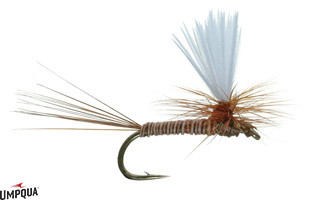
Pale Morning Duns belong to the genus Ephemerella — primarily inermis and infrequens on the South Platte. They’re medium-sized mayflies (size 16–20) with pale yellow to olive-yellow bodies and pale gray to creamy wings. The name is accurate: they hatch in the morning, and they’re distinctly pale compared to the Blue-Winged Olives that precede them in spring.
The lifecycle is typical for mayflies:
Nymph phase: PMD nymphs live in the bottom substrate of tailwater sections for most of the year. In the weeks before the hatch begins, nymphs start migrating toward the surface — this is the subsurface feeding window before the first adults appear.
Emergence: The dun hatches from its nymphal shuck at or near the surface, often drifting for several seconds to minutes in the current before its wings dry and it flies. During this drifting window, the dun is completely vulnerable to trout — a stationary target in the current film. This is when fish feed most aggressively on surface patterns.
Spinner fall: PMD spinners (spent adults) fall in the afternoon, sometimes hours after the morning hatch. The spinner fall is often overlooked but can produce good fishing in its own right. Rust-colored spinner patterns in sizes 18–20 match the spent females.
Hatch Timing by Section

One of the most important things to know about the South Platte PMD hatch is that it doesn’t happen everywhere at the same time. The hatch timing varies by elevation, water temperature, and the reservoir sources feeding each section.
Deckers: My primary PMD water on the South Platte and the section I fish most days during the hatch. PMDs at Deckers typically establish in June and run strong through midsummer. The wider valley means more sun exposure and slightly warmer water temps than the canyon sections above — the hatch comes on fast once it starts and runs through a wide window each day, roughly 10 AM to 2:30 PM at peak.
Dream Stream: The latest section to come on. At 8,700 feet elevation with controlled reservoir flows, the Dream Stream PMD hatch typically arrives in mid-to-late June and runs deep into the summer. If you miss the Deckers peak, the Dream Stream extends your season by 2–3 weeks.
Eleven Mile Canyon: Similar timing to the Dream Stream — mid-June into July. The canyon section’s cold reservoir water delays the hatch relative to the open-valley sections.
Cheesman Canyon: This is the section I fish least, but it’s worth noting for the timing — the canyon runs a week to ten days ahead of Deckers and is technically the earliest PMD section on the system. Expect the first consistent hatches in late May, peaking through June. The hatch window is tight — roughly 10:30 to 1:30.
The Flies
Dry Flies
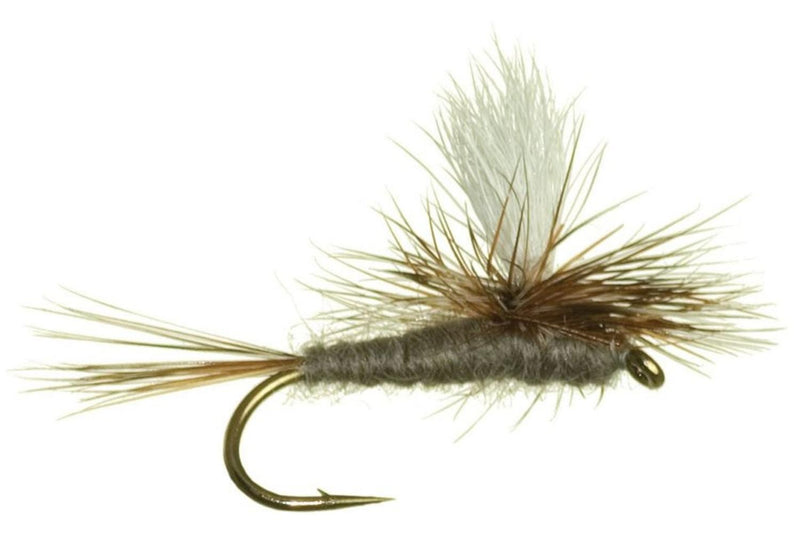
Sparkle Dun PMD (#18, 20) — the most important PMD dry fly on the South Platte. CDC or deer hair wing tied upright, pale yellow dubbed body, trailing shuck of Antron or Z-lon. The trailing shuck is essential — it suggests a crippled or still-hatching dun, which trout key on during heavy emergences because cripples are easier targets than successfully-hatched adults.
Start with size 18. Drop to 20 when you’re getting refusals from fish that are clearly eating PMDs. The size 20 is a meaningful trigger change, not a minor adjustment.
CDC Comparadun PMD (#18, 20) — a flat-wing alternative with no trailing shuck. Effective when fish have seen a lot of Sparkle Duns and are keying on the cleaner adult profile. The CDC wing creates a natural translucency that standard deer hair doesn’t.
Parachute PMD (#18, 20) — the visibility option. A white or pink parachute post lets you track the fly at 40 feet in surface chop. Slightly less effective on flat, technical water where the post creates an unnatural silhouette, but valuable when you need to track your fly in difficult light.
PMD Cripple (#18, 20) — a split-wing or crumpled-wing pattern suggesting a dun that failed to fully hatch. These emerge as the hatch intensifies and fish become more selective — they’re keying on the easiest targets, and cripples are easiest. If standard patterns stop working midway through the hatch, switch to a cripple.
Subsurface
Pheasant Tail Nymph (#16, 18) — the go-to PMD nymph. Fish it dead-drifted at depth before the hatch begins, or hang it 12 inches below your dry fly as a dropper during the hatch. The natural pheasant fiber body matches the slim PMD nymph profile correctly.
PMD Emerger (#18, 20) — a soft-hackle or wet fly pattern fished just below the surface film. In the final 15 minutes before the surface hatch explodes, fish shift from deep nymph feeding to intercepting emergers at the film. An emerger pattern during this transition catches fish that aren’t yet responding to dry flies.
Hatch Matcher RS2 (#18, 20) — the RS2 in olive or pale yellow works as a PMD emerger and is particularly effective on flat-water fish that can study the fly closely.
All of these are available pre-tied at The Fly Fishing Place — including the Sparkle Dun PMD and Pheasant Tail Nymph. Our link gets you 15% off everything.
My take
Seven patterns is the honest list; three do almost all of my actual work. A Sparkle Dun in 18 and 20, a cripple for the stubborn middle of the hatch, and a Pheasant Tail for everything underneath — that’s most of my PMD season in one sentence. I’ve burned mornings rotating through the whole list in a panic while the window closed, and the rotation has never once been what saved me. Carry fewer patterns and believe in them harder. A 90-minute peak rewards the angler who’s fishing, not the one shopping.
Rigging
Standard PMD dry-fly rig:
- 9-foot 5X leader (minimum)
- 24 inches of 6X fluorocarbon tippet
- Single dry fly
Technical flat-water rig:
- 12-foot 5X leader
- 30 inches of 7X fluorocarbon tippet
- Single dry fly
- No dropper — one thing at a time
Dry-dropper rig:
- 9-foot 5X leader
- 24 inches of 6X to dry fly
- 12–14 inches of 6X to Pheasant Tail nymph dropper
- Most productive during the early part of the hatch when fish haven’t fully committed to the surface
The transition point to note: as the hatch intensifies and fish lock onto surface feeding, remove the dropper. The dropper adds current drag and reduces your dead-drift quality on flat water. Once fish are committed to the surface, give them the best possible presentation of a single fly.
Why Fish Refuse and What to Do
Refusals on PMD fish are the South Platte experience — if a trout hasn’t snubbed your fly down here, you haven’t been down here. Don’t change everything at once and don’t take it personally. Here’s the systematic approach I run through when the fish won’t eat:
1. Size first. If fish are refusing a size 18, try a size 20 before changing patterns. The size adjustment is the most common fix on technical tailwater fish.
2. Tippet second. If 6X is producing refusals, step down to 7X. The difference in tippet diameter is visible to a trout in clear, slow water. This is not hypothetical — it’s measurable in refusal rate.
3. Pattern third. After adjusting size and tippet, consider the pattern itself. If you’re fishing a Parachute PMD, try a Sparkle Dun or Comparadun. If you’re fishing a standard emerger, try a cripple. The profile change is the third variable, not the first.
4. Drift last. If all pattern adjustments fail, the problem is drag. Watch your fly carefully — subtle micro-drag on flat water is invisible from above the surface but obvious to the trout from below. Shorten your cast, change your casting angle, or reposition to eliminate the drag before assuming a different fly is needed.
Timing
The PMD hatch on the South Platte follows a consistent daily schedule during the peak season:
- Before 10 AM: subsurface nymph activity; fish may be active but not yet on the surface
- 10–10:30 AM: emergence begins; scattered risers appear
- 10:30 AM–12:30 PM: peak hatch; best surface fishing of the day
- 12:30–2 PM: hatch tapering; fish become more selective as fly density drops
- After 2 PM: late PMD spinner fall begins on some sections; also watch for BWOs on overcast days
The peak window — 10:30 AM to noon — is 90 minutes. Plan your day around it. Being on the water by 9 AM, with your position selected and tippet tied on before the fish start rising, is the difference between productive PMD fishing and scrambling to catch the tail end of the hatch.
Get the timing right, drop a size when they say no, fix the drift before you blame the fly, and the South Platte will hand you the best dry-fly fishing in the state. Get it wrong and you’ll stand in the river debating tippet diameter with a trout that already won. I’ve been both of those guys, often on the same morning — that’s exactly why this hatch is worth chasing.
Some links in this article are affiliate links. Read our full disclosure.