
In this guide
A Trico morning is not a fishing session. It’s a schedule, and you are either on it or you are watching it from the parking area with a cup of coffee and a growing sense of grievance.
The sequence is the same every time: duns at first light, spinners half an hour to an hour behind them, roughly three hours of surface fishing, and then nothing. Learn to read where you are in that sequence and the whole hatch gets simpler, because at any moment there is exactly one right answer and the clock tells you what it is.
This page is the clock and the diagnosis. Which water to stand in and which fly to tie on each have their own page.
The sequence, start to finish
Season: mid-July through late September, peaking in August, with stragglers into October. The best Trico days land in the hottest stretch of the year — the same weeks most South Platte anglers have written the river off as too warm and too slow.
Duns emerge at first light. Sometimes before sunrise. Tricorythodes duns come off in near-darkness and leave the surface fast in July’s warmth, which is why most anglers never see this stage at all and assume it doesn’t happen. If you’re wading in and there are small dark mayflies on the surface, you are early, and early is the correct problem to have.
Spinners fall 30 to 60 minutes later. The duns molt, the males form mating clouds, the mating happens above the water, and the spent adults collapse to the surface. That gap — half an hour to an hour between emergence and fall — is your rigging window, your walking window, and your find-a-fish window. Use all of it.
Prime window: roughly 7 to 10 a.m. This is the fishing. Spent wings flush in the film, fish tipped up and locked in, and about three hours to make something happen.
Done by about 10:30. Not tapering — done. The film clears, the rings stop, and a flat that held thirty rising fish becomes a pleasant view. If you rolled in at nine figuring you had the morning ahead of you, you had ninety minutes and you spent forty of them rigging.
Set the alarm. Set a second one if you’re anything like me.
The mating swarm is your twenty-minute warning
Look above the willows before you look at the river.
Trico males gather into swarms — pulsing vertical columns of tiny specks, usually over bankside vegetation, catching whatever low light there is. Once you’ve seen one you can’t miss it again. When that column is up and working, the fall is roughly 20 to 30 minutes out.
That’s the single most useful thing you can learn about this hatch, because it converts a guess into a countdown. Twenty minutes is enough to walk the bank, find where the film is going to collect, pick a fish’s address before the fish is there, and be standing in position rather than wading into it mid-fall. I’ve watched people spend that twenty minutes tying a leader on the tailgate and then arrive to a flat already three-quarters through its morning.
No swarm above the bank means no fall on the water. If the willows are empty at 7:15, you have time.
Timing by reach
The clock shifts as you move through the system, and it shifts in one direction: colder water runs later. Bottom-release tailwater is cold at the dam and warms as it moves downstream, and canyon walls hold the sun off the surface for an extra hour or two.
| Reach | When the fall lands | Hook size |
|---|---|---|
| Dream Stream | The base window — spinners 7–10 a.m., over by about 10:30 | #20–24 |
| Deckers (upper flat) | About an hour behind the Dream Stream | #20–22 |
| Lower Cheesman | Runs with the Dream Stream; mid-Aug into late Sep is the stretch’s best | #20–24 |
| Eleven Mile Canyon | Hours behind everything else; a very cold release pushes the entire sequence back | #18–22 |
The Eleven Mile offset is the only one that changes where you point the truck instead of what you tie on. Flats gone dead at mid-morning is not a reason to stand there hoping; it’s a reason to drive up and catch a window that hasn’t opened yet.
⚠️ Treat these as offsets, not appointments. Air temperature, cloud cover and the previous night’s low all move the whole sequence, and I’d rather you arrive an hour early on the wrong estimate than an hour late on the right one.
Reading the rise: what stage are they on?
This matters more than fly selection, and it’s the skill that separates a good Trico morning from three hours of throwing the wrong thing at fish that are visibly eating. There are four different rises you might be looking at, and they don’t look alike once you know what to watch for.
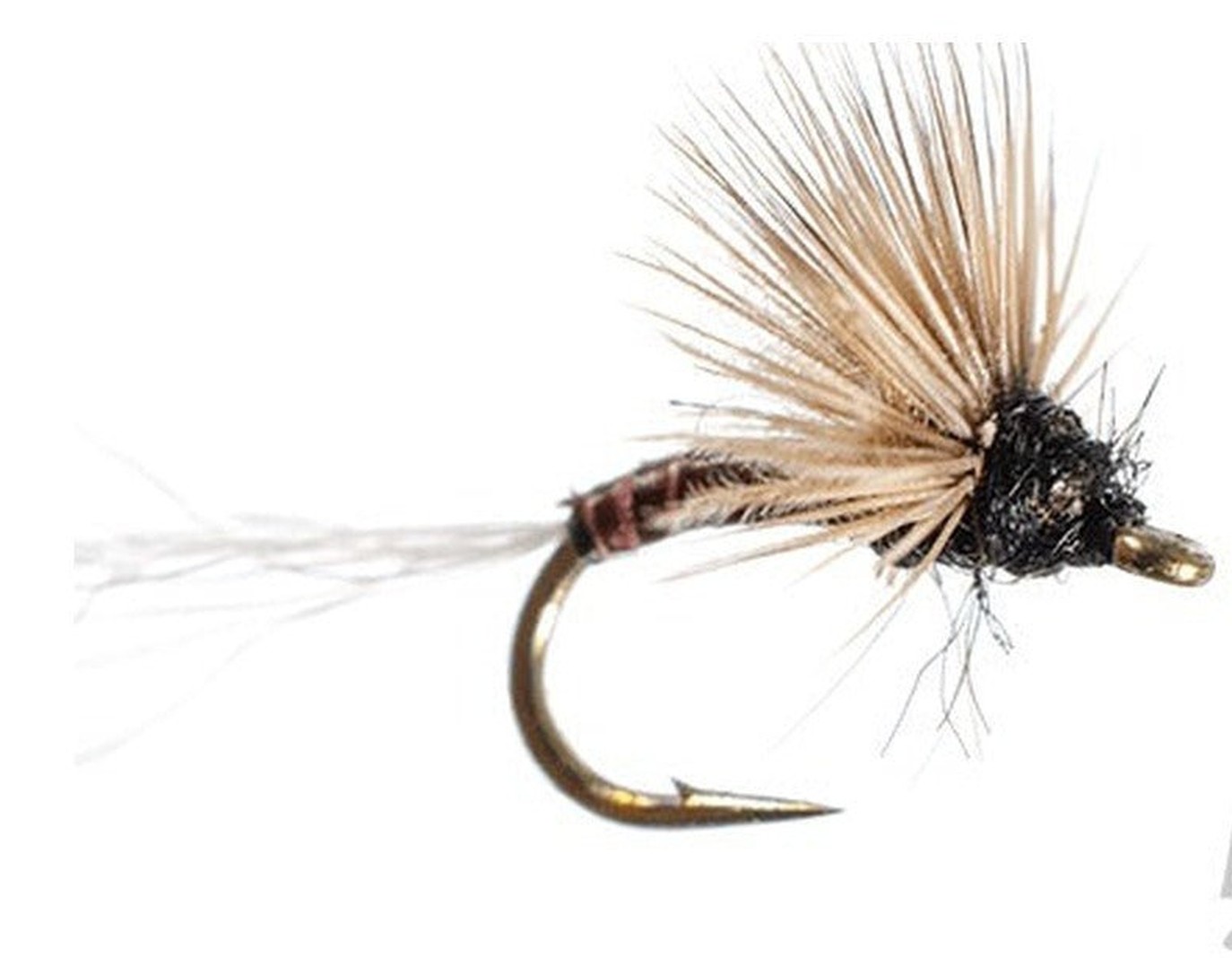
Spinner rise — quiet, flat, rhythmic. A trout eating spent Tricos barely breaks the surface. A subtle ring. A dimple. Sometimes just a dorsal or the tip of a tail. No splash, no urgency, no hurry. The fish is sitting with its nose essentially in the film, in slow water, working a lane. If you see that in the 7-to-10 window, you’re in a spinner fall. Fish a spent-wing pattern.
Emerger rise — a bulge before the break. There’s subsurface motion first: a swelling of water, a boil, a flash, and then the surface breaks. The fish is intercepting the insect just under the film rather than on it. That usually means you’re early — pre-fall, during emergence — and the answer is a small emerger riding in the film instead of a spinner perched on top of it.
Dun rise — deliberate, with a follow. More committed than a spinner sip, and the fish tracks the fly a foot or two before taking it. You’ll see this at first light, before the spinners are down, and it’s the rarest of the four on this river because the dun window is so short.
Everything else. A splash, a slash, or anything with real speed in it is not a Trico fish. Caddis, a terrestrial, a fish chasing something. Don’t let one aggressive rise talk you into abandoning a pod of quiet sippers thirty feet away.
The honest failure mode is refusing to make the call. You watch, you can’t decide, you tie on a spinner because that’s what the internet said, and you burn forty minutes of a three-hour hatch on a fish that has been eating emergers the entire time. Make the call, commit to it for ten minutes, and change it if it’s wrong.
The four-second beat
The other thing the clock does on this hatch is small and easy to miss: these fish eat on an interval.
When the film is dense enough, a trout doesn’t hunt. It parks in a lane and takes whatever arrives, and it settles into a rhythm you can time — four seconds, six seconds, whatever that fish has decided on. It’s remarkably consistent, and it’s the closest thing to a gift this hatch hands out.
What you do with it: watch a single fish through several rises and count. Then deliver so the fly arrives on the next beat, in the lane, rather than dropping a cast onto the ring left over from the last one. That ring is where the fish was. Casting at it is fishing forty seconds in the past.
Get the interval right and you’ll get eats on flies that are honestly a size off, because the fish is already committed to the next thing in the lane. Get it wrong and a perfect fly drifts past a fish that isn’t looking up yet.
My take
I used to treat the pre-fall hour as dead time and spend it driving, which is how I managed to arrive to fully-committed fish and no idea which lane anything was in. Now I’d rather be standing on the bank at 6:45 doing nothing useful than pulling into the lot at 7:30 doing something.
The half hour before the fall is when every decision gets made — where the film will collect, which fish is worth the morning, where I can stand without being a silhouette. During the fall there’s no time to think and no forgiveness for moving your feet. Show up early and be bored for twenty minutes. It’s the highest-return boredom in fly fishing.
What moves the clock
Water temperature. Carry a thermometer in July and August. Releases run cold at the dam and warm downstream, and Trico activity concentrates in roughly the 52–62°F band. Colder than that and the sequence slides later or compresses into a shorter fall. Push past 65°F and trout stress climbs — at that point back off and let the fish rest, which on the lower reaches in August is a real possibility by early afternoon and another reason this is a morning game.
Sun on the water. Direct sun is what collapses the fall more than air temperature alone. On clear, warm mornings the whole thing happens earlier and ends faster. Cool, overcast mornings can stretch it by 30 to 60 minutes, which is the closest thing to a bonus round this hatch offers.
Wind. Wind breaks up the spinner film and scatters it, and it makes the fall nearly impossible to see and to fish. The best Trico mornings are muggy and dead still — conditions that feel wrong for most fly fishing and are exactly right for this one.
Nothing else. One thing worth saying plainly: the fall happens regardless of whether conditions look promising. Bluebird, warm, no clouds, water low — the Tricos still fall. What changes is how long the window lasts, not whether it opens.
After the spinner fall
The surface goes quiet, and you have three reasonable moves.
PMDs. They overlap with the Trico window and can produce their own mid-morning emergence. If the sipping stops and then larger, creamier rises start up an hour later, you’re probably looking at PMDs — swap to a Parachute PMD or a Sparkle Dun and see what happens.
Terrestrials. By late morning the hopper-dropper takes over, particularly on the Deckers stretch, and the faster water you deliberately walked past at 7 a.m. becomes the water you want. Broken water holds fish that will eat a hopper straight through midday.
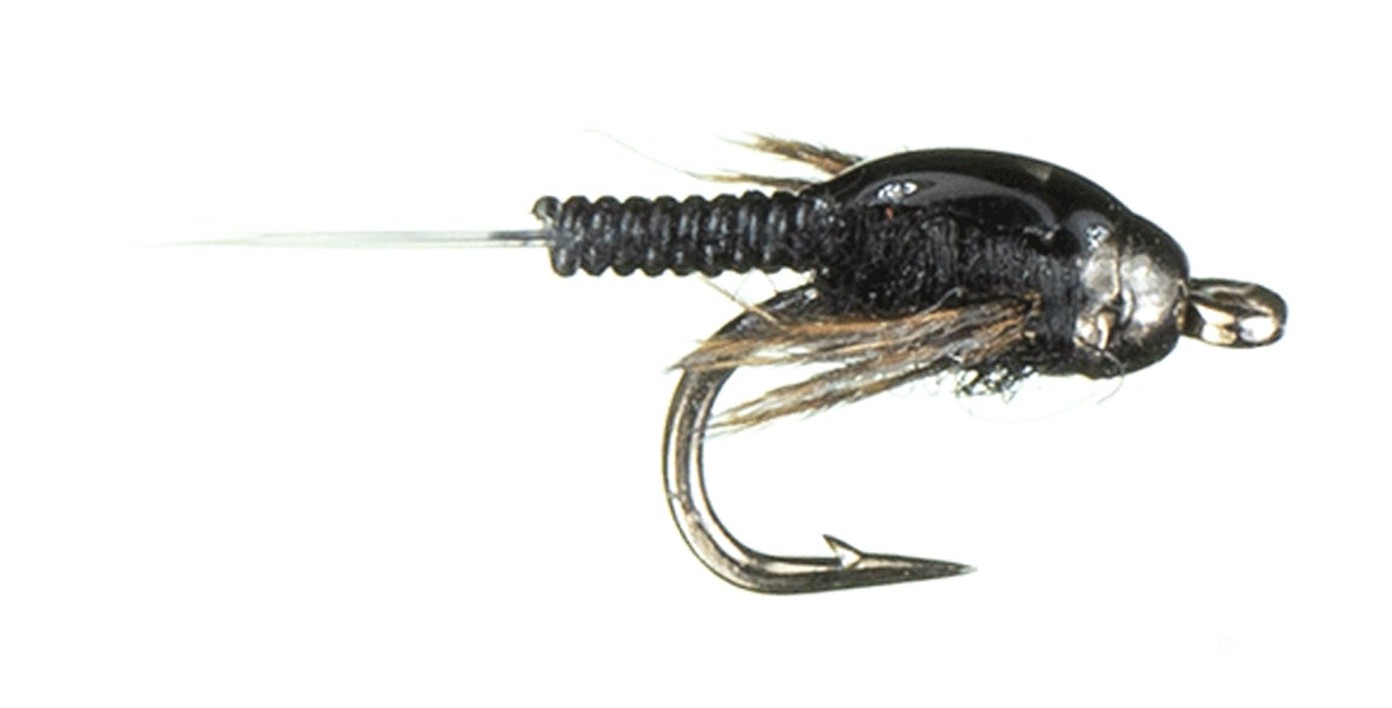
Tight line. When the surface goes fully dead, the euro rig comes back out. A Blowtorch — orange tag in anything stained, green when it’s gin-clear — with a small Pheasant Tail dropper covers the midday slot as well as anything.
Or you drive up to Eleven Mile and fish a spinner fall that hasn’t started yet, which remains my favorite thing about this hatch: the South Platte will sell you the same morning twice if you’re willing to move.
Frequently Asked Questions
Q: What time does the Trico hatch happen on the South Platte? Duns emerge at first light, sometimes before sunrise. The spinner fall — the event you’re actually there for — follows 30 to 60 minutes later, and the prime window runs roughly 7 to 10 a.m., finishing by about 10:30. Deckers runs about an hour behind the Dream Stream, and Eleven Mile Canyon runs hours behind everything because of the cold release.
Q: How do I know if trout are eating spinners or emergers? Watch the rise for subsurface motion. A spinner rise is a flat, quiet dimple with nothing happening below it — the fish is taking a spent fly lying in the film. An emerger rise has a bulge, boil or flash under the water before the surface breaks, because the fish is intercepting the insect below the film. Bulge means emerger, dimple means spinner.
Q: How early do I need to be on the water? In position before 7 a.m., which means arriving well before that. The half hour between the duns and the spinner fall is when you find the film, pick a fish and get in position — if you spend it rigging you’ll be wading into fish that are already eating, and on flat water that ends the morning for that pod.
Q: Does the Trico spinner fall happen every day? Through the peak in August, essentially yes — it happens on bluebird mornings and on cool ones. What conditions change is duration, not occurrence. Still, calm mornings fish far better than windy ones, because wind scatters the film that concentrates the fish in the first place.
Q: Can you nymph during the Trico hatch instead? Yes, and on days when the fall is sparse it’s often more productive. A small Pheasant Tail or RS2 in #20–22 fished tight-line under the spinner zone picks up fish that aren’t quite committing to the film. But if fish are actively sipping in flat water, commit to the dry — that’s the whole reason to have gotten up.
Next: where to stand for the section-by-section water, and the South Platte hatch calendar for where this window sits in the year.