
In this guide
Most anglers spend their first couple of seasons fishing water that looks nice. Pretty, shin-deep, evenly riffled runs that photograph beautifully and hold almost nothing. You cover a hundred yards of postcard, go home skunked, and blame the fly.
Meanwhile the angler who catches fish walks past all of it. He plants himself at one unremarkable seam beside a boulder you stepped over twice, and quietly catches fish while you change flies for the fourth time. He isn’t a better caster than you. He just knows where the trout actually are, and you’re fishing the parking-lot-pretty water two feet to the side of them.
It’s hard to see what he’s doing, because from the bank it doesn’t look like a skill. It looks like a guy standing still. What he’s actually doing is eliminating — ruling out the water that couldn’t hold a fish before he ever strung up, so that everything left over got a real cast.
The good news: this is learnable, and it’s mostly common sense once someone draws you the map. A trout is a small fish in a big, cold, dangerous world, and it makes the same three calculations all day long. Learn those three, then learn which of the three a given lie actually delivers, then learn how season and light nudge the fish between them — and the river stops being a blur of moving water and starts being a map with the fish penciled in.
The three things every trout wants
A trout holds where these overlap. Find the overlap, find the fish:
- Food — a steady drift of bugs delivered to its mouth without much effort. Trout are lazy in the best way: most calories for the least work. A spot that funnels a lot of food past a fish beats a spot that merely looks comfortable.
- Comfort — enough oxygen, a tolerable temperature, and a break from the full force of the current so the fish isn’t burning energy just to hold position. A trout fighting heavy current all day is a trout losing weight.
- Safety — cover from predators above (herons, ospreys, and you) plus a quick escape to deeper water. A trout won’t sit somewhere exposed unless the food is worth the risk — and even then, mostly in low light.
Think of it the way you’d think about your own couch: you want the snacks within reach, the cushion comfortable, and a clear line to the door if something goes wrong. A trout wants the same three things. It is just better at picking the seat than most of us.
Here’s the whole thing in one sentence: the best lies are where a fish can sit in slow water — comfort and safety — right next to fast water that brings the food. That edge is where the fish are. Once you start seeing the river as “where does slow meet fast,” you’ll never un-see it.
Three kinds of lie, and why the fish keeps moving
This is the part nobody tells you, and it’s why a spot that produced at 7 a.m. can be stone dead at noon with the fish still fifteen feet away. Very little water delivers all three needs at once, so lies sort into three types and a trout trades between them all day:
- Feeding lies — riffles, seams, foam lines, tailouts. Loads of food, little cover or rest. A trout uses these opportunistically — during a hatch, in low light — but it won’t live there.
- Holding lies — the deep guts of pools, undercut banks, root wads, the shade under a logjam. Safe and cheap to occupy, but the food delivery is poor. Where fish retreat under bright sun, pressure, or high dirty water. Catchable; just not looking up.
- Prime lies — the rare address that does all three: depth, plus a current break, plus overhead cover. A boulder at the lip of a run beside a deep slot under an overhanging branch. Good fish defend these, and when you take one out, another moves in within hours. That’s not a metaphor, it’s real estate.
So “where do trout hold?” has a time stamp on it. Read a run once in the morning and fish that read all day and you’ll spend the afternoon casting at an address the fish moved out of. When water that produced goes quiet, the first question isn’t what fly — it’s did they slide back into cover?
What is a seam, and why does it matter so much?
A seam is the line where fast water meets slow water — beside the main current, below a boulder, where a riffle dumps into a pool, where two currents rejoin under an island. The trout tucks into the soft side, where holding costs almost nothing, and tips into the fast side to grab what floats by.
That’s the magic of it. The fish gets the comfortable seat and the conveyor belt of food, all in one lie. If you learn to spot one piece of water for the rest of your life, make it the seam. It’s also the water most likely to get ruined: the classic move is wading across three seams to reach a fourth, then standing there wondering where everyone went.
Seams aren’t always obvious. Sometimes it’s a hard, visible line of bubbles; sometimes it’s a subtle change in surface texture — a smooth tongue sliding past a choppy edge. Polarized glasses help you see them. So does standing still and watching the surface for a minute instead of charging in.
And seams move. On a dam-controlled river the crease that held fish at 80 cfs is scoured out or shoved twenty feet toward the bank at 300, so a read is only good for the flow you’re standing in — river by river on the South Platte.
A close cousin: the foam line. Foam collects where currents converge and concentrate — and bugs collect in exactly the same places, because they’re floating on the same water. Foam is home. If you see a thread of foam drifting down a run, that’s the conveyor belt the trout are feeding on. Put your fly at the top of it and let it ride.
The water types, head to tail
Most runs read like a sentence — riffle, run, pool, tailout — and trout use each part differently depending on the day. Learn to name the parts and you’ll know where to start:
- Riffles. Choppy, shallow, oxygenated, and crawling with bugs, and the broken surface hides the fish from above. Wildly underrated, especially in summer when oxygen matters and the chop gives nervous fish confidence. Fish hold right in the riffle and stack at the soft lip where it drops into the run.
- Runs. The deeper, walking-pace water below a riffle — the bread-and-butter holding water on most rivers. Work the seams down both edges and the slot down the gut. If you had to fish one water type blind, make it a good run.
- Pools. Deep and slow. The biggest fish in the river often live here, but they’re spooky and the slow water gives them all the time in the world to inspect your fly and refuse it. Don’t waste the day dredging the dead-slow middle — fish the head of the pool, where the food first arrives, and the drop-off lip where shallow tips into deep.
- Tailouts. The shallow, smooth water where a pool exits and gathers speed before the next riffle. As the bottom rises and the pool narrows, food funnels into a tightening lane, so fish slide up here to eat in low light and during a hatch. The same geometry makes the surface glassy — approach from below, keep low, don’t false-cast over them.
- Pocket water. The boulder-strewn chaos that looks like a mess to the eye and a tangle to the fly line. It isn’t a mess to the fish — every rock is a self-contained lie. It fishes slow and close, one pocket at a time, which is to say it fishes at exactly the pace most attention spans don’t want to. Slow down anyway.
- Eddies. Where current wheels back on itself behind a bank point or a big obstruction, it parks food in the slow middle and keeps it circulating. Genuinely good water almost nobody fishes, because the surface runs backwards relative to the main flow and drag sets in the second you stop paying attention. Worth the mending gymnastics.
- Flats and glides. Wide, smooth water with nothing obviously breaking it. A glide has real depth under the calm and is one of the most walked-past pieces of water anywhere. A shallow, featureless flat is the opposite — thin, exposed, holding fish only in low light or a hatch, when they’re also at their pickiest. Plenty of anglers spend their first two seasons fishing flats and calling them runs.
Pocket water and tailouts reward the most study, and I put them head to head on one specific river in pocket water vs. pool tailouts at Deckers. The same reads scale down to a creek, where the whole stream is structure.
Structure: anything that breaks the current
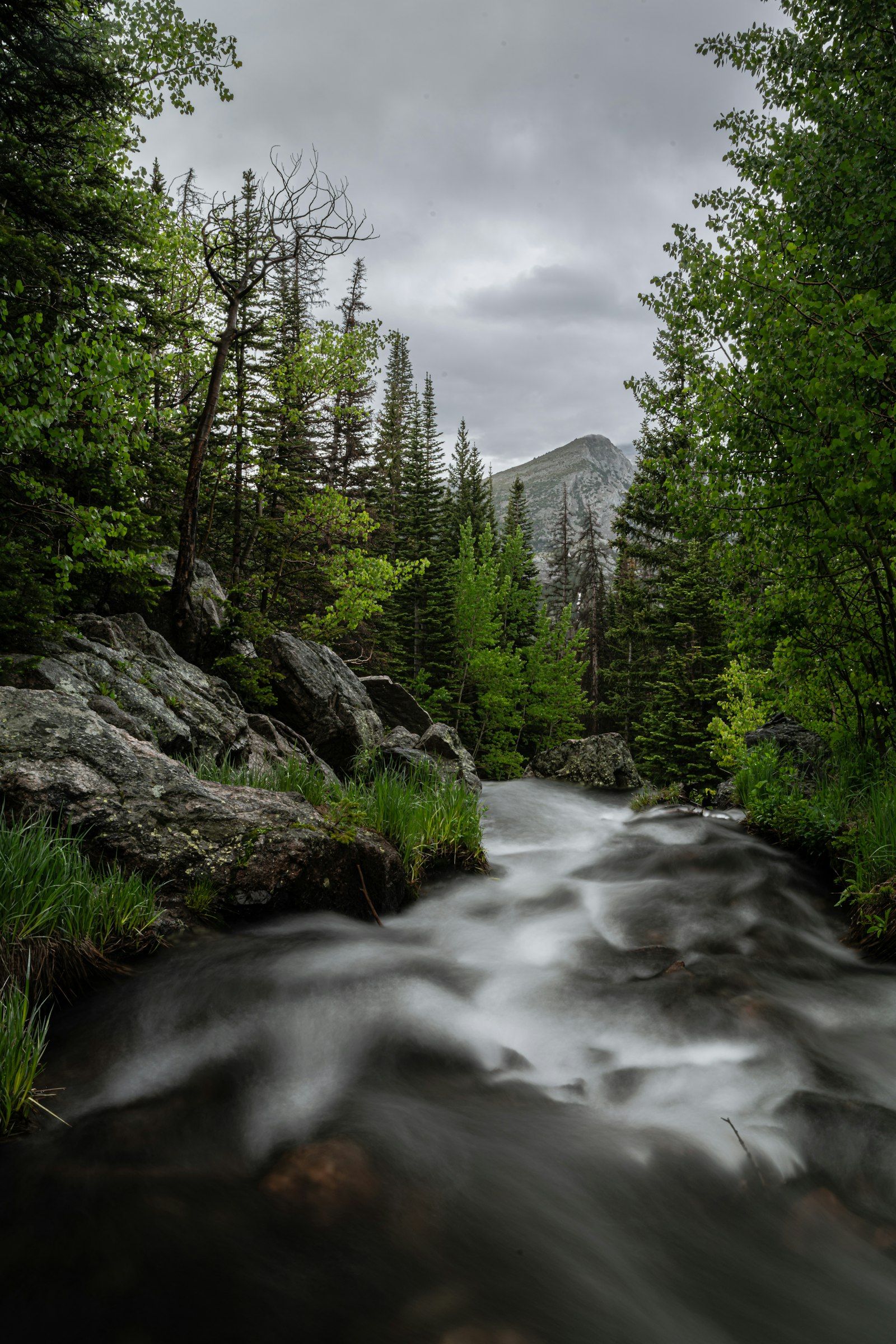
Trout relate to stuff. Scan a run for anything that interrupts the flow and creates a comfort pocket next to a food line:
- Boulders — and remember the cushion in front of the rock, not just the pocket behind it. Water piles up and slows against the upstream face before it splits, putting a fish in soft water and dead in the food line at once. It’s the lie everyone walks past on the way to the obvious one.
- Ledges and drop-offs where shallow turns to deep — a depth change is a current break you can’t see, and depth itself counts as cover.
- Undercut banks, especially on the outside of a bend where the current has dug in tight to the grass. Cover plus food lane plus depth: that’s a prime lie, and it’s why the best fish in a stretch is so often two feet from dry land instead of out in the middle.
- Submerged logs and root wads — cover, shade, and a current break all in one.
- The shade line under overhanging trees, where fish gain overhead cover and pick off terrestrials.
Sort each one as you go. A boulder in a fast riffle is a feeding lie; a root wad in a slow pool is a holding lie. When a piece of structure offers both plus depth, fish it first and fish it carefully.
Season and water temperature move the fish
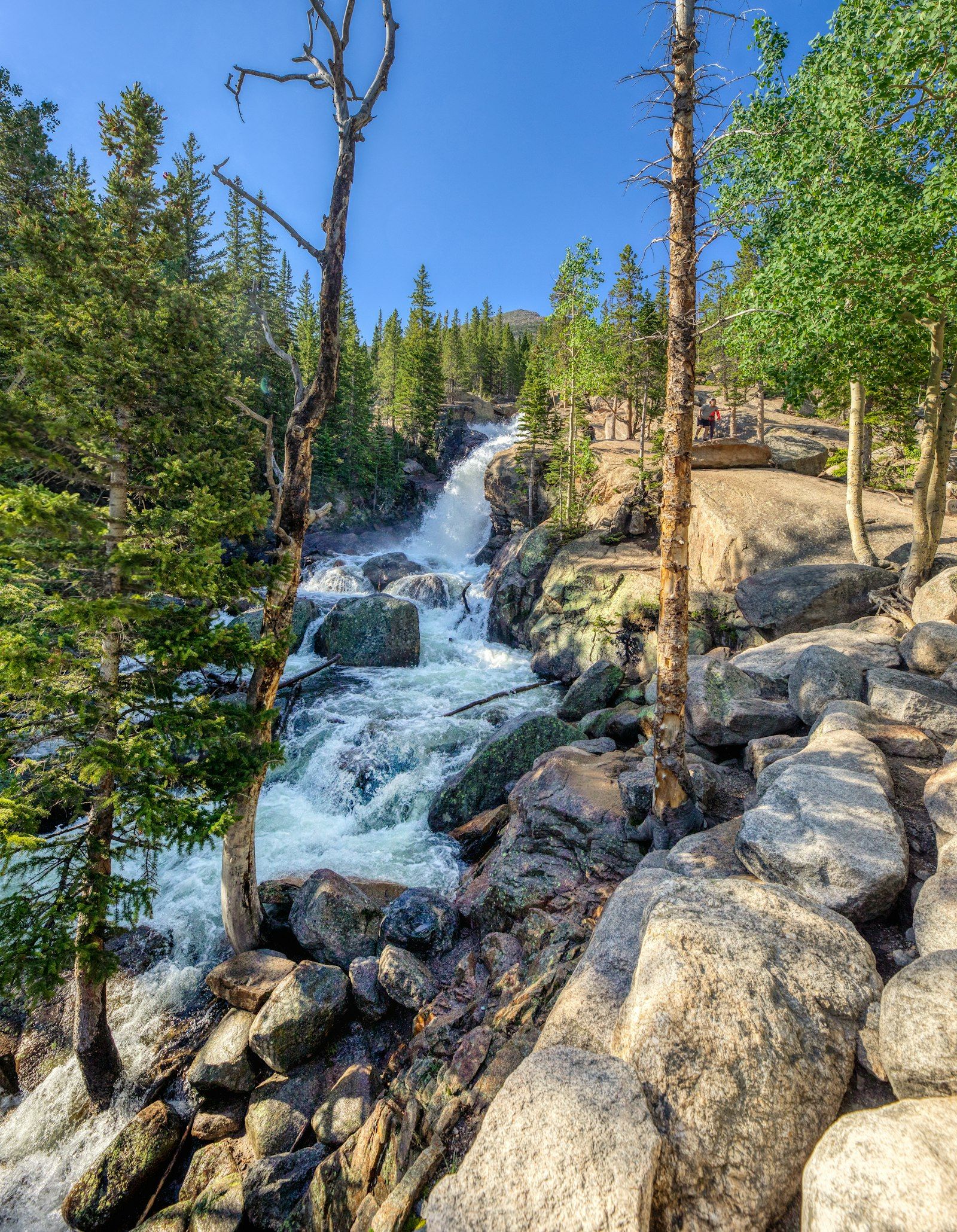
Where trout hold isn’t fixed — it slides with the temperature, because comfort and oxygen change with the season. A thermometer in your pack turns most of this from guesswork into arithmetic. Trout feed most efficiently somewhere around 50–65°F; below roughly 40°F their metabolism falls off a cliff and they stop moving for food; above about 67°F they’re in real trouble.
- Cold water (winter, early spring). Trout get sluggish and won’t burn a calorie they don’t have to. They drop into the slow, deep, soft water — the guts of pools, the bottom seams, the cushion behind boulders — and abandon the fast riffles that held them in July. A winter fish rarely shifts more than a few inches for food, so the fly has to arrive at its nose. Concentrate on the warmest hours, roughly 11 a.m. to 3 p.m., when a degree or two of warming nudges bugs into the drift. Drift a beautiful fly eighteen inches over a January fish’s head and nothing happens. The fish is home. You’re knocking on the wrong floor.
- Warm water (mid-summer). Now dissolved oxygen is the binding constraint — warm water physically holds less of it — so fish push up into riffles, oxygenated pocket water, and pool heads where the current is churned and cool. They also stack at thermal refuges: cold tributary mouths, spring seeps, deep shaded pools. Morning and evening beat the heat of the day. Carry a stream thermometer and use it. At around 67°F a released trout can swim off looking fine and die hours later, so once the water pushes into the upper 60s, go find colder water or go home. That one isn’t a judgement call.
- Runoff / high water. Trout get shoved off the main current entirely and tuck onto the soft edges — inside seams, slack water along the flooded banks, behind anything that breaks the flow. In high, off-color water the fish are at your feet, not across the river. And direction matters as much as level: rising-and-dirtying is the hardest combination there is, while dropping-and-clearing is usually the best window of the spring, because fish settle into predictable lies, can suddenly see your fly, and are hungry. Fish it on the drop. The high-water version at Deckers in May gets its own post.
Light and time of day move them too
Light is the dial that decides which lie type is in play, because dim water is cover.
- Low light (dawn, dusk, overcast) buys a fish enough security to move into the feeding lies — tailouts, riffle edges, thin flats — and eat where it’s completely exposed. This is why dawn patrol works, and why the best dry-fly window of the day is so often the worst light for photographs.
- Bright midday sun takes that security back, and they trade down to the holding lies — under the foam, into the riffle’s chop, tight beside structure, into the shade. If the sun’s high and the fish vanished, they didn’t leave. They moved house.
Which gives you an order: fish the exposed, spooky water first, in the dark, and save the structure and deep slots for when the sun is up. Get it backwards and you spend the good light on water that fishes fine at noon.
A worked example: reading one run
Walk up to a typical run and read it before you wet a line. Say it’s a riffle dropping into a deeper run with a boulder on the left and a foam line down the center-right:
- First fish the near edge — the seam closest to you, where the riffle’s chop softens into the run. It’s the highest-percentage water you can reach without lining anything, and it’s the spot most people wade right past on their way to the middle.
- Then the foam line — drift down the center-right thread where the food concentrates.
- Then the boulder — the cushion in front first, then the pocket behind.
- Last, the tailout — quietly, from below, especially if the light’s going.
Notice the order: closest and least-spooky water first, then work outward and upward.
The number one self-inflicted wound in this sport is marching to the middle of the run and lining every fish between you and the far bank before you’ve made a cast. The far bank always looks better. The far bank is rarely better — it’s just farther from the fish you already spooked getting to it.
The discipline that ties it together
Before you step in, stop at the bottom of the run and just look for sixty seconds. Find the seams, the foam, the structure, the depth changes, the likely lies. Sort them into feeding, holding and prime. Decide your order. Then fish — closest water first, one read at a time. It feels slow. It is the fastest way to get good, and it’s the same habit that glassing a hillside before the stalk taught me in a completely different sport.
Then there’s the other read, the vertical one, which takes most anglers much longer to notice: how deep the water is and where your fly will actually ride in it. Whichever way you’re rigged — a standard line with an indicator or a tight-line sighter — a longer leader keeps fly line off spooky tailout fish, and matching the rig to the true depth of the lie is what turns a correct read into a caught fish. Finding the lie and reaching it are two separate skills, and it’s easy to spend a long time assuming they’re one. That second one has its own piece: reading the bottom on a tight line.
My take
The strong version of this opinion: a mediocre drift over a fish beats a perfect drift over gravel, every single time. Which means the cheapest upgrade available to any of us costs nothing and involves no purchase — you stand still for a minute and think about where the fish is before you make the cast. Most of us resist it because standing still doesn’t feel like fishing. Learn it on one piece of home water — mine is Deckers — until you can walk up to a strange run anywhere and point at the lies before you string up. That’s the day the river opens up.
FAQ
How do you know where trout are holding in a river? Look for where slow water sits next to fast water — seams, foam lines, the soft edges of riffles, the cushions around boulders. Trout hold in the soft water and feed in the fast water beside it, where food, comfort, and safety overlap.
What is a seam in fly fishing? A seam is the visible line where two speeds of current meet — beside the main flow, below a rock, or where a riffle empties into a pool. It gives a trout a low-effort seat with the food conveyor running past its nose, which is why seams are the highest-value water on most rivers.
Why did a spot that produced this morning go dead by noon? Usually the fish moved between lie types rather than leaving. Feeding lies — riffles, seams, tailouts — get used in low light and during hatches; once the sun is up, fish slide back into holding lies with cover and depth, often only a few feet away. Fish the shade lines, drop-offs and undercuts midday instead of re-fishing the morning water.
Should I fish riffles or pools for trout? Both, but don’t overlook riffles — the broken surface hides fish and the water is oxygen-rich and full of bugs, especially in summer. Pools hold bigger but spookier fish; fish the head and the drop-off lip, not the dead-slow middle.
Where do trout go in cold water versus warm water? Trout feed most efficiently around 50–65°F. Below about 40°F they drop into slow, deep, soft water, barely move for food, and eat mainly in the warmest midday hours. As water warms, oxygen becomes the limit and they push up into riffles, pocket water, pool heads and cold tributary mouths, feeding best morning and evening. Above roughly 67°F, stop fishing for them — released trout often die hours later at those temperatures.
Where do trout hold during high water or runoff? On the soft edges — inside seams, slack water along the banks, behind structure that breaks the current. The fish are tucked against the bank at your feet, not out in the heavy middle, and the water fishes best as it drops and clears rather than while it’s rising.
What does “foam is home” mean? Foam collects where the current funnels, and bugs collect there too, so a foam line marks the trout’s feeding lane. Drift your fly down the foam.
Next: Reading water on Deckers — these principles applied to one specific, technical tailwater.