
In this guide
The first time someone pointed at a trout I couldn’t see, I thought he was messing with me. The water was low and clear. He said, “There. Behind the rock, third one back.” I stared at the same patch of water for a full minute, nodding like I had it, the way you nod when someone shows you a constellation and you’re really just looking at three random stars. Nothing. Then the fish moved — a slow, lazy shift to eat something I couldn’t see either — and suddenly there it was, like one of those magic-eye posters snapping into focus. It had been there the whole time. I just couldn’t see it.
That’s the whole game. Sight-fishing isn’t really about the cast. It’s about whether you can find the fish before it finds you, which, the first few seasons, it always does.
Why I think this is the hardest game on the river
By late summer, the South Platte tailwaters drop and clear up. Dream Stream runs like glass. Cheesman Canyon gets so transparent you can count the spots on a fish in four feet of water — if you can find the fish at all. The flows are down, the crowds thin out a little, and the trout get smart. Pressured, picky, and watching everything. By August these fish have seen more fly patterns than I have, and they have the receipts.
Low and clear also means warm, and that’s the part worth saying out loud before any of the fun stuff: late-summer tailwater comes with a thermometer attached, and there are afternoons when the right move is to put the rod away. Sight-fishing is a morning game anyway. That is not a coincidence and it is not a preference — by late morning on low summer water I’m off the river, and the afternoon belongs to the fish.
Blind nymphing still works in that water. But sight-fishing is the high-skill version of the summer game, and it’s the one I keep coming back to. You pick a fish. You watch it. You learn what it’s eating — which is a lot easier if you already know what’s on the water that month — and where it sits, and then you make one good cast instead of forty hopeful ones. When it works, it’s the most satisfying fishing I do all year. When it doesn’t, it’s almost always because I never actually saw the fish — I just lined the water and hoped, which is blind nymphing with extra confidence and worse results.
The hard part isn’t the fly. It’s the seeing.
The one piece of gear that decides this
Polarized sunglasses, and they matter more than your rod does. Glare off the surface is horizontal light; a polarized filter blocks it and lets you see into the water instead of off the top of it. Without that, everything else on this page is theory.
I’ve written the buying side up properly — tints, glass versus polycarbonate, what’s worth paying for, and the two-pair question — in polarized sunglasses for trout. The short version, and it’s that post’s verdict, not a second one: one pair, copper or amber, and spend up for glass if sight-fishing is the point of your day. Copper and amber lift a tan fish off tan gravel; grey is more comfortable in hard glare and flattens exactly the contrast you’re hunting for.
The other half of it costs nothing. No lens beats putting the sun at your back. Sight-fishing into the sun is paying for a filter and then aiming it at the one thing it can’t fix. I plan the approach around the light — sun over my shoulder, my own shadow falling behind me rather than out across the fish. Often the whole difference between seeing a trout and not is standing on the correct bank.
What does a trout actually look like in clear water?
Almost never like a trout. In clear water a holding fish reads as a soft, dark smudge that doesn’t quite match the bottom, a sharp shadow on the gravel, a quick wink of a turning flank, or a blink of white as a mouth opens on a nymph. You learn to hunt the clues, not the fish.
This is where I went wrong for a couple of seasons. I scanned the water expecting to see a trout — a whole fish, nose to tail, helpfully outlined, ideally facing the camera. You almost never do. I had to stop looking for the fish on the cover of the magazine and start looking for the fish that’s actually there, which is a smudge that may or may not be a rock. What you’re hunting for are clues:
- Shapes. A trout in clear water reads as a soft, dark, fish-shaped smudge that doesn’t quite match the bottom. Your eye learns it with time.
- Shadows. Often the easiest tell. The fish itself is camouflaged, but the shadow it throws on the riverbed is a sharp, dark, unmistakable trout outline. I find more fish by their shadows than their bodies.
- The white of a mouth. A feeding trout opens and closes on nymphs, and that quick flash of white inside the mouth blinks at you like a tiny signal. Once you train your eye to it, it’s a dead giveaway.
- Movement. A drifting log doesn’t shift sideways to eat. Any small, deliberate side-to-side or up-and-down move against the current is a fish.
- The wink of a flank. When a trout turns to take something, it rolls slightly and catches the light — a quick wink of silver or gold that’s gone in half a second. Train yourself to notice the flash, not the fish.
You’re not looking for the obvious. You’re looking for the thing that’s almost part of the river but not quite. The longer you stare at one spot, the more it gives up.
Slow down and wade like a heron
Here’s the part no lens fixes: you have to slow way, way down.
Watch a heron hunt sometime. It doesn’t crash around. It takes one slow step, freezes, looks, takes another. It is the most patient thing on the river, and it is also better at this than I am, which I try not to take personally. That’s the pace. When I’m in sight-fishing mode I move at maybe a quarter of my normal speed, and I look before every step — both for fish and for where my next foot lands, because one clumsy crunch of gravel sends a wake through skinny water and empties the run in about the time it takes to say “well, there went that one.”
The rule I drill into myself: look before you cast, and look before you move. The fish I’ve blown on clear water were almost never blown by a bad cast. They were blown because I waded into casting position before spotting the fish that was sitting exactly where I wanted to stand. By the time I saw the wake, it was over, and there is no cast in the world that fixes a fish you already stepped on.
Wet wading helps here more than you’d think — being out of the waders and connected to the water makes me move with more intention and less noise. And everything in reading water on the South Platte applies double when you’re sight-fishing: you’re reading the lies and scanning them for occupants at the same time.
Reading the light through the day
The light is a moving target, and it changes what you can see hour to hour.
Early morning is low-angle and tough — long shadows, lots of surface glare, sun in your face if you’re working east. I often use the first hour to walk and scout rather than fish hard.
Mid-morning to early afternoon is prime. The sun is high enough to punch down into the water column and light up the bottom, and that’s when fish and their shadows show clearest. This is the heart of the sight-fishing window on the Dream Stream.
Overcast is a trade-off, and like most trade-offs in fishing, it’s the kind where you only notice the half you didn’t want. You lose some of that bottom-lighting penetration, but you also lose the worst of the glare, and the fish are usually less spooky and more willing to move for a fly. Some of my best sight days have been bright-but-broken-cloud afternoons — the sun ducking behind a cloud just long enough to light a fish up, then handing it back to me when I wasn’t ready.
Late afternoon shadow creeping across the canyon is when Cheesman gets tricky — half the run lit, half in shade, your eyes constantly readjusting. That’s where a lens that handles changing light earns its keep, and where the canyon’s pocket water and pool tailouts demand you re-read the light for every new lie.
The approach and the cast — once you’ve found one
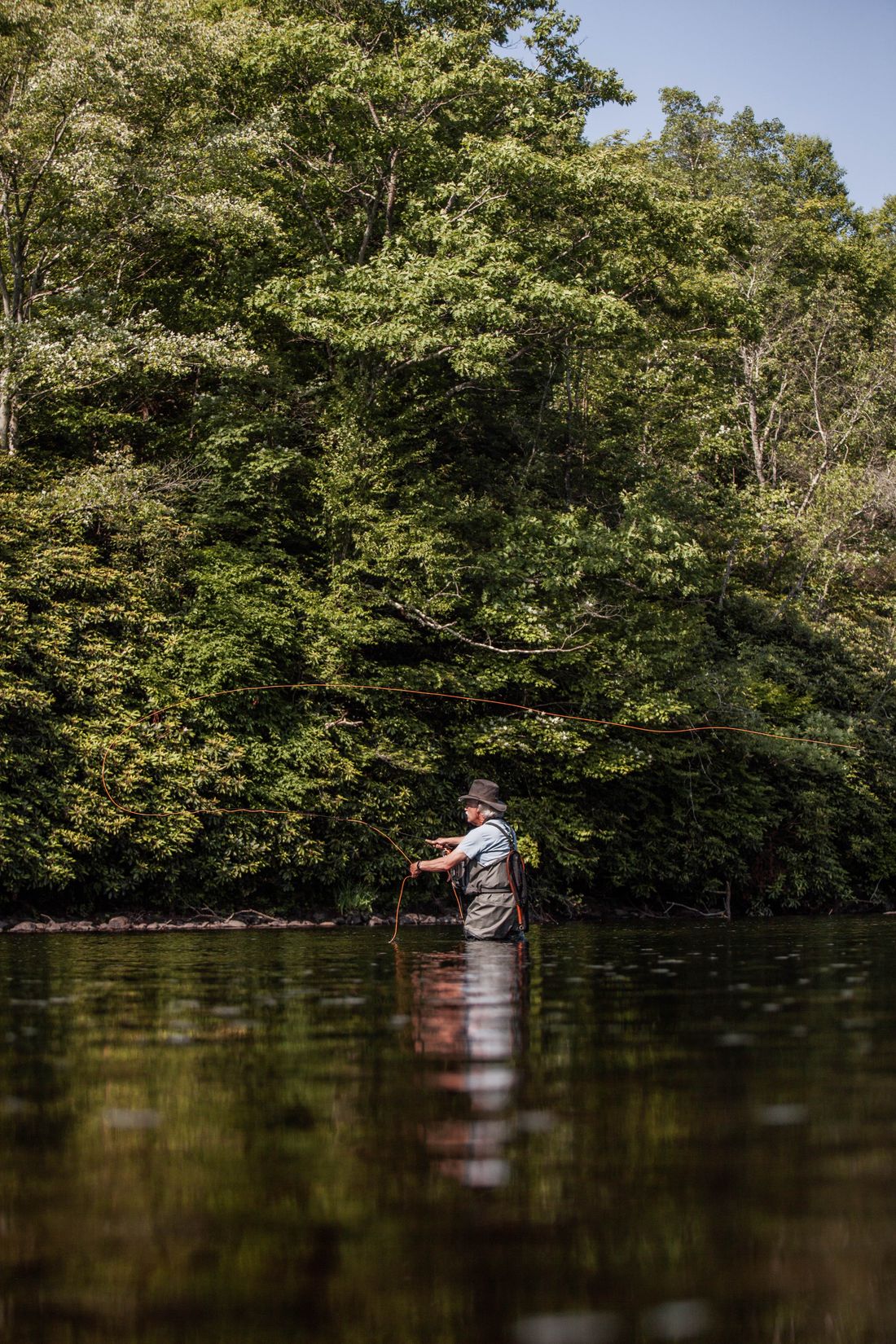
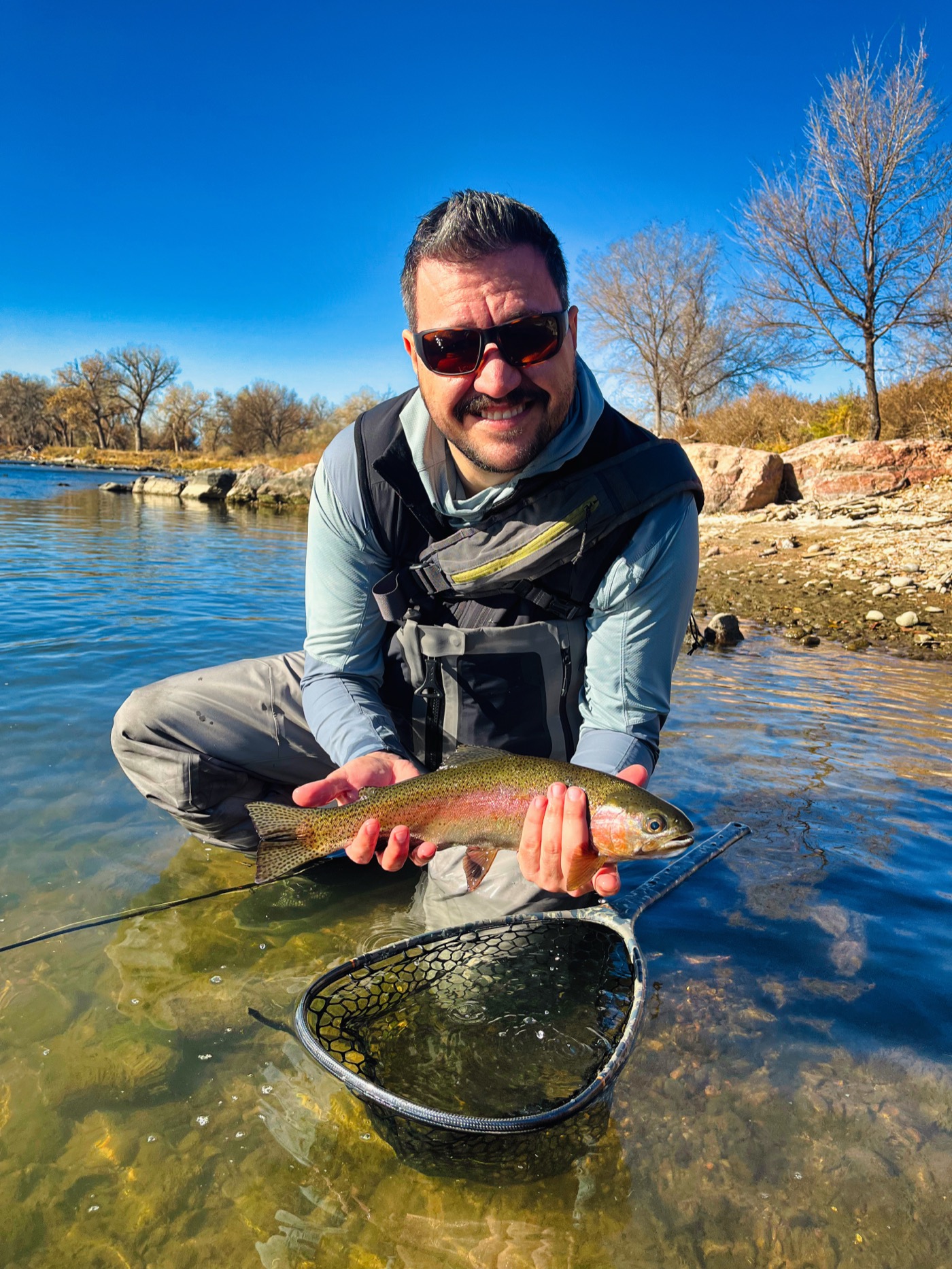
Spotting the fish is most of the battle. But once you’ve got one, the endgame matters.
First, watch it before you do anything. Two minutes of observation tells you which way it’s facing, how often it’s eating, whether it’s working high in the column or rooting on the bottom, and roughly what depth your fly needs to ride. A fish that’s actively rocking side to side and flashing white is eating. A fish hanging dead-still and low is harder — possibly resting, possibly just hard to feed.
Then plan the approach. Get into position low and slow, ideally from downstream and to the side, sun behind you. Don’t false-cast over the fish — waving a fly line back and forth over a wild trout’s head is a great way to introduce yourself, and a terrible way to catch him. False-cast off to the side and to the bank, then deliver. Line shadow and a slapping leader spook more sighted trout than the fly ever does.
The cast itself is usually shorter and gentler than people expect. You’re not bombing distance; you’re placing one accurate drift a couple feet upstream of a fish you can see, then watching the take with your own eyes instead of an indicator. That visual take — watching a trout slide over and eat your fly — is the whole reason this is the best fishing on the river. Everything else is just the long, fiddly setup for that one half-second, and it’s worth every minute of it. As for what to throw, my first pick on sighted fish is an Olsen Blowtorch — I fish the orange tag in stained water and the green tag when it’s clear, and on gin-clear tailwater the green tag rides most of the time. After that it’s the usual clear-water suspects in my South Platte fly box: small and natural, fished light. I’ve changed flies on a glued-down fish over and over and watched it ignore all four with the patience of a fish that has nowhere better to be; sometimes it isn’t the fly, it’s that the trout already clocked me three casts ago and is just waiting for me to leave. And if you want to take these eyes off the tailwater and onto something wilder, sight-fishing is also how I hunt small high-country water — more on that in finding blue lines in Colorado.
If you’re refreshing leader and tippet before a clear-water trip, The Fly Fishing Place carries the light fluorocarbon I run for sighted fish, and the code RDC knocks the price down a touch.
My take
Sight-fishing is the only fishing where I feel like I actually outwitted a trout instead of drifting flies past a hundred of them and hoping one was home. It rewards patience over gear every single time — the glasses and the fly matter far less than putting the sun at your back, slowing down, and watching before you cast. My best days on clear water are the ones where I find one good fish, take the time to read it, and leave the rest of the river alone. Learn to see them, and the catching mostly takes care of itself.
Frequently asked questions
Where on the South Platte is sight-fishing best? The Dream Stream and Cheesman Canyon are the standouts in late summer, when flows drop and the water turns gin-clear. Both demand a careful, slow approach. Cheesman’s canyon shade also makes adaptive lenses especially handy.
Why can’t I see fish even with good polarized glasses? Usually it’s light angle and patience, in that order, and it’s almost never the glasses’ fault no matter how badly you want it to be. Get the sun behind you, slow down, and stop looking for whole fish — look for shadows, movement, and the wink of a turning flank. Your eye is a skill that trains over a season. Give it time on the water.
The part that takes a season
Spend on the glasses, put the sun at your back, and let your eyes do the fishing — the cast is the easy part. The seeing is the part that takes a season, and there’s no shortcut except hours of staring at water and feeling slightly foolish, talking yourself into rocks and out of fish, until one day the river quietly hands one over and it snaps into focus. Then you can’t stop seeing them — which is its own problem, because now you’ll stand on the bank picking out trout you have no business casting to, and call it a good day. It is.
When you’re ready to put the eyes to work, start where the water turns to glass: my South Platte fly box is what I’m tying on once I’ve found one.