
In this guide
May at Deckers is not April at Deckers. Most people show up expecting the same river they fished two weeks earlier and get frustrated when nothing works — and yeah, I’ve been that guy, standing in a spot that produced like crazy a fortnight ago, wondering why the fish suddenly hate me. The flows are different, the fish have moved, and the tactics that crushed it during the pre-runoff window need to be adjusted or thrown out entirely. I’ve fished Deckers through enough May runoff cycles to know what the river looks like when it’s rising and what it takes to stay productive when most anglers are packing up and heading home.
Here’s what you actually need to know — the stuff I wish someone had told me before I wasted a few good mornings figuring it out the hard way.
A note for 2026. This is a record-low snowpack year, so there’s less melt pushing Deckers than a typical May. Denver Water is managing the upstream reservoirs tighter than usual, which means flows here are driven more by release decisions than by snowmelt right now. The ranges below still hold, but in a year like this don’t assume the calendar — pull the gauge before every trip.
Fishing Deckers in May, the short version
To fish Deckers during May runoff: check the gauge first (USGS 06701900), then abandon mid-river and work the edges — bank cushions within 12 inches of the bank, inside seams, back eddies, and cobbled riffles — because trout leave the deep pools once flows push past 300 CFS. Rig heavy and mechanical: a 9-foot 4X or 5X fluorocarbon indicator setup with split shot, or tight-line the tight seams, and lead with a red or pink San Juan Worm (size 14-16), a Two Bit Hooker (18), a tungsten Pheasant Tail (18-20), and a Rojo Midge dropper. Fish ugly on purpose in May and save the 7X for the months that reward it.
What Runoff Does to Deckers
The South Platte above Deckers is dam-controlled. Cheesman Reservoir buffers the worst of the snowmelt, which is why Deckers fishes through conditions that would blow out a free-flowing river entirely. But “buffered” doesn’t mean “unaffected.” Denver Water adjusts releases as snowpack melts off the Tarryall and Platte River Mountains, and those release decisions show up at your feet within 24 to 48 hours.
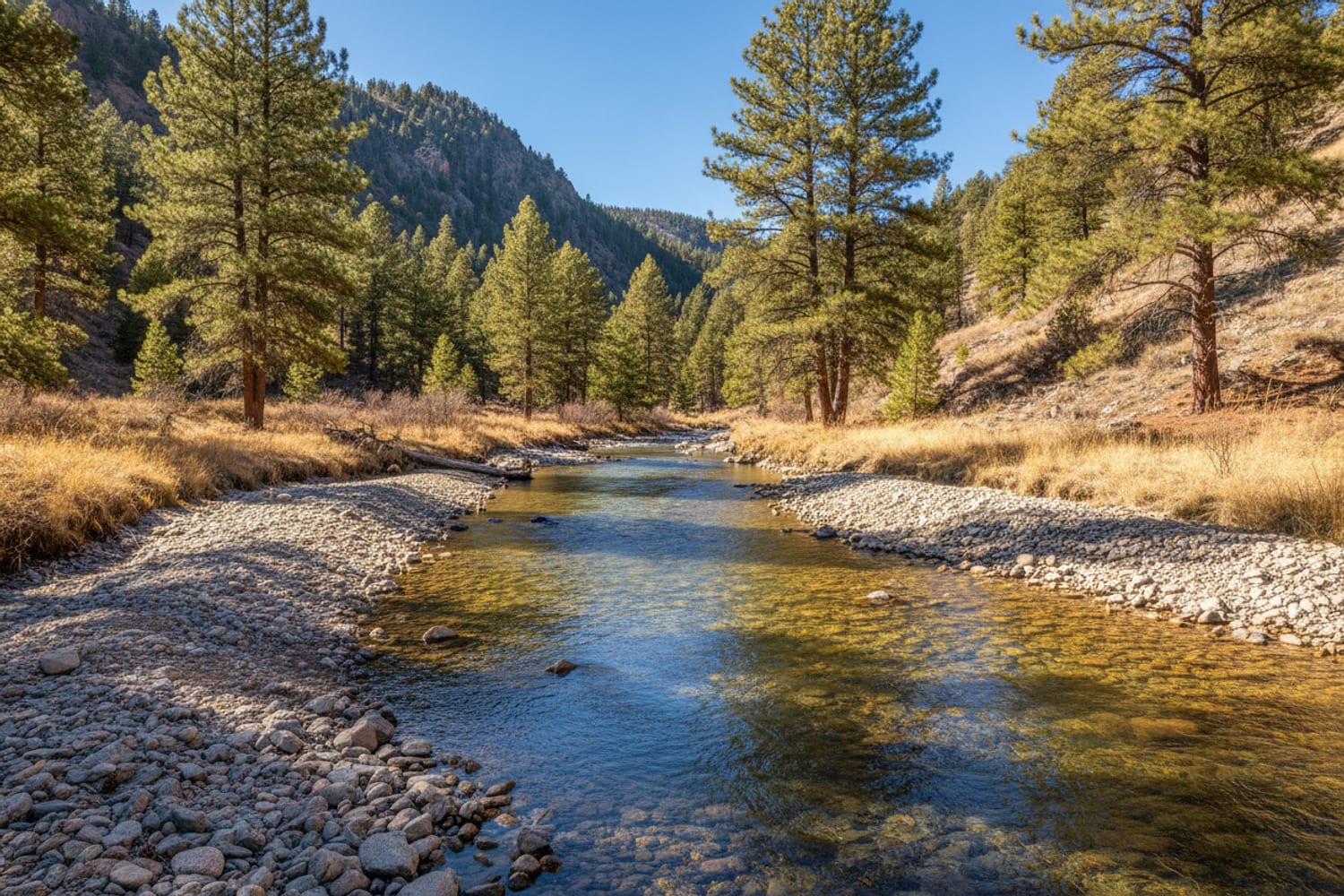
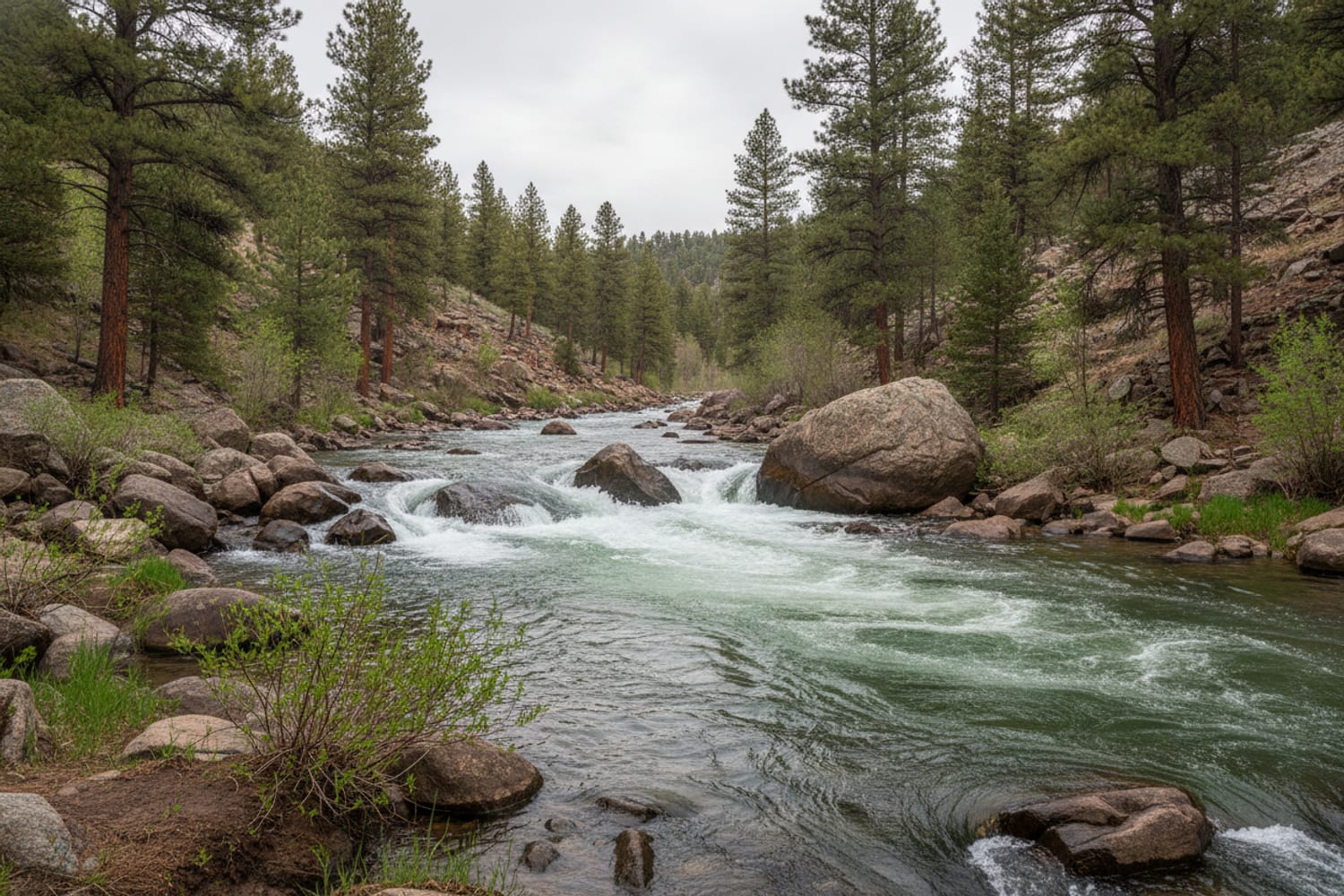
Early May at Deckers can still be manageable — 110 to 180 CFS, clear water, active fish. By mid-May and into the back half of the month, expect flows to push 300 CFS and sometimes higher. I’ve seen it hit 400 to 500 CFS during heavy melt years. At those flows, the river looks completely different. The flats spread wide and shallow, the seams blow out, and the foam lines that normally telegraph holding water disappear into a uniform sheet of fast, turbid water.
Water clarity fluctuates. Flows change sharply and then clear within a day or two. Afternoon thunderstorms add a brief stain. You can show up to 8 inches of visibility one morning and have cleaner water by the next afternoon. Check the Deckers gauge (USGS 06701900) before you leave the house. USGS real-time data is free and accurate. I’ve made the hour-plus drive up only to find chocolate milk waiting for me, and there’s no one to blame but the guy who didn’t pull up the gauge. Don’t be that guy.
Where the Fish Go When the River Rises
This is the part most guides get wrong. They say “fish the edges” and leave it at that. That’s true, but it needs more context.
When flows rise at Deckers, trout abandon mid-river positions. The hydraulics change fast, and holding in heavy current burns more energy than it returns. Fish move to where the work-to-reward ratio makes sense. That means a few specific spots:
Bank edges with soft water behind structure. Any boulder, undercut bank, or root mass along the edge creates a cushion of slower water. Fish stack in these spots tight to the bank. I mean within 12 inches of the bank, sometimes less. Cast past it and you’re fishing over their heads.
Inside seams where faster water meets slow. The line where moving water transitions to near-still water holds trout suspended, feeding on anything the current delivers. At 300+ CFS these seams compress and tighten. They’re narrower and harder to find, but they’re there.
Back eddies. At higher flows Deckers creates back eddies below bends and structure that don’t exist at normal flows. These are worth walking the bank to find. An eddy with foam and debris collecting in it is collecting food, and fish know it.
Shallow, cobbled riffles. This surprises people. But at higher flows, trout move into water that looks too shallow and fast to hold fish. The cobble breaks velocity at the bottom, and dissolved oxygen is high. Nymphing a riffle at Deckers in May has put some of my best fish in the net.
What stops producing: the deep, slow pools. In normal conditions those pools hold fish in the water column. During runoff the velocity increases through the pools, the structure breaks down, and fish move out. Don’t waste time working deep slots when the river is pushing 300+.
Rigging for Off-Color, Higher Flows
Forget the delicate 7X leader setup you were running in March. May runoff fishing is mechanical. You’re getting weight down, getting flies into tight windows, and detecting subtle takes in heavier current. Here’s how I rig:
Indicator nymphing. 9-foot 4X or 5X fluorocarbon leader. Strike indicator sized up — I run a larger Thingamabobber when flows are high because I need to see it at distance and I need it to hold up against faster surface water. Add split shot above your top fly, usually 12 to 18 inches above. I’m not afraid to stack two shot when I need to punch through faster current. The goal is to get your flies ticking the bottom, not riding mid-column.
Fly depth. Adjust your indicator to dial depth. Most people fish too shallow during runoff and wonder why they’re not getting hit. Start with your indicator set to 1.5 to 2 times the water depth and adjust from there. If you’re not occasionally hanging up on the bottom, you’re not fishing deep enough.
Tight-line nymphing. Works well in the seams and along edges where you can get close and upstream of the fish. Eliminates surface drag on your line and gives direct contact with your flies. I switch between indicator and tight-line depending on the water I’m fishing. Fast, wide runs — indicator. Tight seams and edges — tight-line.

Fly Patterns That Work at Deckers in May
Higher, off-color flows call for flies with more profile and more weight. Visibility is reduced, fish are holding tight to cover, and you need patterns that show up and create enough of a profile to trigger a strike in murky water.
San Juan Worm. I know. But it flat-out works during runoff. Earthworms and other invertebrates get washed into the system during high flows and rain events. Trout eat them. A San Juan Worm in red or pink, size 14 to 16, is often my first fly on the point during runoff conditions. Don’t overthink it.
Two Bit Hooker, size 18. Bigger profile nymph, great in seams. Has been producing consistently at Deckers through the May transition period. Fish it as a dropper above a smaller pattern or alone when you want something with presence in the water column.
Tungsten-bead Pheasant Tail, size 18-20. A staple on the South Platte year-round. The tungsten bead gets it down fast, which matters when you’re dealing with heavier current. Natural coloration reads well even in slightly stained water.
Rojo Midge, size 20-22. Midges never stop producing on the South Platte. Even when flows are high and conditions feel wrong for small flies, the fish still eat midges. I keep a midge cluster or Rojo Midge on as a dropper below a heavier point fly.
Caddis patterns. Little Black Caddis and Grannom Caddis are peaking through late May and into early June. If you’re on the water during a hatch, switch to a caddis dry or a soft-hackle caddis swung through the edges. The caddis hatch at Deckers in late May is underrated — most people are so locked into nymphing they miss it entirely. The South Platte caddis hatch guide covers the full caddis season and which patterns work at each stage.
Streamers. When visibility drops hard — 6 inches or less — a size 8 to 10 Bead Head Woolly Bugger fished along the bank and through back eddies produces. Swing it through structure, strip it slow along the bank. Browns especially will hit a streamer that gets close to their holding water.
My take
May runoff fishing rewards a certain shamelessness, and I lean into it. This is the month I fish ugly on purpose — weight, worm, a big indicator — and save the 7X habits for the months that reward them. The hard part isn’t the rig; it’s letting go of the April map in your head. I’ve stood in the exact spot that produced like crazy two weeks earlier, changing flies like that was the problem, when the real problem was that the fish had simply moved. Fish where the river is now, not where it was two weeks ago.
Reading the Flats When the River Spreads Out
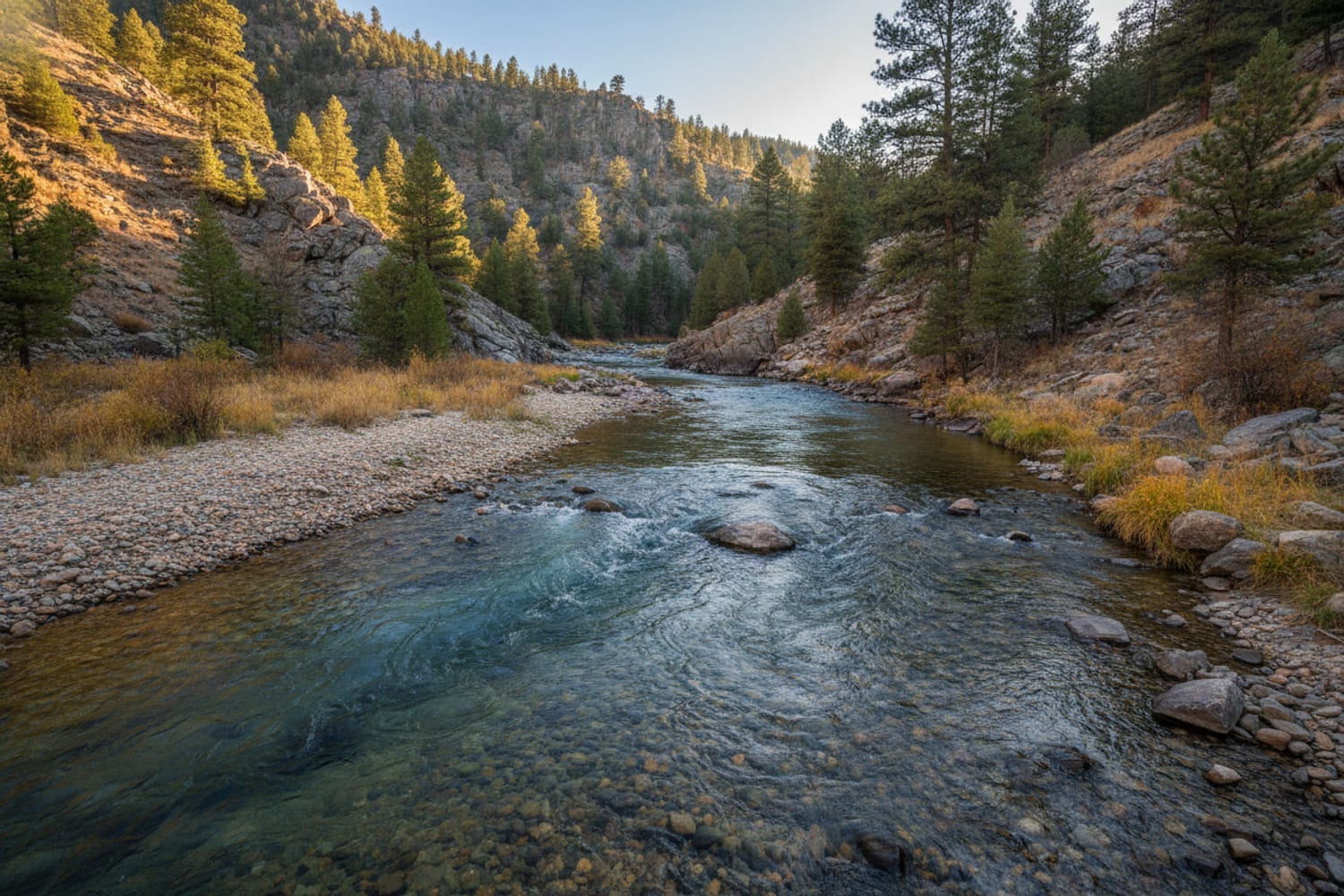
The stretch of Deckers that runs through the broad flats below the canyon section changes dramatically during high flows. At normal levels you can read it easily — obvious riffles, defined pools, visible structure. At 400 CFS that flat water spreads wide, the riffles push fast and uniform, and the obvious holding spots disappear.
Here’s how I approach it: walk before you wade. I’ll spend 15 minutes walking the bank looking for current breaks before I ever step in the water. Anything that interrupts the flow — a submerged boulder, a change in bottom composition, a slight depression in the streambed — creates a holding spot. At higher flows these subtle features matter more, not less, because they’re the only refuge available.
Foam lines are your friend even when they’re messy. A foam line that would normally tell you exactly where to drop your fly becomes harder to read during runoff, but the physics are the same. Surface foam accumulates where water slows and converges. That converging, slowing water is where food concentrates. Follow the foam.
Pay attention to where the riffles transition into slower water. That transition zone — a foot or two of water where fast riffle current spills into slower pool current — stacks fish during high flows. They sit just below the riffle break, intercept whatever the fast water delivers, and drop back into the slower current. I’ve caught a lot of May fish in that six-foot-wide zone at the bottom of every riffle on the Deckers flats.
Timing Your Day
Water temperatures in the mid-to-upper 40s by late May mean fish are active and feeding aggressively in the midday window. This isn’t February where you’re grinding for four hours to move three fish. The midday window at Deckers in May — roughly 10 AM to 2 PM — produces consistently. Water temps climb enough to kick off insect activity, BWOs and caddis both hatch in this window, and fish that were sluggish in the cold morning water start eating.
I typically hit the water by 9, take a lunch break, and fish hard through the afternoon until flows or visibility deteriorate. If afternoon thunderstorms are in the forecast, those bring a brief stain but also trigger feeding activity. Don’t automatically leave when the sky gets dark — some of the best action I’ve had at Deckers came right before a storm when the barometric pressure was dropping and fish were stacking up to feed.
Wading Safety at Higher Flows
I’ll say this once because it matters. Deckers at 300 to 400+ CFS is not a casual wade. The cobble bottom is slick, the current in the main channel is strong enough to take your feet out, and a misstep in the wrong place goes bad fast. Wading staff, wading boots with grippy soles, and a wading belt on your waders are not optional at these flows. Stay out of the main channel at peak flows — the fish aren’t there anyway, and it’s not worth the risk. Fish the edges where the fish are holding and where the wading is actually manageable.
Runoff pushes a lot of anglers toward easier fishing — private water, tailwaters that don’t fluctuate, waiting out May entirely. That’s fine, honestly. More room for the rest of us. But Deckers in May, fished right, is some of the most productive trout fishing on the South Platte. The fish are active, the hatches are coming on, and the water is full of food that high flows deliver. Show up with the right rig, find the edges, and fish the seams — you’ll catch fish when everyone else has already gone home, and you’ll feel a little smug about it. I won’t tell. For a broader look at how the whole South Platte system handles spring runoff, see the South Platte spring runoff guide.