
In this guide
Rain does one thing to my euro leader that I could happily live without. It glues it to the rod. The blank gets wet, the leader touches it, and from then on it lies along the graphite between the guides as if somebody painted it there. On a tight line, where the leader is the whole connection to the flies, that’s hard to fish around.
A few drops of rain shouldn’t be able to out-muscle a long graphite rod. They manage it anyway. The fix is a tippet spiral: heavy tippet wound down the rod in an open coil, so the leader rides on ridges of mono, up off the wet finish. Nobody has measured how well it works, so I can’t give you a number. It’s about a five-minute job at the river, and it all comes off when the weather clears.
What a sticky leader does to a tight line
On a dry day the leader slides through the guides and the rod stays out of the conversation. On a wet day, every inch of leader that touches the blank stays touching it, and a light sprinkle is enough to start it. You don’t need a downpour.
The cast is where you feel it first. Line you meant to shoot through the guides drags to a stop, and a rig with tungsten on the point turns heavy and clumsy, because the leader can’t move the way the cast needs it to. Casting weighted flies on a leader that won’t slide gets ugly fast.
After that it’s simple mechanics. A tight line works because the leader moves freely through the guides while you lead the flies and gather slack. When the leader is stuck to the blank, the slack you meant to take in stays out, contact goes soft, and the sighter stops telling you much of anything, because the line above it isn’t moving with the drift.
The rain that gets South Platte trout feeding is the same rain gluing the leader to your rod. Whoever arranged that doesn’t fish.
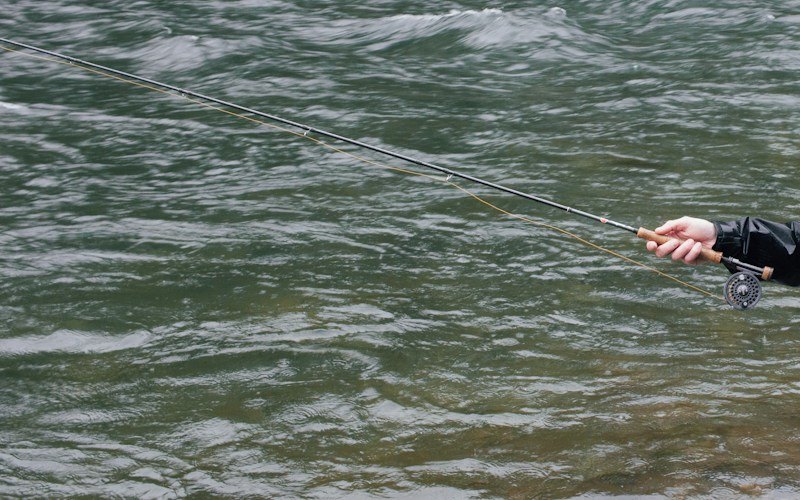
Why does a wet euro leader stick to the rod?
The best explanation is a film of water pulling them together. Wherever water sits between two surfaces it can wet, it forms a thin bridge along the edges of the contact, and the surface tension in that bridge pulls the surfaces toward each other. It’s called capillary adhesion. A wet glass that lifts its coaster off the bar is pulling the same trick.
Nylon, fluorocarbon and the finish on a rod all let water spread across them well enough for that bridge to pull. Changing leader material won’t get you out of it.
Three more things follow from it:
- Static is an unlikely culprit in wet weather. Moisture bleeds electric charge off surfaces, so a soaked rod and a soaked leader are a poor place for static to build.
- A thicker leader doesn’t save you. Heavier, tapered leaders stick too. A stout section up top, like the heavy 20-pound butt a lot of mono rigs start with, won’t keep the leader clear of a wet blank.
- Thinner and lighter makes it worse. Go thinner and the pull drops much more slowly than the leader’s weight and stiffness do. Weight falls with the square of the diameter and stiffness falls faster still, so a fine, limp leader has very little left to peel itself off the blank with.
So the thinner you build a leader to get flies down, the better it gets at lying flat on a wet rod. Fly fishing is full of improvements like that.
How do you stop a euro leader from sticking to the rod?
Tie heavy tippet, 1X or 2X, to the tip-top and spiral it down to the hook keeper with a quarter to a half inch between turns. The leader rides on the mono instead of the wet blank, so the water has far less rod to glue it to.
Heavy tippet is the point. The X numbers run backwards, so 1X and 2X are thick by trout standards, and a thicker strand stands taller off the blank. Keep a spool of 1X or 2X tippet in the pack along with a few small pieces of self-fusing silicone tape cut at home, and you can do the whole job standing on the bank. A spiral down a full-length euro rod takes roughly 15 to 30 feet of tippet, depending on the spacing, so one spool covers a few wet days.
- Unstring the rod. Reel up and pull the leader out of the guides, or take the reel off. Wind over a strung rod and the spiral traps the leader against the blank.
- Put the rod together. The spiral crosses the ferrules, so assemble the rod and line up the guides before you start.
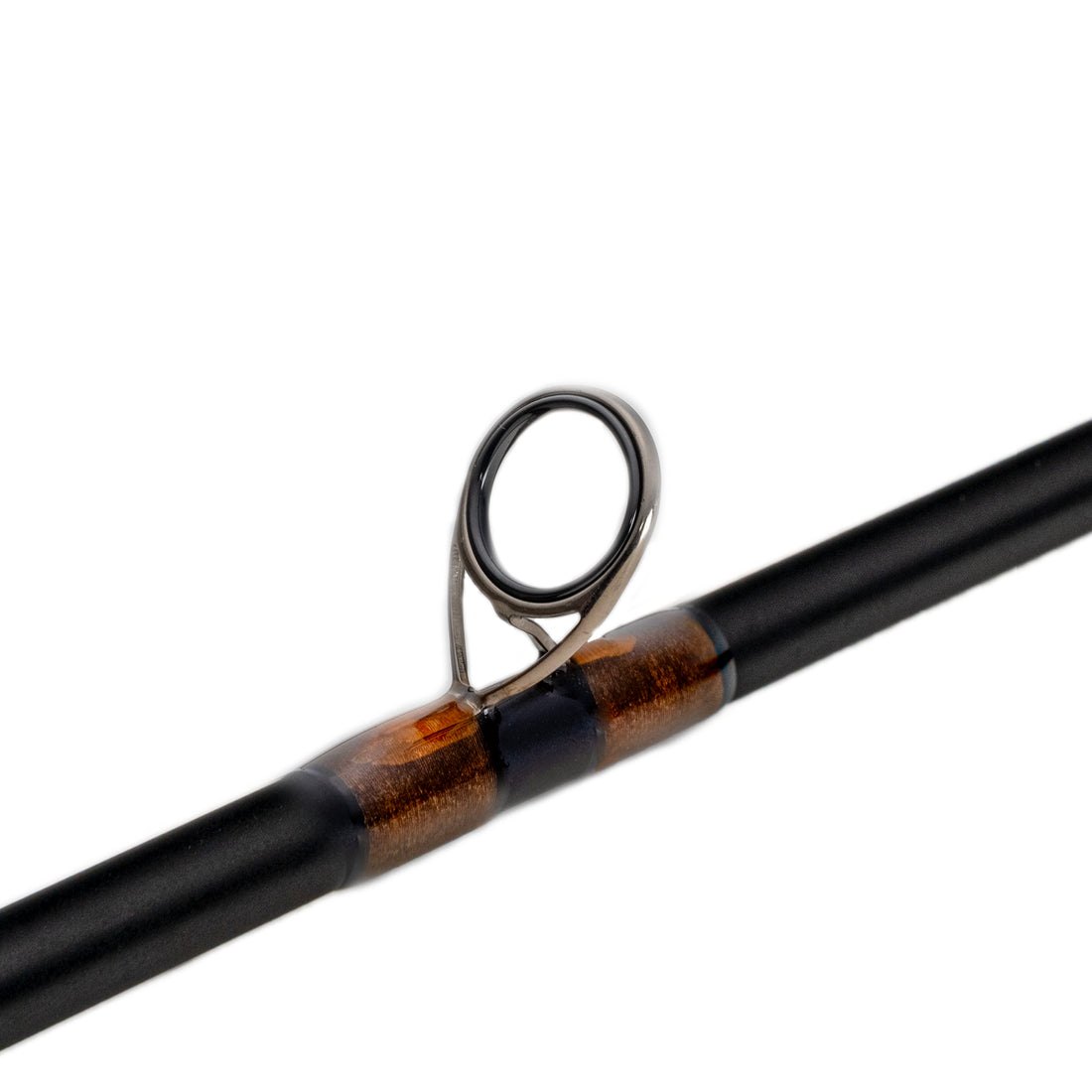
- Tie the tippet to the tip-top guide. Tie it to the frame of the guide and trim the tag.
- Wind it down the rod in an open spiral. Keep the wraps evenly spaced, about 1/4 to 1/2 inch apart, working from the tip toward the grip. Keep it snug, so the turns don’t creep, but don’t stretch it. Pass each guide; don’t wrap around it.
- Tie it off at the hook keeper. If the keeper sits in the wrong spot, or your rod doesn’t have one, hold the end down with a small piece of silicone tape, stretched and wrapped over itself. As a backup, tie an overhand knot or two in the tag on the grip side of the tape and hold it with a second piece just above the knot. If the first piece slips, the knot catches.
- String up and fish. Run the leader back through the guides. It now rides on the ridges of the spiral.
- Take it all off when the rain quits. Unwrap any tape, unwind the spiral from the bottom, untie it at the tip-top and pocket the old tippet. If the day ends wet, unwind it before you break the rod down, or once you’re home if the rod rides assembled on the roof.
When you’re done, the rod looks like something a very organized spider got to, and you’re the spider.
Many anglers wrap only the top sections, the tip and the one or two below it, on the theory that the top is where the leader does most of its sticking. That’s less to wind. If you go that way, give each section its own spiral and tie it off at the bottom of that section, just above the ferrule, so the rod still comes apart. Whatever you wrap, closer turns and heavier tippet add a little weight, and on the top sections it sits out toward the tip, where a long euro rod is built to stay light. The advice on material ranges from 1X or 2X down to about 4X spaced wider apart. Heavier tippet holds the leader higher, and lighter tippet weighs less.
What not to put on your rod
The spiral is gentle because only mono, and at most a scrap of non-stick tape, touches the blank. The trouble starts when something stickier or sharper gets involved.
- No glue on the blank. Super glue, UV resin or epoxy on the finish means a blade later to get it off, and a blade next to graphite is how finishes get scratched. Keep knives and razors off the blank.
- Read your warranty first. Some rod makers exclude modification or customization of the rod from their warranty. Whether a glued wrap counts is their call, and warranty terms differ a lot from maker to maker, so check yours before you try anything permanent.
- Self-fusing silicone tape is the tape to use. It has no adhesive at all. It holds only by fusing to itself, so stretch it as you wrap and overlap it on itself, and it comes off clean. Unwrap it to take it off, and don’t cut it off the blank.
- Skip vinyl electrical tape. Its backing carries a sticky rubber adhesive, and the cold makes it worse. One common electrical tape’s data sheet shows it gripping harder and stretching barely half as far at 0°F as at room temperature. That’s an adhesive getting grabbier on your finish in the cold. Save it for the trailer lights.
Other things that help a little
A few habits help at the edges. Each one works for a while and has a catch.
- Wipe the blank. A dry bandana run down the top sections clears the water for a while, which in steady rain isn’t long.
- Keep the guides hanging straight down. The leader runs under the guides, so with the guides pointed at the water, gravity pulls it away from the blank between them. Roll the rod onto its side for a cast or a drift and the leader lies back down on the graphite.
- Keep the rod out of the river. A dry day can do it too. Dip the tip in the water to free a tangle, or use the rod to steady yourself while you wade, and the leader can stick until the blank dries.
- Give it fewer places to touch. Every fix here works the same way, the spiral included: the less wet rod the leader rests on, the fewer bridges the water can build.
Then there are the bigger workarounds.
- Line out past the tip-top. Fish with fly line, or a heavier running line, out through the tip so less fine leader sits in the guides. It’s been tried, and the complaints are more sag and less feel. On my own sighter setup, no fly line goes out past the tip.
- Heavier flies. More weight on the point gives the cast more to pull the leader through with. It also works against the reason you fish a light euro rig in the first place.
- Stand-off guides. Some anglers keep a second, wet-weather rod with stand-off guides that hold the line farther off the blank. A standard euro rod’s guide layout is set up for other jobs, like keeping a long mono leader from tangling and sagging, so this is a choice you make when you buy a rod.
I’ve left sprays, waxes and line dressings off this list on purpose. I don’t want anything coating a rod finish or soaking into cork.
Snow and winter on the South Platte
Snow does it too. Once it melts on the blank, it’s the same film of water as rain, and the spiral goes on the same way.
On a freezing day, skip the tape and tie off at the hook keeper. Self-fusing tape is made to cure at room temperature.
Iced guides are a separate problem. Once water freezes in the rings, a spiral has nothing to offer. The winter river runs on its own clock for that: early in the day the rings keep freezing between drifts, and they usually stop by late morning.
My take
I wind a tippet spiral on my 10’7” 3-weight when the weather turns wet, and it’s the first thing I’d tell anyone who fishes a tight line in the rain. Of everything in this post, it’s the one I’d pick, because it leaves the rig alone. Heavier flies and line past the tip-top change how the rig fishes, and a rag or a careful rod angle has to be kept up all day. The spiral goes on once, and after that it’s just part of the rod.
Next: with the leader sliding again, put two flies under the sighter.