
In this review
I’ve forgotten things. Bug spray on a horsefly day. A net at Deckers where a fish broke 6X anyway. The wading boots once — drove an hour, opened the truck, no boots. I’ll never live that down, and my fishing buddies won’t let me. The list below exists because I’ve spent years refining it down to what I actually use, not what catalogs say I should carry. For a guy who preaches packing light, I had to learn the hard way that “light” and “I forgot the boots” are not the same thing.
Here’s what’s on me when I leave for the river.
What’s actually in my day pack
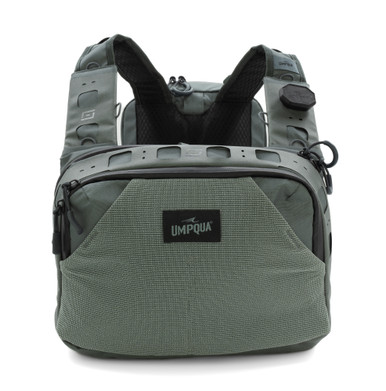
Most of it lives in a chest pack — a Fishpond Stormshadow these days, the Umpqua SWIFTLINK Overlook before it: my Diamondback 10’7” 3-weight euro rig (30 feet of Adams 3X mono, Umpqua Perform X Tri-Color sighter, tippet ring, Trouthunter Fluoro 5X/6X) with the Scott Centric 9’ 5-weight tubed as backup, two fly boxes (midges/emergers in 18–24, nymphs/attractors in 12–20), five tools on a zinger, Skwala RS waders over rubber-sole boots, First Lite layers, and a Montana Knife Company Westslope on me. That’s the load, and it’s what’s left after a lot of seasons of adding things and then quietly taking them back out. Everything below is the why behind each piece — and what I finally stopped carrying.
Update, July 2026: the pack itself has changed — my everyday carry is now the Fishpond Stormshadow, which bumped the Overlook you’ll read about below. The rest of the kit still holds.
The Pack — Umpqua SWIFTLINK Overlook Chest Pack
I’ve fished eight packs in the last year. Yes, eight. My wallet would like a word. The Overlook is the best of them by a wide margin. Chest-mounted, mid-volume, organized internally without being fussy. It sits high enough that I can wade chest-deep without lifting it. The magnetic net dock on the back lets me carry a net without a dedicated lanyard.
Most of the gear below lives in this pack. The chest-pack format means everything I need is at eye level — which matters when I’m tying tippet at 38°F with cold fingers at the Deckers parking lot.
The Rod and Reel
This depends on water, but it splits about evenly between the euro setup and a standard line — the Diamondback 10’ 7” 3-weight running a mono rig, and the Scott Centric 9’ 5-weight with a Ross LTX 5/6. The Centric comes out for dry-dropper days, BWO emergence, anything where fish are looking up, or slower water where tight-line nymphing doesn’t have the edge.
I covered the full quiver in My Fly Rod Quiver. What lives in the truck: both of them — the Diamondback rigged with the mono setup, the Scott Centric tubed and lined, neither one the backup.
Lines, Leaders, Tippet
The Euro Setup
The euro rod’s fly line stays on the reel and inside the guides. Everything past it is a mono rig — straight monofilament from the fly line to the tippet to the fly. Less drag, less mass, direct contact with the flies. The whole system relies on touch, not on a heavy line carrying the cast.
- Mono: 30 feet of Adams Euro Nymph Mono in 3X, level, tied straight to the fly line. Adams lists the 3X at 0.205 mm, about .008 inch.
- Sighter: 24 inches of tricolor indicator mono between the mono and the tippet ring. I run Umpqua Perform X Tri-Color Sighter — 2X medium, 0.009”, red/black/green. The color shift on a take is the strike indicator — no bobber, no indicator yarn.
- Tippet ring: Small stainless ring at the end of the sighter. Lets me change tippet without rebuilding the rig.
- Tippet: 4–5 feet of Trouthunter Fluoro 5X (or 6X in low-flow Deckers conditions below 100 cfs) from the tippet ring down to the point fly.
The Fly-Line Setups (Secondary)
- Fly line: SA Amplitude MPX 5-weight on the Scott Centric for dry-dropper, indicator nymphing, and dry-fly days.
- Leaders: 9’ 5X for nymphing, 12’ 6X for dries.
- Tippet spools: Trouthunter Fluoro in 4X, 5X, 6X, and 7X. I’ll run 7X on Deckers in flows below 100 cfs when fish get inspection-close.
- Furled leader in the pack pocket for emerger days when I want a softer turnover.
The Fly Boxes
Two boxes on me at all times:
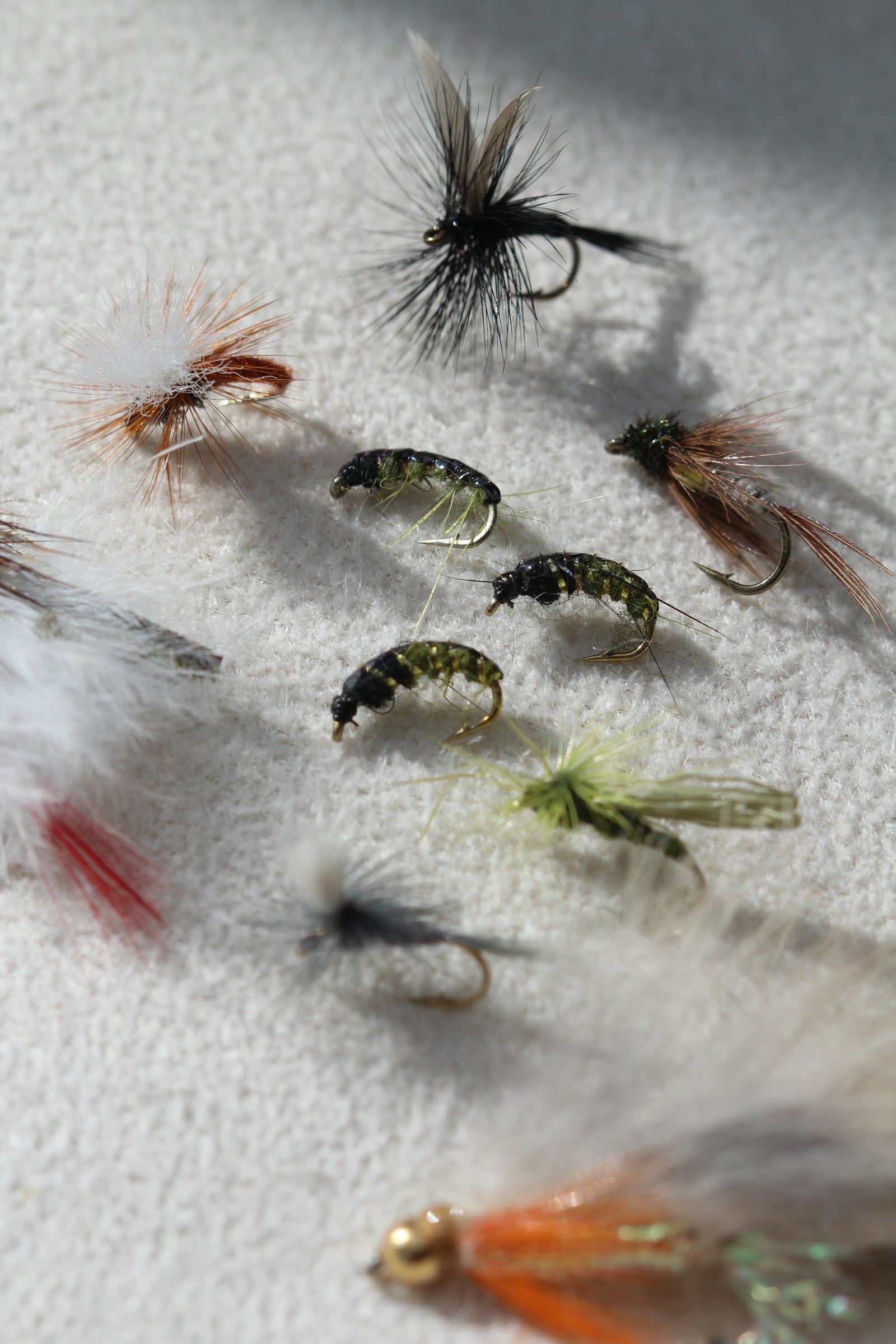
- Box 1 — Midges and emergers (small fly box). Black Beauties, Mercury Midges, Top Secret Midges, RS2s in gray/olive/black, Juju Baetis. Sizes 18–24.
- Box 2 — Nymphs and attractors. Walt’s Worms, Pheasant Tails, Frenchies, Perdigons, Blowtorches, Mayer’s Mini Leeches, scuds. Sizes 12–20.
A third box stays in the pack pocket but only comes out on dry-fly days: BWO duns, parachute Adams, Comparaduns, terrestrials. Sizes 14–22.
You can find most of these patterns at The Fly Fishing Place. 15% off is built into the link with my code RDC.
Tools
Five things on a zinger or in the pack:
- Nippers — bottle-style, sharp. Cheap nippers cost you flies.
- Hemostats — for unhooking fish and tightening knots.
- Tippet holder — bar style, all four sizes in one device.
- Floatant — Loon Aquel for dries, Frog’s Fanny for CDC.
- Strike indicators — orange yarn or Thingamabobber, depending on water.
Optional but in the pack: small headlamp, magnifying glass for tying knots in 7X.
Wading
- Skwala RS waders for cold-weather days. They handle 38°F water and keep me dry. I covered why I like them and when I leave them at home in a separate post.
- Wading boots — rubber soles, always. No felt, no studs; I just wade carefully on the slick granite.
- Wading staff if the water is over 200 cfs.

Clothing — The First Lite Layer
I wrote a dedicated post on why First Lite owns my wardrobe. The short version for the river:
- Wick Long Sleeve Crew or Wick Hoody next to skin
- Wick Quarter Zip as mid layer
- Navigator Hoody as outer layer (comes off by 10 a.m. on most days)
- A First Lite pant if I’m not in waders
Sun and Safety
- Polarized sunglasses. Non-negotiable — you can’t see fish without them.
- Sunscreen. SPF 50, reapply at lunch.
- Hat with a brim — wide brim for high-sun days, cap with sun cover for cool mornings.
Water and Food
- Water: 1.5L minimum, more in summer. Hydration bladder in the pack or a Nalgene clipped externally.
- Food: Two bars (Skout, RX, or similar), one real sandwich for the lunch break. Beef jerky for the truck on the way home.
The Odd Stuff
- Montana Knife Company Westslope. Small fixed-blade EDC, made in Missoula. This is the knife that’s on me every day — not just on the river. Field-dresses fish, opens packages, cuts cord, handles the dozen knife-jobs that come up in a day outside. I broke down why it earns that spot in my full MKC Westslope review. The multitool stays in the truck. The Westslope is what I actually use.
- Cigars in the chest pack pocket. Here’s why.
- Lighter and matches — because cigars.
- Microfiber cloth for sunglasses and the rod tip after a fall.
- Extra phone battery — Deckers gets no signal but I want the camera working.
- A spare leader in the pack pocket, sealed in its envelope.
- Leatherman Arc lives in the truck, not on me. The Arc is Leatherman’s MagnaCut-blade flagship — premium multitool tier — and it earns its place when I need pliers, a screwdriver, or a saw on the tailgate. But for everything that comes up at hand on the water, the Westslope handles it.
What I No Longer Bring
This part matters. Over the years I’ve dropped:
- A vest. Replaced by the chest pack.
- A landing net with a long handle. Replaced by a smaller magnetic-dock net.
- A “just in case” extra fly line. Never used it. The fly line on the reel is fine.
- A spare reel. Same logic — fly line failure is rare. If it happens, the day is over and I drive home.
The pack is lighter now than it was three years ago. That’s the goal — strip down to what actually gets used. It took me embarrassingly long to admit half that stuff was just ballast.
Final Word
The list is personal. Yours should be different. But the categories are universal: pack, rod, lines, flies, tools, wading, clothing, water, food, the small stuff. Cover those eleven and you’ve got a day.
When I forget something now, it’s usually the cigars.