
In this guide
The South Platte doesn’t close in December. The fish don’t leave. The hatches keep happening. The one thing that does disappear is everybody else — the parking lot at Cheesman Canyon empties out, and January and February on this river turn into some of my favorite days of the year. The price of admission is being slightly cold and slightly crazy. I’m comfortable with both.
Winter tailwater fishing is an acquired taste, like black coffee or standing in 40-degree water on purpose. But once you acquire it, you’ll never want to give those February mornings back.
The short answer
Winter on the South Platte is midge fishing, sizes 20–26 — the workhorse is a two-fly nymph rig with a size 22 Zebra Midge on point and a size 24 RS2 or Mercury Midge dropper, fished slow and deep, plus a size 20 Griffith’s Gnat on 7X for calm-afternoon risers. Best water is Cheesman Canyon (bring microspikes), with roadside Deckers as the sensible fallback; fish the 10 AM to 2 PM window and skip the frozen dawn.
That’s the whole trip. Everything below is the why and the how — but if you just came for the recipe, that’s the recipe.
Why Winter Works
Tailwater fisheries don’t have the temperature swings that freestone streams do. The South Platte below Cheesman reservoir maintains temperatures in the 38–45°F range throughout the year. The fish don’t go dormant. They feed actively, primarily on midges, because midges hatch year-round regardless of air temperature.
The trade: fish are more lethargic in cold water. They won’t chase a fly across four feet of river. The presentation must be precise, the drift must be perfect, and the fly must come directly to the fish rather than expecting the fish to come to the fly. Winter fishing on the South Platte requires better technique than summer fishing, which is one of the reasons the crowd thins out.
The other reason: it’s cold. Genuinely, character-building cold. January at Cheesman runs 20–35°F air temperature at the start of the day. The canyon is in shadow until 9 or 10 AM. You’re wading 40°F water in frozen air and your guides ice up between drifts. The anglers who show up in those conditions catch fish. The ones who stay home and stay warm — honestly, the sensible ones — miss the best midge fishing of the year.
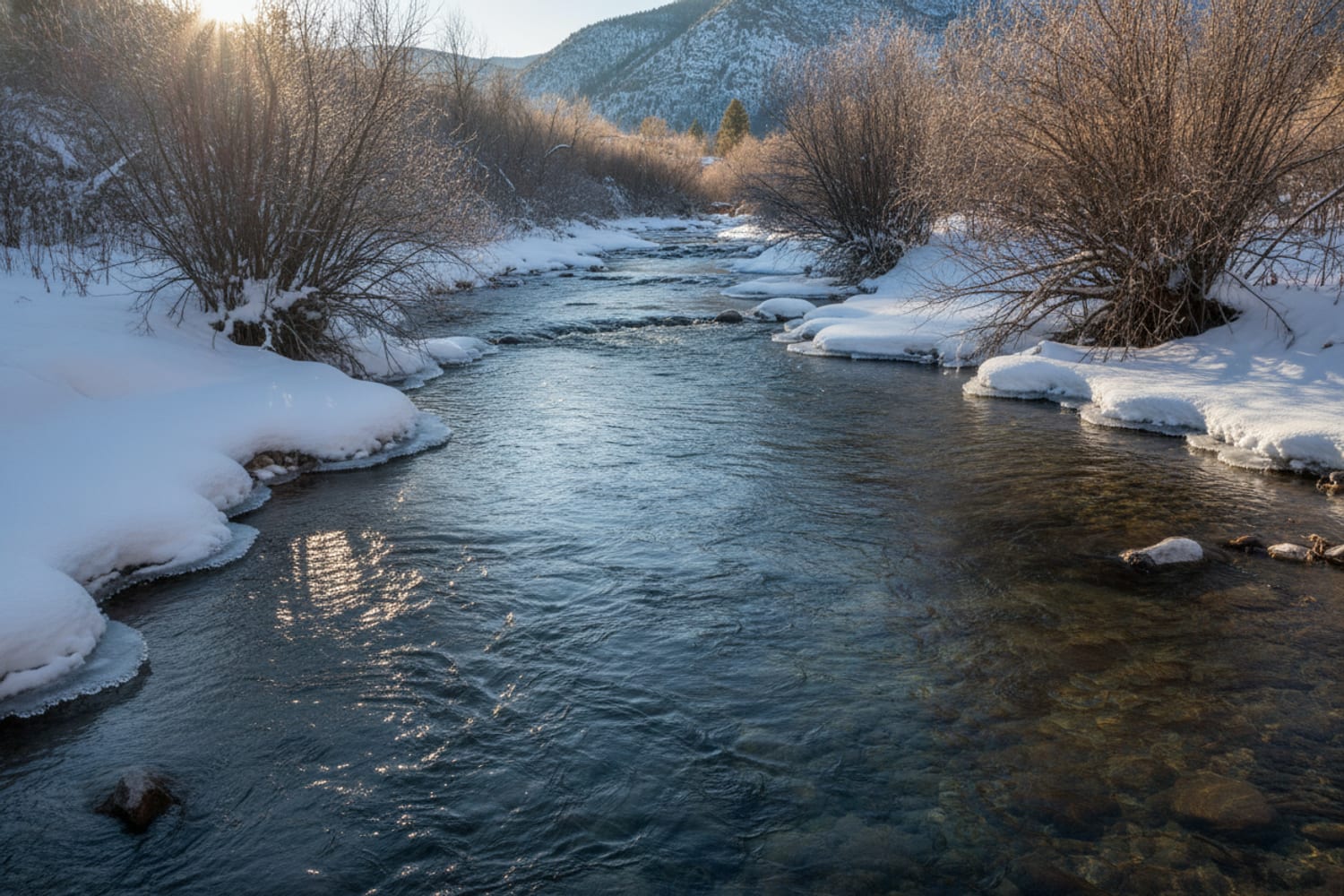
Midge Fishing in Winter
Midges are the only significant food source in South Platte winter. The fish are keyed on them. Everything you’re doing is trying to present a midge — larva, pupa, or adult — in exactly the right zone at exactly the right speed.
Midge larva: The deepest feeding zone. Fish hold near the bottom in winter and pick off larvae drifting in the current. A size 22–26 midge larva in red, olive, or black on a size 24 curved hook with a tungsten bead. Yes, that small. The South Platte winter fish have seen larger midges and they’re not fooled by size 18s.
Midge pupa: The most productive winter pattern in my experience. A CDC midge pupa or soft-hackle wet fly in the 20–24 range fished in the mid-column catches fish during the transition from larva to adult. The fish are not particularly selective about emerger versus pupa in winter — any pattern that sits in the film or just below it at the right size catches fish.
Midge cluster dry fly: On calm, sunny winter afternoons, fish rise to clusters of adult midges on the surface. A size 20–22 midge cluster pattern fished on 7X tippet to rising fish in a calm flat section of Cheesman is some of the best fishing the river offers. These are real January rises, not aberrations.
Two-fly winter rig: I fish a size 22 zebra midge as the point fly with a size 24 RS2 or plain midge larva as the dropper, 6 inches above. Both flies in the bottom third of the water column. The indicator is set shallow — often 18 inches to 2 feet — because I’m fishing slow winter lies in 2–3 feet of water.
Brassie (#20–22): Copper wire body, thread head. Simple, consistently effective. The metallic body catches current light and the slim profile sinks quickly. A good change-up when fish are off the Zebra Midge — sometimes the different material triggers a take.
Palomino Midge (#22–24): A thread-body pupa with a small white wing stub suggesting the emerging adult. Fish it near the top of the indicator depth when you see fish rising but can’t get them to the dry. It’s the transitional pattern between nymph and dry-fly fishing.
Griffith’s Gnat (#18–22): The standard midge cluster dry fly — peacock herl body hackled with grizzly. On calm sunny winter afternoons when you see consistent risers on flat water, a size 20 Griffith’s Gnat on 7X tippet is the first dry to reach for.
Rigging for Winter
The rigging matters as much as the fly selection. Three setups cover all South Platte winter situations:
Standard two-nymph indicator rig (80% of days):
- 9-foot 5X leader
- 18–24 inches of 6X fluorocarbon tippet
- Size 22 Zebra Midge (point fly)
- 12–14 inches of 7X fluorocarbon tippet
- Size 24 Mercury Midge or RS2 (dropper)
- Small indicator set at 1.5x the water depth
The key in winter: fish slow. Cold metabolisms mean fish won’t chase. Your drift needs to be at current speed or slower, directly in front of the fish. Set indicator depth correctly — flies dragging along the bottom or drifting above the fish’s sightline both catch nothing.
Euro-nymph setup (Cheesman, clear water): A tight-line setup for Cheesman’s low-gradient water provides better strike detection:
- 20–25 foot leader with a high-visibility sighter section
- 2–3 feet of 6X fluorocarbon to the point fly
- Thin tungsten beads only — no split shot
- Two flies maximum
The advantage over indicator fishing in winter: you feel takes that never move the indicator. Cold water fish sip, not slash. The euro setup at Cheesman in January finds fish that indicator anglers walk right past.
Midge dry setup (calm afternoon surface risers):
- 9-foot 5X leader, 24–30 inches of 7X tippet
- Single Griffith’s Gnat or Parachute Midge
- No indicator — pure dry-fly fishing
- Approach from downstream, present from 25 feet minimum
Where to Fish in Winter
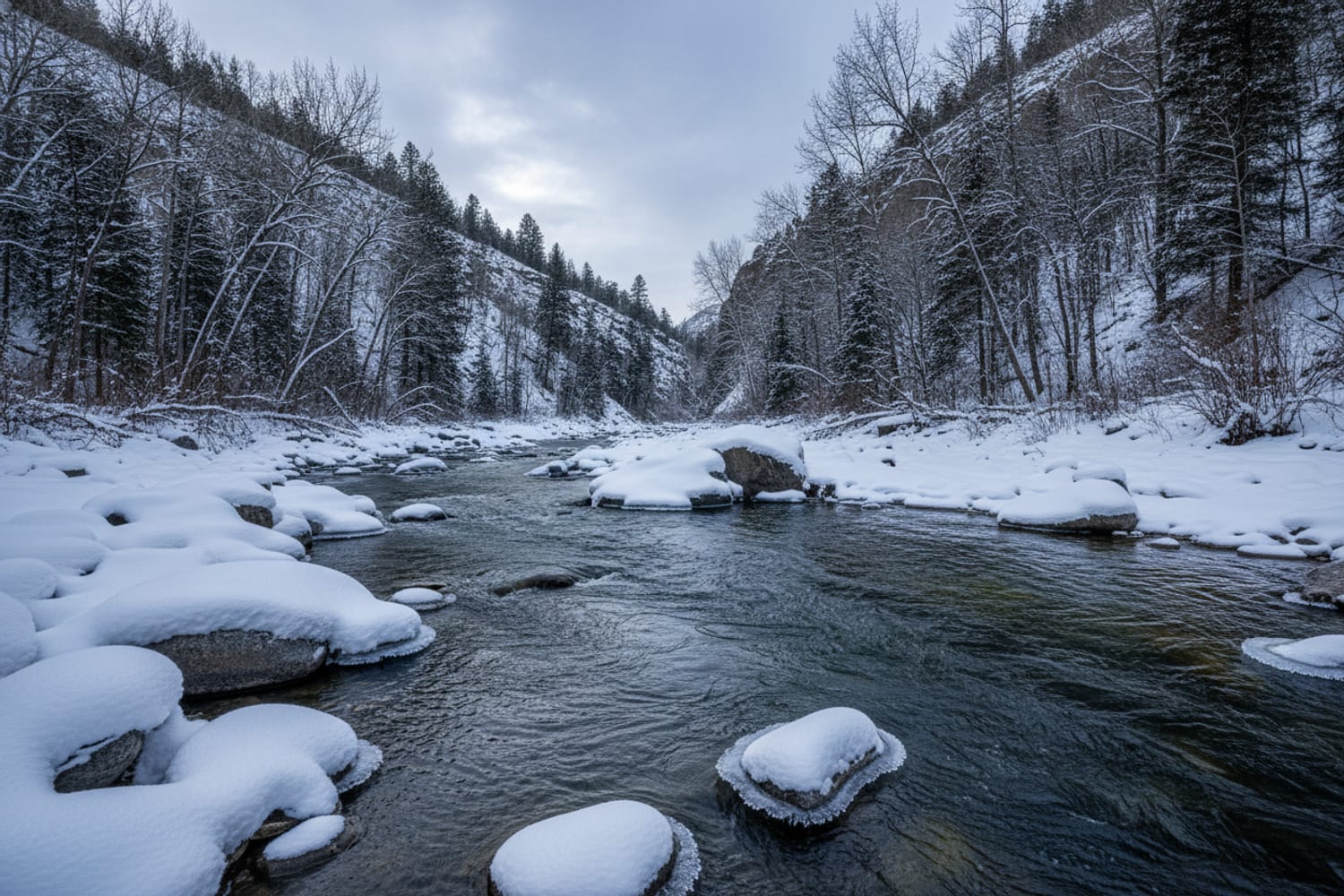
Cheesman Canyon is the gold standard — canyon walls provide wind shelter, the catch-and-release regulations mean maximum fish density, and the deep slots hold the most concentrated winter trout. The hike in requires microspikes on icy days (November through February), but the reward is nearly empty water on weekday mornings. The deep pools beneath the canyon walls are where the largest fish hold in the coldest months.
Deckers is the more practical winter choice. Roadside access means no approach concerns in ice or snow. The wide flat above the Trumbull Road bridge holds consistent midge activity through winter months. USGS gauge 06701900.
Eleven Mile Canyon is underrated. The reservoir-fed water runs cold and consistent, the canyon road is typically accessible year-round, and the midge population here is among the densest in the South Platte system. Fewer anglers make the drive to Eleven Mile in January.
My take
My winter decision tree is shorter than it looks on paper. Full day and clean roads: the canyon, microspikes in the pack, no negotiating with myself about the icy hike in. Marginal weather or a late start: Deckers, and no shame in it — roadside access is a feature when it’s 25 degrees. The mistake I’ve stopped making is bouncing between sections chasing rumors of better water. Cold fish aren’t going anywhere, and neither are the empty parking lots. Pick one piece of water the night before and let the day stay simple.
Timing the Winter Day
Morning: Skip it if you can — winter is the one season that rewards sleeping in, so enjoy it. The first two hours of a December day at Cheesman are the worst fishing of the day. The water is at its coldest (often below 38°F at dawn), the fish are completely inactive, and the ice forming in your guides requires constant clearing. There’s nothing wrong with arriving at 9 AM instead of 7 AM in winter.
Midday: The South Platte winter window is 10 AM to 2 PM. This is when air temperature has risen enough that your guides stop icing, when the first midge hatches come off the warmer water surfaces, and when fish start actively feeding rather than conserving. Fish hard in this window.
Afternoon: On clear cold days, the fishing often slows again after 2 PM as temperatures drop with the sun’s angle. On overcast warm-for-winter days (45°F+), the afternoon can extend the productive window. Check the forecast — a slightly warmer overcast day is often better winter fishing than a bluebird cold day.
Gear for Cold-Weather Wading
Cold-weather South Platte fishing requires different gear choices than summer.
Base layer: I fish in a Merino wool base layer (bottom and top) in winter. Synthetic base layers work but Merino maintains its warmth even when wet from condensation inside waders. The layer next to your skin is the most critical in cold conditions.
Midlayer: A heavy fleece or synthetic puffy under the wading jacket. I wear a Patagonia R2 fleece as my midlayer most winter days. On the coldest days (below 25°F air), I add a down layer that I can shed when the midday sun warms up.
Waders: In winter, what you wear under your waders matters as much as the wader itself. The Simms G4Z is a heavy option — thick GORE-TEX Pro shell, aggressive abrasion resistance for frozen bank edges, built for punishment. The Skwala RS is the lighter option; it works well in cold with the right base layers, and the weight advantage is real on hike-in days like Cheesman Canyon. Either wader works — dress the layering underneath accordingly and you’ll be fine.
Hand warmers: I carry chemical hand warmers in my vest pockets and rotate them to fishing hand and reel hand throughout the day. The one failure point that ends winter days early is fingers that have lost dexterity. Keep hands functional and you can fish for five hours in 20°F air.
Gloves: Simms and Glacier Glove make the best wading gloves for cold fishing. I use a fingerless fleece glove on my casting hand and a full glove for my reel hand, switching when I need to tie a knot.
The Best Part
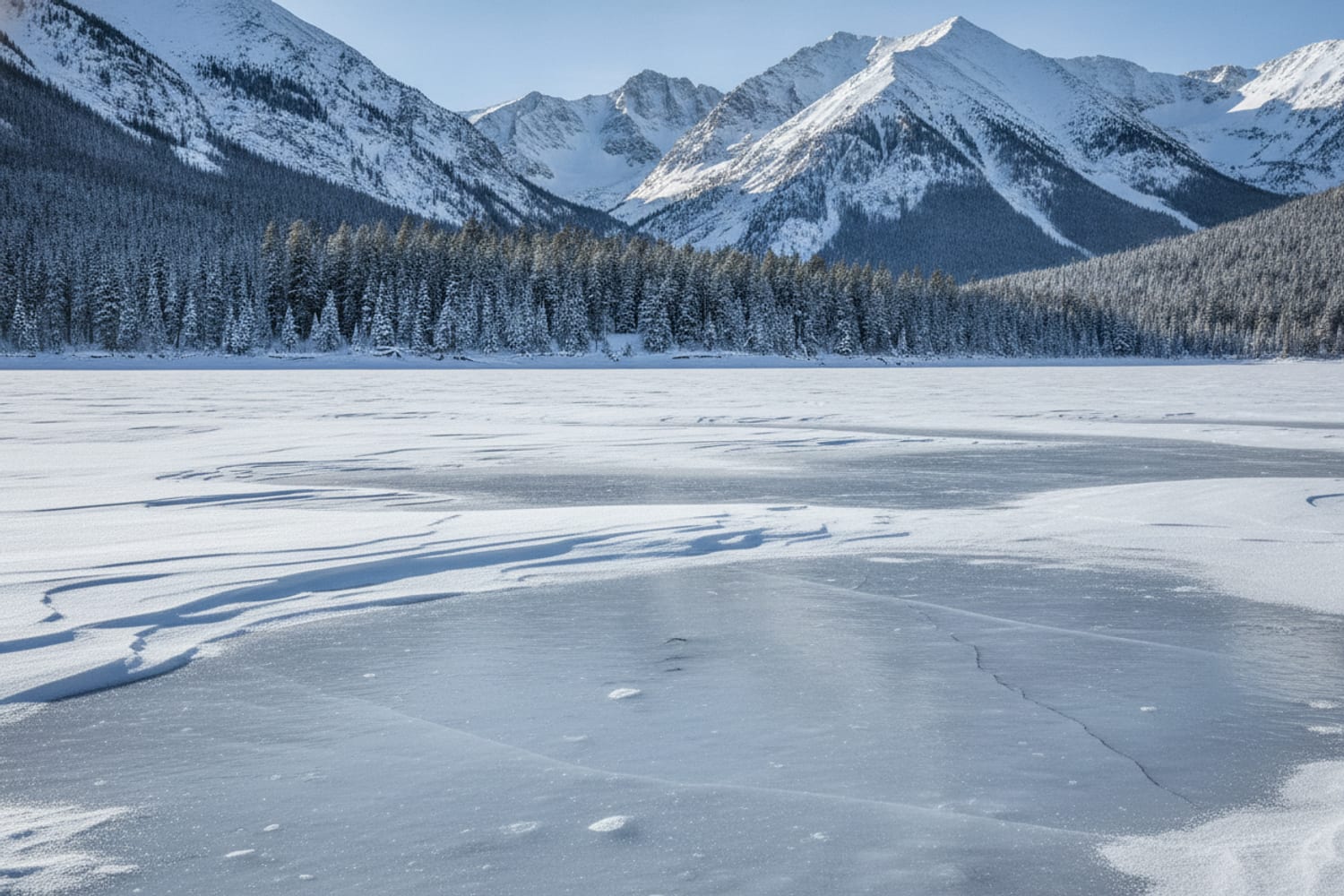
January at Cheesman Canyon is the most peaceful fishing of the year. No crowds, no noise, no competing presentations from four anglers working the same pool. The canyon has a different quality in winter — the cottonwoods are bare, the light is low and clear, and you can see fish that are hidden by summer leaf cover.
I keep fishing through winter because the river keeps working. The only variable is whether I have the gear and the willingness to show up — and the willingness is the harder one to pack. But the gear is manageable, the canyon is empty, and the fish are still eating. That’s a trade I’ll take on a frozen morning every time.