
In this review
I watched a guy at Deckers a couple years ago clamp a Thingamabobber and three split shot onto what was very obviously a 10-foot 3-weight euro rod, then spend twenty minutes wondering aloud why it cast “like a wet noodle with a tumor.” It did, because that’s not what the rod is for. He’d read that euro rods are great nymph rods — true — and assumed that meant they’re great at all nymphing — very much not true. I didn’t say anything, because nobody likes the guy who walks over to correct your rig. But I’ve thought about that poor rod ever since.
So here’s the thing I’d have told him if I were a worse neighbor: a euro/tight-line rod and an indicator-nymph rod both fish nymphs, are both often ten feet long, and are built for almost exactly opposite jobs. They look like cousins. They are not interchangeable. Bolt a bobber onto the wrong one and you’ve bought the wrong tool, and you’ll quietly blame yourself — standing there convinced you’ve forgotten how to cast, when really you’ve just handed a violin a drum solo.
I’ve spent more hours behind a euro rod than I’d care to admit to anyone who keeps a tally. Let me save you the twenty minutes.
What’s the core difference between a euro rod and an indicator rod?
It comes down to two things: what’s outside the rod tip, and how soft that tip is. Everything else follows from those two.
- A euro rod fishes a long, nearly weightless leader — a “mono rig” — with little or no fly line out past the guides. The flies’ own tungsten does the casting. So it needs a soft, ultra-sensitive tip to register feather-light takes and protect 6X–7X tippet, plus length to hold line off the water for a tight, drag-free connection.
- An indicator-nymph rod fishes a conventional weight-forward fly line with a buoyant indicator (a bobber), usually split shot, and you mend that line to manage the drift. That demands the opposite of a euro tip: backbone to lob a weighted rig and a bobber, and a stiffer blank that can lift it all off the water and set the hook through a belly of line.
Soft-tip-no-line-weight versus stiffer-blank-line-driven. That’s the whole thing, and if you remember nothing else, remember that the two rods solve opposite problems. They’re not better-and-worse versions of the same rod; they’re a screwdriver and a pry bar that happen to share a drawer. (If “soft tip” and “stiff tip” mean nothing to you yet, read what fly rod action actually means first — it makes the rest of this click.)
What is a euro / tight-line rod built for?
Tight-line nymphing — getting a drag-free, deep drift through technical water on light tippet, watching a colored sighter in the leader instead of a bobber.
Spec envelope: 10’ to 11’, 2–4 weight, with a 10’ 3-weight as the sweet spot. A soft, sensitive tip sitting over a blank with hidden lower backbone.
The design priorities stack up in a very specific order, and the order tells you everything:
- A soft tip first. It does double duty — it telegraphs the take up the leader and it cushions the hookset so 6X and 7X survive. This is the defining feature.
- Length second. You hold the line off the water and reach across conflicting currents to keep a tight, drag-free connection. The reach is the entire point; a euro rod shorter than 10 feet throws away the thing it’s built to do.
- Low swing weight third. You hold that rod tip up for hours, so designers keep the tip light and the balance back toward your hand — which is why euro guys often size up the reel, to counterbalance the long light tip. (Balance, not braking. On a 3-weight the reel is mostly there to hold line and balance the rod, not to fight fish.)
Why a 3-weight and not a 2 or a 4? A 2-weight gives you maximum sensitivity and tippet protection but no backbone for heavy tungsten or wind. A 4-weight gives you that power but dulls the tip feel. The 3-weight splits the difference, which is why it’s the one everybody lands on — the Goldilocks answer nobody had to argue about. I fish a Diamondback Gen IV 10’7” 3-weight, and as I’ve leaned harder into tight-lining it’s earned a real half of my season. It hasn’t taken over — the Centric still gets the other half — but it went from a specialist to a rod I reach for without thinking.
What it’s bad at: casting a conventional weight-forward fly line. With no line mass outside the tip, a euro rod throws fly line poorly — it’s not your dry-fly rod, not your distance rod, and it’s badly underpowered for a big indicator-and-shot rig. Ask it to do that and you get the wet-noodle-with-a-tumor cast, which is a fancy way of saying the rod just sort of gives up in the middle of the stroke. (See: the gentleman at Deckers.)

What is an indicator-nymph rod built for?
The bobber-and-shot grind on bigger, faster, deeper water — high flows, heavy tungsten, a large indicator, long mends, sometimes two flies.
Spec envelope: 9’ to 10’, 5–6 weight, with the 10’ 5-weight as the archetype. Medium-fast, with real lower-blank backbone.
Where the euro rod’s whole religion is sensitivity, the indicator rod’s religion is control of conventional line. It needs backbone to lob a weighted rig with a bobber and shot without the cast collapsing — you’re throwing a small wind chime, and the rod has to keep it from folding back on itself. It needs length to reach out and mend across seams. And it needs a 5- or 6-weight line to carry that rig and lift it off the water for the recast — because here, unlike euro, the line is doing the casting, not the flies. The depth math is different too: with an indicator you’re setting it at roughly 1.5 to 2 times the water depth and getting the rig down with weighted flies or shot, then reading the bobber for the pause. (If your indicator drifts all day and never hesitates, congratulations — you’ve spent the afternoon trolling the surface. That’s fishing too shallow, and it’s the classic mistake.)
The bonus is versatility: a 10’ 5-weight also doubles nicely as a light streamer rod or a dry-dropper rod, which a euro rod absolutely will not. It’s the more general tool of the two.
What it’s bad at: tight-line sensitivity. That stiffer tip can’t register subtle takes or protect light tippet the way a euro rod does. Try to tight-line nymph with it and you’ll pop 5X on the set and miss the soft eats entirely — the take just doesn’t make it up a stiff blank to your hand. It’s like trying to feel a coin through an oven mitt; the information’s there, it just never arrives.
Euro rod vs indicator rod, side by side
| Euro / tight-line rod | Indicator-nymph rod | |
|---|---|---|
| Typical spec | 10’–11’, 2–4wt (10’ 3wt sweet spot) | 9’–10’, 5–6wt (10’ 5wt archetype) |
| Tip | Soft, ultra-sensitive | Stiffer, with backbone |
| What’s outside the tip | Near-weightless mono rig | Conventional WF fly line |
| Strike detection | Colored sighter + feel | Buoyant indicator (bobber) |
| Casts the… | Flies’ own tungsten weight | Fly line’s mass |
| Best water | Close, technical, clear, light tippet | Big, fast, deep, high flows |
| Tippet protection | Excellent (6X–7X) | Modest |
| Also good for | Not much — it’s a specialist | Streamers, dry-dropper |
| Range | Short — rod-plus-leader (~15–25 ft) | Long drifts at distance |
Can one rod do both euro and indicator nymphing?
Sort of, badly — and “badly” is doing a lot of work in that sentence. They overlap right at the edges and fail at each other’s core job.
A euro rod can fish an indicator, but it’s underpowered for heavy shot and a big bobber, so you’re lobbing a rig the rod can’t really carry. An indicator rod can high-stick a short nymph drift, but its stiff tip kills the feel and the tippet protection that make tight-line fishing work in the first place. Each one limps through the other’s job — politely, the way a sedan “can” go off-roading.
The honest middle ground has a name: the “mono rod.” It’s a slightly stouter 10’ or 10’6” 3- or 4-weight, built to tight-line nymph and lob a small streamer or fish a light indicator off the same mono rig. If you genuinely want one nymph rod that flexes across techniques — and a lot of people reasonably do — that’s the buy. Just go in clear-eyed: it’s a compromise, not a true do-both. It tight-lines a little less sweetly than a pure euro rod and handles a big bobber rig a little worse than a real indicator stick. It does both jobs at maybe an 80, which is plenty most days — but it’ll never be the rod you brag about doing either one.
When should you fish a euro rod vs an indicator rig?
This is the part that actually matters on the water, because the rod follows the technique, and the technique follows the water. Match the rod to how you’ll nymph, not the other way around:
- Clear, technical, light-tippet tailwater where you’ll tight-line within a rod’s reach? Euro rod, 10’ 3-weight. This is the specialist’s tool for exactly the water I fish most — close pocket water and seams where micro-drag murders an indicator drift. A lot of Front Range anglers now treat it as their primary rod, not a niche stick. More on the technique in euro nymphing the South Platte and how to build the leader from scratch.
- Bigger, pushier water; high flows; heavy rigs under a bobber; long drifts at distance? Indicator rod, 10’ 5-weight — and it’ll pull double duty for streamers and dry-dropper when you want it to. This is the rod for the Arkansas or the South Platte when it’s up and you’re suspending a two-fly rig over a deep run from twenty-five feet away. The nymph rigging guide walks through that setup.
- Want one nymph rod for everything? The mono-rod-style 10’ 3/4-weight — eyes open to the compromise.
The deciding factor is almost always range and water type, not personal loyalty. Euro is a short-line, get-close, contact game; it wins inside about 25 feet in broken, complex currents. Indicator wins on long drifts across wide flats and anywhere you need to suspend a rig at distance without spooking fish. The water doesn’t care which rod you’re emotionally attached to. Most serious nymph anglers I know carry both rigs and switch by what’s in front of them rather than by dogma — and honestly, that’s the move. The guys who pick a side and die on that hill tend to catch fewer fish and have stronger opinions, which is a rough trade.
Why euro earned half my season
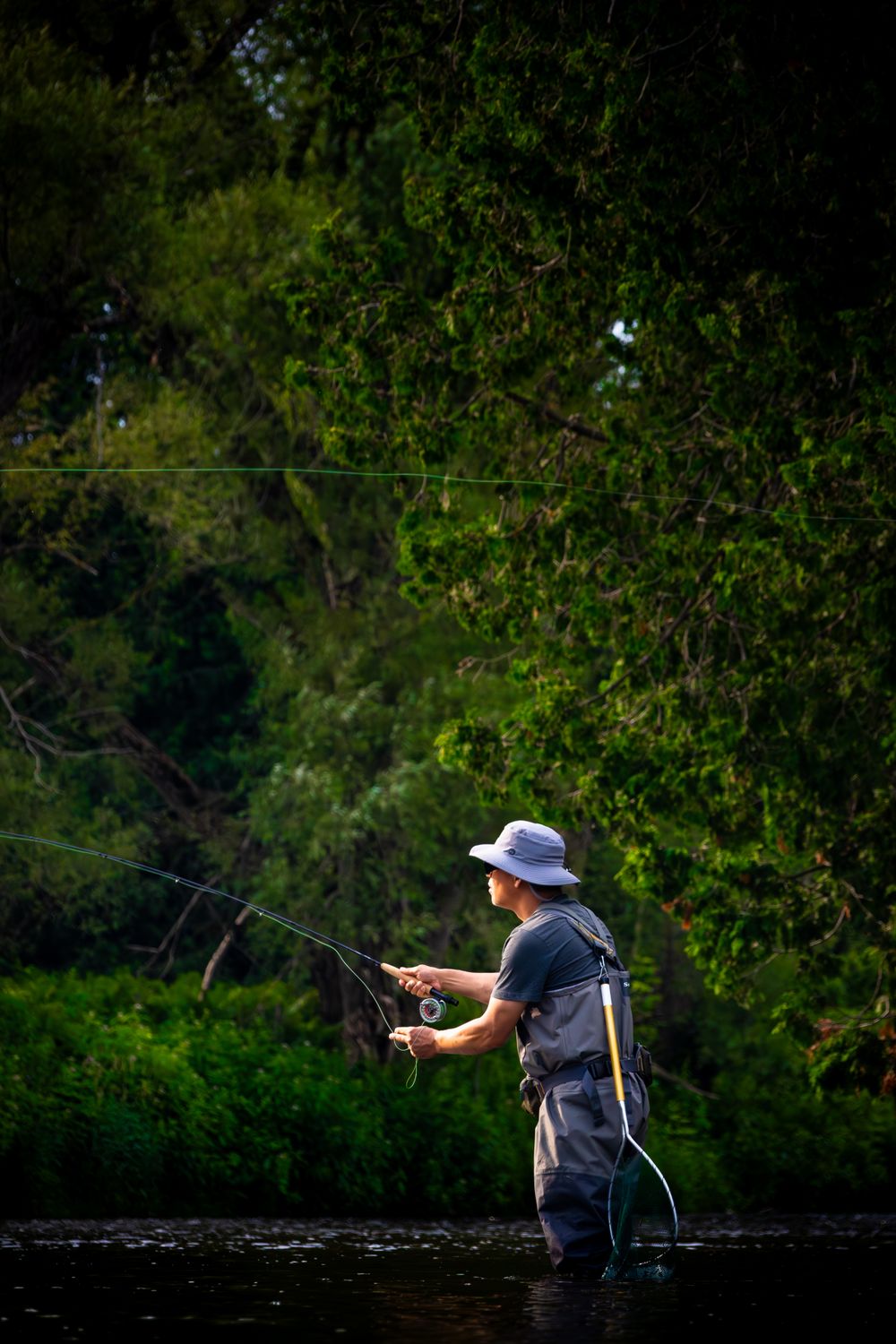
For years my default was the 9-foot 5-weight — the do-everything rod, indicator rig and all. It was a fine arrangement, right up until it wasn’t. Then I got serious about tight-lining on the South Platte, and something shifted. On clear, pressured, technical tailwater, the contact game just flat out-fishes the bobber for me: a truer dead drift, an instant strike read, no shot signature slapping down to spook fish, and the sighter telling me exactly where my flies are in the column. Once I’d felt the difference, there was no going back to guessing — the 10’7” 3-weight started getting the most water by a wide margin, and these days it takes about half my season.
That’s not me telling you euro is better. It’s me telling you it’s better for the water I fish most — clear, close, light-tippet, technical. If your home water is big and pushy and you’re suspending rigs at distance, the indicator rod is the smarter primary, and you’d be right to make it yours. The water decides. (If you’re trying to figure out how all of this fits into a coherent quiver, I worked through that in how many fly rods you really need.)
My take
Don’t buy a euro rod and then bolt a bobber and three BBs onto it. You’ll fight it all day, you’ll lose, and you’ll end up muttering about wet noodles in front of a stranger who’s too polite to help you — which, take it from a guy who watched it happen, is no way to spend a Tuesday. Match the rod to how you nymph: tight-line contact wants a soft, long euro rod; bobber-and-shot wants a stouter indicator rod. They are not the same tool wearing different price tags — they’re opposite answers to opposite problems.
Most tailwater anglers fishing clear water on light tippet are better served by the euro stick. Most folks grinding high, off-color water under an indicator want the 5-weight. Pick the technique first — driven by your water — and the right rod is suddenly obvious. The guy at Deckers had it backwards, and the rod paid for it.
Next up: see how to actually fish the tight-line game in euro nymphing the South Platte, build the leader that makes it work, and figure out where both rods land in how many fly rods you really need.