
In this review
The Navigator Hoody lives in my truck. That’s not a marketing line — it’s a fact about how my life works. If I’m headed to Deckers in the dark, glassing for elk before sunrise, or just running into town when the temperature drops below 60, the Navigator is in arm’s reach. It comes out of the truck more days than it doesn’t. That’s the cleanest answer to why I — a Colorado fly fisher — wear a hunting brand from base layer to outer shell, every day of the year.
I write a fly fishing blog. I fish Deckers, the Arkansas at Pueblo, and the Dream Stream. I’m also a bow hunter, and I’ve spent enough cold mornings on Colorado mountains to know what clothing actually works. The fact that almost every piece of clothing I own is now First Lite happened slowly, then all at once — the way these things go — and I’ve stopped trying to explain it to the people who give me a look when they spot hunting-brand camo cuts hanging in a fly fisher’s closet.
The short version: their Merino is the best I’ve worn. The construction is built for hunting (which is harder on clothing than fishing). The same brand covers fly fishing, bow hunting, and every off-water day I spend outside. One brand, one closet, every weather window. I keep preaching “own less” to anyone who’ll listen — my closet clearly wasn’t in the room for that speech. Below is the full lineup: what I actually own, what I actually wear, and when each piece comes out.
At a Glance — The Full Lineup
Eighteen pieces, year-round rotation. Jump to any section that matches your conditions.
| Piece | Category | When It Earns Its Spot |
|---|---|---|
| Wick Short Sleeve Crew | Summer base / tee | Hot wet-wading days, June–August |
| Wick Long Sleeve Crew | Lightweight base | Hot-weather sun coverage; thin enough to layer in spring/fall — replaces synthetic sun shirts |
| Wick Hoody | Sun hoody | Casting under low sun, hot afternoons |
| Wick Quarter Zip | Layering piece | Spring/fall — under the Navigator |
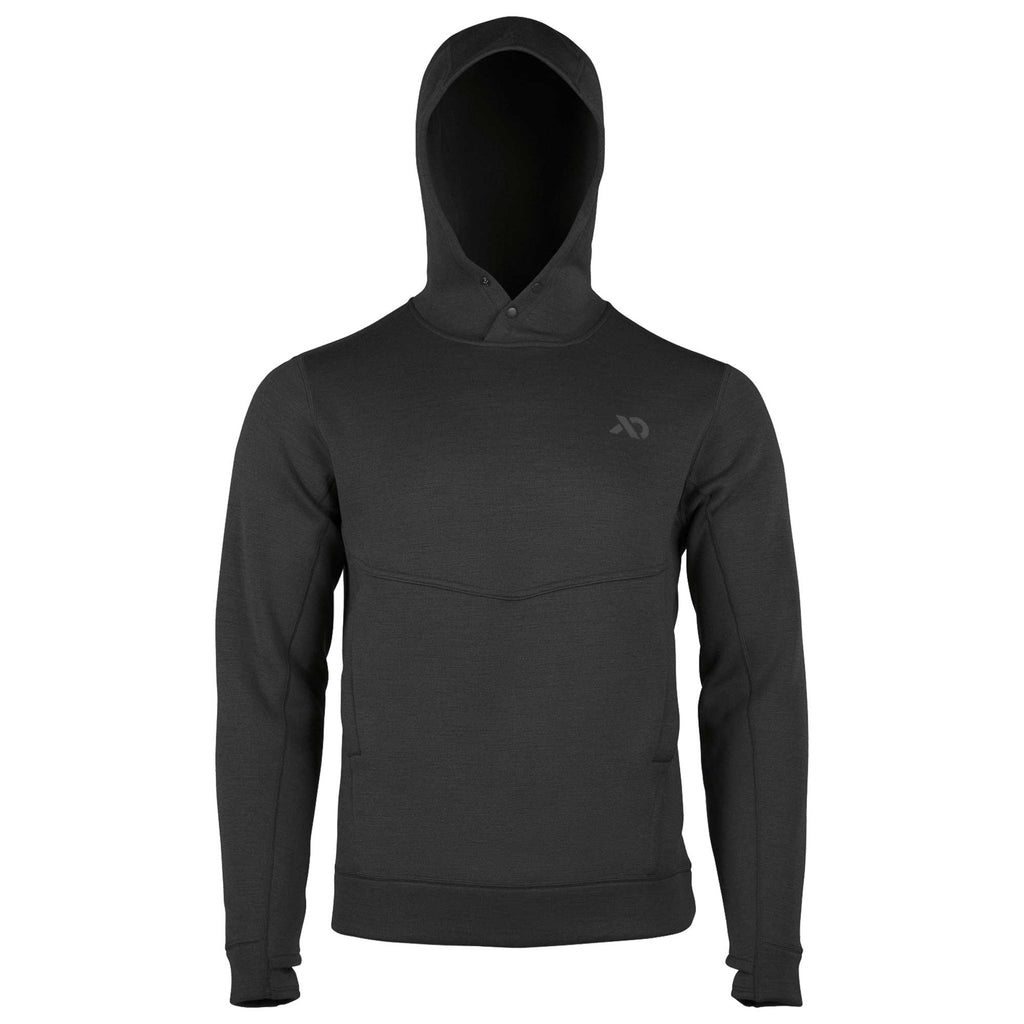
| Navigator Hoody | Adaptive midlayer | The truck piece. Cold mornings to mid-day. 20–60°F |
| Navigator Pant | Multi-pursuit midlayer | Most-versatile pant — fishes + hikes |
| 308 Pant | Year-round mountain pant | Hunting + technical days with pocket capacity |
| Gravel Pant | Stretch duck cotton | Approach hikes, lifestyle, travel |
| Trace Short | Hot-weather short | 90°F summer daily — KineticGrid fabric |
| Guide Lite Short | 37.5 stretch nylon short | Summer daily, dries fast |
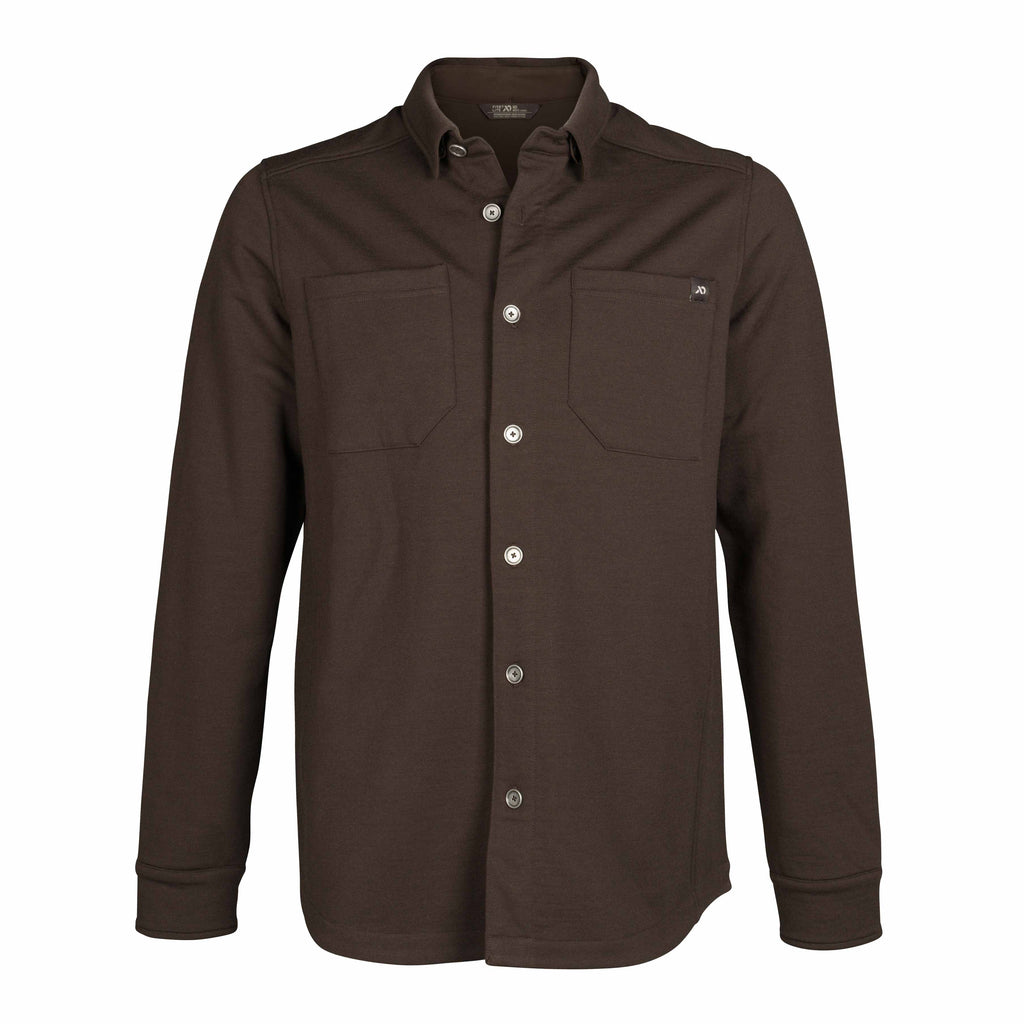
| Rugged Wool Field Shirt | Heavy wool button-down | Off-water everyday, travel, camp |
| Rugged Wool Quarter Zip | Heavy wool layer | Light fishing days too cold for Wick |
| Thermagrid Merino Henley | Grid-fleece warmth | Drive to river, camp evenings, travel |
| Horizon Hemp Short Sleeve | Hot-weather tee | Errands at 90°F — reads as a real shirt |
| Rugged Wool Half-Finger Glove | Tipping/casting glove | Tying tippet at 38°F — fingertips free |
| Rugged Wool Fleece Glove | Full-coverage warm glove | Glassing, driving cold hands, blinds |
| Furnace Hoody | Heavyweight Merino | Plowing snow, garage, off-river winter |
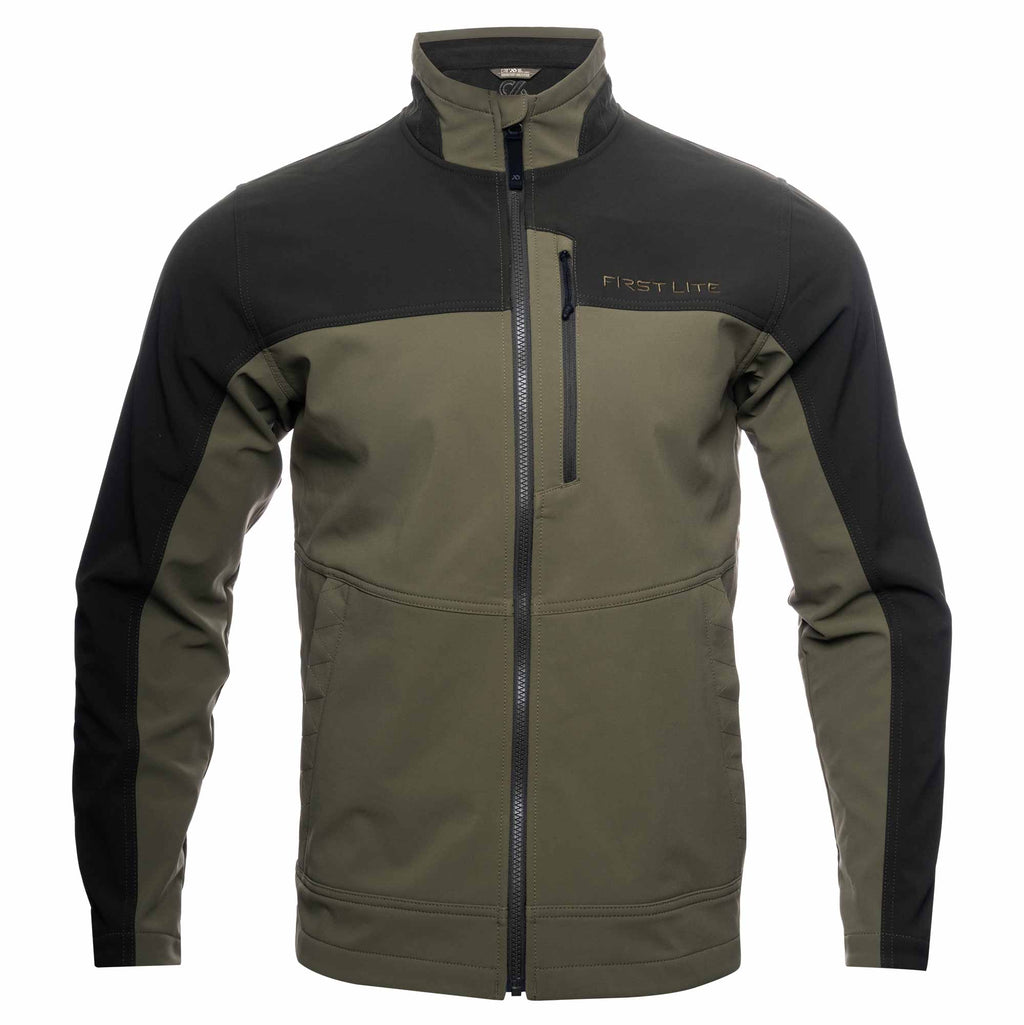
| Scout Soft Shell Jacket | Shoulder-season shell | Windy fall days, October Pueblo afternoons |
The Wick Line — All Of It
Wick is First Lite’s lightweight Aerowool tier — 17.5-micron Merino blended with 37.5 nylon, built to run cool, dry fast, and survive multi-day trips without stinking. I own the full men’s top range — Short Sleeve Crew, Long Sleeve Crew, Hoody, and Quarter Zip — and I rotate through them by conditions and what’s clean.
Wick Short Sleeve Crew
Summer base layer or summer standalone tee. I wear this on hot wet-wading days at Deckers or the Arkansas, with the Long Sleeve Crew or the Hoody over it when the morning is cold and the afternoon turns into August. The Merino doesn’t get gross after multiple days — that’s why I pack three of these on a long trip instead of seven cotton t-shirts.
My take: the summer Merino tee that justifies leaving cotton at home.
Wick Long Sleeve Crew
Sleeve coverage for sun protection on long days — First Lite’s lightweight 150-gram Aerowool base layer, built for warm weather but thin enough to layer when it’s not. It does the job of about four shirts I used to own — synthetic sun shirts that get gross by day two, cotton tees that soak up sweat and hold it, light flannels that overheat the second the sun hits. The Long Sleeve Crew replaces all of them. I wear it standalone in summer with sleeves rolled up, layer it under the Wick Quarter Zip in spring and fall, and it ends up under the Navigator on cold mornings. One shirt, every temperature window.
My take: the one Wick piece I’d buy first if I were starting from scratch.
Wick Hoody
The hood does what hoods do — sun cover for the back of your neck, optional head protection in wind, casting under a low sun without squinting. Merino runs cooler than synthetic sun hoodies, which sounds backwards until you live in it.
My take: Merino runs cooler than synthetic sun hoodies. Sounds backwards. Isn’t.
Wick Quarter Zip
This is the layering piece. Throw it over the Long Sleeve Crew or the Hoody, dump heat with the zip, fish all day, regulate temperature without taking anything off. On cool spring mornings at Deckers it’s the layer that lives directly under the Navigator.
My take: the temperature-regulator. Zip up, zip down, no clothing changes mid-fish.
The whole Wick line is built from Aerowool — First Lite’s 150-gram blend of 17.5-micron Merino wool with 37.5-activated nylon fibers. The Merino handles warmth and odor control. The 37.5 nylon actively pulls moisture out of the fabric and pushes it to the surface to evaporate, so it dries faster than pure Merino can. Hot zones get reinforced with 125-gram Aerowool mesh panels for extra breathability. The result is a base layer that runs cool when you’re working hard, warm when you stop, and doesn’t stink after three days. Costs more than the Costco version. I don’t care. Buy once, cry once.
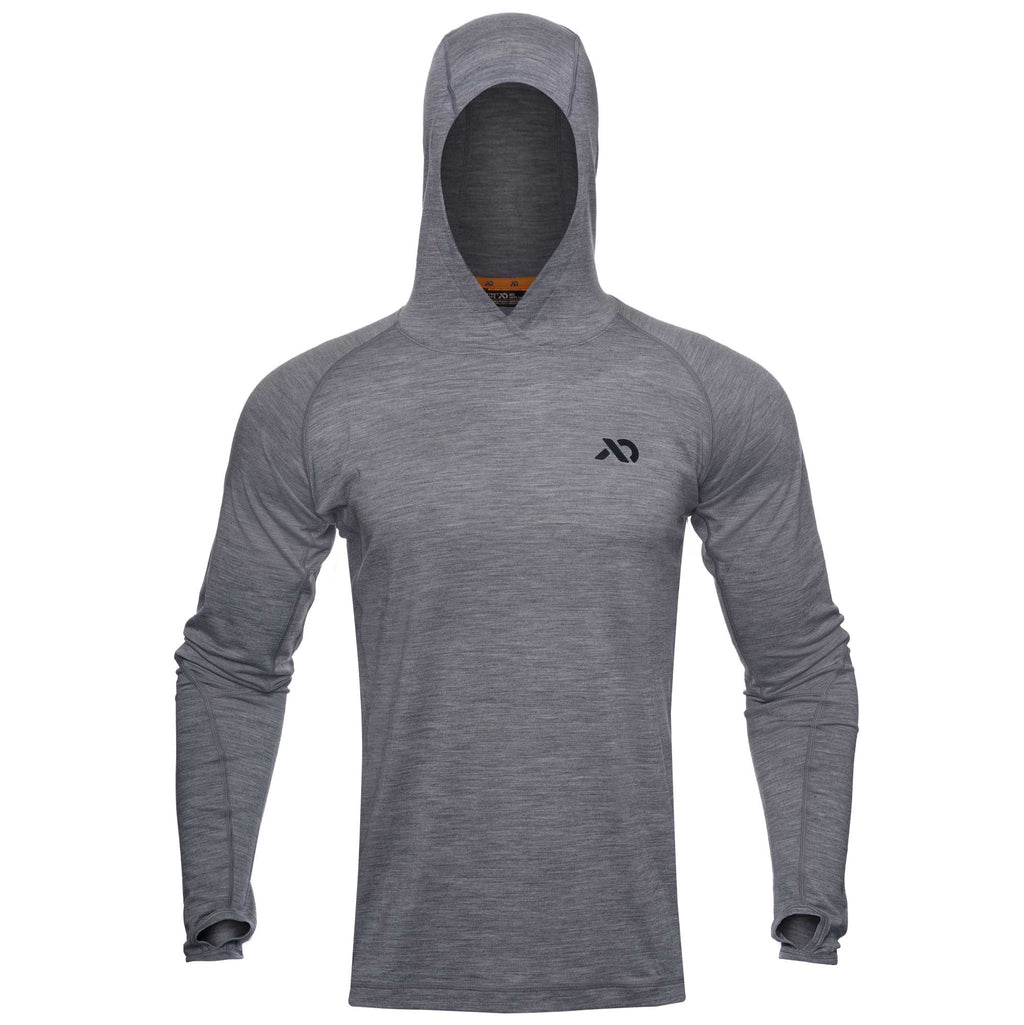
The Navigator Hoody — The Centerpiece
The Navigator is First Lite’s adaptive midlayer — 30D stretch woven polyester face, 112gsm 37.5 fleece backer, quarter-zip with a scuba hood, fleece-lined kangaroo pocket. Rated 20°F to 60°F. That’s the spec sheet. Here’s what it actually does.
Cold-morning fishing layer at Deckers in March. Pre-dawn coffee at the truck, walk down the road still wearing it, fish the first run with it on, peel the hood back when the sun hits, eventually tie it around my waist by 10 a.m. The full thermal range of a Colorado spring morning in one piece.
Glassing layer for bow hunting in September. Sitting still on a hillside in mid-40s air. The Navigator does what a heavier puffy can’t — it breathes when I have to move, holds enough warmth when I’m still, and doesn’t make synthetic-jacket noise when I draw.
Year-round outer layer in everything else. Spring drives, fall hikes, winter errands when it’s 35 and clear, the random late-summer cold front that rolls into the high country. It’s the most versatile single piece of clothing I own.
It lives in my truck because that’s where it earns its keep. By the time I get home from a trip, the Navigator has done four different jobs and I’m in a t-shirt again. That’s the test.
My take
This is the single most versatile piece of clothing I own. If you buy one First Lite piece, this is it.
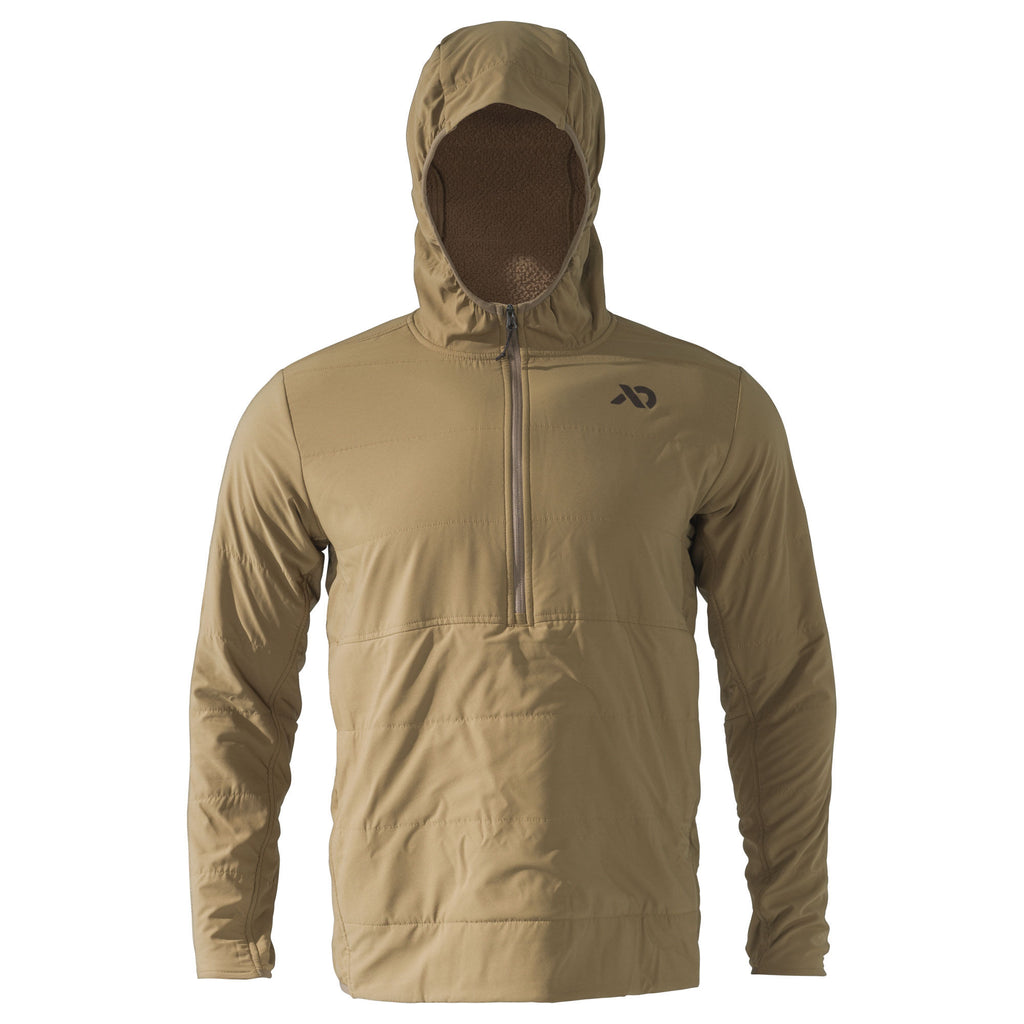
The Pants — Three Builds, One Closet
I rotate three First Lite pants depending on the day.
Navigator Pant
The pant version of the Navigator Hoody — First Lite’s multi-pursuit midlayer in pant form. Water-shedding stretch woven polyester shell over a 37.5 fleece liner, articulated cuts, fishes and hikes equally well. The most versatile of the three.
My take: the do-everything pant. If you buy one, buy this one.
308 Pant
Year-round mountain pant — 100% polyester 4-way stretch, built in First Lite’s standardized straight-leg 308 Fit. Layer up or down with it. Day-to-day hunting pant when I need pocket capacity and real toughness in the leg.
My take: the hunting-side workhorse — comes out the most on the bow side of the year.
Gravel Pant
Stretch duck cotton, straight-leg 308 fit, real pockets for tools, knife, and phone. More casual than the Navigator, more rugged than a chino. Approach hikes, lifestyle wear, travel days, anything where I’m not fully dialed into technical synthetic gear.
My take: the off-water pant — what I’m wearing at the gas station and the airport.
There’s no single “daily driver” — the pant gets picked based on conditions. Three pants, one brand. That’s the story.
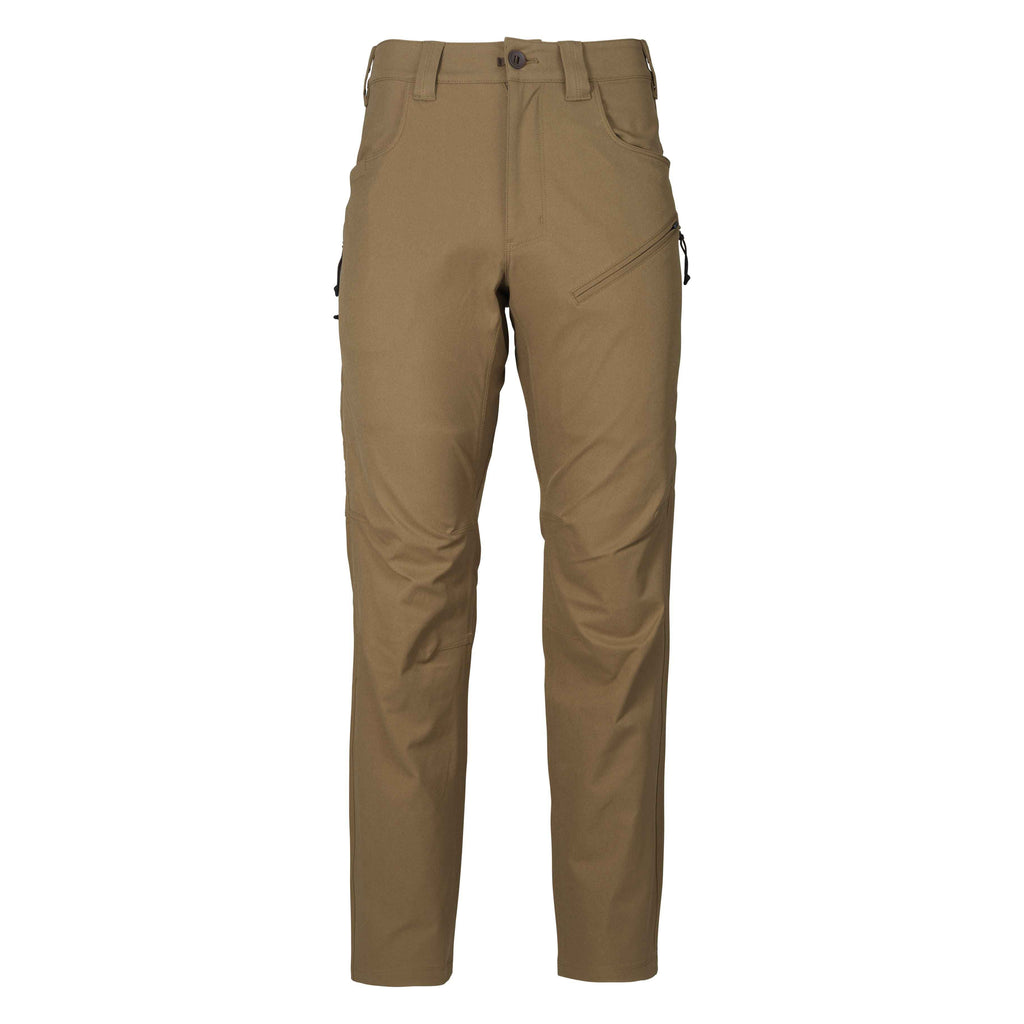
Shorts — Trace and Guide Lite
My summer warm-weather daily shorts. Around town, at home, errands in July, anything that doesn’t require a long pant. Not wet wading shorts in my use — I wear them for living, not specifically for fishing.
Trace Short
Constructed on First Lite’s KineticGrid™ fabric with HeiQ Pure Odor Control — built for days when humidity and temperature both crest 90. Fits better than any short I’ve owned in years. Coming out of the dryer to running errands to grabbing dinner, it stays comfortable in the worst heat.
My take: the daily summer short. June through September it lives at the top of the drawer.
Guide Lite Short
37.5 stretch nylon, fast-drying when wet, tough enough to take heavy use. More technical than the Trace — when I know the day will involve sweat, water, and back-to-back activity, this is the pick. Same fit philosophy, different fabric story.
My take: when I expect to get wet — boats, paddleboards, lake days — the Guide Lite is the one.
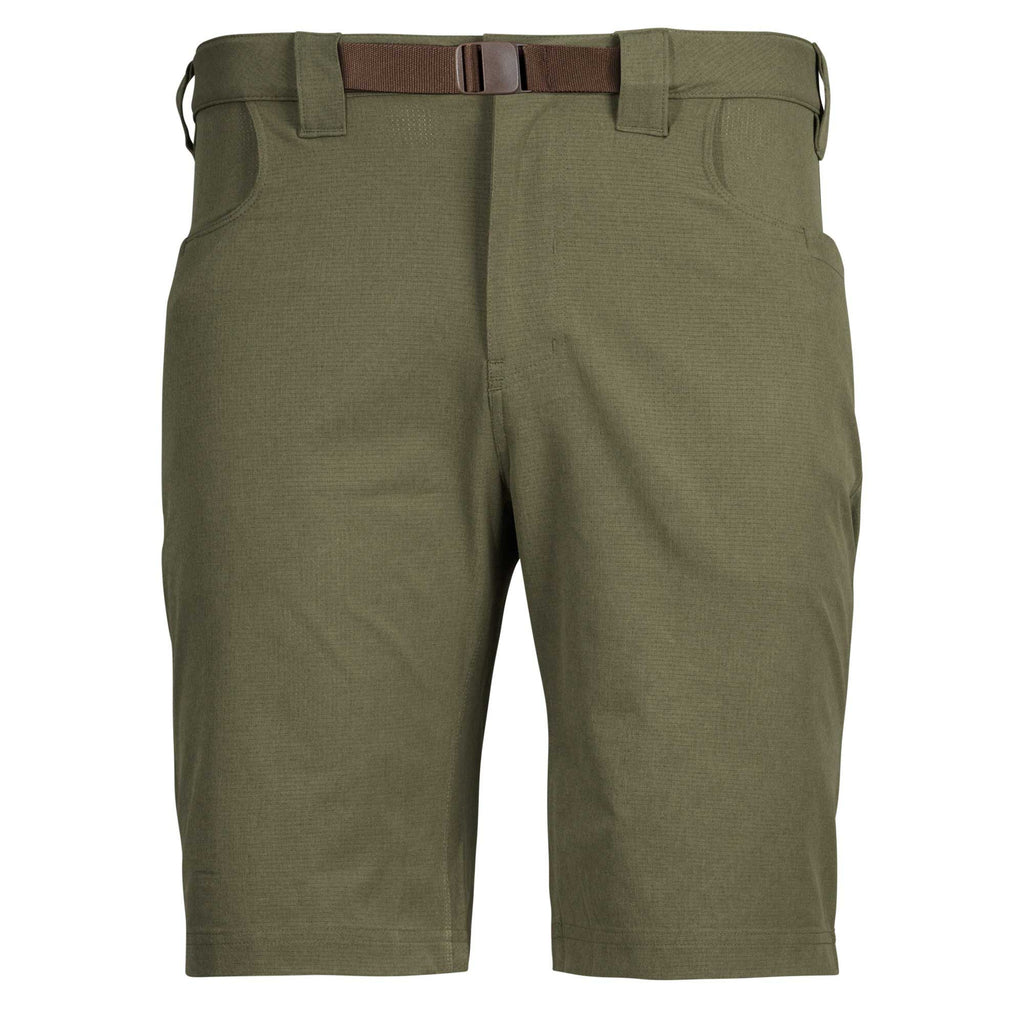
Heavy Wool & Off-Water Daily — Rugged Wool, Thermagrid Merino, Horizon Hemp
This is where First Lite stopped being a fishing-and-hunting brand to me and started being just the brand.
Rugged Wool Field Shirt and Quarter Zip
Off-water everyday wear. Light fishing days when the Wick line is too thin and the Furnace is overkill. Travel days. Camp days. The kind of pieces I throw on without thinking and that hold up to whatever I throw at them. The Field Shirt is the button-down version; the Quarter Zip is the cleaner pull-on cut for layering. Both are built on the same 85% Merino fabric — heavyweight enough to wear standalone in a 50°F river afternoon but breathable enough to not overheat under a midlayer.
What sets them apart from “outdoor lifestyle” knockoffs from other brands: the wool weight is real, the seams don’t pucker after one wash, and the fit doesn’t go shapeless after a month. These are the pieces that quietly replaced a row of lifestyle brands I used to think I needed.
My take: the everyday pieces. They look like clothes, not gear — and that’s the point.
Thermagrid Merino Henley
Travel, lodge, around-camp warmth. 56% Merino wool, 40% polyester, 4% spandex — built as a grid fleece structure that traps warm air against your skin while staying breathable. The Henley cut layers cleanly under almost anything without bunching at the collar, and on its own it reads as a real shirt instead of obvious base layer. I wear it on the drive to the river when the truck heater hasn’t caught up yet, around camp at night when the temperature drops, and on travel days where I want one warm layer that looks like a shirt instead of long underwear.
My take: the one warm layer that doesn’t look like long underwear. Wear it on the plane, in the lodge, in the truck.
Horizon Hemp Short Sleeve
Hot-weather tee — 55% hemp, 44% TENCEL, 2% spandex. Lighter than the Wick Crew, more casual cut, and the hemp blend has a textured drape that reads more “actual shirt” than “performance base layer.” This is what I wear running errands on a 90-degree day, walking the dog after work, or grabbing dinner in town. It’s the piece in the lineup that doesn’t look like it came from a hunting brand. Hemp also has built-in odor resistance that competes with Merino — a feature most synthetic tees can’t touch. Buy two. Wear one until the other is clean.
My take: the only First Lite piece nobody guesses is from a hunting brand.
Rugged Wool Half-Finger Glove
The one that comes out when I’m tying tippet at 38°F at the Deckers parking lot. Fingertips exposed so I can pinch tippet and pull knots tight; merino covering the back of the hand and the lower fingers so the rest doesn’t go numb. It’s the glove I reach for ten times more than any other — early-morning fishing, late-fall casting, any task that needs dexterity in cold conditions.
For fly fishing specifically, this is the right glove. Synthetic gloves that compete with this either lose dexterity or fail at warmth. Merino keeps warming even when wet, which matters because tippet work IS wet work — wet hands, splashed wading, weather closing in.
My take: the most-used winter glove in my closet. If you fish in 30s and 40s, get a pair.
Rugged Wool Fleece Glove
The warmer, full-coverage version. Heavier merino, full fingers, more thermal capacity. This is the one for hunting glassing in cold air, driving with cold hands, or sitting in a blind in late-season weather. When my hands are too cold for the Half-Finger, I switch to these and tuck them in my pockets between casts.
The full-finger build means no dexterity for tippet work, but that’s not the job — this glove exists for when you’ve stopped fishing and you’re just trying to keep your hands functional.
My take: the cold-weather backup. Live in your jacket pocket until the river goes single-digits.
The Furnace Hoody — At-Home Heavyweight
The Furnace Hoody is First Lite’s heavyweight Merino. I don’t wear it fishing — Wick + Navigator handles most fishing conditions, and on the rare day where it doesn’t, I’d layer Wick under Navigator under a shell before reaching for Furnace.
Where Furnace earns its place is around home in winter. Plowing snow, working in the garage, splitting wood, anything off the river where I want pure heavyweight Merino comfort. It’s the warmest layer I own and it’s a tank.
My take: not a fishing piece. The pure-winter at-home Merino tank.
The Scout Soft Shell Jacket
The Scout Soft Shell Jacket is the shoulder-season cover — the layer that fills the gap between the Wick Hoody and the Navigator. Water-resistant polyester face, breathable active fleece lining, 2-way stretch construction, and importantly: no hood. The hoodless cut is deliberate. It layers cleanly under a rain shell or over a Wick Hoody without bunching at the neck, and it doesn’t catch on backpack straps or a fly rod grip when you’re casting.
Where it earns its place: windy fall mornings when the Navigator runs too warm but a Wick top alone gets blown through. October afternoons on the Arkansas at Pueblo when the sun’s still out but the wind picked up. Spring evenings in the truck driving home from the river. It’s the layer I throw on when I’m not sure what I need — and it almost always works.
For bow hunting it’s a strong stalking layer in cool conditions. Quiet on brush, breathes during the climb, holds enough warmth when I’m sitting on a hillside glassing. Same principle as the Navigator just leaner — less insulation, more mobility, harder to overheat in.
My take: the in-between shell. When the Wick Hoody is too thin and the Navigator is too warm, this fills the gap.
The Tall Problem
I’m 6’4”. That’s where most brands quietly give up on me.
Buying outdoor gear at this height is a constant exercise in compromise. Sleeves end mid-wrist when they should reach the heel of my hand. Shirt hems ride up the second I reach for a high branch or the second fly box on a top shelf. Pant inseams hit two inches above my boot top. The “regular” cut at 99% of outdoor brands is built for someone 5’10” to 6’0” — anything taller and you’re wearing a smaller version of what you ordered.
First Lite doesn’t have this problem. They don’t even offer a “Tall” SKU — they don’t need to. Their regular sizes are cut long enough that a 6’4” frame fits perfectly. The Navigator sleeves cover my wrists when I’m casting. The Wick Hoody hangs down where it should, not where it stops mid-back. The pant inseams reach the boot.
I don’t know exactly how First Lite does this when most brands don’t. I just know it works. For anyone over 6’2” reading this — this is the brand you’ve been looking for.
Why This Brand, Not a Fly Fishing Brand
Four reasons.
The Merino quality is unmatched. I’ve tried Patagonia’s Merino, Smartwool, Icebreaker, and smaller players. First Lite’s Merino — Aerowool in the Wick line, Merino-X in the heavyweights — holds its shape, resists tearing, and doesn’t pill out by month six. That’s the durability story. The performance story is that it’s warm when wet — which matters when you’re standing in a Colorado tailwater up to your thighs in 38-degree water. Synthetic base layers get cold when wet. Wool doesn’t.
Built for cold and rough conditions. Fishing brands are built for fishing. Hunting brands are built for sitting on a mountain in 18-degree wind for eight hours waiting for an animal to come into bow range. The construction tolerances are different. The seams that hold up to packing out elk quarters hold up to crashing through willows for a side channel.
Versatility across hunting and fishing. This is the killer feature. I’m a bow hunter and a fly fisher. One brand covers both. One wardrobe, one set of investments, one philosophy across every outdoor day of the year. There’s no other brand I’ve found that does both this well.
Fit and feel. Hard to measure in a spec sheet. The Navigator fits the way a midlayer should. The Wick Hoody hangs the way Merino should hang. The Rugged Wool Field Shirt drapes the way a real shirt drapes. Fit, hand-feel, cut — First Lite gets these right in a way fishing brands often miss and hunting brands sometimes treat as an afterthought.
Why I’m Writing This Down
I’d wear this kit whether anyone paid me to or not — and so far, nobody has. I’m writing it down because I’ve always told readers what’s actually in my closet, not what brands tell me to recommend.
First Lite is the brand I keep reaching for — before a Deckers morning, in the woods in September, and in town when the temperature drops. The Wick line replaced four other base-layer brands. The Navigator replaced two midlayers. The Rugged Wool collection replaced a row of lifestyle brands I used to think I needed.
If you fly fish hard, in real weather, on real rivers, in real seasons — and you’re tired of buying Merino that turns into Swiss cheese after one year — this is the system. The Wick line is the entry point. The Navigator is the centerpiece. The Furnace is the heavyweight cold-room answer. The pants and the Rugged Wool round out the rest.
That’s the clothing. For everything else that comes to the river with me — rods, reels, fly boxes, the pack — here’s what I bring to the river.
I don’t have a partnership with First Lite. I wrote this because I wanted to. If anyone at First Lite happens to read this — I’ve already done the work. The closet is full, the camo’s in the fly fishing photos, and I’m not slowing down. Let’s talk.