
In this guide
The name explains the fly, which is more than I can say for half the patterns crowding my boxes. Craig McDonald was at the vise in Scotland, finished wrapping the red wire rib over a brown ice dub body under a silver bead, held it up, and it looked like a Duracell battery. So he called it that. No focus group, no Latin. The fly spread through competition circuits and eventually made it to American guide boxes, where it quietly became one of the most productive winter patterns on the South Platte.
McDonald is part of the Scottish competitive fly fishing community — a circuit that has consistently produced flies that work far outside the waters they were tied for. And here’s the thing I’ve made peace with: the Duracell’s design isn’t complicated. It doesn’t look exactly like any one invertebrate. It looks generally like food, with a UV body that catches available light in cold, clear water and a red rib that triggers takes nobody has fully explained. On Deckers in January, when flows drop below 100 cfs and the fish have backed into the deepest seams to wait out the cold, this is the fly that moves them.
The short answer
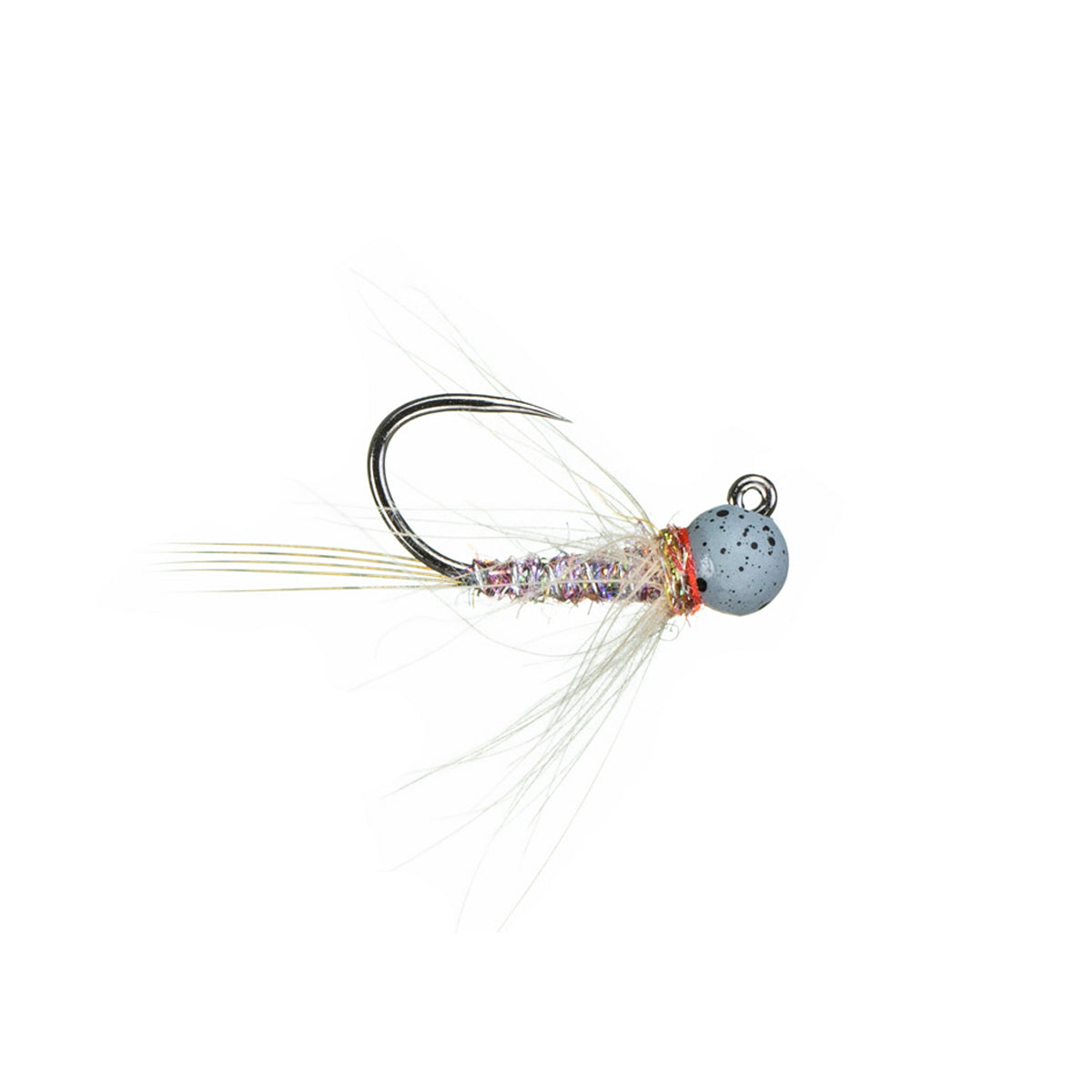
The Duracell Jig is Craig McDonald’s Scottish competition nymph — a slotted silver/nickel tungsten bead, a RED UTC Ultra Wire rib (the one part you never substitute), and a slim Ice Dub UV Brown body on a Fulling Mill 5045 barbless jig hook. On the South Platte, fish it in sizes #16–18 as your euro-rig anchor (dropper 18–20” above) at Deckers, Cheesman Canyon, and the Dream Stream, November into early spring — especially when Deckers drops below 100 cfs and you switch to 6X.
That’s the whole fly. Everything below is why the red rib matters and how to fish it deep in cold water.
The Recipe
The red wire rib is the signature element. Don’t substitute it with copper or gold — the color is part of what makes this pattern work. Everything else can flex a little. The rib cannot. This is the one place I’ll tell you to stop improvising.
Hook: Fulling Mill 5045 Competition Jig, barbless, sizes #12–18 (South Platte: #16–18)
Bead: Slotted tungsten, silver/nickel, 2.8–3.3mm for size 16
Thread: Uni 8/0, camel (tan) — matches the body tones
Tail: Coq de Leon, brown/barred, 6–8 fibers
Rib: UTC Ultra Wire, RED, small — this is the defining element
Body: Ice Dub UV Brown, slim tapered
Collar: CDC, slate dun, one stripped side
The body should be slim — the Ice Dub UV Brown picks up light in low-visibility winter conditions and creates a subtle translucence that’s different from standard dubbing. Keep the taper consistent and don’t overdress it. The CDC collar does the micro-movement work; one strip of material is enough.
The silver/nickel bead plus red wire rib plus brown body is what earned the Duracell name. That combination is also, apparently, what Colorado trout decide is dinner in January. Nobody asked them to explain themselves either.
When It Matters on the South Platte
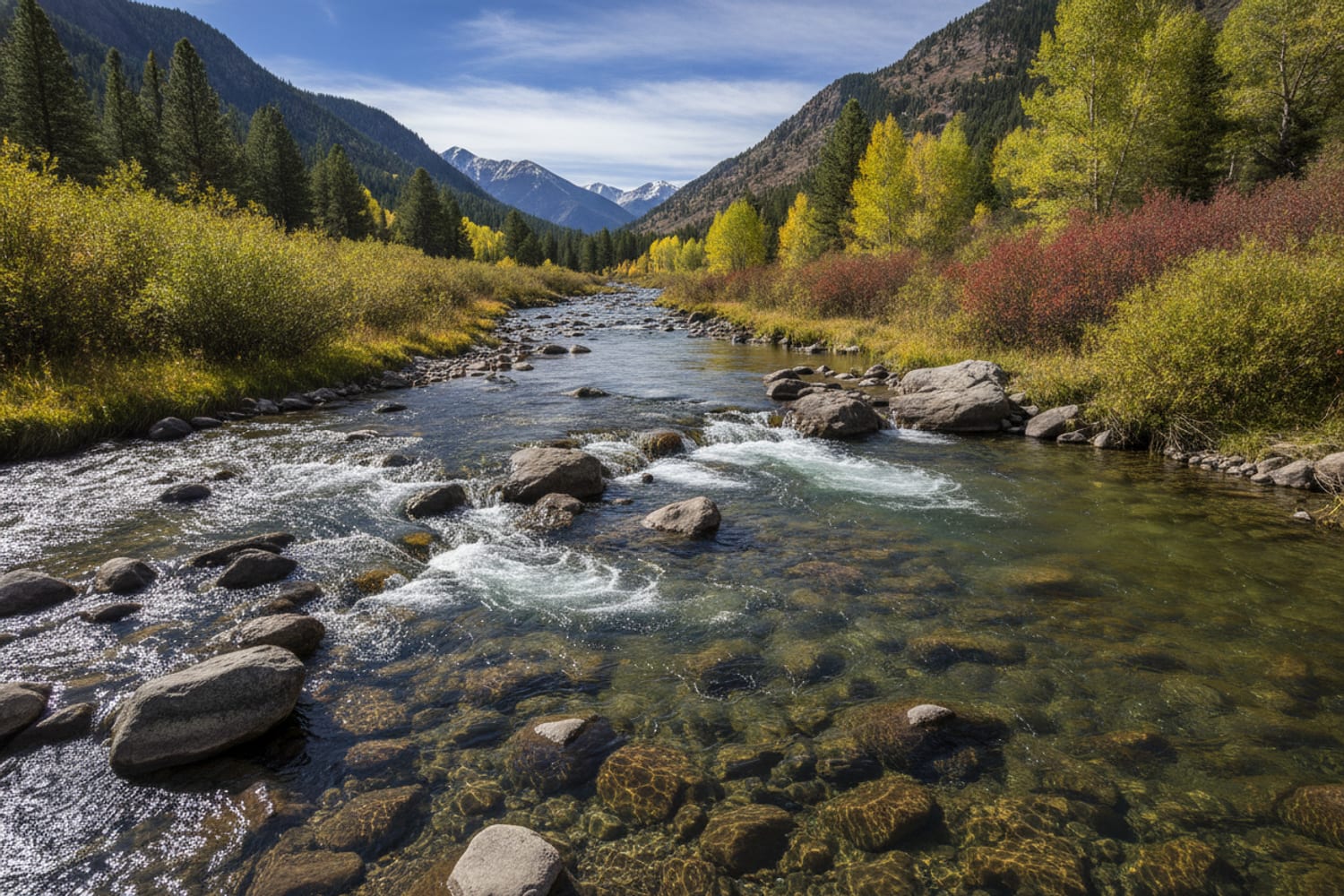
Deckers in winter is the Duracell’s primary window on this river. November through early April, when flows drop and fish stack in the deepest holding lies along the bank structure and inside bends. The silver bead catches available winter light in ways a gold or copper bead doesn’t. The red rib does something to fish in cold, clear, slow water — whether it reads as a midge rib or just triggers curiosity, the takes are real. Colorado Fly Supply and several South Platte guide operations list it specifically as a winter anchor fly for Deckers, sized 16–18.
Cheesman Canyon in the deep pool water and slower canyon runs. The Duracell produces well in Cheesman from late fall through early spring — the same window as Deckers, with the same conditions pushing it. In the faster pocket water, a heavier or slicker fly gets to depth faster. In the slower transitional water between Cheesman’s fast runs and pools, the Duracell holds depth and produces.
Dream Stream in the deeper corridor seams in fall and winter. Size 16–18 through the current tongues between weed beds. The Duracell is less effective in the slowest flat water — it’s built for moving water where fish are oriented into current and intercepting drifting food. Work the transitions and the deeper seam lines, not the flat edges.
My take
After enough winters at Deckers, the Duracell has become the fly I tie on first from November into early spring — no audition, no debate. It doesn’t imitate a specific bug, and I’ve stopped minding; it looks like food, it gets deep, and cold-water fish keep agreeing. At the vise I let everything flex except the rib — red, always. Some flies I fish out of curiosity. This one I fish out of trust, and trust is the rarer thing in a winter box.
How to Fish It
Point fly in a euro rig. The Duracell is your anchor — the heaviest fly in the system — with a lighter dropper 18–20 inches above it. An RS2, Zebra Midge, or small Juju Baetis in the dropper position covers most winter conditions at Deckers and Cheesman.
5X fluorocarbon on the tippet section. Below 100 cfs at Deckers, drop to 6X — in those conditions fish have all the time in the world to inspect your tippet, and the thicker material creates drag in slow current.
Watch the sighter for any hesitation or speed change. In cold water, fish metabolism is low — they don’t chase and slam midwinter nymphs. They ease into position, open their mouths, and hold. The take looks like the fly stopped, or like your sighter went slightly heavy. Set on anything that isn’t a clean drift through structure.
The red wire rib makes this fly identifiable in your box from three feet away, which is genuinely useful when your hands have gone numb and your reading glasses are back in the truck. Keep sizes 16 and 18 in both natural and a slightly darker brown variant if you’re tying them — the standard color covers most of the year, but in late October when Deckers fish see the first serious midge hatches of fall, the darker body version earns its keep.
Tie a few, drop one in the deep seams, and trust the battery. It’s been outfishing patterns with far prettier names and far longer ingredient lists for years now. Sometimes the fly that looks like food just keeps catching fish, and the rest of us are left standing in the cold, overthinking it.