
In this guide
There’s a stretch every fall when the South Platte goes cold and quiet and a lot of anglers put the rods away until spring. I understand the instinct. I’ve never shared it.
The tailwaters keep fishing all winter. Deckers and Cheesman will give you fish on a cold afternoon if you’re willing to work a midge through the slow water, and I’ve written up how I fish the South Platte in winter if that’s your plan. But right about the time the high country starts to lock up, a second season opens on top of the first one. Hard water. Most winter weekends I’m out on the ice somewhere in South Park, and it’s the one time of year I keep fish. My catch-and-release summer self has been told about this and has decided not to comment.
That’s the season this post is about: when the ice comes in, what this particular winter changes, how thick is thick enough, and where a first-timer should stand.
When does Colorado ice actually form?
Ice comes in on a run of cold nights, and it reaches the high country first. Small, shallow, wind-sheltered lakes lock up weeks before big, deep, wind-raked ones, and elevation decides most of the rest. The same cold snap that puts real ice on a small South Park lake can leave a skim on a reservoir an hour east.
In South Park, that usually means Tarryall and the smaller lakes skin over first. Eleven Mile is bigger and a good deal deeper, so it follows later, and in a normal winter it’s typically safe to walk by mid-to-late December. Further west, the big reservoirs freeze in pieces instead of all at once. Blue Mesa makes ice first near the inlet and the Lake City bridge in late November or early December and works west for weeks after that. Lake Granby usually isn’t walkable until early January, with machines out later still. Front Range lakes come last and least reliably, and in a warm year some of them never really get there.
Once it starts, the season runs three or four months, December into March, a little longer on the highest lakes. The back end has its own rules, and I covered them in late-season ice at Eleven Mile.
Ice reports in November are a lot like fishing reports in July. Everybody has one, and the lake hasn’t read any of them.
The one rule that never changes: early ice is thin ice, and “the calendar says December” has drowned people. Ice forms on cold nights and rots on warm afternoons, and a lake that held a truck last week can have soft spots this week. Whether it’s safe yet depends on that lake, that day, checked with your own auger.
What’s different about this winter?
The 2025–26 snowpack was the worst on record for the South Platte basin, peaking at about 42 percent of normal, and Denver Water declared a Stage 1 drought last March. That carries straight onto the ice this year.
- Antero is off the board. Denver Water drained Antero Reservoir and closed it to all recreation for 2026, moving its water downstream toward Cheesman. There’s no reopening date. Refilling depends on the weather, so plan this winter without it.
- Spinney is never an ice lake. Spinney Mountain closes for the winter every year, and ice fishing there is prohibited, drought or no drought.
- Eleven Mile is the open South Park water, and the call is yours. It’s a Denver Water reservoir, and Denver Water does not monitor the ice. Nobody is checking it for you.
- Expect low pools. Drought-managed reservoirs are running lower, with drawn-down shorelines and longer walks to the water. Winter levels on managed water can also move while the lake is frozen. Check the current pool level and access before you drive, and give the ice near shore extra suspicion.
None of that cancels the season. It narrows the list and puts more of the judgment on you.
How thick does the ice need to be?
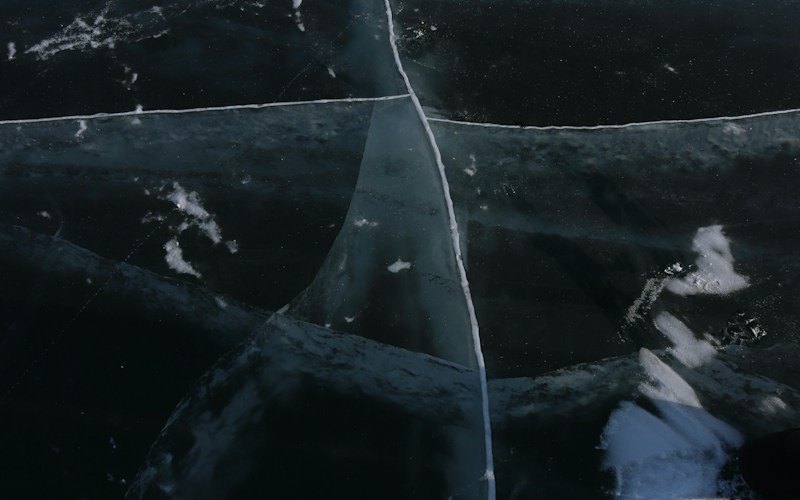
Not all ice is equal. Clear, hard new ice, the dark, almost black kind, is the strong stuff. White snow ice forms when snow on top of the sheet melts and refreezes. CPW puts it plainly: “White or gray ice is much weaker. You should only consider traveling on clear, blue ice.” Honeycombed late-season ice, gray and matte with a dull thud under the spud bar, doesn’t count at all. Stay off it, whatever the auger says.
Colorado Parks and Wildlife’s rules of thumb, for new, clear ice:
- 2 inches or less: stay off.
- 4 inches: one person on foot.
- 6 inches: a snowmobile or ATV.
Those are CPW’s own numbers, and CPW calls them guidelines. They promise nothing. Four inches of good ice is the minimum for walking. Driving onto the ice isn’t allowed at Colorado’s state parks and wildlife areas; vehicles stay on designated roads, and anglers who drove an SUV onto Tarryall were ticketed for it.
Check as you go. A heavy rock thrown out first, then a spud bar, then a test hole and a tape measure. Carry a way out in case you’re wrong: ice picks around your neck and a partner who isn’t standing right next to you. Inlets, outlets, springs, aerators and pressure ridges are always suspect, no matter what the middle of the lake reads. On Eleven Mile specifically, CPW has warned about dangerous pressure ridges at Witcher’s Cove and Coyote Ridge. When in doubt, the answer is the shore. Nothing out there is worth going through for.
How do you know when a lake is ready?
Start with the people who are watching it. CPW posts ice notes for the state parks, Eleven Mile included, and its fishing reports cover the bigger reservoirs. Local shops hear what came off the ice last weekend. Treat all of it as a reason to go look. Whether you walk out still depends on what your own auger tells you at the edge.
When you get there, look before you step. A lake with anglers already spread out on it, holes drilled and refrozen, and clear ice under the snow is telling you something. A lake with open water showing, slush along the bank, or nobody on it at all is telling you something too. Drill near shore first, measure, then drill again every few steps as you move out. The thickness at the ramp says nothing about the thickness a hundred yards out.
What can you catch through Colorado ice?
More than most people expect, and it changes by the lake.
- Trout are the backbone. Rainbows, browns and cutthroat come through the ice at Tarryall, Delaney Buttes, Jefferson Lake, Stagecoach and most of the bigger reservoirs.
- Kokanee are the sleeper. Blue Mesa is the state’s main kokanee water, and Eleven Mile, Williams Fork, Wolford and Jefferson Lake hold them too. They school, they roam, and when you find them it’s busy.
- Northern pike live in Williams Fork, Stagecoach, Eleven Mile, Tarryall, Wolford and Green Mountain, and CPW encourages anglers to keep them on several of those waters. That’s tip-up fishing, which is where the second-rod stamp earns the money.
- Lake trout are the big-water project: Lake Granby, Blue Mesa, Twin Lakes and Williams Fork. Deep water, heavy jigs, and a lot of time watching a flasher for one fish.
- Yellow perch are the easy, fast action, at Eleven Mile, Blue Mesa and the Front Range metro reservoirs like Chatfield and Cherry Creek. They’re also the best fish there is for a kid’s first day on the ice.
For a first season, pick one lake and one species and learn it. Trout and perch at Eleven Mile will teach you more than chasing lake trout on Granby ever will.
Where should a first-timer start?
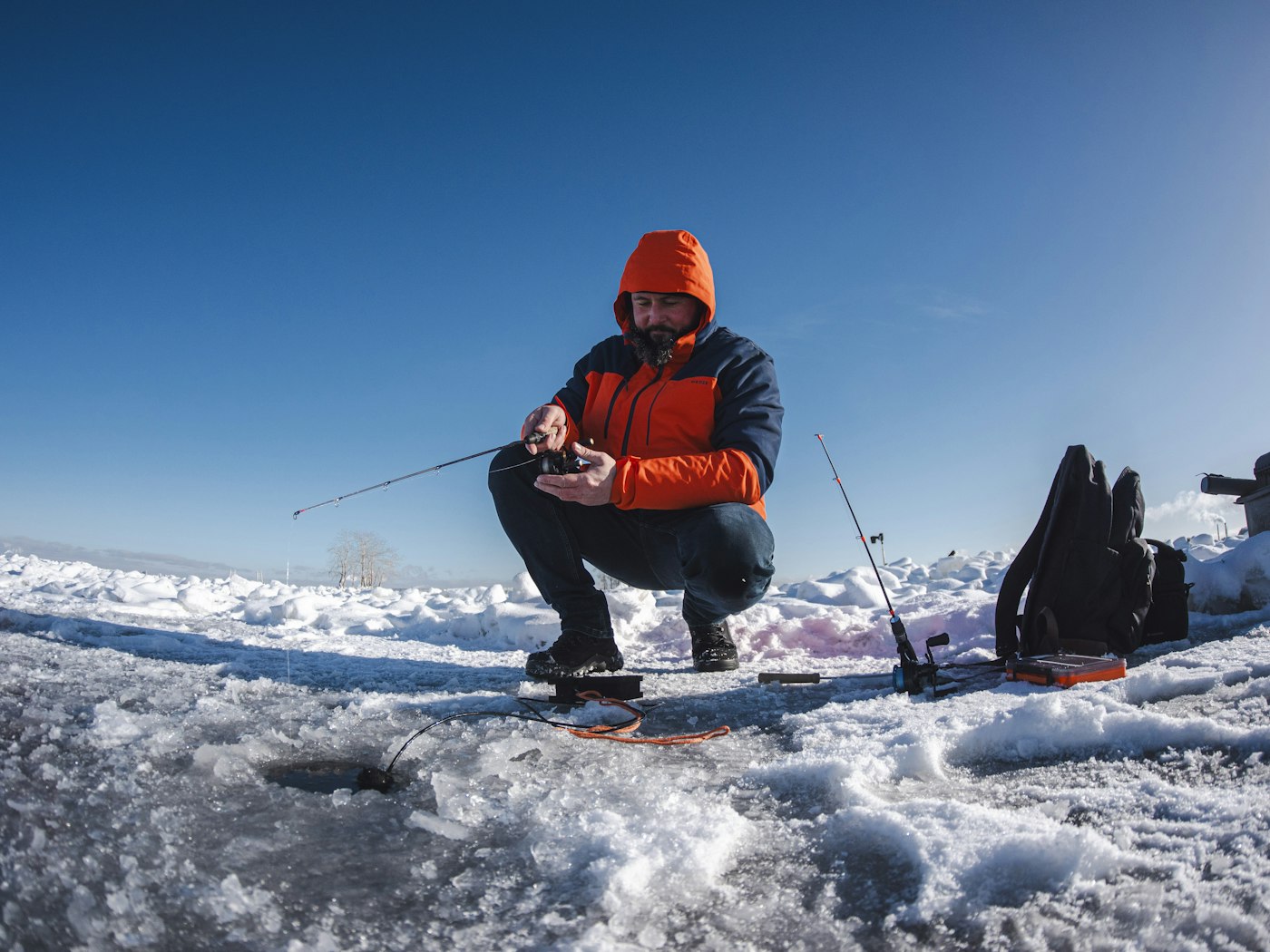
Start where other people are already fishing, on a lake you can read, once the ice is solid and the reports agree with your auger. For a lot of the Front Range that means Eleven Mile once it’s safe. It’s where I take my son every winter. Fish the shallower bays near the crowd instead of wandering out alone, and give the pressure-ridge areas a wide berth.
You don’t need a flasher, a shelter or a sled to catch your first fish through the ice. You need a hand auger, a short jigging rod, a few small tungsten jigs, a couple of waxworms, the ice picks from the section above, and someone who’s done it once. The whole kit takes up less room than my rod tubes do, which says more about the rod tubes than about ice fishing. When you’re ready to add to it, here’s what I actually carry onto Eleven Mile.
Get the paperwork right too. Anyone 16 or older needs a Colorado fishing license, and running a tip-up next to your jig rod takes a second-rod stamp. Hole size and bait are regulated, and the bait rules change from water to water, so read CPW’s current license and regulation pages for the lake you’re fishing before you go.
Ice also strips away most of what makes fishing hard for a beginner. There’s no cast to learn. You drop a jig, watch the line, and lift when it moves. That’s a big part of why I’d start a kid on the ice before the river.
My take
Ice fishing looks uncomfortable from the couch. It isn’t. With a hand auger, a warm layer and one lake you trust, it’s the easiest, highest-odds fishing this state offers from December into March, and it reaches fish the summer crowds never see. It’s also the only fishing here that can kill you if you’re careless with the ice, so hold a hard floor on thickness and turn around without arguing about it. Do that and it’s the best winter fishing I know.
What’s coming this season
Between now and ice-out I’ll be putting up the gear I actually run and the tactics I use: first-ice safety in more depth, how to read a flasher, finding fish on a lake you’ve never drilled, jigging versus deadsticking, the flasher-versus-camera question, and reviews of the shelters, augers, heaters, sleds and rods I’d buy again. Lake by lake, from Eleven Mile to Tarryall to the Front Range, and the species that make Colorado hard water worth the cold: trout, kokanee, perch and pike.
Fair warning about the gear, though. A starter kit fits in one hand in December, and somehow by February it needs the whole truck bed.
The tailwaters will still be there. The midges still come off on the warmer afternoons, and I’ll still be down on the South Platte when they do, most likely with a Zebra Midge tied on. But once the high lakes lock up, the season moves out onto the ice, and so do I.