
In this guide
When the South Platte gets crowded and I need to remember why I started doing this, I go up. No drift boats, no parking-lot combat, no guy explaining his sighter to anyone who’ll listen. Just cold water, granite, lodgepole, and brook trout that hit a dry fly like they’ve been waiting all summer for it — which, up there, they basically have.
I’ve written before about why I started chasing blue lines, and the fish in that story was a brookie: third cast, a fly I hadn’t fussed over, and me laughing out loud alone in the woods. After a season of getting humbled by educated tailwater browns, a fish that wanted to eat felt like a gift. It still does.
Brook trout don’t get the respect the big tailwater fish do. That’s a mistake — and it’s also a little complicated, because they’re not supposed to be here at all. Here’s where they came from, how to know you’re actually holding one, where they live and why, when to go, and what the state genuinely lets you take home.
Wait — are brook trout even native to Colorado?
No, and it matters. Brook trout (Salvelinus fontinalis) are native to the eastern United States and Canada. They’re not even technically a trout — they’re a char, genus Salvelinus, cousins of lake trout, bull trout and Arctic char.
For roughly ten thousand years before Europeans showed up, the only trout in Colorado were cutthroat — greenback in the South Platte drainage, Colorado River cutthroat west of the Divide, Rio Grande cutthroat in the south. That was the entire cast. Then mining-era silt, dredging and heavy metals wrecked the native fishery through the late 1800s, the state answered with hatcheries, and brook trout were first in the door: fish culturists were raising them in Colorado by 1872, making the brookie the first non-native salmonid ever stocked here. Colorado Parks and Wildlife dates their arrival simply as “an entry to Colorado in the late 1800s.” Either way, they got a century-and-a-half head start on my opinion of them.
They took to it the way few transplants ever do. Too well, in a lot of places. CPW’s own species page puts it flatly: brook trout are “prolific,” and this fish “often becomes overpopulated and can out-compete other trout.” In small headwater streams and alpine lakes that lands squarely on the native cutthroat, and the result is a creek that’s wall to wall with brook trout without a single one over eight inches — hundreds of fish splitting a food supply that would comfortably feed a couple dozen. That’s what stunting is. It isn’t a bad year; it’s arithmetic.
CPW spends real money on this. Removal projects and, more recently, stocked YY brook trout — males engineered to father only male offspring — are being used to collapse brookie populations in specific drainages so native Colorado River cutthroat can be put back. When the state is stocking a fish specifically to make that fish disappear, you’ve got a decent read on the situation.
That’s the conservation tension, and it changes how you should treat what you catch. It also means something happy: there are a lot of them, they’re eager, and you’re allowed to have fun.
How to know you’re actually holding a brook trout
If you’ve only ever seen pictures, the real thing still gets you. A wild brookie is, to my eye, the best-looking fish that swims in Colorado, and it’s also one of the easiest to identify once you know the four things to look at:
- Vermiculation. A dark olive-green back covered in pale, worm-like squiggles — like someone doodled a topo map across its shoulders. The pattern runs out onto the dorsal fin. Nothing else in a Colorado creek has it.
- Blue halos. Yellow spots scattered down the flanks and, mixed in, red dots ringed in pale blue that look almost painted on.
- The fins. White leading edges on the lower fins, backed by a sharp black line, then orange-red behind it. CPW describes the same thing as “tri-colored outlined fins (orange, black and white).”
- The tail. Only slightly forked — squarer than a brown’s or a rainbow’s.
One honest caveat on that third point, because I’ve seen it written as an absolute and it isn’t quite: white-edged fins mark a char, not specifically a brook trout. Colorado also holds lake trout, and CPW stocks splake (lake × brook) and tiger trout (brown × brook) in a handful of select lakes — all of which can carry some version of that fin. In a small mountain creek you’re fine. On an alpine lake with a stocking history, check the back for vermiculation before you announce anything, ideally before you announce it out loud to somebody who knows.
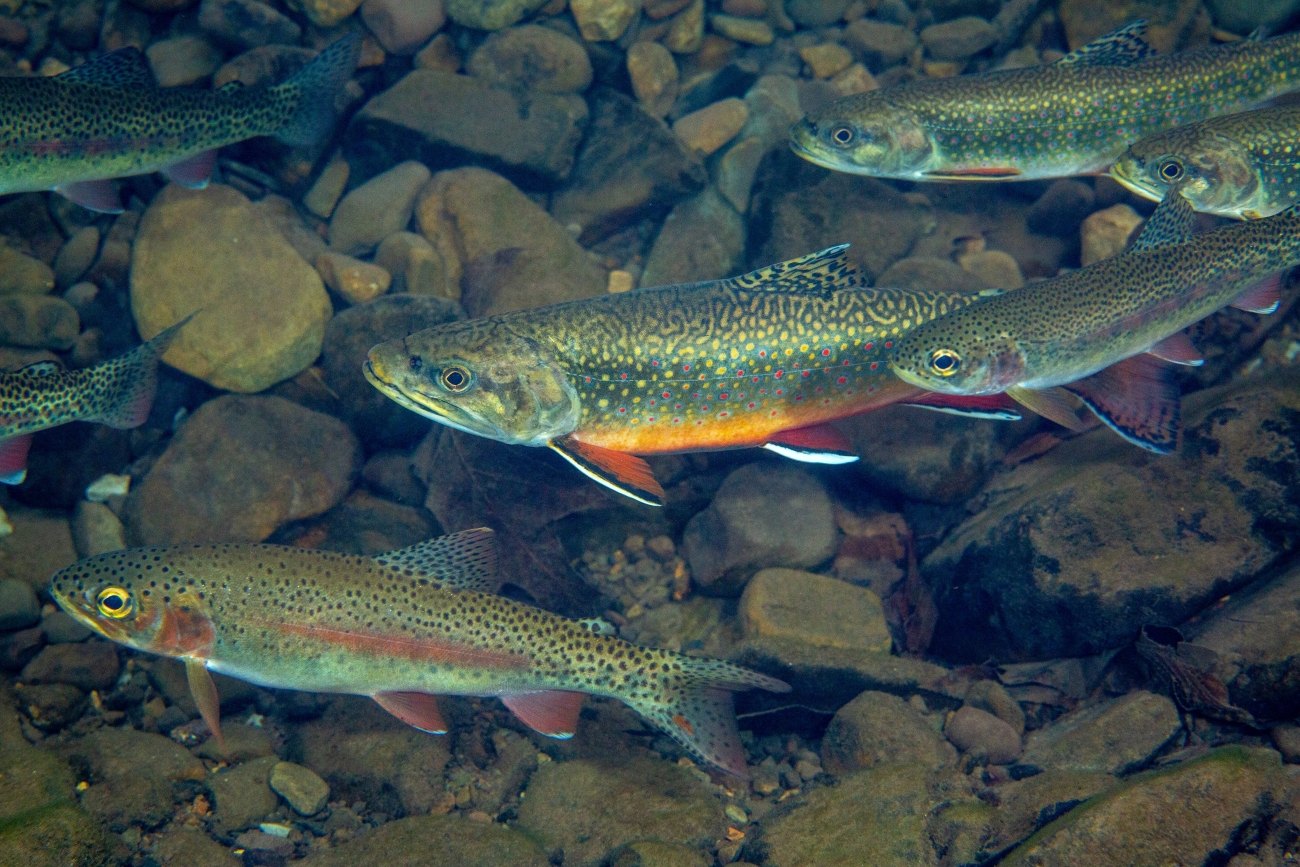
They get more beautiful in fall. Brook trout are autumn spawners — the same calendar the browns run on — and as the water cools through September and October the males go incandescent: burnt-orange belly, electric blue halos, a hooked jaw. An October male brookie in full color is a genuinely spectacular animal, and you don’t have to hike to the back of beyond to find one.
Which is exactly why the fall section below comes with a string attached.
Where brook trout live
Think up. Brookies want the coldest, most oxygenated water in the system, and they tolerate lower pH than the other trout, which is a large part of why they end up in the thin, acidic, hard country above the famous tailwaters. CPW puts their habitat as “higher elevation lakes, beaver dams and streams” — the agency doesn’t publish a hard elevation band, and neither will I, but in practice you are looking at the creeks above the last cabin, not below it.
- High-country freestone creeks — tumbling pocket water at the end of a hike. Every plunge pool and cushion can hold one.
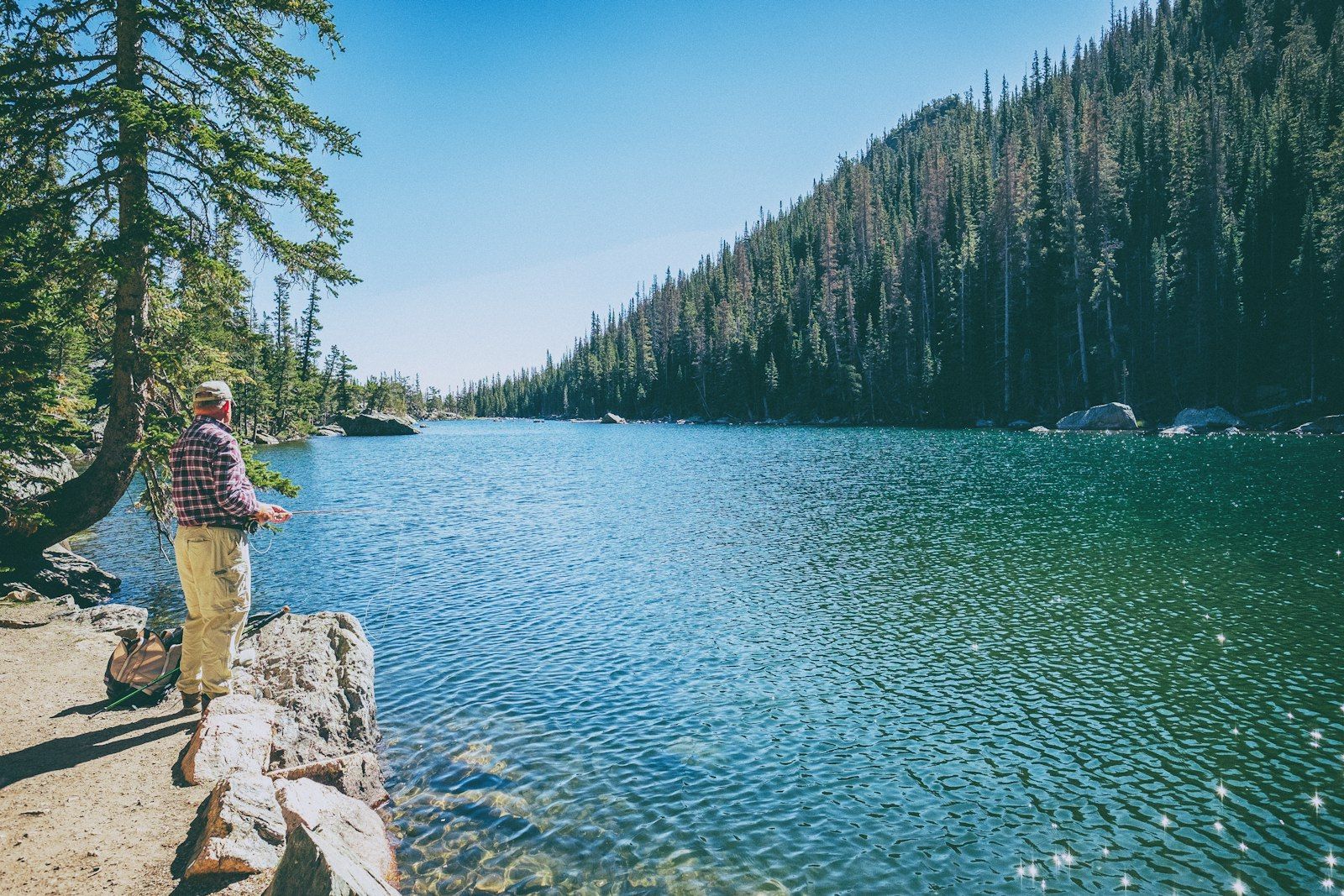
- Alpine and subalpine lakes — the little blue dots on the topo at the top of a steep trail. Cruise the drop-offs and the inlet.
- Beaver ponds — the best of the three and the most overlooked. A dam backs a creek up into a silty, tea-stained pool, and brookies in particular love them. The fish sit tight to cover: sunken stick-tangles, the brushwork of the dam itself, undercut banks, drowned timber. The bottom is soft, the water’s dark, and it fishes small and close.
This is blue-line water — the thin squiggles on the map nobody else bothers driving for. It’s also some of the best beginner and kid water in the state, because the fish are forgiving and the casts are short. It’s exactly the kind of creek to bring a kid to: eager fish, no crowds, nobody keeping score. More on fishing with kids here.
Worth confirming what’s actually in a given drainage first, though. Some of these creeks hold conservation-sensitive native cutthroat in tiny isolated populations, and those reaches often carry their own rules. CPW’s water-by-water listing is the place to check, not the guy at the trailhead.
How to catch them: keep it simple
Here’s the secret nobody can sell you a $400 setup for — brook trout are not picky. A high-country brookie eats first and asks questions never. The entire game is getting a fly over them without spooking them first.
You can, of course, still blow it by crashing up the bank like a moose. The fish are forgiving; they are not blind.
I’ve written the whole small-creek kit and the stealth game up properly in the blue-line setup — the short soft rod, the short leader, the one box, approaching from downstream, staying off the skyline. Rather than run it all again, here’s only the part that’s specifically about brook trout.
A short rod is the tool. I fish a 7-foot-2 3-weight on creeks — it’s in my quiver — because it loads at rod’s length and drops a fly into a dinner-plate pocket without room for a backcast. A 9-foot 5-weight works, but on tight water it feels like parking a truck in a one-car garage.
Fish attractor dries. Brookies key on visibility and movement far more than exact imitation, so the box is short and bright:
- A Royal Wulff or Royal Coachman — the classic high-country fly for a reason.
- An Elk Hair Caddis in 14–16 — floats forever, twitches well.
- A Stimulator — doubles as a hopper and a stonefly and a “why not.”
- A Parachute Adams — the one that catches when you don’t know what’s happening.
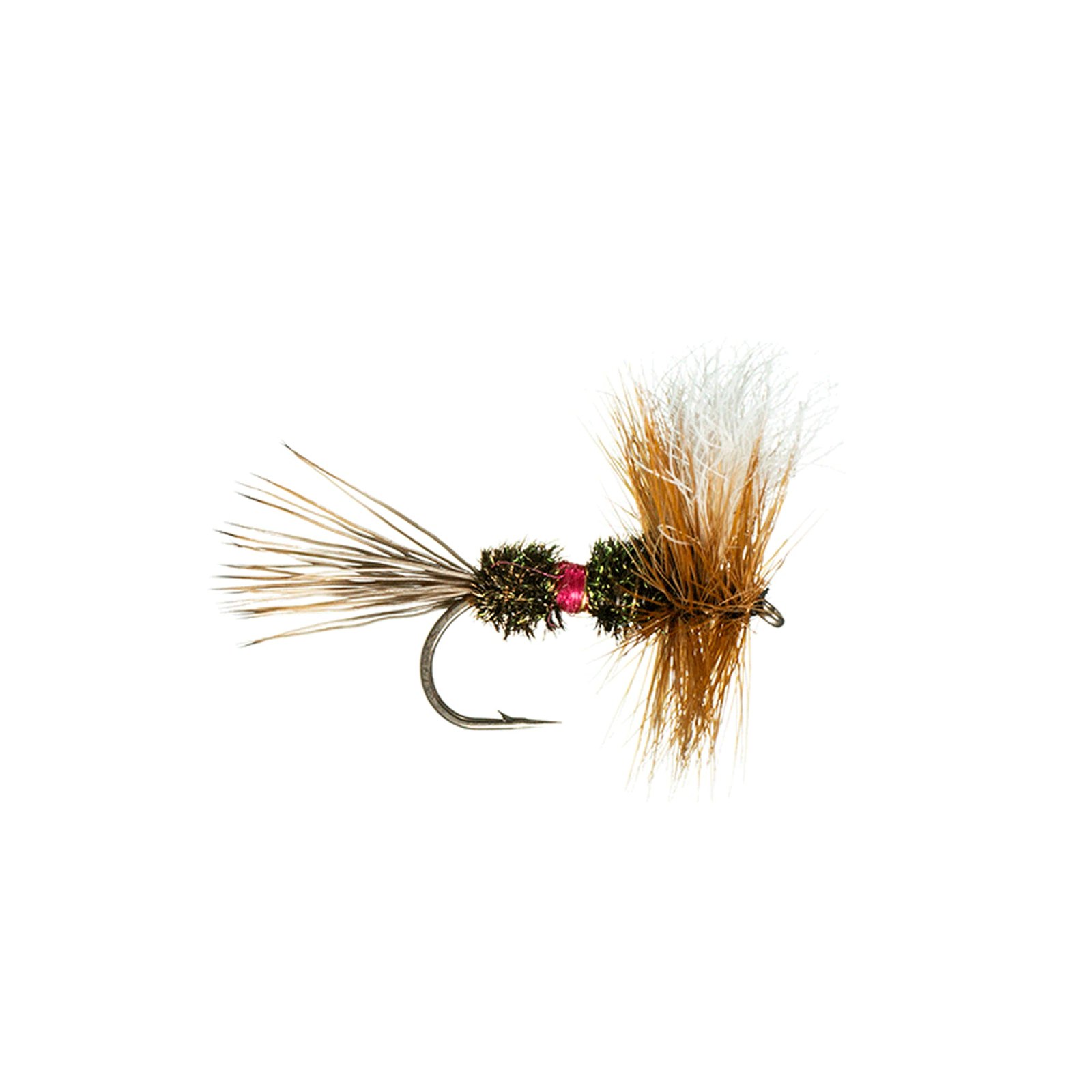
Hang a dropper if they’re deep. On a cold morning, or in the dark middle of a beaver pond, drop a small beadhead (a Hare’s Ear, a small Pheasant Tail, a Blowtorch) 18 inches off the bend of the dry. The dry doubles as your indicator.
Read the pockets, then leave them. In a tumbling creek the fish hold in the soft spots — the cushion in front of a boulder, the foam seam beside the main chute, the head and tail of every little plunge pool. Drop the fly at the top, let it drift the seam, lift, move on. This isn’t tailwater siege fishing. A good brookie morning is a half-mile of creek and a great many small decisions, not one run worked to death.
Expect small, and mean it. A nine-inch brookie is a good fish up there and a foot-long one is the fish of the trip. If the day needs to produce inches, point the truck at a tailwater instead — there’s no shame in it, and there’s no talking a stunted creek into growing you a twenty-incher.
When to go
Brook trout fishing tracks the high country’s short season. Roughly:
- July through September — prime. Once the high country melts out and the creeks drop and clear (usually by mid-July), the dry-fly fishing is as good as it gets, all day. This is also the window when the tailwaters are too warm to fish honestly in the afternoon, which is the case I make in my dog days up high post.
- Fall (late September–October) — the prettiest and the most delicate. Brookies color up and feed hard, but they’re also spawning, on the same fall calendar as brown trout, and that changes the rules. More on that in a second.
- Winter/spring — the high stuff is locked in snow and ice. This is when you’re back on the tailwaters waiting for summer.
Is it okay to fish for brook trout during the fall spawn?
Yes, with the same discipline you’d use on spawning browns. Learn to see a redd and stay off it. A redd is a clean, light-colored oval of gravel — dinner-plate to bathtub sized — noticeably brighter than the dark, mossy bottom around it, usually in a pool tailout or the soft edge of a riffle, often with a fish or two hovering over it. Don’t wade through one, don’t cast to a fish that’s locked onto it, and don’t fight a hooked fish down across one. On a narrow creek that mostly means walking the bank instead of the streambed for a few weeks, which costs you nothing. Fish the pockets and plunge pools away from clean gravel and you can have the best-looking fish of the year with a clear conscience. (I go through reading redds properly in a piece on the brown trout spawn — that one publishes later this fall.)
A typical morning up high
Here’s how one of these days tends to go, because the rhythm is half the appeal. Leave early — earlier than you need to, because the drive up is part of it — and hike in a mile or three, gaining enough elevation that the lodgepole gives way to spruce. Rig at the water: one dry, a short 4X leader, no fly box archaeology, and start at the bottom of the stretch so you’re always coming up behind the fish.
The first pocket is the size of a bathtub behind a truck-sized boulder. The fly rides the foam seam for two feet and a six-inch brookie materializes and eats it like it’s the last bug on earth. Laugh if you want to — most people do — release it, and take three steps to the next pocket. Repeat until early afternoon, when the clouds start building and it’s time to walk out, sunburned, having out-fished a tailwater day without once arguing with a fish over tippet diameter.
Getting up there and back
The country that makes brook trout fishing good is the country that makes it unforgiving, so this part is straight.
You will usually be alone and often outside cell coverage. Tell somebody your drainage and your turnaround time before you leave the truck, and carry a paper or offline map.
Altitude is not a rumor. If you’ve come up from lower ground in the last day or two, go slow on the climb in, drink plenty of water, and know the difference between being winded and being sick. Headache, nausea, dizziness, or shortness of breath that doesn’t settle when you stop are signals to turn around and go down — not to push through. Descending is the treatment.
Watch the sky. The high country builds thunderstorms fast in summer, most often in the early afternoon. Plan to be off exposed slopes, ridges and open lake shores by then. A graphite rod is the tallest thing on an alpine basin and you do not want to be holding it.
The walking is the hazard more than the water. Loose rock, wet deadfall, talus, streambed cobble that rolls under a boot. Carry a wading staff for every crossing, and if a crossing looks marginal, walk upstream and find a better one.
Cold water is a shoulder-season problem. Wet-wading is a summer move. In spring and fall, high-country water is cold enough to cost you dexterity and judgment quickly, and hypothermia is a real risk at altitude even on a mild day. Full waders, spare layers, and a way to make heat.
Why it’s okay to keep a few
This is the part that surprises people raised on strict catch-and-release, so let’s use real numbers instead of vibes.
Colorado’s statewide limit is four trout per day and eight in possession, in the aggregate — that’s four total across brook, brown, rainbow, cutthroat and the rest, not four of each. On top of that, the state adds a brook trout bonus: an additional 10 brook trout eight inches or less, daily bag and possession, statewide. It applies to brookies only, and it’s a rule built for exactly the kind of stunted, over-crowded small fish a high brook-trout creek is full of.
Two caveats that matter more than the numbers. First, the statewide limit is a floor, not the law on every water — individual lakes and stream reaches carry special regulations that override it, some protect native cutthroat strictly, and a few are catch-and-release. Check CPW’s current listing for the specific water before you keep anything; limits change, and a blog post is not a regulation. Second, a limit is permission, not an instruction.
Where I land on it: I’m a hunter, and I don’t think a trout has to go back out of reflex to make me a good person. The fish I actually keep are the ones I take through the ice in the winter — that’s my one standing exception to catch-and-release, and it’s a deliberate one. But the argument for thinning a stunted brook trout creek is real and it isn’t mine: more food for the survivors, less pressure on the natives the state is spending real money to put back. If you want to cook a few pan-sized brookies in butter over a fire on a high-country evening, that’s one of the genuine old-fashioned pleasures of this sport, and on the right water it’s the responsible call rather than the guilty one.
Whatever you don’t keep, put back properly — wet hands, minimal air, quick. Cold, oxygenated creek water is about the friendliest place in Colorado to release a trout, which is no reason to get sloppy about it.
My take
Brook trout are the antidote to taking fly fishing too seriously. When a tailwater fish has you two hours into a debate about a size-24 midge, a day on a high creek catching willing, gorgeous little char on a dry fly is the reset button. They ask nothing of you but a quiet approach and a fly that floats. The honest complication is that they’re only up there because we put them there, and the same afternoon can be both the most fun you’ll have all summer and a small act of ecological cleanup. I’ve made my peace with that. Mostly.
FAQ
What’s the best fly for brook trout in Colorado? A bright, buoyant attractor dry — Royal Wulff, Elk Hair Caddis, or a Stimulator in size 14–16. Brookies key on visibility and movement more than exact imitation. Add a small beadhead dropper if they’re holding deep in cold water or a beaver pond.
What rod should I use for high-country brook trout? A short, light rod — a 7 to 7.5-foot 3-weight is ideal for tight creeks and short casts. A 9-foot 5-weight works but feels oversized on small water.
When is the best time to catch brook trout in Colorado? Mid-July through September once the high country melts out and clears. Fall (late September–October) is the most beautiful window as the fish color up, but they’re spawning then, so stay off the clean gravel.
Are brook trout actually trout? No — they’re a char (Salvelinus fontinalis), more closely related to lake trout and Arctic char than to rainbows or browns. They’re also non-native to Colorado, first cultured here in 1872 and introduced from the eastern U.S.
How do you tell a brook trout from a cutthroat or a small brown? Look at the back and the lower fins. Brook trout have pale, worm-like vermiculation over a dark olive back, red spots ringed in blue halos, and white-and-black leading edges on the lower fins. Cutthroat have the orange-red slash under the jaw and no vermiculation; browns have dark and red spots on a buttery flank with no worm pattern and no white fin edge.
Can you keep brook trout in Colorado? Usually yes. The statewide trout limit is 4 daily and 8 in possession in the aggregate, and CPW allows an additional 10 brook trout of 8 inches or less. Individual waters can be stricter, so check CPW’s current regulations for the specific stream or lake first.
Why are brook trout so small in some streams? Overpopulation. In waters where they out-breed the available food, brookies stunt out into endless small fish. It’s exactly the situation where harvesting a few actually helps the fishery — and where CPW sometimes removes them outright to make room for native cutthroat.
Next: you’ve got the fish — now go find the water. Here’s how I find blue lines in Colorado, and the setup I carry once I’ve made the hike.