
Eleven Mile Reservoir in January is one of those places that reminds you why you got into winter fishing in the first place — assuming you can feel your face long enough to remember anything. The lake is frozen solid, the summer crowds are long gone, and the trout are stacked at depths you can actually reach through the ice. I’ve made the winter trip more times than I can count, mostly because it never disappoints and partly because I clearly never learn my lesson about the cold. For the gear list that makes a full day on the ice comfortable in South Park’s cold, the Eleven Mile ice fishing gear guide covers augers, electronics, shelter, and clothing in detail.
Here’s what you need to know before you make the drive.
The short answer
Eleven Mile Reservoir sits at 8,600 feet in South Park, about 80 minutes from Colorado Springs, and its ice season runs roughly December through February for three targets: rainbow trout (14–24 inches, jigged with a small tungsten jig on a 28-inch medium-light rod), kokanee salmon (schooled at 25–40 feet, hit tiny spoons or tube jigs tipped with corn), and northern pike (tip-ups with sucker minnows in 6–15 feet near the inlet, always on a wire leader). A flasher is what turns the kokanee bite from guessing into fishing.
Everything below is access, spots, regs, and the full tactics — but that’s the trip in one breath.
What Eleven Mile Offers in Winter
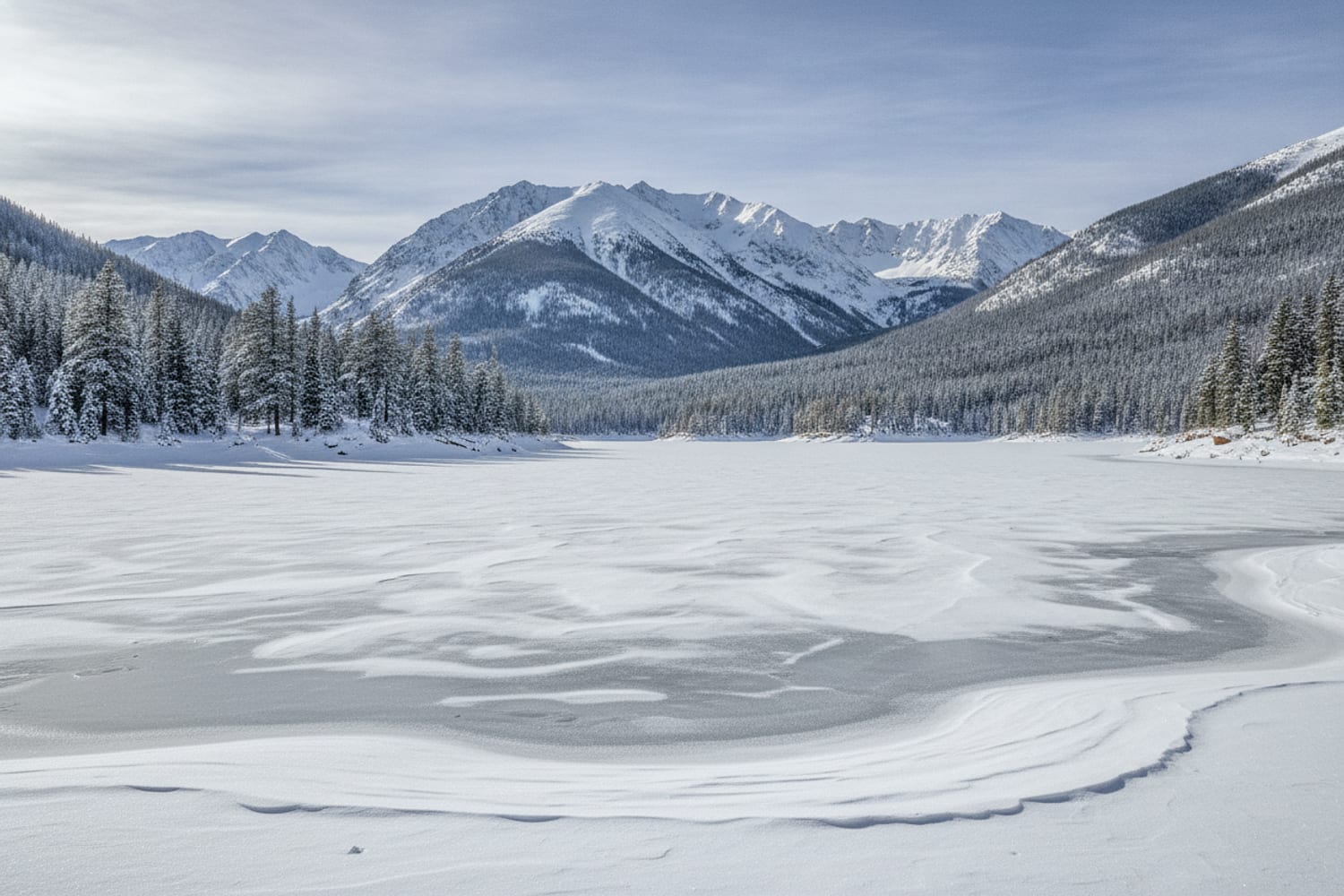
Eleven Mile Reservoir sits at 8,600 feet in South Park, about 80 minutes from Colorado Springs and roughly two hours from Denver. It’s managed by Colorado Parks & Wildlife as a premier trout fishery in summer, but the ice fishing season — typically December through February depending on conditions — is when the place really shines for people who know it.
Target species:
Rainbow trout are the primary target. Eleven Mile holds rainbows in the 14–24 inch range, with the occasional fish that will genuinely surprise you. They suspend at various depths through the water column — typically 15–30 feet in midwinter — and respond well to jigging presentations.
Kokanee salmon make Eleven Mile unique among Colorado ice fisheries. The reservoir has a strong kokanee population. In January and February, kokanee school tightly and can be found suspended in the 25–40 foot range. When you find them on the flasher, the fishing gets fast.
Northern pike hold in the shallower sections near the inlet and weed edges. A tip-up with a sucker minnow in 6–10 feet of water near the north end has produced some big pike in January and February.

Access and Parking
The main access is through the Eleven Mile State Park entrance off County Road 92, south of Lake George on Highway 24. There’s an entrance fee — either a day pass or Colorado Parks & Wildlife annual pass. The annual pass pays for itself in two or three visits.
In winter, the park maintains access to the main boat ramp and parking area on the south end of the reservoir. The parking lot stays plowed. There’s a pit toilet at the south end; expect it to be cold.
Drive distance from the parking lot to productive ice fishing water depends on where the best ice is. In a typical January, you can park and walk 200–400 yards to fishable water. Bring a sled for your gear — hauling an auger, a bucket, tip-ups, and a shelter by hand gets old quickly.
Ice thickness: Colorado Parks & Wildlife posts updates on reservoir conditions when available. Generally, Eleven Mile freezes hard enough for safe foot travel by late December in a normal winter, sometimes earlier. Check CPW’s website or call the park before your first trip of the season. Four inches is the minimum for foot travel; 8–12 inches supports snowmobiles and ATVs.
Best Spots on the Reservoir
South end flats (15–25 feet): The most accessible area and where most ice anglers set up. Consistent rainbow trout action in mid-depth water. Start here if you’re new to the reservoir.
The main basin (25–45 feet): Mid-reservoir deeper water is where the kokanee stack in January and February. If you’re marking fish but not getting bites in the shallows, move out toward deeper water and look for suspended marks at 25–40 feet.
North end shallows and inlet (6–15 feet): Pike country. Set tip-ups with live or dead sucker minnows in the weedy shallower sections. This area also produces rainbow trout early in the season before they move deeper with the cold.
The east bank drop-off: Where the shelf drops from 8 feet to 25+ feet. Both rainbows and kokanee cruise this edge. Set up on the drop and work both depths.
Regulations
Eleven Mile Reservoir has specific ice fishing regulations that differ from summer rules. Key points:
- Artificial lures and flies only in the Gold Medal section — confirm current boundaries with CPW
- Possession limits apply to species — check current kokanee and rainbow limits before the trip
- Live bait rules: check CPW for current bait regulations on the reservoir; rules have changed in recent years
- Ice fishing shelter rules: overnight shelter camping on the ice has specific regulations; day-use shelters are generally fine
The safest approach: download the current CPW Ice Fishing regulation supplement before you go. It’s updated annually and the reservoir-specific rules are clearly listed.
My take
For what it’s worth, my standard play here: skip the comfort of the south-flats crowd, set up over the east-bank drop, and treat the kokanee as the point of the trip rather than the bonus. Half the lakes in Colorado will trade you winter rainbows through a hole in the ice; almost nowhere else stacks schooling kokanee under you like this place does, and if I’m driving 80 minutes I want the thing I can’t get closer to home. The rainbows still show up on the same shelf anyway. That’s not a compromise — that’s the drop-off doing its job.
Setup and Tactics
For rainbow trout: I run a jigging rod — a 28-inch medium light with 4 lb fluorocarbon — with a small tungsten jig (1/32 to 1/16 oz) in pink, chartreuse, or white. A small piece of wax worm or PowerBait on the hook helps. Drop to bottom, come up 2–4 feet, and work a slow lift-and-drop jigging motion. Strikes typically come on the fall.
For kokanee: Smaller presentations. A size 8 jigging spoon or small tube jig tipped with corn. Kokanee are sight feeders and hit tiny bait. Find their depth on the flasher and stay right in their zone — they often won’t come up more than 2–3 feet for a bait.
For pike: Set tip-ups with a large shiner, sucker, or smelt in the shallow weedy areas. Use a wire leader — pike have teeth that will cut 20 lb mono like thread. Check tip-ups every 20–30 minutes.
What to Bring
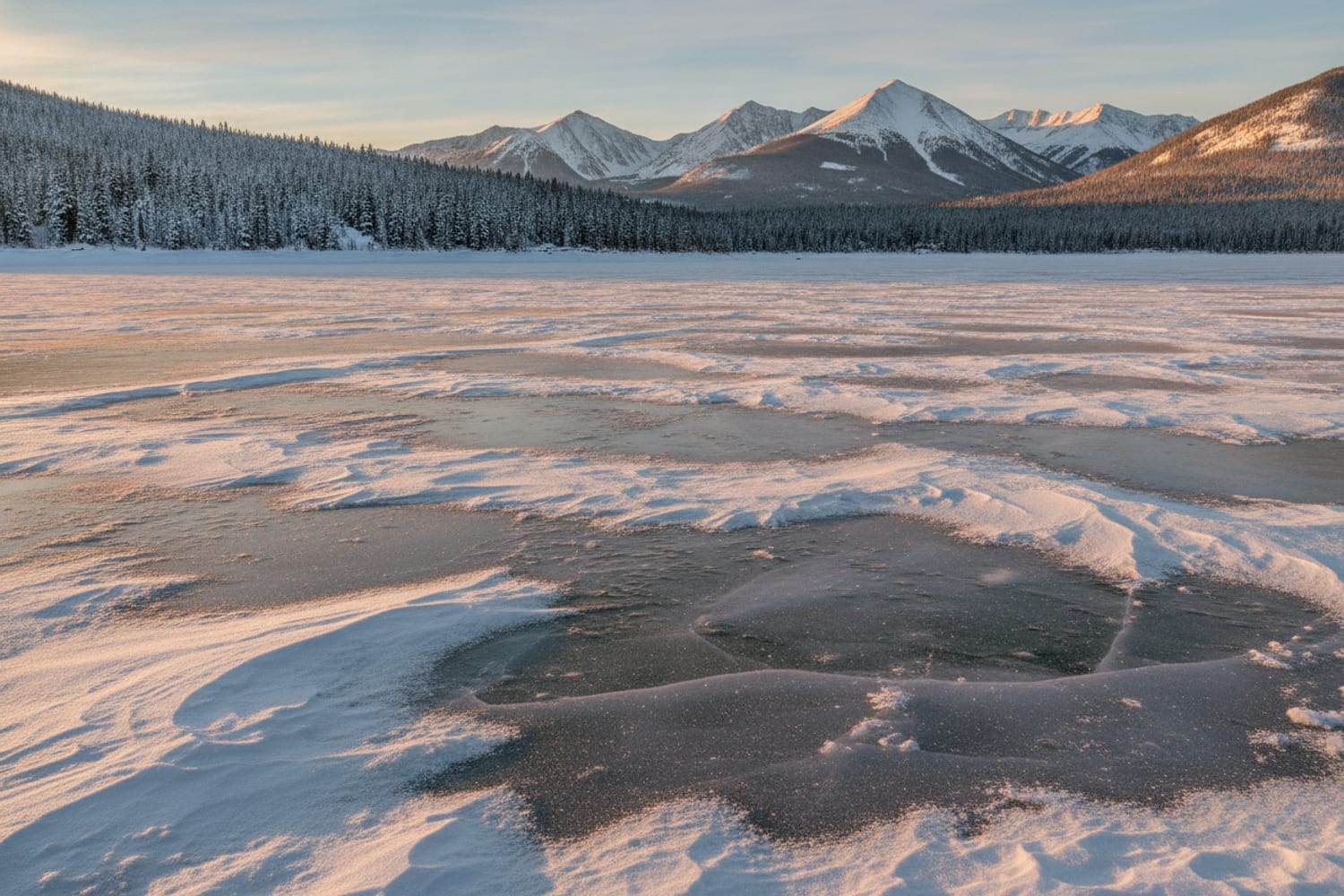
Eleven Mile at 8,600 feet in January is genuinely cold. Air temperatures of 5–15°F are normal; wind across the open lake amplifies that significantly. Dress for it or stay home — there’s no in-between, and the lake does not care how tough you think you are.
Essential gear:
- Quality auger (hand or power — I use a hand auger for 6-inch holes, works fine in 8–12 inches of ice)
- Portable shelter or at minimum a windbreak — exposure on open ice is real
- Ice skimmer for clearing holes
- Bucket with seat
- Hand warmers, multiple pairs
- Insulated boots rated to -20°F or colder
- Layered system: merino base, fleece mid, windproof outer
Electronics: A portable flasher or fish finder with an ice transducer changes the game at Eleven Mile. The kokanee fishing especially depends on finding fish at specific depths, and without electronics you’re guessing. A Vexilar or Humminbird Ice is worth the investment if you ice fish more than a few days a year.
The drive from Colorado Springs is about 80 minutes. Plan for an early start — first light on Eleven Mile in January is worth the alarm, and yes, you’ll question that the moment it goes off in the dark. Bring the coffee, drill the hole, and let the flasher do the convincing. If you’re planning a February trip when the kokanee bite peaks, the February ice fishing guide has the specific timing and tactics for that window.