
In this guide
January at Eleven Mile Reservoir is good. February is better. Every year around the first week of February, something shifts in the kokanee bite at Eleven Mile and the fishing goes from good to genuinely exceptional. I’ve made a handful of February trips over the years chasing that window, and so far the fish have been kind enough to keep proving me right.
I’ll be honest — most people hang up the auger in February because it’s cold and they assume the bite died with the holidays. Their loss is your elbow room. Here’s why February is the month to be at Eleven Mile and what actually changes about the fishing when it peaks.
If you only make one trip
February — specifically the second or third week — is the best ice fishing at Eleven Mile Reservoir: the kokanee settle in and suspend at 28–40 feet in the main basin, the weekend crowds have thinned, and 12–18 inches of solid ice makes most of the reservoir easy to work. Set up over 30–40 feet, drop a small silver Kastmaster spoon or a white/pink tube jig tipped with corn, and go on a weekday if you can. If you only make one ice trip all winter, this is the one.
Why February Is Different
By February, the ice at Eleven Mile has typically been solid for six to eight weeks. The fish have settled into their winter patterns and the baitfish — primarily the smelt and small kokanee fry that feed the predators — are stacked in predictable locations. The rainbows and larger kokanee have found their comfort zone depths and they’re not moving around looking for warmer water anymore. They’re right where you expect them.
The kokanee in February at Eleven Mile suspend at 28–40 feet in the main basin with remarkable consistency. Find that depth on your flasher and you’re looking at fish. The problem in January is that the kokanee are still moving between depths as the lake thermocline settles. By February, they’ve found their lane and they stay in it.
The other factor: pressure. Eleven Mile sees significant ice fishing pressure throughout the season. The crowds peak on weekends in January when the ice is fresh and everyone is excited. By mid-February, the weekend crowds have thinned and a weekday trip to Eleven Mile in February can feel like a private lake.

The Kokanee Bite in February
Eleven Mile’s kokanee are the open secret of Colorado ice fishing. Most ice anglers focus on rainbow trout because that’s what they know. The kokanee program at Eleven Mile in February is exceptional and underfished relative to the trout bite.
Finding them: Set up over 30–40 feet of water in the main basin, central to eastern sections of the reservoir. Drop your flasher transducer and look for suspended marks at 25–38 feet. When you see marks stacked tight in a depth band, that’s the kokanee school.
The presentation: Kokanee are sight feeders and they respond to very small, flashy presentations. A size 10–12 Kastmaster spoon in silver or a small tube jig in white or pink tipped with corn is the standard Eleven Mile kokanee setup. Lower to the school depth, let it settle, and work a very subtle 2–3 inch lift-and-drop. Kokanee hits are subtle — watch for the mark on your flasher rising to your jig, then a slight hesitation in your jig’s fall.
Why corn: I’ve fished corn alongside wax worm for kokanee at Eleven Mile and corn consistently outperforms. Kokanee naturally eat small crustaceans and planktonic organisms, and corn mimics that size and color profile better than wax worm does.
When the kokanee school is active, a two-rod setup (where regulations permit) with two different jig colors tells you quickly which presentation they prefer on a given day. They’ll switch preferences between morning and afternoon.
The Rainbow Trout Bite in February
The rainbow trout at Eleven Mile in February are in two places: suspended in the mid-column (15–25 feet) chasing baitfish, and cruising the drop-off edges between shallow and deep water.
The mid-column suspended fish are the most active. They’re chasing whatever’s available and a jigged tungsten jig in chartreuse or pink with a small wax worm or PowerBait piece will draw strikes. The key is working the full water column — start at 25 feet and work up to 10 feet, pausing every 3–4 feet. The rainbows tell you their depth when they hit.
Drop-off edge rainbows are more structure-oriented. Set up over the 15–20 foot drop along the reservoir’s eastern shelf and fish tight to bottom. A heavier jig (1/8 oz) dropped to bottom and slowly lifted 6 inches, paused, then dropped again. These fish are slower and more deliberate than suspended fish but they tend to be larger.
My take
Given one February day out here, I’m spending it as a kokanee snob: a weekday, the main basin, and the patience to let the flasher find the school before I commit to anything. The rainbows are the steadier bet and I’ll gladly take them, but the kokanee window is the thing this lake does better than almost anywhere in Colorado, and most of the crowd is parked over rainbow water anyway. Two rods down where the rules allow, two jig colors, a pocket full of corn, and no particular hurry. That’s my February.
Timing the February Day
The February bite at Eleven Mile has a clear pattern. First light through 9 AM is active — fish are feeding aggressively as the ice warms slightly from overnight cold. Activity slows from 10 AM to noon, which is when most casual ice fishers leave. The afternoon bite starts around 1 PM and runs through 4 PM as light angles change.
I almost always stay through the afternoon. The folks who pack it in at noon for the drive home miss the second feeding window — and I’ve eaten more than one cold sandwich watching them caravan off the ice right before things turned on. The fish at Eleven Mile in February don’t know what time it is, but they do respond to changing light angles.
Bring enough food and coffee for a full day. A thermos of hot coffee on the ice at Eleven Mile in February is not optional. It’s what keeps you fishing through the slow midday hours when you’d otherwise be tempted to pack up.
Ice Conditions in February
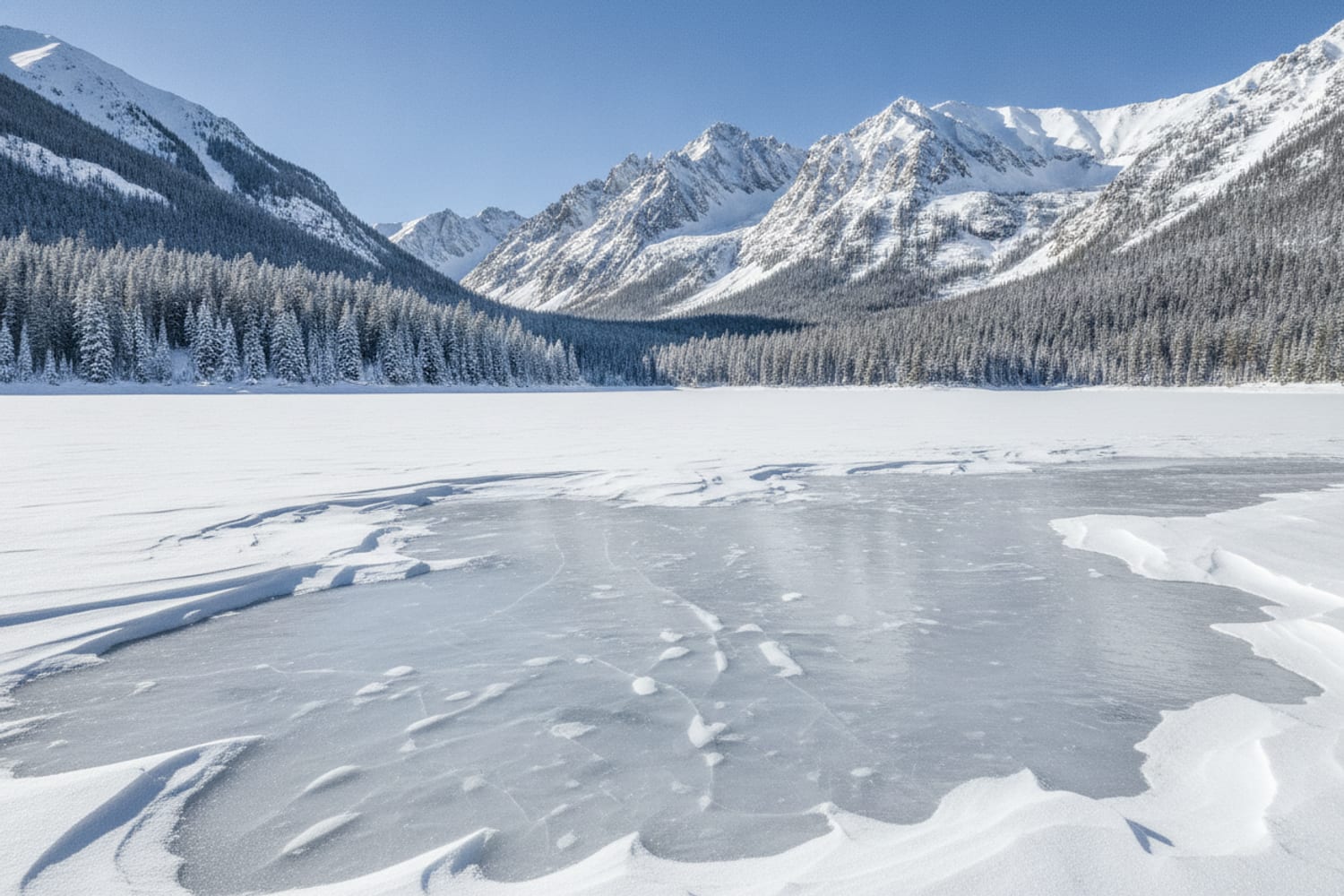
By February, Eleven Mile typically has 12–18 inches of solid ice across most of the fishable area. That’s more than adequate for foot traffic and sleds. The ice is usually rougher and more wind-swept than in January — snow blows off the exposed surface and the texture can be slick. Cleats on your boots or Yaktrax are valuable.
Watch the south end near the inlet creek. Ice at the inlet end can be thinner than the main basin due to flowing water underneath. Stay away from the inlet area, especially in a warm-spell February when temperatures have been in the 40s. The rest of the reservoir is generally safe when the main basin ice is 10+ inches.
Check ice thickness at multiple points as you move away from the parking area. A chisel or hand auger works for spot-checking; drill a test hole before committing to a new area. The state park posts ice condition updates when they have information; call the park before your trip.
February vs. January — The Short Version
January is when you show up, get the lay of the reservoir, and figure out where the fish are holding. February is when you exploit what you learned. The ice is better, the fish are more settled, the crowds are lighter, and the kokanee bite specifically is at its peak. If you can only make one ice fishing trip to Eleven Mile per winter, make it the second or third week of February.

The season closes when the ice becomes unsafe — typically early to mid-March at Eleven Mile, sometimes later in a cold winter. By then the ice fishing has usually given way to the anticipation of the spring fly fishing season on the South Platte below. Two very different fisheries, same state, same county — and I’ll happily fish both, which tells you everything about how I budget my weekends. That’s what makes South Park worth the drive any time of year. For the full ice fishing gear list for Eleven Mile’s cold South Park conditions, the Eleven Mile ice fishing gear guide covers what to bring and why.