
In this guide
Picture a South Platte tailout at dusk in June: caddis coming off in clouds, trout working the film like they’re getting paid by the bug, and an angler on the bank with four dry-fly boxes open, feeding the pod every Elk Hair Caddis he owns. The fish ignore all of them with the patience of trout that have seen a thousand.
The bug they want isn’t on top. It’s an inch under, swimming up.
A soft hackle wet fly is the answer most anglers on Cheesman and Deckers never tie on. During the South Platte caddis hatch — when Spotted Sedge (Hydropsyche) pupae ascend through the water column, heaviest in the evening — a swung or dead-drifted soft hackle in #14–18 puts your fly exactly where the eating happens, instead of two inches above it where most dries end up.
Why Soft Hackles Work During the Caddis Emergence
Caddis have complete metamorphosis: larva, pupa, adult. The pupa is the critical stage. After spending weeks in a case or net on the streambed, the mature pupa seals its case, absorbs gas beneath its shuck, and rockets toward the surface. That ascent — fast, erratic, pulling toward the film — is what a swung soft hackle imitates at a mechanical level.
When you cast across current and let tension build on the line, the fly swings in an arc and rises through the column. That’s what the natural does. The soft, webby hackle fibers — partridge, starling, hen — pulse with every micro-current variation in a way no stiff dry-fly hackle ever will. Sylvester Nemes made this his life’s argument when he revived the North Country spider tradition in the 1970s: movement beats detail. A scruffy fly with two turns of partridge looks more alive than a perfect exact-imitation that just sits there.
Which is humbling for anyone who has spent twenty minutes on a perfect exact-imitation.
On tailwaters this matters even more. The fish in Cheesman and Deckers are educated, and pressured hard. But in the film and just below it, during an active emergence, they stop analyzing — they’re eating ascending pupae by the dozen, and a fly that moves like one gets eaten before they think too hard about it.
The Four Foundational Soft Hackle Patterns for South Platte Caddis
These are the four worth carrying in June. You don’t need a fifth. Sizes #14–18 cover the range of caddis you’ll meet on the tailwaters — size down toward #18 for clear, low-flow Cheesman; size up toward #14 in faster Deckers pocket water or when flows are elevated.
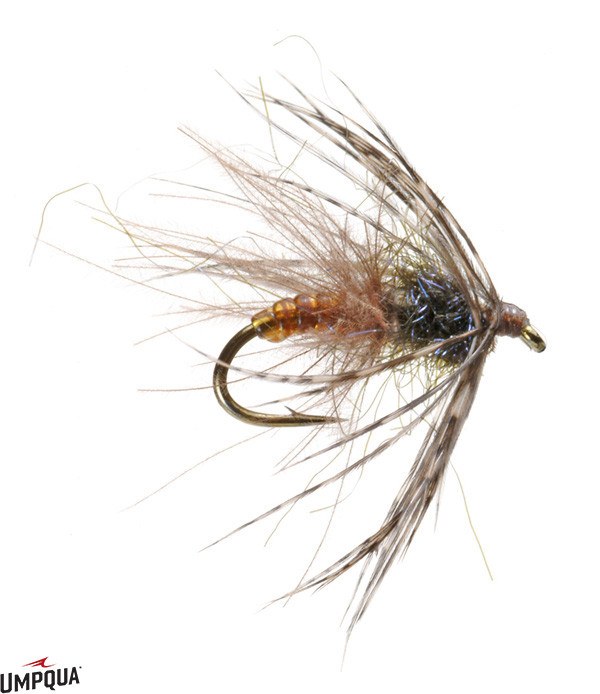
Partridge and Orange The oldest one, and still the one to tie on first. Orange floss or silk body, a couple turns of gray partridge hackle at the head. The orange reads as a caddis-pupa body in almost any light. Fish it #16 as your default and drop to #18 in clear, flat tailout water. This is the fly Nemes brought back to American anglers from the Yorkshire spider tradition, and it routinely outfishes flies that take ten times as long to tie.
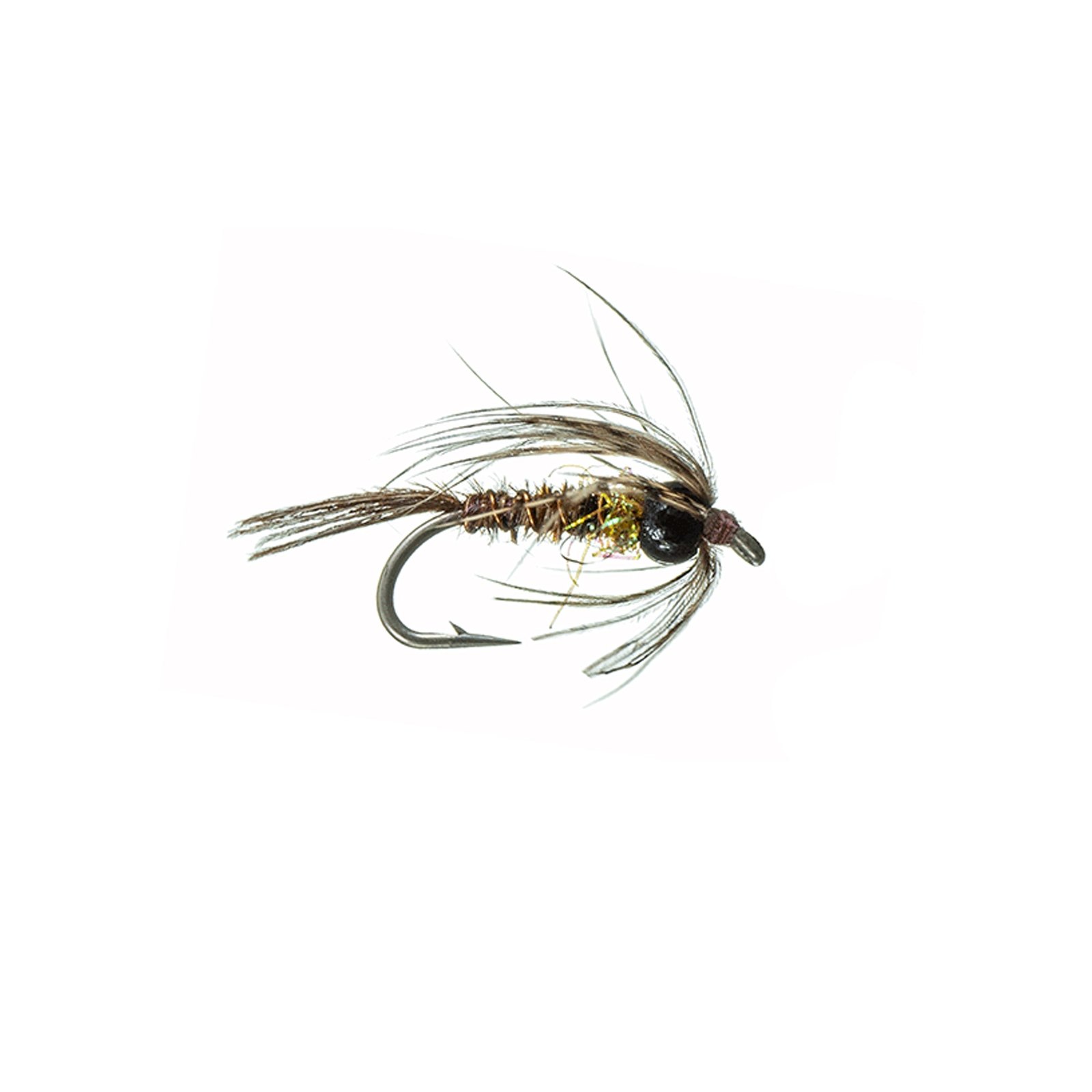
Starling and Herl Peacock herl body, starling hackle. Peacock herl is one of those materials trout find irresistible — there’s iridescence built into every fiber that synthetic materials haven’t replicated. The starling hackle is finer and softer than partridge, which makes it better in smaller sizes. Tie this in #16–18 and fish it when you’re not sure whether fish are keyed on caddis or midges — it bridges both well.
March Brown Spider Brown floss or fine dubbing body, brown partridge hackle. Runs a little larger — #14–16 — and works well in Deckers pocket water where fish are holding in faster current and need to decide quickly. The brown matches Hydropsyche pupae more closely than the orange variants. Good choice for early June when flows are still on the higher side.
CDC Soft Hackle A more modern variation: a body of fine dubbing (olive or tan), a loop of CDC fiber as the hackle, sometimes a small bead head. The CDC traps micro-bubbles the same way a rising pupa traps gas beneath its shuck. This one fishes especially well dead-drift rather than swung — more on that below. CDC soft hackles in #16–18 are a strong choice on Cheesman evenings when fish are sipping just under the film and refusing the dry.
Tying Soft Hackles for Tailwater Proportions
The traditional North Country spider is tied sparse. That’s not laziness — it’s the point. (It’s also the most forgiving kind of tying there is, which is good news for anyone whose vise skills peak around two turns of hackle.) On freestone water that moves fast, a fatter fly works fine. On Cheesman’s glassy pools and Deckers’ slower tailouts, sparse is mandatory. Here’s how to think about proportions for tailwater soft hackles:
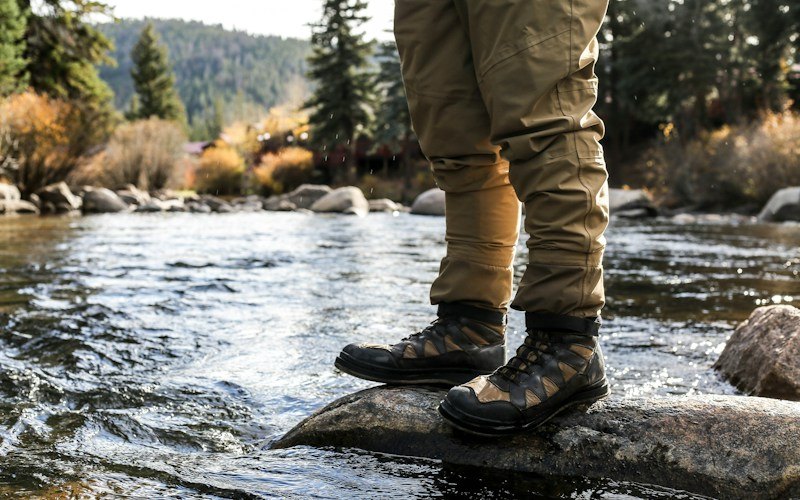
Hook: A standard wet-fly hook, slightly heavier wire than a dry-fly hook, with a wider gape, in #14–18. Pinch the barb — penetration on a light wet-fly take is better without the barb fighting you, and several South Platte stretches require it anyway. Check the current CPW regulations for the water you’re fishing at cpw.state.co.us.
Thread: 8/0 or finer. The body on most of these patterns is just the thread or a single layer of floss/herl over bare thread. Don’t build up bulk.
Body: One layer. On the Partridge and Orange, two or three wraps of orange floss over a thread base. On the Starling and Herl, three to four wraps of peacock herl twisted around the thread for durability. The body should be slim enough that you can see the hook bend through it.
Hackle: Two turns maximum. This is where most people over-dress. Two turns of partridge or starling hackle gives you legs; four turns gives you a pom-pom. The fibers should reach just past the hook point. Fold the hackle fibers back after winding and use a thread collar to push them slightly rearward — they’ll flare and breathe in current instead of collapsing.
Head: Small, tight, finished. The thread head is part of the anatomy on a classic soft hackle. Keep it clean.
For the CDC soft hackle, loop a small bunch of CDC fibers around the thread at the head and pull them even before whip-finishing. The CDC will splay naturally in the water.
How to Fish the Swing in Pocket Water and Tailouts
There are two distinct presentations to know: the wet fly swing, and the dead-drift with a swing finish. They’re different techniques for different water types, and you’ll use both in an evening.
The Wet Fly Swing — Pocket Water and Riffle Seams
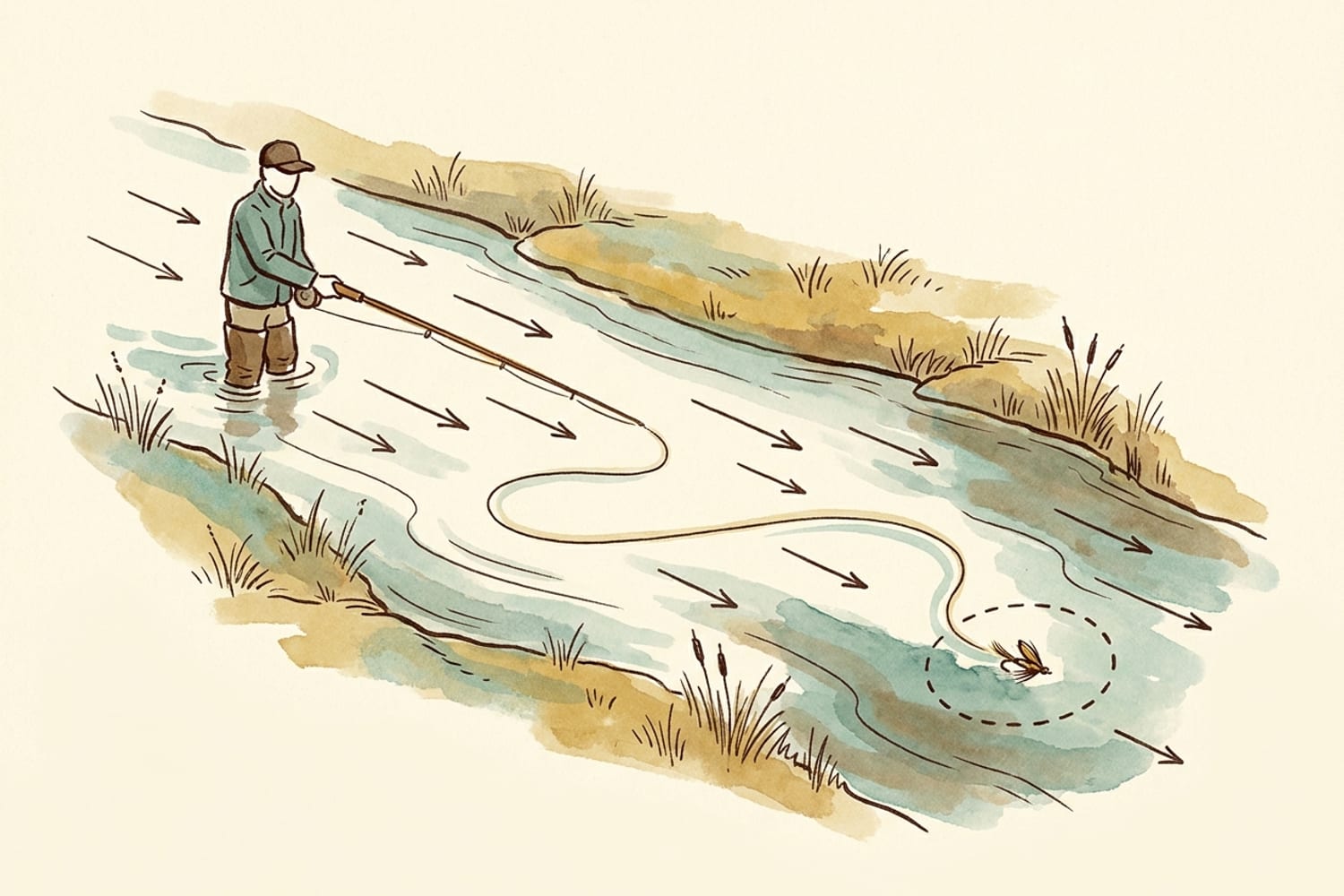
This is the foundational move. In Deckers’ broken pocket water, position yourself at the upstream edge of a riffle or at the head of a run. Cast across and slightly downstream — roughly 45 degrees off your downstream bank. Let the fly sink for a two-count, then hold the rod at about 45 degrees off the water and let the current do the work. The fly will arc through the seam and hang below you. Strikes happen throughout the swing but concentrate at two moments: when the fly first reaches the seam and begins to tension up, and at the hang — when it’s directly downstream and rising. Hold there for five to ten seconds before picking up.
Don’t add action. The current is animating the hackle. Your only job is to feed or check line to control swing speed. In fast water, a downstream mend right after the cast slows the swing so the fly has time to sink and cross the seam instead of blowing through it in two seconds. In slower tailout water, skip the mend — let it tension immediately and swing tight.
The hardest part is doing nothing. The take comes as a slow, heavy pull, and the instinct is to set hard the way you would on a nymph. Don’t. The fish has usually turned with the fly and hooked itself; a violent set just pulls it out of a soft mouth. A wet-fly trout set like a nymph take tends to end up in the trees behind you, or at least its lip does. Let the line come tight, then lift.
The Dead-Drift with Swing Finish — Evening Tailouts
This is the technique for those Cheesman evenings when fish are clearly working in the film but ignoring the dry fly. Cast upstream and across, same as you would a dry, but use a slightly heavier tippet — 4X or 5X — because the hookset on a swinging take is downstream and you’ll lose fish on 6X. Mend immediately to get a drag-free drift as the fly sinks into the column. When the fly reaches the trout’s position, stop mending and let it swing. The combination of a natural drift through the feeding lane followed by that rising swing at the end mimics the complete pupa behavior — ascending from the bottom, reaching the film, rising through it.
The tippet setup matters here. A 9-foot leader tapered to 5X covers most soft hackle work. If you’re fishing the CDC soft hackle dead-drift on Cheesman’s flat water, drop to 5X or 6X fluorocarbon. You want enough diameter to turn the fly over without creating excessive drag, but light enough that the hackle has room to move.
| Pattern | Size | Water Type | Method | Tippet |
|---|---|---|---|---|
| Partridge & Orange | #16–18 | Tailouts, slow seams | Dead-drift / swing | 5X–6X |
| Starling & Herl | #16–18 | Moderate runs | Swing | 5X |
| March Brown Spider | #14–16 | Pocket water, riffles | Swing | 4X–5X |
| CDC Soft Hackle | #16–18 | Flat pools, evening film | Dead-drift / swing | 5X–6X |
My take
A #16 Partridge and Orange is the best value in a June box — a few wraps of floss, two turns of partridge, and it gets eaten in water where carefully chosen dries get audited. The leverage is the point: almost nobody on this river swings a wet fly, so wary fish get shown something that moves like a living pupa instead. I’d tie it on at the first bulge rather than after the dries have failed, because the fish are telling you where they’re eating. An out-of-fashion fly on pressured water is its own kind of secret weapon.
What Time Does the June Caddis Hatch Happen on the South Platte?
Caddis activity builds through the late afternoon and runs into dark in June — be on the water by mid-afternoon, with the prime evening window from about 4 p.m. until you can’t see your fly anymore. The subsurface pupa game is best in that last couple of hours as the emergence peaks and the adults start showing on top. When tan or olive adults are fluttering off the water and fish start working the film, switch to the soft hackle. The South Platte hatch calendar shows how the caddis window stacks up against the PMD and BWO activity at each section.
So plan your evening around it. Driving up after work and rigging in a hurry often just buys you an hour of skipping rocks until the light gets low and the bugs finally decide to show — they keep their own schedule, not yours.
The bulge is the tell. A trout bulging just under the surface — a hump of water with no visible mouth — is eating pupae in the film or just below it. That’s a soft-hackle situation. A trout with its nose fully out is more likely on adults or film emergers; try the X-Caddis or the LaFontaine Sparkle Pupa first, then the CDC soft hackle if they won’t commit.
In Cheesman Canyon, the tailouts below the major pools are the prime soft hackle water. Fish hold there at the lip, intercepting pupae as they slow before the surface. Work those zones with the dead-drift/swing combo and you’ll find fish that the angler fishing dries upstream is not touching.
At Deckers, the riffle complexes between pools are where the swing shines. You can cover a lot of water methodically, stepping downstream after each swing series, and contact fish throughout the column rather than waiting for surface activity to locate them.
On the Dream Stream’s meadow water, the soft hackle dead-drift in the slow bends is underutilized. The current is gentle enough that a swung fly moves very slowly — which is actually perfect for a CDC soft hackle fished downstream with minimal tension, letting it hang and pulse in the slow water.
Gear Notes
A 9-foot 5-weight is the right rod for this. You need enough length to mend without disturbing the fly and a tip with enough feel for the subtle takes on a downstream swing — soft hackle takes are often a light pull rather than a violent strike. A standard weight-forward floating line is all you need. No need for a sinking tip in tailwater conditions at June flows.
For the leader, 9 feet tapered to 5X handles most soft hackle situations. You’re not throwing tiny flies and you need the strength for downstream hooksets. Add a tippet section of 18–24 inches of fluorocarbon to get the fly to sink without adding split shot — the fluorocarbon sinks faster than mono and keeps the rig simple.
Skip split shot on soft-hackle rigs in most tailwater conditions. The swing works because the fly is relatively unweighted and rises naturally through the column — pin it to the bottom with a couple of BBs and you’ve just built a clumsy nymph rig. If you’re in deeper pocket water and need to get down, a small bead on the fly is fine — a bead-head March Brown Spider is a legitimate pattern — but keep it small. You want the fly to move, not plow the gravel.
Frequently Asked Questions
Q: What size soft hackle should I use for June caddis on the South Platte? Size #16 is the default for most South Platte tailwater conditions in June. Drop to #18 in low, clear water at Cheesman Canyon or when fish are visibly selective. Go to #14 in faster pocket water at Deckers or during higher flow periods when Hydropsyche are active.
Q: How do I know when to swing vs. dead-drift a soft hackle wet fly? Swing it in riffle and pocket water where current does the work of animating the fly. Dead-drift it in slow tailouts and flat pools, especially during evening caddis activity when fish are bulging just under the film. The most effective approach in tailouts is a dead-drift followed by a controlled swing at the end of the presentation.
Q: What tippet should I use for soft hackle wet flies? 5X fluorocarbon for most soft hackle work — it’s heavy enough to turn the fly over and hold on downstream hooksets, and it sinks faster than mono which helps get the fly into the column without split shot. Drop to 6X only for CDC soft hackles fished dead-drift on flat, clear water where the lighter tippet is necessary for natural drift.
Q: Can I euro nymph a soft hackle wet fly? Yes, and it works well in deeper runs and pocket water. Hang the soft hackle as the top dropper on a tight-line rig and let a heavier anchor fly carry it down — for me that anchor is usually an Olsen Blowtorch (the Devin Olsen variant, orange tag for stained water, green for clear), which gets the rig to the fish and tends to do plenty of catching itself. You lose the classic swing but gain depth control and direct contact with subtle takes. On technical tailwater fish that won’t chase a swung fly, it’s a legitimate option.
Bottom line
The dry fly gets the glory during caddis season, but the pupa in the column is where the eating actually happens. Tie a dozen Partridge and Oranges in #16, throw a few Starling and Herl and CDC variants in the box, and spend the next June evening swinging the tailouts instead of cycling through dry patterns. The fish are usually a couple of inches lower than your fly. Stop arguing with them about it and June gets a lot more fun.
If you want the whole picture — when the bugs come off, where to stand, and what to throw on top when the fish finally commit to the surface — read the South Platte caddis hatch guide next.