
In this review
I split my season about evenly between a 10’7” Diamondback euro 3-weight and a 5-weight on a regular line — a rod with all the romance of a tent pole — and when the wind comes up and the drift is everything, I reach for fast graphite without a flicker of guilt. So when a 7’6” piece of split cane came out of the tube, my honest first thought was that it looked too nice to take anywhere near a river. Beautiful work — the kind of object you catch yourself just looking at. I genuinely wasn’t sure it belonged on technical tailwater, where the wind comes up most afternoons and I’m usually in a hurry.
I’ll say the quiet part out loud: I went in a skeptic. To a lot of us who came up on graphite, bamboo reads like a costume — the fly-rod equivalent of buying a fountain pen to write your grocery list. So the only question worth a review is the blunt one: does the Headwaters Gallatin actually fish a technical Colorado tailwater, or is it a pretty thing you hang over the fireplace and quietly lie about using? A few afternoons at Deckers settled it. Spoiler: I owe the rod an apology.
What it is, up front
Here’s the spec sheet, so we both know what we’re talking about before I get sentimental about a fishing rod:
- Rod: Headwaters Gallatin — 7’6”, 4-weight, medium action, Payne 100 taper, 2-piece. The Deluxe ships a spare second tip, and you rotate them — cane, like the rest of us, takes a set if it sits in one position too long.
- Cane: genuine hand-split, hand-planed Tonkin bamboo, blonde (honey-toned) finish.
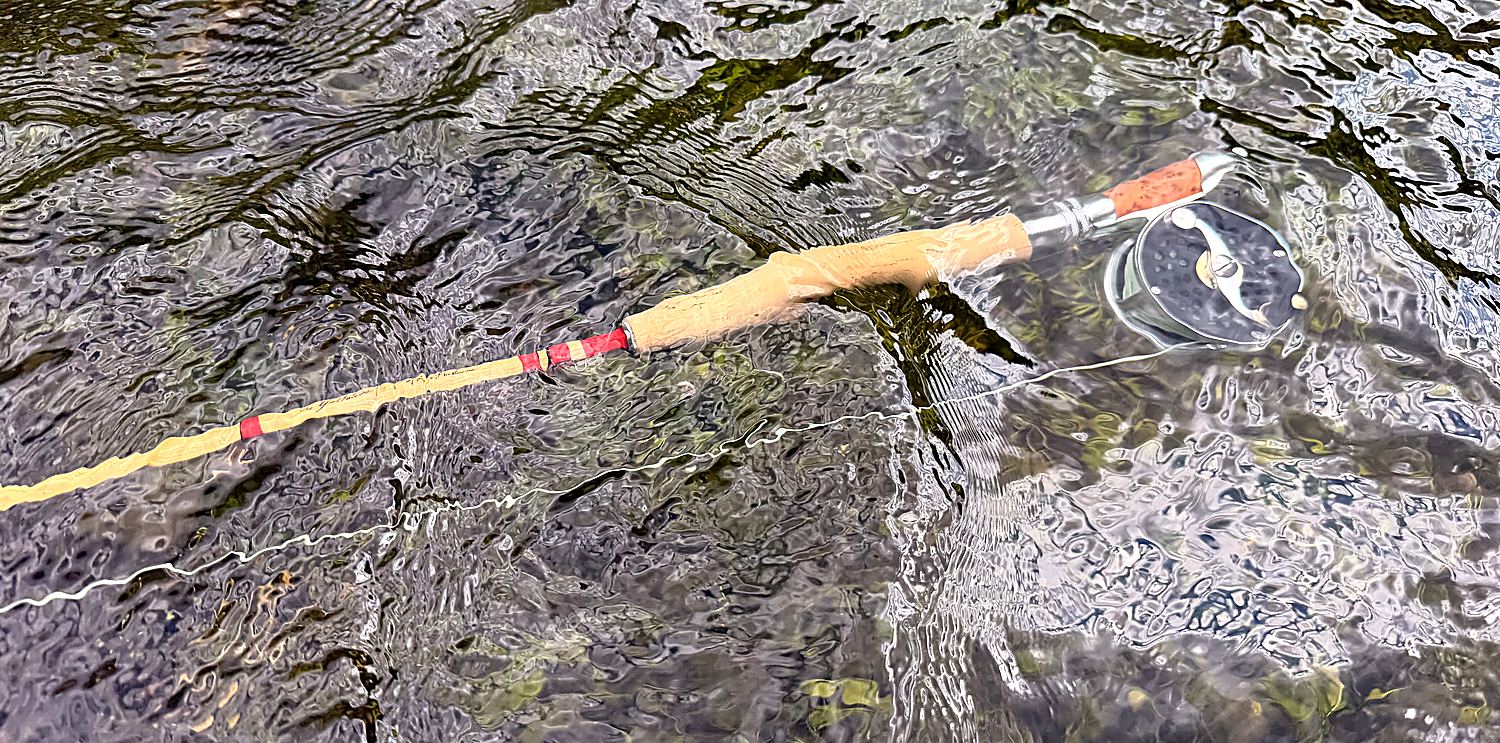
- Appointments: red agate stripping guide, deep burgundy wraps with a black tip, a downlocking knurled reel seat over a stabilized burled-maple insert, fine cork grip, Cordura tube and sock.
- Reel/line (separate bundle): the Clark Fork 2.5 click-and-pawl reel (machined 6061 aluminum, 2.8 oz, ambidextrous — mine’s set for right-hand retrieve) with a matched 4-weight floating line, backing, leader, tippet, and flies.
- Price: Favorite (1 tip) $500 · Deluxe (2 tips) $600. The Clark Fork 2.5 reel is a rod-purchase add-on at $137.50, half its $275 standalone price.
- Award: Into Fly Fishing named Headwaters Best Affordable Bamboo Fly Rod 2026 — the maker and its Deluxe series, not this model on its own, so don’t let me sell you a trophy that isn’t the rod’s. It still tells you something that “affordable” and “bamboo” ended up in the same sentence at all.
Why “affordable bamboo” can even exist
Here’s the part that matters, and it’s the honest one. Bench-built cane from a named maker starts around $1,450 and runs well past $4,000 — the kind of rod you commission, forget you ordered, and get a phone call about two birthdays later. (Why cane costs what it does is its own rabbit hole: the culm, the waste rate, the hours.) The Gallatin starts at $500, a catalog rod you order and fish, not a custom build with a years-long wait. That gap isn’t magic — it’s the model. Headwaters is an Idaho-based, direct-to-consumer outfit (no dealers, no middlemen), and the rods are built overseas, by artisan workshops in China that have made cane for them for over two decades. That’s not a knock — it’s why a working angler can own real split-cane for the price of a mid-tier graphite rod. I’d rather tell you that straight than dress it up in heritage and a markup.
The Payne 100, and what your money buys
A bamboo rod is really just a taper — a table of dimensions at every inch — reassembled in cane. The Gallatin rides the Payne 100, a genuine classic from the Payne lineage, a name that’s meant smooth, presentation-first trout rods for about a century. Headwaters calls the 100 the versatile one. Set against the Payne 98 — the finer, fine-tippet specialist — the 100, in their words, “loads a half-step quicker than the 98 and carries line a little further, without losing the presentation qualities that made Payne’s tapers famous.” I won’t pretend I can read a taper chart like sheet music. What I can tell you is what it does in the hand: medium action, with a soft tip that flexes right down into the cork.
The craft underneath it is real — a single culm of Tonkin split into strips, each hand-planed to tolerances measured in thousandths, six wedges glued back into a hexagon so the dense power fibers ride the outside where the bending stress lives. And yes, cane is heavier than graphite. That’s physics — a solid fiber beam versus a hollow carbon tube — not a defect. I’ll admit I went in braced for the dreaded cane heft, waiting for my forearm to file a complaint around hour three. It never did. A full day at Deckers and I never once thought about the weight. Turns out the number on a spec sheet and what your arm actually notices are two different animals.
Does the Gallatin actually fish a technical tailwater?
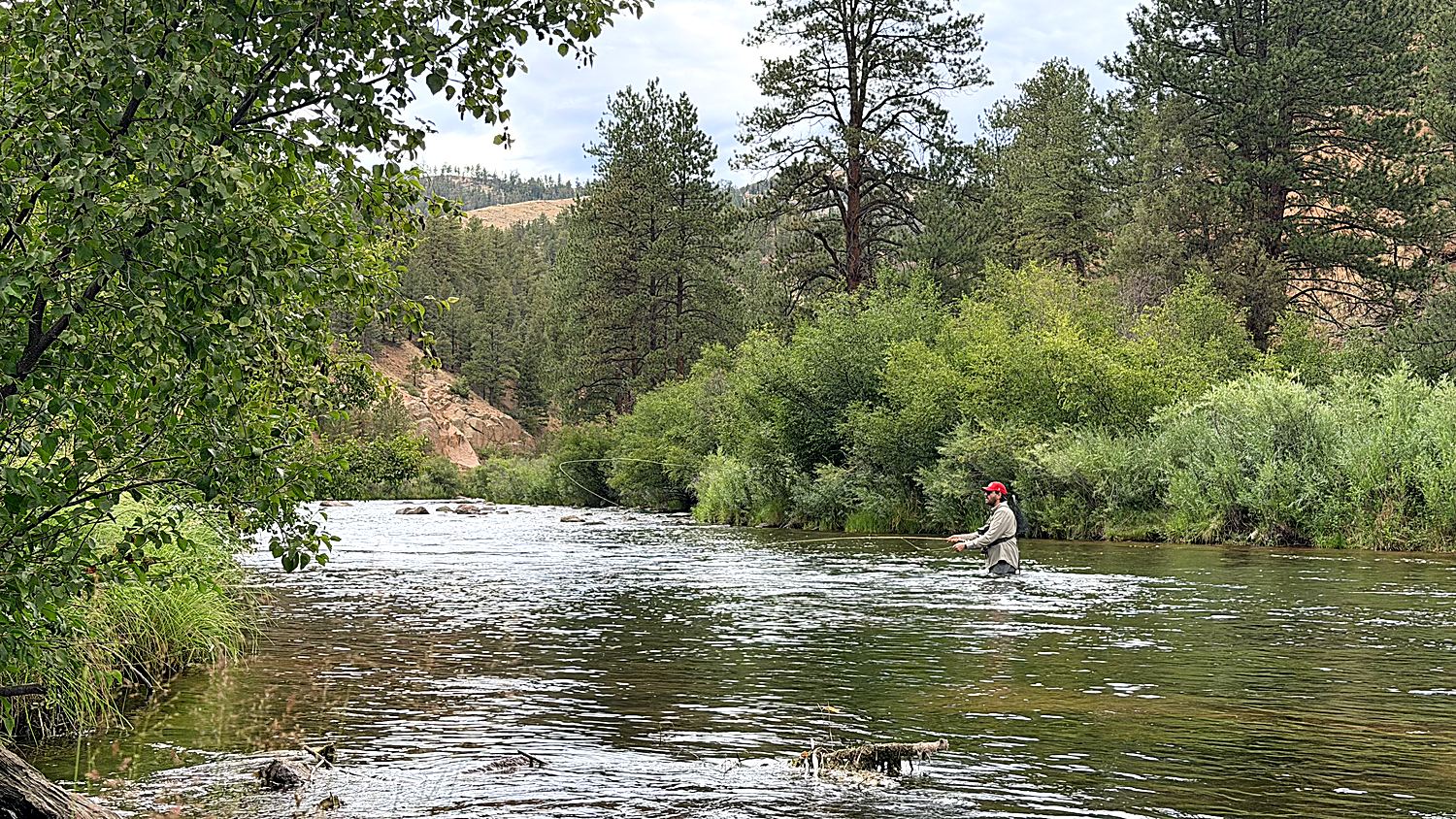
Yes — inside its range. Under about 35 feet, on a dry fly, on light tippet, it fishes as well as anything I own, and it protects fine tippet better than my graphite does. Outside that range it stops being the right tool and stops pretending otherwise. Here’s the afternoon that settled it.
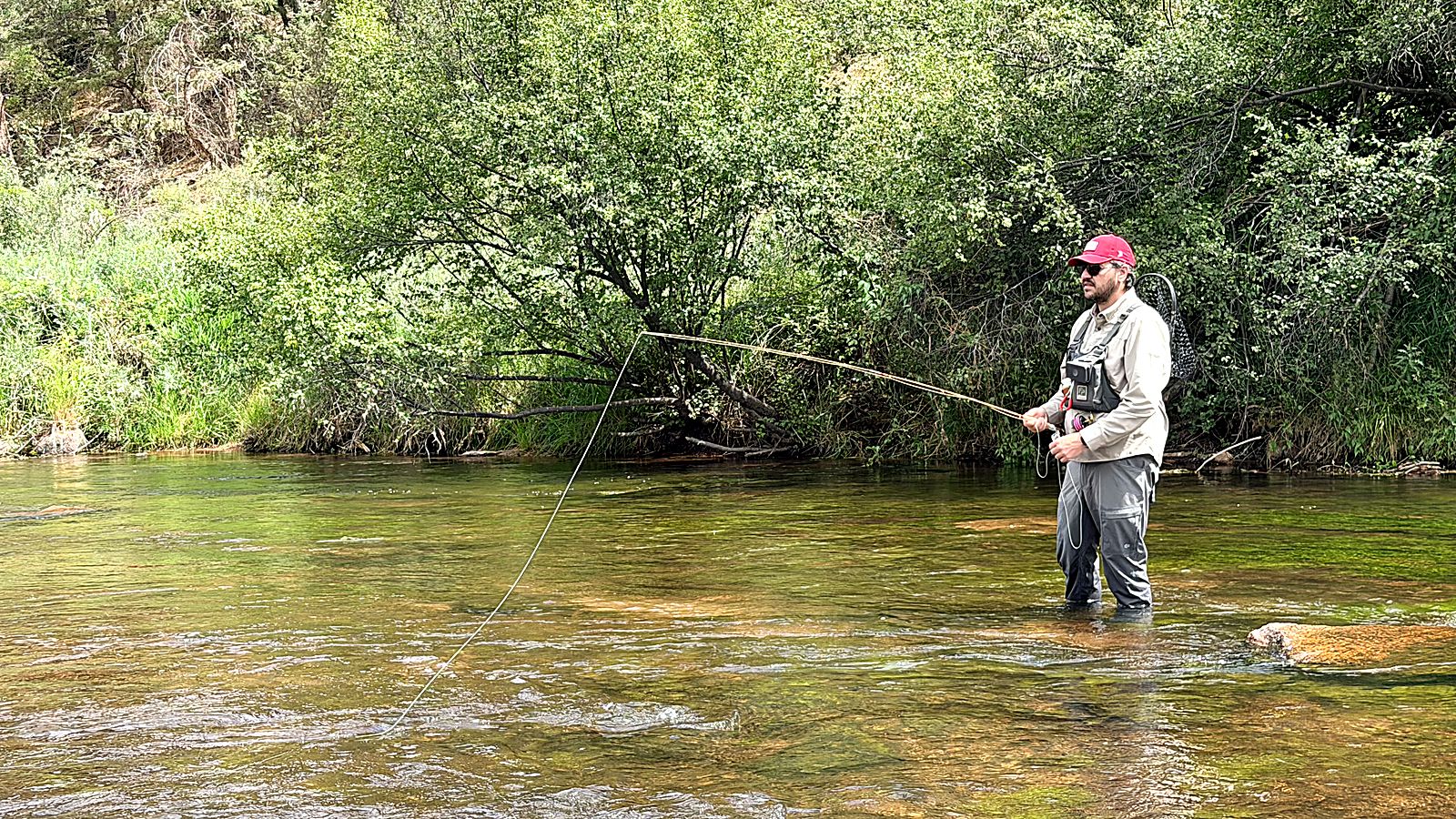
I took it to Deckers on a caddis afternoon — the South Platte doing its thing, bugs coming off the water, fish finally looking up instead of glued to the bottom the way they’d been all spring. With caddis in the air the obvious first call was an Elk Hair Caddis (here’s what the Platte’s caddis do and when); I worked a Parachute Adams alongside it as the generalist and kept a small Chubby in the rotation as the change-up. The rod did the thing soft cane is supposed to do: it set the fly down like it was placing it on a shelf. At the range where dry-fly fishing actually happens — call it 20 to 35 feet — it’s accurate, and it’s gentle enough that you’re not slapping your line down and putting every fish in the pool on notice.
And it put fish in the net, which is the part I actually cared about: two browns and three rainbows, all on the dry, everything running 12 to 14 inches except the best fish of the day — a 16-inch brown that ate the Chubby, which was the biggest and least subtle thing I had on the water all afternoon. The other brown took the Elk Hair Caddis, and the rainbows split between the caddis and the Parachute. The Elk Hair was the only fly that got both species to commit, which on an afternoon with caddis coming off is the least surprising sentence in this review. That soft tip the cane crowd won’t shut up about? It’s real. When a rainbow eats and bolts for the next zip code, the whole rod bends down with it and cushions the light tippet instead of popping it off. You feel everything — the load, the take, the head-shakes telegraphing straight up the blank into your hand. Nothing’s muffled the way it can be through a fast graphite stick.
Then there’s the thing I didn’t expect, and it’s the heart of this whole review: the rod has a soul, and it slows you down.
I know how that sounds. I’d have rolled my eyes at it too, a month ago. But a fast graphite rod lets you cast without thinking — you can be sloppy at speed and the rod will cover for you. Cane won’t. It has no interest in covering for me, and the first twenty minutes were a fairly public accounting of every bad habit I’ve picked up on graphite. It makes you wait for the load, and waiting for the load means you have to actually pay attention to what you’re doing. That’s the whole difference: on graphite I’m doing, and on this rod I’m thinking about what I’m doing.
And it’s not slow the way a bad rod is slow. It’s precise. It’s quiet — no crack, no hiss, just the line going where you sent it. Everything about it feels deliberate, which turns out to be the point rather than the price.
It’s completely different from a modern rod, and I don’t mean that as a specification. I mean it changes the afternoon. It hands you back the time to enjoy the thing you drove an hour up the canyon to do, instead of grinding through it. It turned an ordinary afternoon into one I still think about. I came up the canyon a skeptic and walked back to the truck grinning like an idiot.
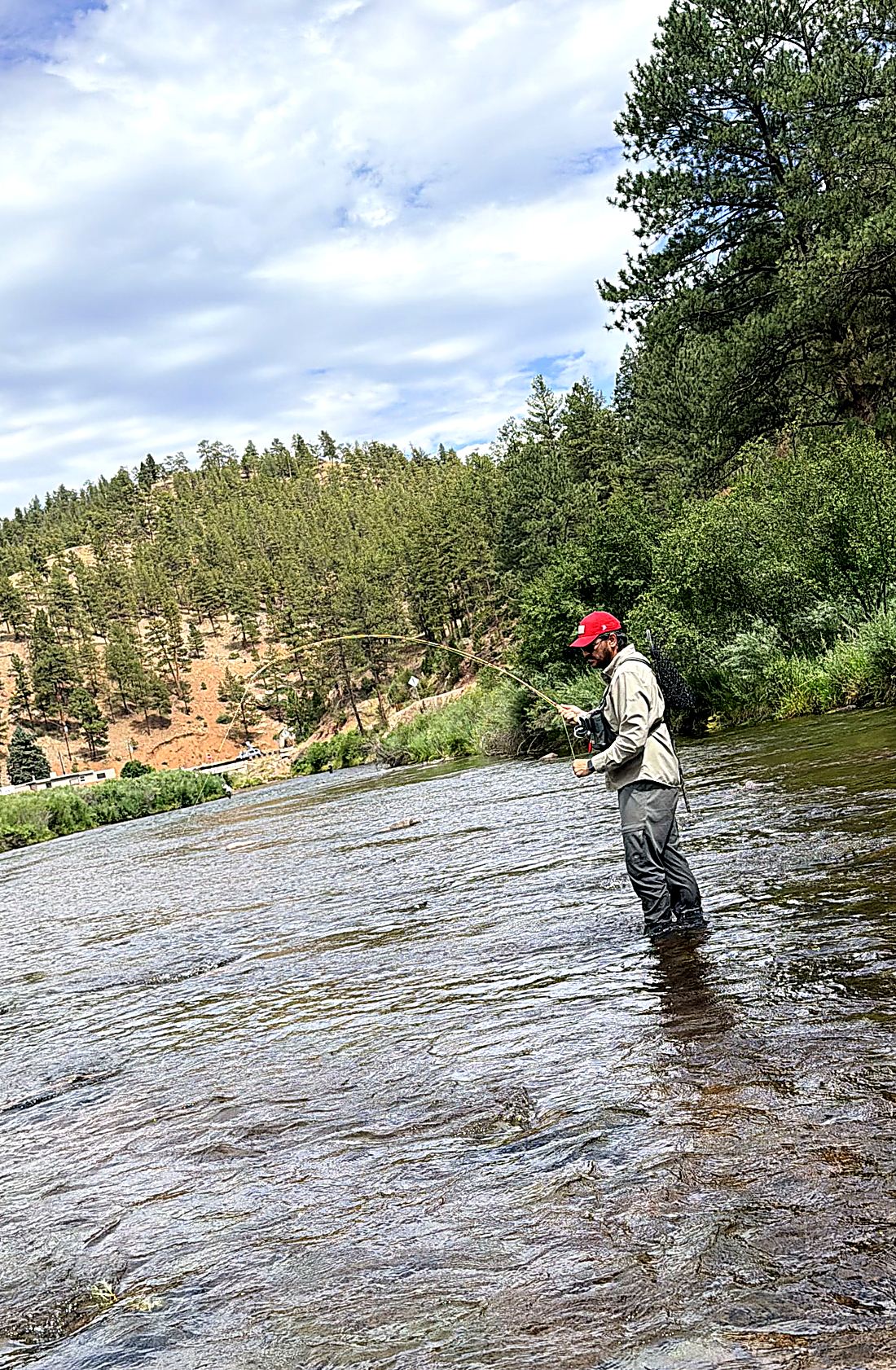
It’s not all magic, and I’m not going to pretend it is. When I wanted to reach all the way across the river, the Gallatin politely tapped out. Distance is the honest ceiling here. This is a short-to-mid-range tool, and asking it to bomb a long line is asking a jazz trio to play stadium rock — wrong instrument, wrong room.
The wind, though, surprised me. I had it pegged as the thing that would embarrass this rod, and it handled a breezy Platte afternoon better than I expected it to — not a wind rod, but not the wet noodle I’d braced for either. I’d budgeted a whole paragraph of complaining and never got to use it.
Cane vs. my graphite
This is the comparison everybody actually wants, so here’s the honest fit-to-purpose version, stacked against what I normally fish — the Scott Centric, the Winston Pure 2, and the euro rig.
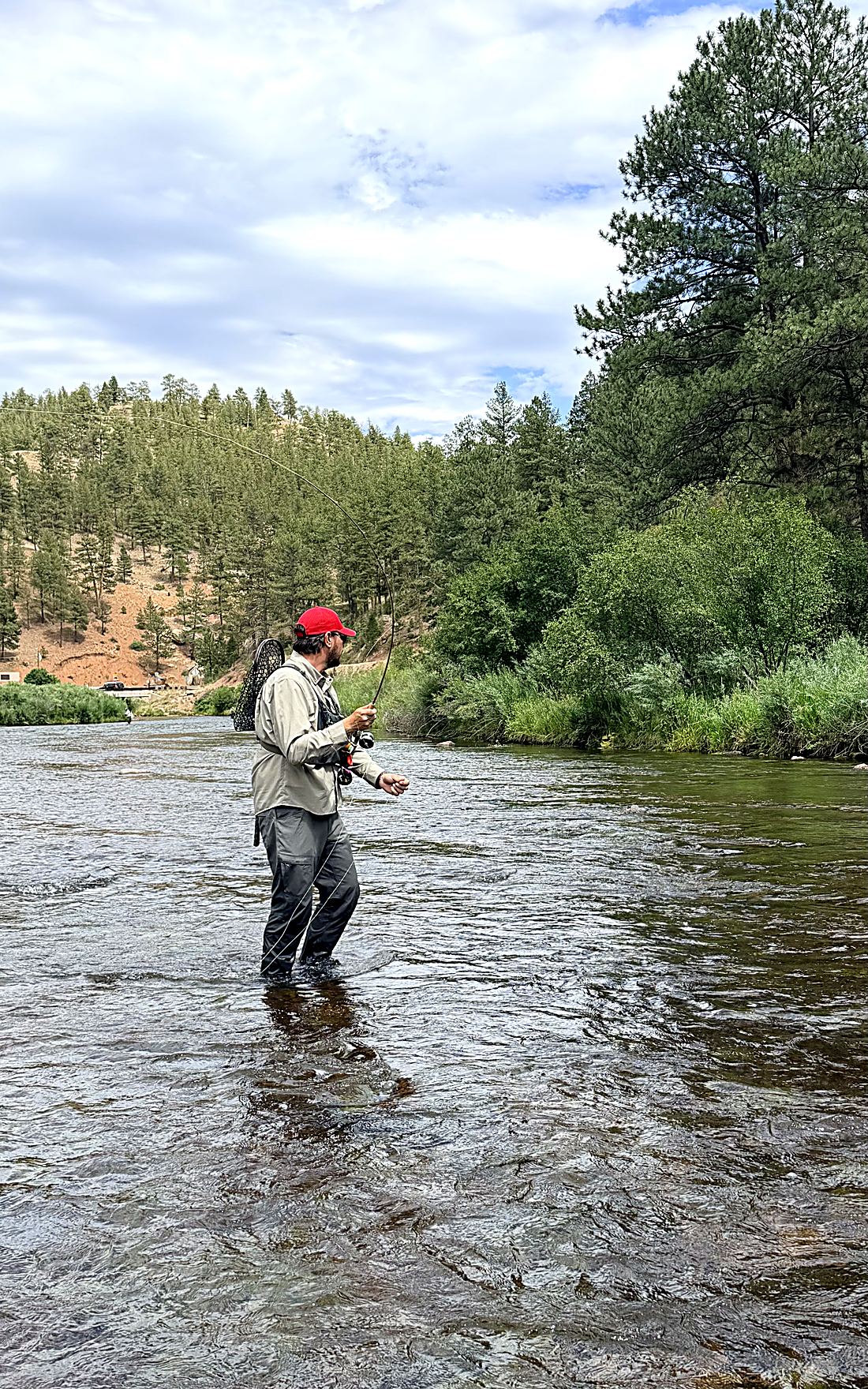
Where the Gallatin wins: feel and feedback (you feel it load, which makes the timing dead easy), soft, delicate presentation at short-to-mid range, real tippet protection on the light stuff, and that hard-to-name dampening that quiets the tip and settles the whole cast. Where graphite wins, and it isn’t close: distance, lifting power on a hot fish, and anything that involves a weighted nymph rig.
So the trade is simple. When the day is about presentation and just plain enjoying yourself, the cane wins and I don’t miss the graphite for a second. When it’s about distance or chucking tungsten, it’s a graphite day and I don’t kid myself otherwise. They’re different tools, not rivals. A good half of my year is still tungsten and a sighter, which I’d rather not think about too hard on a rod this pretty.
The reel: Clark Fork 2.5
The reel bundle pairs the rod with the Clark Fork 2.5, a simple click-and-pawl reel — no drag system, just a ratchet and a spring, which is exactly right. A disc drag on a 4-weight is like cruise control on a golf cart: technically possible, deeply unnecessary. It’s a great little reel with the same old-school feel as the rod.
Then a good brown eats, turns, and heads downstream, and the ratchet lets go — and that is the best thing about this outfit, full stop. It doesn’t chirp and it doesn’t whisper. It sounds like a machine gun — flat out, no rhythm to it, a noise you feel in your wrist before you’ve worked out what’s happening. That noise is the same reason I keep a click-pawl Ross Colorado on my 3-weight creek setup, and it’s the whole argument this section is making — at this size a reel is line storage, balance, and the sound it makes when a fish runs, not a brake. The sound isn’t a bonus on top of the click-pawl case. It is the case. You palm the rim and pinch the line for the rare fish that earns the right to run. Machined from 6061 aluminum, 2.8 oz, balances the rod nicely, and there’s nothing to set and nothing to fail. More on why click-pawl belongs on light rods in Click-Pawl vs. Disc Drag.
The honest cons — who this isn’t for
No rod is all upside, and a review that pretends otherwise isn’t worth reading. The Gallatin won’t throw heavy streamers or big air-resistant rigs, and it has less lifting and pulling power than an equivalent carbon rod — and, again, distance is its ceiling. Cane also asks for a little care graphite shrugs off: dry it before you tube it, keep it out of a hot car, store it hanging or flat so it never takes a set. It’s a fishing rod with the maintenance schedule of a houseplant — not demanding, but it’ll sulk if you ignore it.
The one thing I was flat wrong about going in: I assumed cane would wear me out over a full day. On this 7’6” rod, over full days, I never felt it. If you want one do-everything stick, or you mostly chuck nymph rigs and streamers, this still isn’t your rod — and that’s fine. Buy it for what it is, not what it isn’t.
My take
It’s staying in the quiver, and it isn’t close. Not the sentence I expected to type when I slid 7’6” of split cane out of a tube wondering whether it was too pretty to fish. What got me wasn’t a spec. The Gallatin changed how I fished — it made me wait for the load, think about the cast, and enjoy an afternoon instead of grinding through it. It’s precise, it’s quiet, and it’s unlike a modern rod in a way I can’t fully explain. It will never reach the far bank. I’d take it anyway, and I have, on the soft afternoons since.
Who should buy it, and the one thing I still owe you
Who’s it for? The dry-fly angler who fishes tailwaters and small water and wants to enjoy it, not just grind it out — and anyone curious about cane who’d rather not spend two grand to find out whether they like it. There’s a real catch to the direct-to-consumer model and it belongs right here: there is no fly shop where you can wave one around first, so you are buying a rod you have never cast. What takes the sting out of that is the policy — every Headwaters rod comes with a 30-day trial and a lifetime warranty to the original owner, and they pay return shipping if you send it back — so “find out whether you like it” is a thing you can actually do. Who should skip it? If you want one rod to do everything, or your fishing is mostly weighted rigs and streamers, buy a good 4-weight in graphite and never look back. But as a specialist you’ll genuinely reach for, at a price that finally makes real split-cane reachable, the Gallatin more than earns its keep on my home water. I went looking for a wall-hanging and found a fishing rod.
One honest gap before I oversell it: I wanted it partly for blue lines — those tight little wild-trout creeks where a short cane rod should be pure, giggling joy — and I haven’t gotten it up there yet. That’s this summer’s assignment, and I’ll report back honestly when I do, fish or no fish. Consider that an IOU with a due date I’ve set once already and missed.
A few honest questions
Is a bamboo rod practical for everyday trout fishing?
For the right fishing, absolutely — close, technical dry-fly work on tailwaters and small streams, where a soft tip protects fine tippet and lays a fly down gently. For distance, streamers, or heavy nymph rigs, reach for graphite. Think of cane as a specialist you’ll genuinely use, not a one-rod quiver.
Favorite or Deluxe — is the second tip worth $100?
The Deluxe is $100 over the Favorite and the spare tip is the only difference. Bought later on its own, a Gallatin tip is $150 — so buying the Deluxe up front actually saves you $50 rather than costing you anything. The tip is the part of a cane rod most likely to meet a car door, and rotating two of them keeps either from taking a set. So the only reason to start at $500 is cash today, not cash overall: the Favorite gets you on the water for a hundred less, and if it sticks you buy the tip later and pay the extra fifty for the privilege of having waited. If this is going to be your main dry-fly rod, take the Deluxe and be done. If you genuinely aren’t sure cane is for you, the Favorite is the smaller bet — just go in knowing the second tip costs more the long way round.
What’s a good first bamboo size?
A 7’–7’6” 4-weight is the classic all-arounder and the easiest place to start — exactly what the Gallatin is. Drop to a 6’6” 3-weight if your home water is tight little creeks. I’d steer away from a long 6-weight as a first cane rod — that’s a rod built to do the two things cane is worst at.
Next
If you’re weighing the whole category, start with What Is Tonkin Cane and How a Bamboo Rod Is Made. And here’s everything else in my quiver.