In this review
The most expensive fly in your box is the wrong one you leave on because changing it is a hassle.
Here’s how I ended up caring about that. Steve Abbott — who builds Flytime’s QuickDrift — flew out to Colorado, we fished the South Platte together, and I came off the water with a kit and a real question: does this thing change how you fish, or is it one more gadget for the pile? (Full disclosure: Flytime gave me the kit. They didn’t pay for this write-up and don’t get a vote in it — if it didn’t work, that’s exactly what you’d be reading.)
The short version: it quietly deleted the hassle, and my fishing got sharper without my having to get more disciplined about it. That’s the whole review, really. Everything below is me explaining why that one sentence matters.
What it actually is
The QuickDrift is a quick-change rig system — not a fly box. It solves the one thing that quietly eats your day on technical water: rigging.
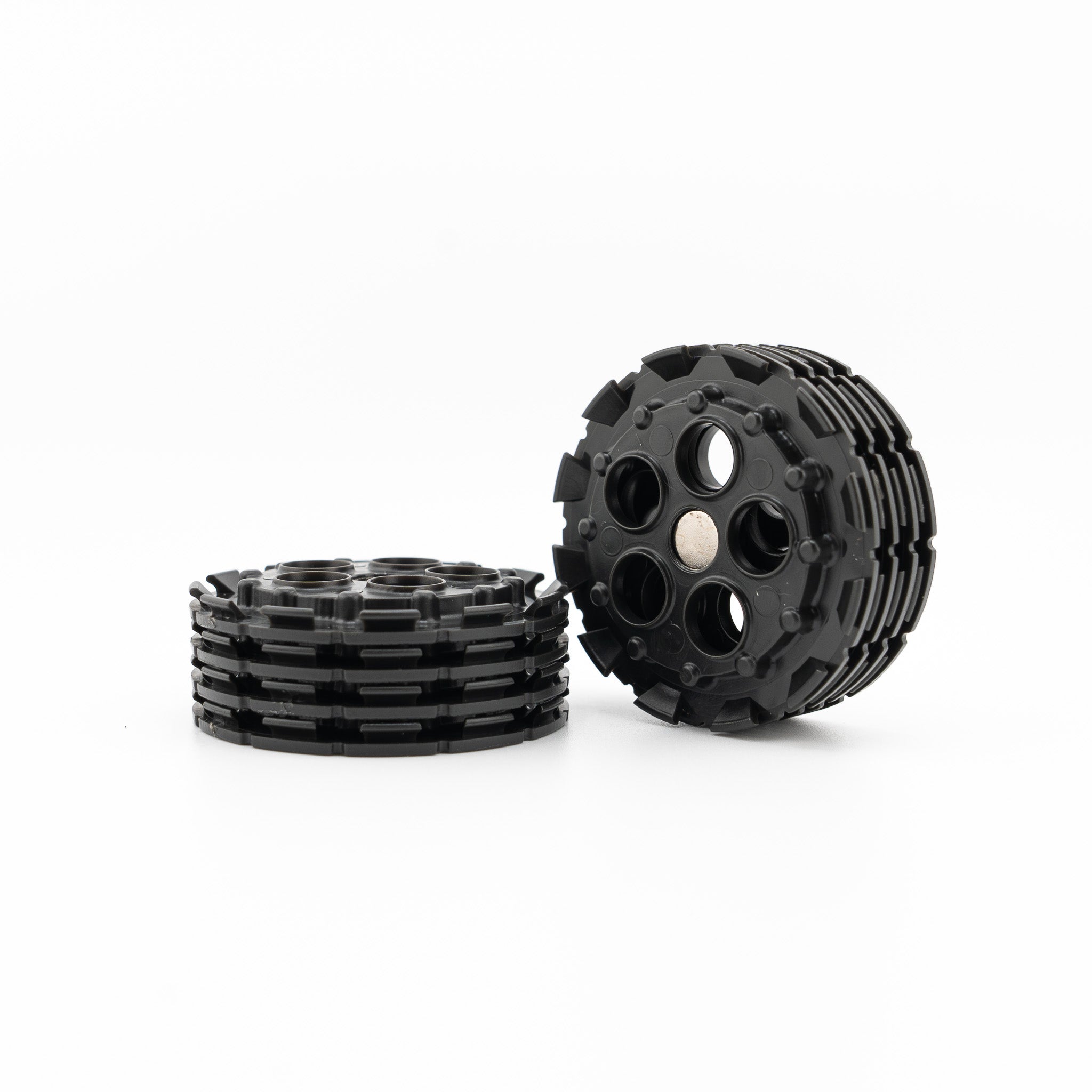
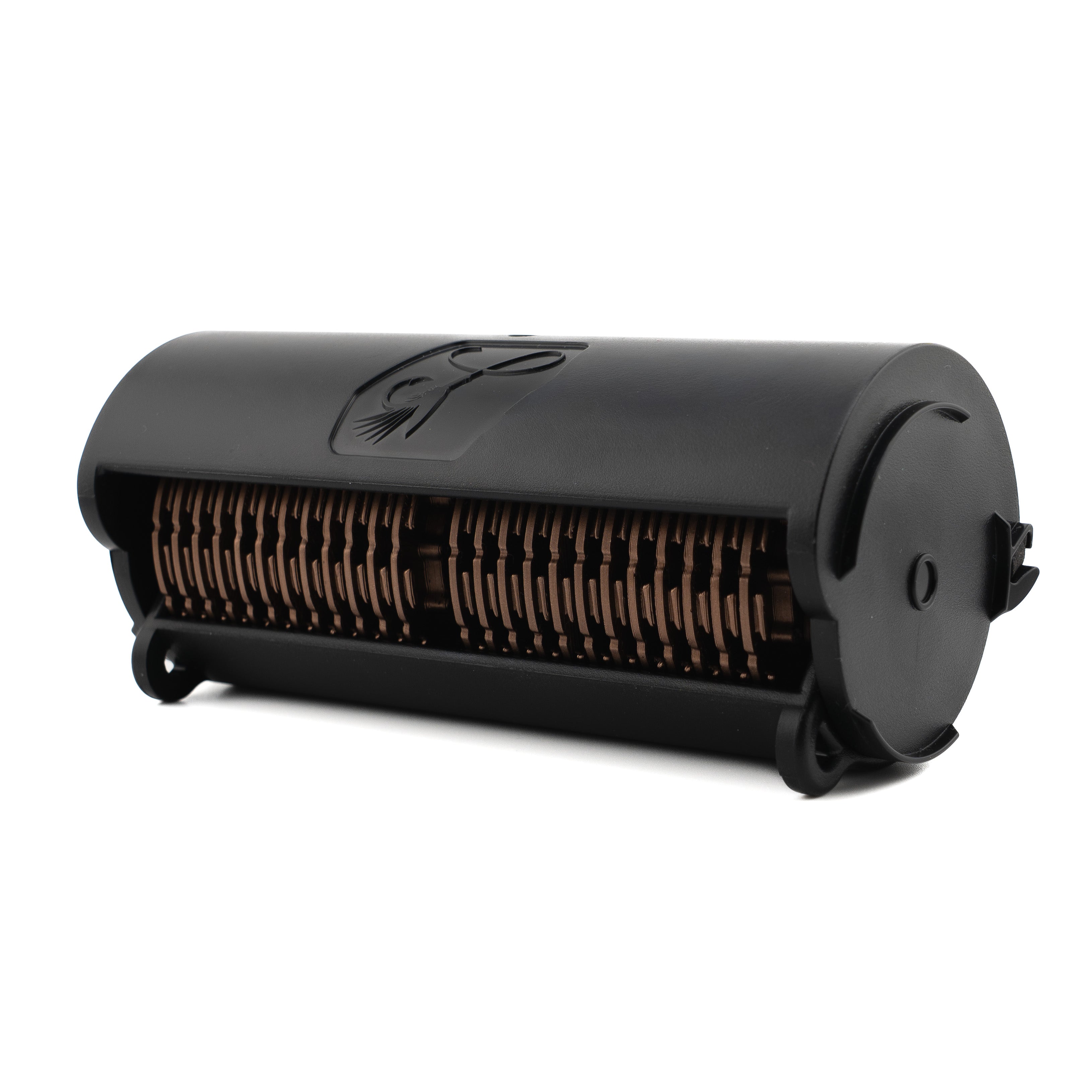
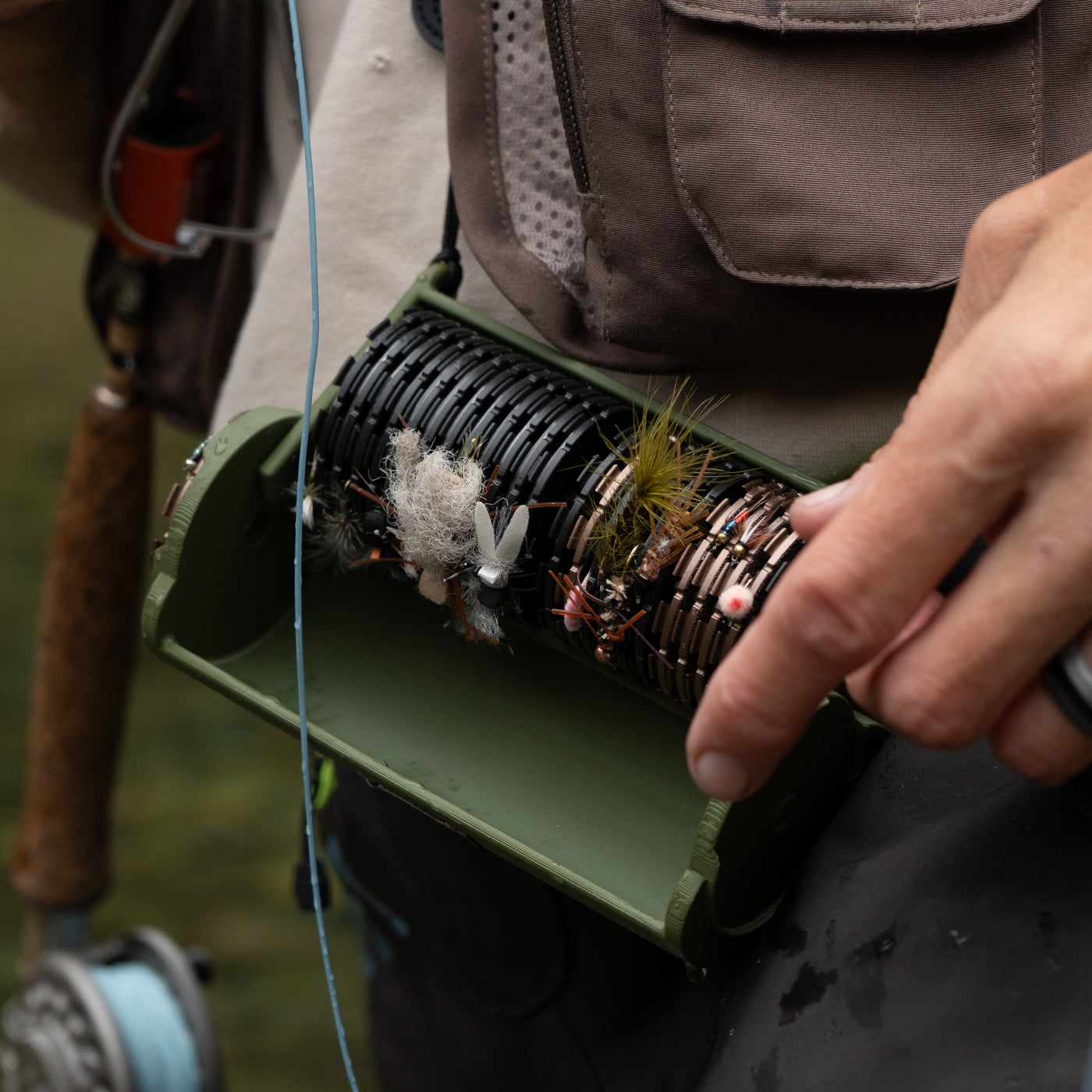
The idea is simple once you see it. At home, you tie your own rigs — your tippet, your length, your fly — and finish each with a small loop. Each rig winds onto a little magnetic spool, and a row of those spools loads into a compact shell case you wear crossbody. On the river you’ve got a Quick Connect tied once to your leader; the rig’s loop drops into a spiral groove, twists down, and clicks home. No knot, no cutting, no headlamp-in-your-teeth tippet surgery. Pull it off the same way to swap.
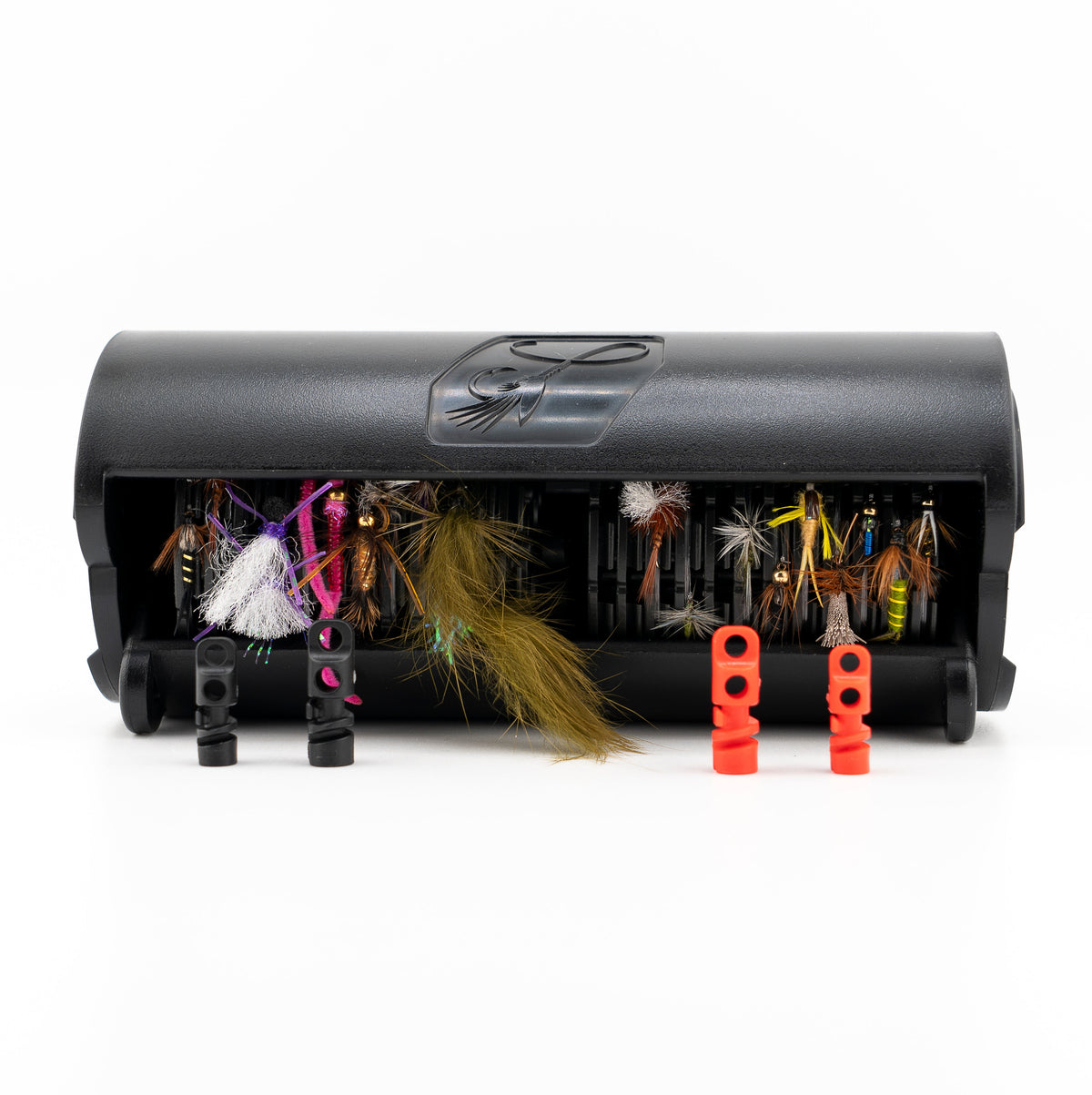
There are two connector types — floating and sinking. Both carry a small hole, and one thing worth trying is threading a bit of floating wool through it for a built-in strike indicator. The floating connector keeps your rig up in the film; the sinking one drags nymphs and streamers down. On technical Deckers water, where you spend the day nudging your depth around, having both on hand is most of the game.
See it on the water
Steve pulled some footage from our days on the river — the QuickDrift working on the South Platte — plus a couple of Flytime’s quick clips on how the system actually works:
Why it changes how you fish
Here’s the pitch you’d expect: it saves time. And it does — a rig swap that used to be a five-minute knot job becomes a five-second click.
But that’s not the part that matters. The part that matters is subtler, and it’s the reason I bothered writing this at all.
The real cost of changing flies was never the time. It was the hesitation.
You know the moment. You’re pretty sure the fish have moved off the 20 and onto something smaller, or that you should drop another eight inches to find the bottom — but re-rigging means pulling off the water, threading tippet with cold hands, tying a knot you’ll cinch wrong the first time, and losing your run to the guy downstream. So you don’t. You give the current fly “five more drifts.” You fish the wrong bug because changing it is a chore.
Take the chore away and the hesitation goes with it. You start changing on a hunch — not because you’re certain, but because it costs you nothing to find out. That’s a different way to fish. The anglers who out-fish me have always changed more than I do; this lets you fish like them without having to be disciplined about it.
How is it different from a plain strike indicator?
Worth being clear about what this is not. A plain strike indicator — a Thingamabobber, a yarn tuft, a New Zealand wool rig — solves detection: it tells you when a fish eats. The QuickDrift solves changing: it swaps the whole rig hanging under that indicator. They aren’t competitors, and the wool trick above is just a way to fold basic detection into the connector so you carry one fewer thing.
Against the normal way of changing rigs — cut, re-tie, re-measure your tippet, re-pinch the shot — the real difference is where the work lives. A standard setup costs you nothing at the bench and a few fussy minutes every single time you change on the water. The QuickDrift flips that: you spend the minutes on the couch and pay almost nothing streamside. If you change rigs twice a season, that trade isn’t worth it. If you change six times before lunch on a tailwater, it pays for itself in a morning.
The questions I had going in
So here’s the real-world read — the questions I had in the parking lot, and what I found once it was in my hands.
Does the connector mess with your drift? That was my first worry — you’re adding a small connector in-line above your fly, and Deckers fish inspect a drift like they’re charging rent. The good news is that it doesn’t. The connector rides far enough up the leader that a fish keyed on your fly never registers it, and the fly drifts like nothing changed. That’s the point where it stops feeling like a gadget and starts feeling like part of the setup.
Is it worth $136? For how I fish, easily. This is gear built for the angler who changes constantly — euro nymphers, hopper-dropper switchers, anyone working technical tailwater like the South Platte where the right answer changes by the hour. Spread across a season of faster, sharper fishing, it earns its keep in the first few good days.
Where does the tying happen now? At the bench, with good light and a cold drink, instead of standing in current at 3 p.m. losing feeling in your fingers. The tying comes out better because you’re not rushing it, and the fishing runs cleaner because the fussy part is finished before you ever step in the river. That part surprised me — the prep got good instead of being the tax you pay to go fishing.
How do you get the most out of it?
Fish it on purpose and it pays you back. The case holds a tight, curated spread rather than your whole box, so you pick your dozen-or-so most likely rigs the night before — and that bit of planning quietly makes you a sharper angler, because you end up reading the day in your head before you’re ever standing in the river. Keep both connector styles on hand — floating to ride the film, sinking to get down — so you can match whatever the water’s doing and lean on the spread you built. Set it up that way and it slots right into how you already fish the technical stuff.
Who it’s for
If you’ve ever left the wrong fly on because changing it was a pain — and if you fish water where the fly actually matters — this belongs in your kit. That’s most of us on the South Platte, whether we admit it or not. It’s a genuinely smart, well-built system, and the more technical your water, the more you’ll wonder how you fished without it. You can look at the QuickDrift for yourself right here.