
In this review
Most of the flies in a shop bin were tied by someone who has never fished them. That’s not a knock — it’s just how the machine works. Somebody fills an order, the bins get stocked, and the fly that ends up on your tippet was proportioned by a spreadsheet as much as by a river.
Fleeger’s Flies is the other thing. It’s one guy — Jesse Fleeger, out of Butler County, Pennsylvania — who guides for a living and ties commercially on top of that. I’ve been fishing his flies hard on the South Platte and the Arkansas since the start of the summer, and they’ve earned permanent, multiple spots in my box. Worth stating plainly: Jesse and I have an arrangement, so I’m not a stranger writing about a shop I found at random. The flies still had to earn their spots the ordinary way — in my box, on my water, against everything else I carry, most of which I paid for and some of which I tied badly myself.
The short version: Jesse’s euro nymphs, eggs, midges, and dries translate straight to South Platte and Arkansas tailwater. If you’re a tailwater angler tired of flies that unravel on the second fish — or you’d just rather your money go to a working guide than a factory — this is for you. Code ROCKY15 takes 15% off.
What makes a guide-tied fly actually fish better?
A guide watches flies fail all day. Every refused drift, every fly that fell apart after two fish, every hook that bent on a good one — a working guide sees all of it, on other people’s rods, in real time. That feedback loop is brutal and constant, and it ends up in the vise. The rest of us get a version of it too, but ours arrives at about four data points a season and we mostly blame the drift.
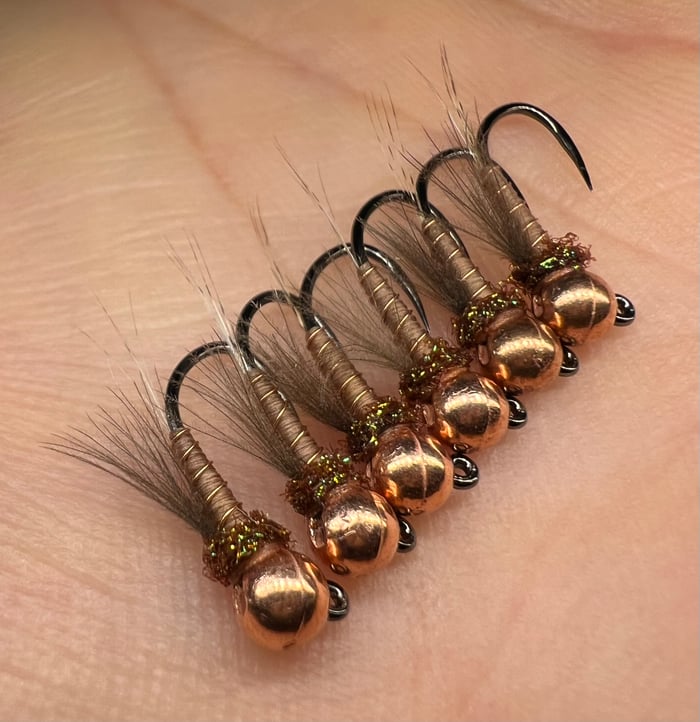
You can feel it in Jesse’s stuff: proportions that are actually right, hot spots placed where a fish looks, materials chosen to survive a season instead of to photograph well. His Rust Runner is a good tell. He describes it himself as a slim, copper-headed, natural-toned nymph with a clean profile and just a touch of sparkle, and that’s exactly what shows up in the mail — a jig-hung bug with no wasted bulk on it, which is the whole trick on a tailwater. It’s one of the patterns I keep the most backups of. That’s the kind of small, deliberate call you only make after you’ve watched fish eat and refuse the same bug a thousand times.
I’m not going to publish how any of it is tied, and you shouldn’t want me to. Jesse’s patterns are his living, and the entire point of buying from a working tier is that you’re paying him for the ten years of watching fish that produced those proportions — not renting a materials list off a blog. What follows is what the flies are and where they fish.
That’s the whole quality argument, and it’s the only one I care about. Not “hand-tied” as a marketing word — hand-tied by someone whose paycheck depends on his clients catching fish.
The bench
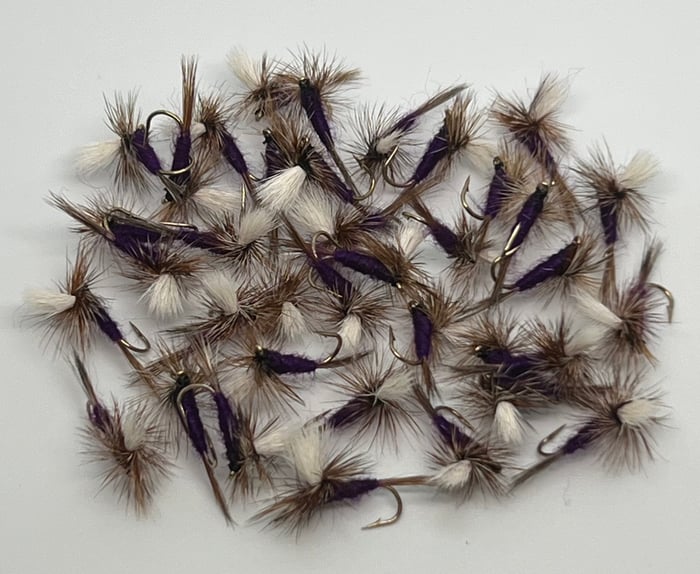
Jesse ties across the board, not just one niche: euro nymphs, brass-bead and weightless nymphs, dries, soft hackles and wets, tenkara flies, egg patterns, streamers, even bass and panfish stuff. Buy singles, or have him build out a complete box.
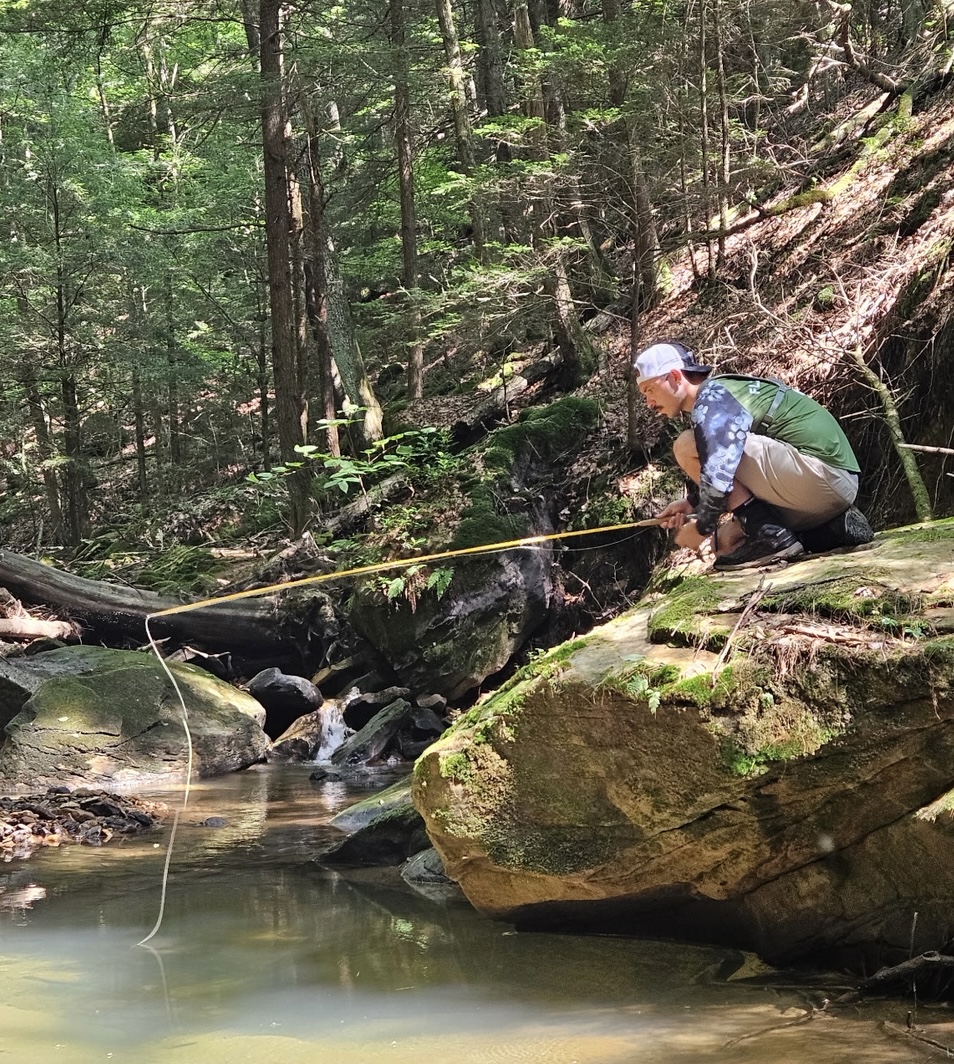
His home water tells you where the flies got pressure-tested — the small Western Pennsylvania mountain streams he chases native brook trout in, and the Lake Erie steelhead tributaries. That’s cold, technical water, and steelhead don’t forgive a sloppy tie. Anything that earns a spot in that program is built to a real standard.
Those two waters are further apart than they sound, and that’s the useful part. A native brook-trout creek in the Pennsylvania hills is skinny, clear, low-light water where the fish are small, unpressured, and will still refuse a fly that’s too heavy or too fat for the seam it’s in. A Lake Erie tributary in November is the opposite problem — big, cold, pushy water, and a fish on the end that can straighten a hook you were feeling optimistic about. Tying to satisfy both ends of that means you can’t get away with a house style. You need small and sparse that still sinks, and you need durable that isn’t clumsy. Which, by coincidence or not, is the exact pair of demands a Colorado tailwater makes on a Tuesday in February.
Which Fleeger patterns cross over to Colorado?
The short answer: pretty much his whole trout bench. Here’s what crosses over —
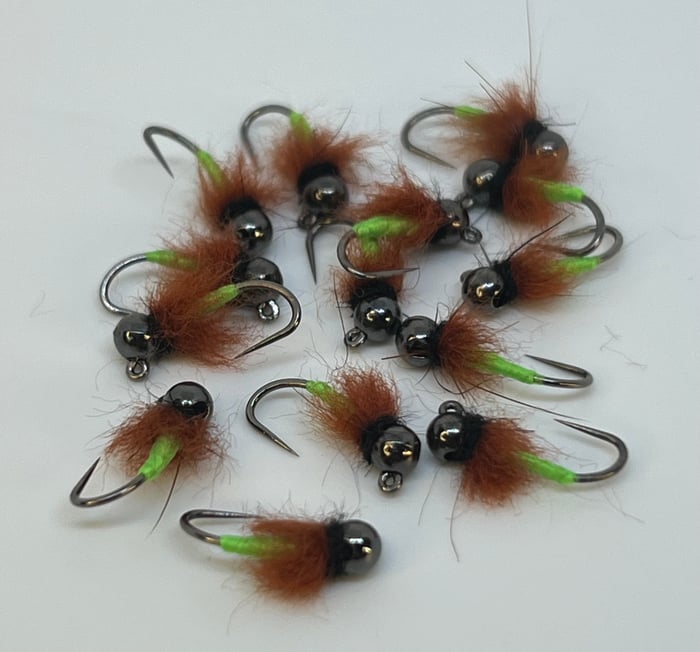
- Euro nymphs — jig-hook, tungsten, tied to the sizes and profiles a tailwater fish will actually eat. This is the core of his bench, and on the days I’m tight-lining the South Platte it’s the core of mine. They hang off the rig I build every spring without me having to think about it.
- Egg patterns — I fish eggs on the Arkansas below Pueblo in spring and the Dream Stream in fall, and a guy who ties for steelhead country knows eggs cold. See where they fit in my egg-pattern guide.
- Midges and soft hackles — the year-round Colorado grind. Small, clean, durable ties are the whole ballgame; that’s his lane. My midge rundown is the water these swim in.
- Dry flies — his BWOs, tricos, and parachute Adams are the flies that have to sit up in flat tailwater light instead of drowning after two drifts. A guy who watches trout refuse a waterlogged dry all day ties them to keep their posture — which is the whole margin on a technical rainbow.
Add it up and you’re getting a working guide’s flies — proportioned by someone whose paycheck rides on his clients catching fish — for a spreadsheet’s price.
Why does a Pennsylvania bench work on a Colorado tailwater?
Because tailwaters are more alike than the map suggests. Cold, regulated, year-round flows produce the same short list of food — midges, small mayflies, scuds, eggs when something is spawning above you — and they produce the same kind of trout: unhurried, well-fed, and completely unimpressed by a fly that’s a size too big. Whether that water is below a Pennsylvania dam or below Cheesman, the fly has to be small, has to sink on a short leash, and has to keep its shape after the third fish.
What does not transfer is the calendar and the color of the river, and those are yours to solve, not his. He’s tying to a standard, not to the South Platte in August. You still have to know that you’re sizing down through the summer, that the Arkansas below Pueblo is a different animal from the Platte, and that no fly ties on its own tippet. The flies are the easy half. I’ve had plenty of days where the flies were the only competent thing on the rig.
Ordering, practically: he lists his euro nymphs down through the small sizes, so ask for the smaller end of the range for Colorado tailwater and don’t buy one of anything. Buy three. The pattern you like is the pattern you’re going to leave in a rock, and there is no faster way to sour on a good fly than losing your only one at 7 a.m. on the fish of the morning.
The honest cons
Because a review that’s all upside is just an ad with extra steps:
- It’s one guy, so there’s a lead time. If you need fifty flies for a trip tomorrow, go to the shop. If you want flies that last the season, they’re worth the wait.
- It’s a small operation. Selection in any one size runs deeper some weeks than others — it’s a vise, not a warehouse.
- He’s tying for his water, not yours. The bench is built around Western PA trout and Great Lakes steelhead, so the catalog leans that way. Everything I’ve listed above crosses over, but you’re the one doing the crossing — nobody at the other end is picking Colorado flies for you.
- You pay more per fly than a bulk bin. Not wildly more, but more, and that’s the honest trade: you’re buying a fly that survives the run instead of three that don’t. If you’re fishing water that eats flies by the dozen and you genuinely don’t care what you lose, the cheap bin is the correct answer and I won’t pretend otherwise.
- Buying from a person is slower than buying from a search bar. No next-day anything, no infinite inventory, no algorithm suggesting four more things. That is either the entire appeal or a dealbreaker, and you know which one you are before you get to the checkout.
They’ve been in the box since the start of summer, and the thing I keep noticing is that they hold up. I’ve run one small euro nymph through a whole run of fish and it kept its shape, its hot spot, and its hook — which is more than I can say for my own ties, where fly number six of the night usually starts developing opinions. And he’s good people: a working guide who ties real volume, answers when you message him, and genuinely cares whether the fish eats.
My take
Jesse’s flies are just what I trust now. His euro nymphs are the first thing I tie on, I keep the deepest backups of the ones I lean on hardest, and a summer of hard use in, I still haven’t found the failure point. These didn’t talk their way into my box — they fished their way in. Buy his nymphs and his eggs first, buy three of each, and accept the wait. It’s a one-man vise, and that’s the reason they’re good, not a flaw you’re tolerating.
Bottom line
If you buy your flies from a bin and you’ve never once thought about who tied them, Fleeger’s is a good reason to start. Support a one-man shop, get a guide’s proportions on your tippet, and skip the part where a fly comes apart on the second fish. His nymphs and eggs slot straight into what I actually carry on the Platte — which is the only endorsement I know how to give a fly.
Start with his trout nymphs and eggs, and use code ROCKY15 for 15% off. Shop Fleeger’s Flies →