
In this guide
There are two windows on the South Platte each year when eggs become one of the most-eaten foods in the drop zones below active spawning beds. Brown trout spawn runs from mid-October through November, peaking in early November on the Deckers stretch. Rainbow spawn comes around in March and April. During both, trout that aren’t spawning sit downstream of the redds and gorge on dropped eggs.
If you’re fishing tailwaters in those windows and you don’t have eggs in your box, you’re handicapped. The fish are eating them. You either match the food or you don’t catch the fish that are actually feeding.
This post is the practical guide. Recipe, when, where, and — important — how to fish eggs ethically without disturbing spawning fish or trampling redds.
The short answer
Fish egg patterns on the South Platte in two windows: brown spawn (mid-October through November) and rainbow spawn (March–April). Three patterns cover it — Otter’s Soft Milking Egg, the Y2K, and a washed-out dead-egg variant, in sizes #14–#18, with peach the single most productive color. Fish them as a point fly to the trailing fish 10–30 feet downstream of the redds — never to fish on the beds, and never wading through them.
That’s the whole thing. Everything below is the recipe, the color rotation by river, and how to fish it without being that angler.
The Recipe
Eggs are the easiest fly category to tie and the easiest to buy. Three patterns cover everything.
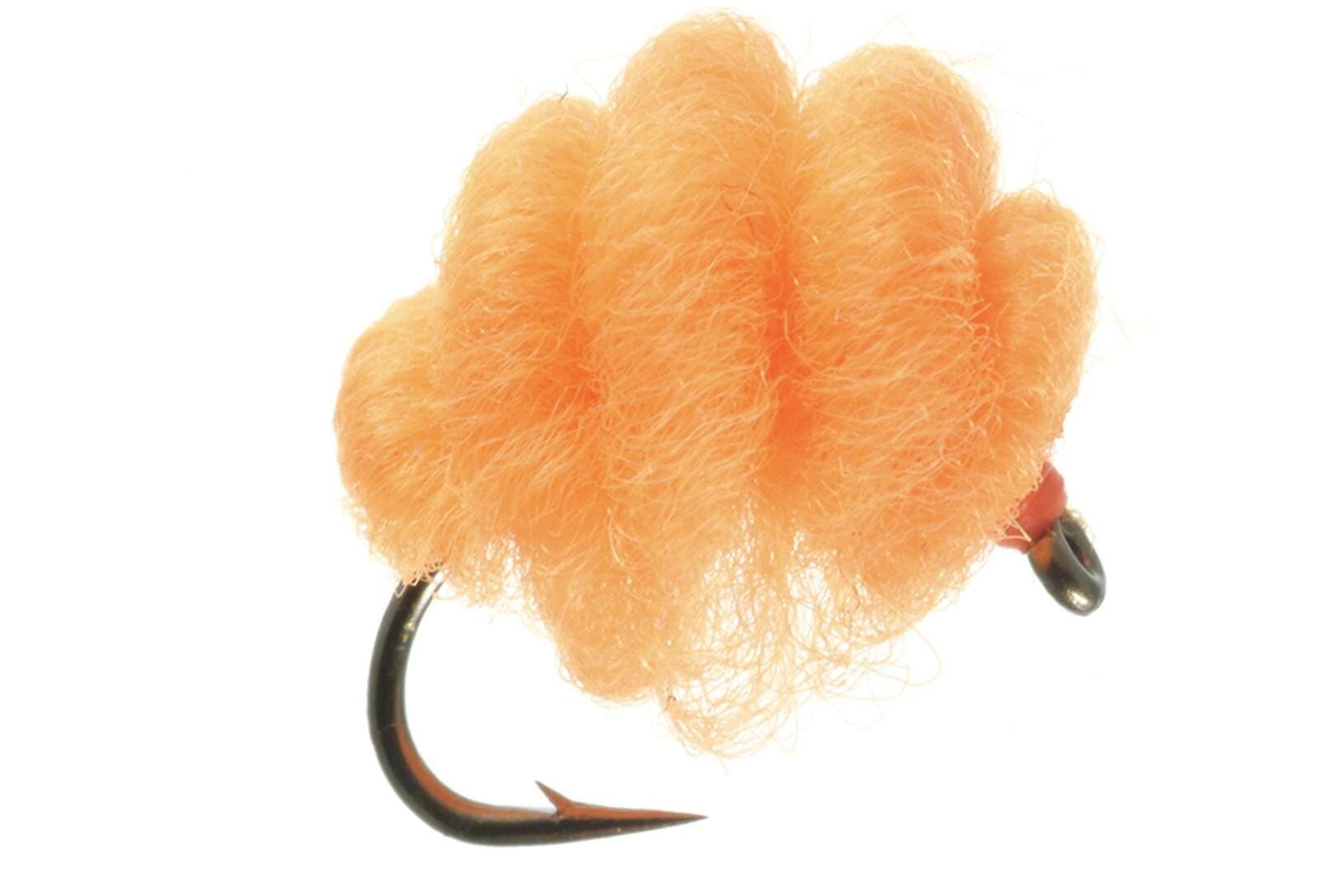
Otter’s Soft Milking Egg — the gold standard. Soft-bodied silicone egg with a translucent “milking” appearance that mimics how a real salmonid egg looks when it’s tumbling. Pink, peach, chartreuse, dead-egg cream. Sizes #14, #16, #18 (I lean small).
Y2K — a two-color McFly Foam pattern with a darker dot inside a lighter outer shell. Looks like a clustered egg sac or an egg with the spot of the developing embryo showing. Chartreuse-over-pink is the classic, but red-over-cream and orange-over-pink also produce. Sizes #14, #16, #18.
Dead-egg variant — any egg pattern in a washed-out, faded cream color. Critical for the tail end of the spawn when fish have seen every bright color and are keying on the eggs that have been in the river a few days and lost their saturation.
Hook: Curved short-shank scud hook — Tiemco 2457, Daiichi 1130, Firehole 633, sizes #14, #16, #18 Bead: Slotted tungsten, 2.5mm for #14, 2.0mm for #16, 1.5mm for #18. Faceted gold bead works fine; faceted silver in clear water. Body material: McFly Foam (Y2K, Glo Bug variants) or Otter’s Soft Milking Egg silicone bodies (sold pre-made). Thread: Color matched to the body. White Uni 6/0 works for almost everything.
Five colors cover the season:
- Pink — early brown spawn (mid-October).
- Peach — peak spawn windows. The most universally productive single color.
- Chartreuse — high water and stained water during spawn windows.
- Orange — rainbow spawn (March–April). More productive for spring spawn than fall.
- Dead-egg cream — late in either spawn window. When the brights stop working, the cream picks up.
Carry a dozen of each. They get refused, they get broken off in fast water, they get chewed by aggressive fish. Egg patterns are consumables.
My take
Eggs make some anglers squirm — too easy, too effective, a little too close to bait. But in the drop zone during a spawn, an egg is matching the hatch; the hatch just happens to be eggs. Fish it honestly — trailers only, never the redds — and it’s some of the most efficient nymphing of the entire year.
When It Matters on the South Platte
Deckers is the strongest spawn fishery in the basin. Brown trout move up into the gravel-bottom riffles below the bridge and through the runs above Trumbull starting in mid-October. By the first week of November, the spawn is in full swing and there are large browns visible on every spawning bed. The fish you’re targeting aren’t the ones on the redds — they’re the smaller browns and rainbows holding 10–20 feet downstream picking off dropped eggs. Peach #14 with a small midge dropper is the rig from mid-October through Thanksgiving. It’s some of the most consistent fishing of the year — and also the most crowded, because November at Deckers brings out everyone who owns a pair of waders. Get there early, and fish the quiet drop zones nobody else is standing in.
Rainbow spawn at Deckers runs March through mid-April. Same playbook, different color rotation — orange and peach lead, dead-egg cream picks up the late-spawn window.
Arkansas River at Pueblo has a respectable rainbow spawn in March/April. Same color palette as Deckers spring spawn. The Pueblo tailwater fish aren’t as concentrated on the spawn as Deckers fish, but the egg bite is still meaningful for two months.
Dream Stream sees a strong rainbow run-up from Eleven Mile Reservoir each spring. April is the peak. Orange and peach are the colors that work.
Eleven Mile Canyon and Cheesman see lighter spawn activity than the open-valley sections, but eggs still produce in those waters during the standard windows.
How to Fish Eggs
The egg is a point fly. The droppers are small — a Zebra Midge or RS2 size 20 above it. The egg gets to depth, the dropper rides in the strike zone, and trailing-fish behavior keys on both.
Tippet: 5X fluorocarbon to the egg, 6X off the egg to the dropper. The egg is the heavy fly; the dropper is the finesse.
Indicator nymphing is the standard application. Fish drop-zone water — the slower runs and tailouts 10–30 feet downstream of known spawning sections. Don’t sight-fish to fish you can see on clean gravel (those are spawning fish, see the ethics section below). Drift through the deeper slots and seams that catch dropped eggs as they wash downstream. The take is hard, not subtle. Drop-zone fish are aggressive eaters.
Tight-line / euro nymphing works well too, especially in lower flows or canyon water where indicator presentations create drag. Bring the egg through the slot with a controlled drop and feel for the eat through the rod tip.
The Ethics — Don’t Be That Angler
The egg pattern bite is real but it comes with responsibility. Spawning fish are concentrated on visible gravel redds — circular cleared depressions in the streambed where the female has dug a nest. Don’t wade through redds. Don’t fish to fish that are actively on redds. The fish you want are the trailers behind the spawning beds, 10–30 feet downstream, in the drop zone.
This isn’t a moral lecture, it’s basic resource management. Spawning fish are doing the work of producing next year’s fish. Stepping on a redd or hooking a fish that’s actively spawning damages the population. The drop-zone fish are fair game — they’re not on beds and they’re feeding aggressively.
Three rules:
- Look for the bright clean gravel. Spawning redds stand out from the surrounding stained substrate because spawning fish actively clear them. If you see clean light-colored gravel in a shape that looks intentional, walk around it.
- Don’t fish to a fish that’s positioned over clean gravel. That’s a spawning fish. Cast to fish in dirty gravel or in the drop zones below.
- No streamers during spawn. A streamer cast through a spawning fish triggers predator response that can spook the entire bed. Stick to dead-drifted eggs and droppers.
Fish the drop zone, leave the redds alone, and you’ll have plenty of productive water without doing damage.
Frequently asked questions
What’s the single best egg color? Peach. If I could carry one color through both spawn windows, it’s peach — the most universally productive. Chartreuse for high/stained water, orange leans spring (rainbow spawn), pink for early brown spawn, and dead-egg cream for the tail end when the brights quit working.
Can I fish eggs outside the spawn? No — there are no eggs in the drift in summer, and the trout know it. Pull them from the box May through September and bring them back in October. Fishing eggs in July just trains you to feel skunked.
Is egg fishing ethical? Yes — if you do it right. Fish the trailers in the drop zone 10–30 feet below the redds, never the fish parked on clean gravel, and never wade through a redd. The drop-zone fish are feeding, not spawning. They’re fair game.
Bead-head or unweighted egg? Bead-head almost always — you want the egg down in the drop-zone slots fast. Match bead to hook (2.5mm/#14 down to 1.5mm/#18), let the egg be the anchor, and trail a small midge or RS2.
Why Eggs Work
In the drop zones below active redds, eggs become the most-targeted food in the drift. That’s the entire mechanism. Eggs are calorie-dense, abundant in those specific zones, and easy to eat. Drop-zone fish position to intercept dropped eggs and gorge for the duration of the spawn. A peach Otter’s Egg dead-drifted through that water is recognized for what it is and eaten without hesitation. Outside the drop zones — the wide river generally — midges, BWO emergers, and scuds still dominate. The egg bite is location-specific.
Outside the spawn windows, eggs don’t work. There are no eggs in the drift in July. Pull them from the box from May through September; bring them back in October.
When are egg patterns worth fishing on the South Platte?
Two windows: brown spawn from mid-October through November, and rainbow spawn in March and April. Outside those windows there are no eggs in the drift, so the egg bite shuts off and midges, BWO emergers, and scuds take over.
You can stock egg patterns through The Fly Fishing Place — use code RDC at checkout. Otter’s Eggs, Y2Ks, and Glo Bugs in the colors and sizes that match the South Platte spawn calendar.
Fish the drop zone, leave the redds alone, and bring the eggs back every October.