
In this guide
Part 5 of The Tight Line — my series on fishing a tight-line rig on South Platte tailwaters. Start with Part 1.
Most of the trout you catch on a tight line, you never feel eat. That sentence still feels wrong to write, because the whole romance of fly fishing is supposed to be the grab — the line going tight, the jolt up the rod, the moment you and the fish find out about each other at the same instant. On a mono rig over a South Platte tailwater, that moment usually doesn’t happen. The fish has eaten, turned, and started to spit before any of it reaches your hand. If you wait to feel it, you set on a fish that’s already gone.
Most anglers spend their first euro season not believing that. They come from indicator fishing — where the take is a bobber going under and your job is mostly to not fall asleep — and assume a tight line is just a more sensitive version of the same thing. So they stand in a riffle waiting for a thump that, for most fish, is never coming. They catch some and miss a pile. The fish aren’t being subtle to spite anyone; that’s just how a trout eats a #18 in cold water, and the angler is using the wrong organ to listen.
So you don’t wait to feel it. You read it. Strike detection on a tight line is a visual skill, not a tactile one, and the thing doing the reporting is the sighter. I covered what the sighter is — a gauge, not a bobber — back in Part 1. This is the part where that gauge pays you back: the take is the fifth and hardest thing it tells you, and it tells you in a language of stalls, ticks, and pauses that takes a season to really hear. George Daniel boils the whole skill down to one instruction: watch the sighter for any hesitation, tick, or unnatural movement, and set. The hard part isn’t the rule. It’s trusting it when your hand is screaming that it didn’t feel a thing.
Why you can’t feel it (and why that’s fine)
Understand why the take is invisible before you try to see it. Fish on a tailwater often eat as a reflex — a small, soft inhale of something the size of a #18 that drifted into the lane. No chase, no slam. The trout opens its mouth, the fly goes in with a slug of water, and a half-second later it figures out the fly is wrong and pushes it back out. That whole event barely moves your fly at all. And the window is so cruelly short for a biology reason worth knowing, because it stops you taking the misses personally: a trout has taste receptors in and around its mouth, so it doesn’t have to swallow to know your size-20 is tungsten and thread, not a baetis. It tastes the fraud the instant the fly’s inside and starts ejecting on the next beat. You’re not setting on a take. You’re setting on the memory of one.
Movement that small at the fly, in current already tugging the whole rig downstream, does not transmit cleanly up the leader to your hand. By the time enough load builds to feel, the fish is done. But that movement does something else first: it changes the sighter instantly, because the sighter is rigidly connected to the fly and sitting right in front of your eyes. The hand is the slow sensor. The eye is the fast one. Tight-line detection is just the decision to trust the fast one — and you can know that for a full season and still flinch toward your hand every time until you drill it out. Most of us do.
The sighter cues — what a take actually looks like
A take doesn’t bob your sighter. It interrupts it. Everything on the end of your line is drifting in one continuous, predictable motion, and a take is the moment that motion breaks. But you can only read the break if you’ve set the baseline first — and the baseline is a living sighter, not a dead one. George Daniel’s tell is the cleanest I know: a correctly weighted rig puts a subtle, nervous pulse in the sighter, a little twitch of life as the flies tick along just off the bottom. A sighter gone stone-dead isn’t calm — it means the flies are dragging bottom (too heavy, too slow) and you’ve lost the very motion the take is supposed to break. Tune the rig to that pulse first. You can’t see the needle jump on a gauge that isn’t on.
Here are the breaks to set on, roughly in order of how often they show up.
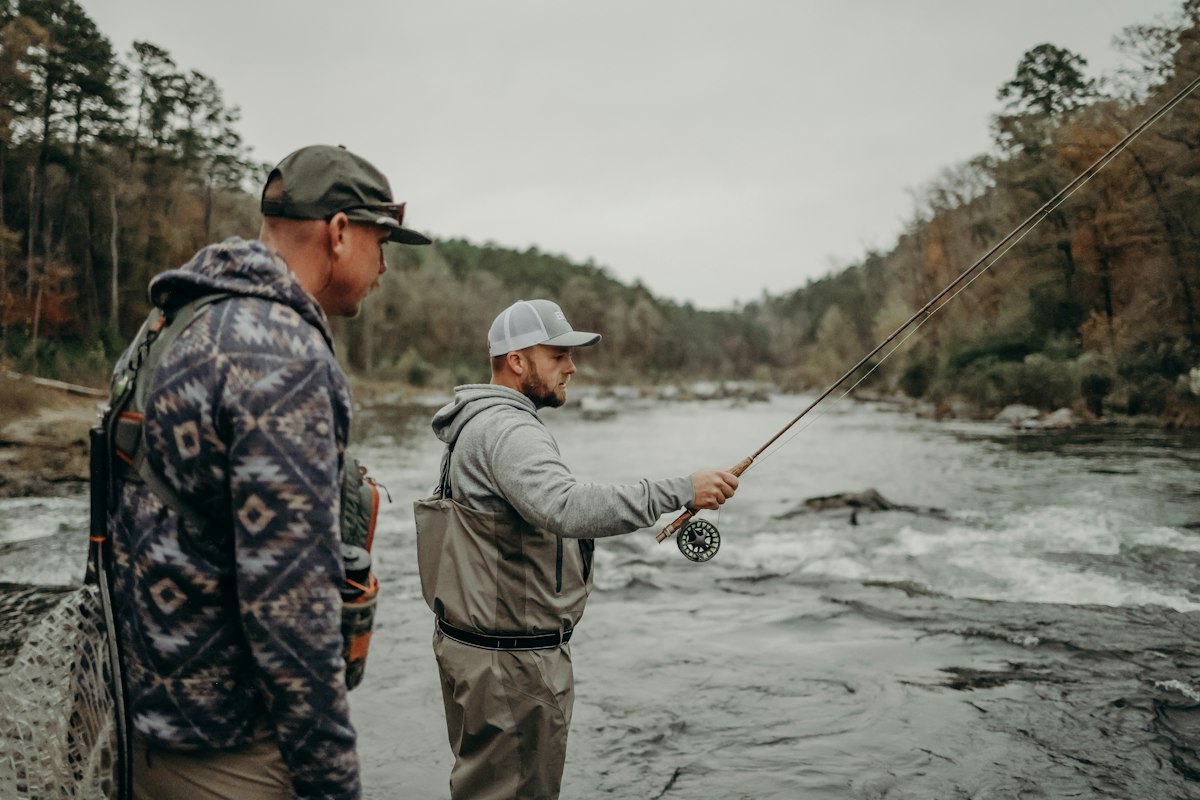
The stall. The most common take on the South Platte is a stop. Your sighter is drifting at its steady pace and then, for no reason the current gives you, it just hangs — holds in place a beat while the water keeps moving around it. A drifting rig doesn’t stop on its own. Something stopped it. It’s easy to miss because it’s so undramatic — the line just pauses, like it snagged a cobweb. Nothing about it announces a fish. Learn to love that boring little stall anyway.
The pause that’s a hair too long. The stall’s subtler cousin, and the one that gets missed most. The sighter doesn’t stop dead — it hesitates a quarter-second longer than the drift should allow before it resumes. On a Dream Stream rainbow, this is usually all you get: a wrongness in the rhythm more felt than seen. Set on the wrongness. I know — “set when it feels weird” is useless advice to a beginner and the only honest advice I have. There’s no shortcut.
The tick upstream, or any dart. Every now and then the sighter doesn’t stall — it darts the wrong way. A tiny twitch against the current, upstream or sideways, is a fish that ate and turned back toward its lie. Nothing in a dead drift moves upstream, so it’s the most unambiguous take there is and the one to set on hardest — the rod should already be moving. A quick dart in any other direction is the same story; you don’t need to decode which way it went. Don’t waste a precious half-beat figuring that out, as if naming the vector would help. It does not. The fish does not care that you identified it correctly before it spat your fly. Register, set, analyze later.
The sighter going dead-straight. Easy to miss, because it’s the absence of motion rather than a motion. The sighter has that living, nervous pulse as it drifts — a soft curve, a gentle bounce as the flies tick along. When a fish eats and holds, that life can vanish: the sighter draws tight and straightens, going rigid because a fish is now anchoring the far end. Too clean, too taut, too straight is often a fish sitting there with your fly. Set on the straightening. This is the one anglers miss longest — the brain files “tight and straight” under good drift instead of fish, and it takes a lot of slow eats to retrain it.
The rare felt take — and why you still can’t wait for it. Sometimes you do feel it — a fish that ate hard, or a big one whose turn loaded the rod. Set, obviously. But the trap is calibrating your hookset to the loud eats and blowing every quiet one — and on this river the quiet ones are most of them. The felt take is a bonus, not the system; the system is your eyes. A felt take is a gift of certainty in a discipline built on doubt, but treat it as confirmation rather than permission, or your catch rate will lie to you.
The eat at the very end of the drift. The one that’s easy to forget. As the drift runs out below you, the flies stop dead-drifting and start to rise and swing, and that induced lift looks a great deal like an insect leaving the bottom — trout hammer it. The good news is the sighter usually reports this one loudly. The bad news is that by then most of us have mentally started the next cast. Keep your eyes on the sighter until the flies leave the water, and if it stalls or jumps on the swing, set fast, the same as you would anywhere else in the drift.
Telling a real take from the river
Here’s the honest part: the river produces all of these signals too, without a single fish involved. Your sighter stalls when your flies tap a rock. It hesitates when the rig swings into a slower seam. It ticks and darts when you cross a current line. The bottom of a tailwater is a minefield of false positives, and this is exactly where most people talk themselves out of setting — “that was probably just a rock” — and miss the fish that was, in fact, not a rock. Narrate yourself out of four straight stalls (“rock… rock… ledge… rock…”) and the fifth one will bend your rod into a hoop, and you will feel genuinely betrayed. The river was telling you the truth the whole time.
You get better at telling them apart, but you never get perfect, and that’s the key insight. A rock grabs, holds, then releases as the current frees the fly; a fish often gives an extra beat of soft hesitation before it lets go. A ledge slows the whole drift gradually; a take interrupts a drift that was otherwise steady. A seam shows up at the same spot every drift. Knowing what your flies are doing on the bottom is what separates “that’s the shelf I know about” from “that’s something new.” The trick that helps most is fishing one lane until you have it memorized — same slot, drift after drift, until the rig grabbing the same rock became background noise. After that, the genuinely new interruption lights up like it’s wearing a hi-vis vest.
There’s a second fix, and it’s sneakier: fish just above the bottom on purpose instead of grinding it. Domenick Swentosky makes this argument better than I will — if the rig isn’t touching anything, then sighter movement means a fish and not a rock. You give up the last inch of depth and most of your false positives go with it. On a day when you genuinely can’t tell the two apart, take the cleaner signal over the extra inch. It also happens to fix the dead-sighter problem from earlier, because a rig riding just off the bottom is a rig that still has a pulse.
But — and I cannot stress this enough — when you genuinely can’t tell, you don’t get to stand there and adjudicate. The fish has already started spitting. You set. The “rock or fish” debate is a luxury you can only afford after the hook is moving, and the slow way to learn that is losing the argument to a lot of fish while winning it against a lot of rocks.
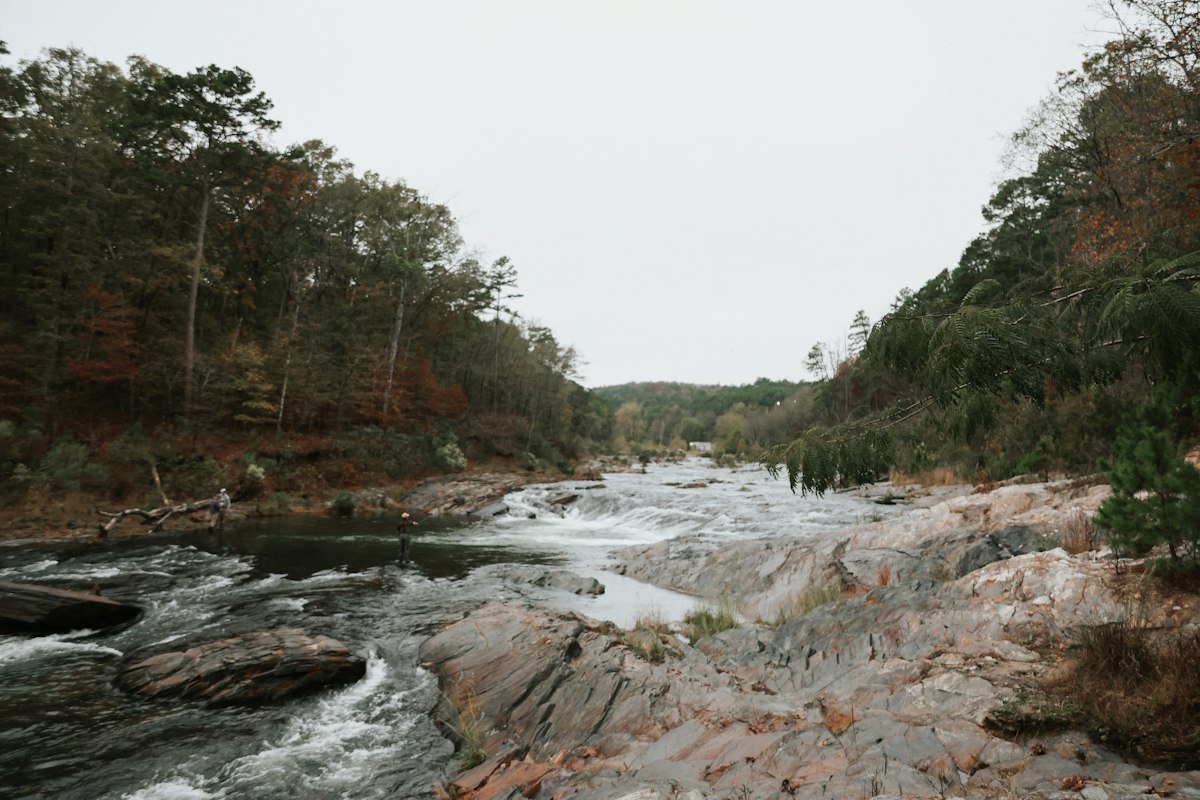
The same take reads differently on different water
Strike detection is mostly one fixed skill — but the texture of the take shifts a lot depending on where you’re standing and what the dam let out that morning. A take you’d read instantly at Deckers can be nearly invisible at Cheesman, and the Dream Stream has its own dialect. Fish only one of them and you’ll build an instinct that quietly fails you on the other two.
Deckers is the place to learn this. The broken, friendly, riffle-run-pocket water below the canyon does you a favor — the chop means fish get a split second to decide and commit a little harder, so stalls are crisper and ticks punchier. It’s a forgiving classroom: you can be a little late and a little dumb — most of us are both, for entire seasons — and still connect.
Cheesman Canyon takes the exact same skill and turns the volume down to almost nothing. Gin-clear flats, fish that have already seen whatever you’re about to show them, and water so smooth there’s no chop to amplify a take. The eats are whispers — the pause-that’s-a-hair-too-long is sometimes the whole signal. Up there, hold less sighter off the water, fish the thinnest tippet you can get away with, and treat every twitch as a fish until proven otherwise, because the cost of skepticism is brutal. The canyon punishes the heavy-handed and embarrasses the impatient.
The Dream Stream changes the read again — open meadow between Spinney and Eleven Mile, full of big cruising and run-up rainbows that aren’t always sitting in a fixed lane. So the take often comes as a slow, anchoring load rather than a sharp interruption: no dart, no stall, the line just goes tight and quiet because there’s suddenly a big, unbothered fish idling on the end. Out there, watch for the life leaving the sighter more than a jump in it. And the wind crosses that meadow like it’s late for something, turning a held-up sighter into a kite — on a nasty day drop it lower and lean on feel, because a quarter-second hesitation is just gone in a 20-mph gust.
Then there’s flow, which on a tailwater is a management event, not a weather one — somebody turns a dial and your river changes by the hour. Low and clear, fish move minimally (a cold trout won’t shift more than a few inches for a bug), so takes are tiny and soft, tucked in the slow seams and tailouts, and you’re hunting feather-light hesitations inside the narrow midday window when the bugs actually come off. Higher water scours the bottom and relocates everything — the bucket that held a fish at 80 cfs is dry at 300 — so half your memorized false-positives are suddenly wrong and you’re reading a new bottom from scratch. After any big release, re-learn the run before you trust your stalls. Expect to set on the same new ledge nine times in a row after a bump, briefly convinced it’s the world’s most persistent trout.
One quieter lever sits under all of it: how you carry the rig. Leading versus following is Part 3’s entire subject and I’m not re-arguing it here — but it has a detection consequence worth naming. Leading (actively setting the flies’ speed under light constant tension) makes takes read crisp and immediate. Following (letting the current govern the flies and catching up only periodically) drifts more naturally but reports eats softer and later, because there’s more slack to eat through. Most good days are a blend. The part that belongs to this post: know which one you’re doing, because a take while following lands mushier and later than the same take while leading — and if you don’t account for that, you’ll blame the fish for being subtle when really you left yourself a foot of slack.
The one rule: set on anything that isn’t the drift
Here’s the rule the whole post comes down to, the one I actually fish by: set on anything that isn’t the drift. Any stall, tick, pause, straightening, or dart — if the sighter does something the current didn’t tell it to, you set, now, before the analysis. You’ll set on rocks, ledges, seams, phantom nothing. Set anyway.
People resist this because setting on rocks feels like failure. It isn’t. A tight-line hookset is nearly free — a quick lift, and if there’s no fish, your rig pops up, you drop it back in the slot, keep fishing. You lose two seconds and a little dignity. The cost of not setting is a fish that ate, a debate, and a fish gone — and on a pressured tailwater those fish don’t eat twice. The math is lopsided. Set on enough rocks and somebody across the run may ask, sincerely, if you’re alright. You’re great. Roughly one lift in however-many is a trout. The rocks aren’t the point — they’re the tax. Fish with the slow sensor instead — watching the colored line drift, waiting for the rod to say something — and that line will report eat after eat you scroll straight past.
My take
The thing that changes your catch rate on a tight line isn’t a fly or a rod — it’s deciding to believe the sighter over your hand. See a little stall, think “probably a rock,” skip the set, and there’s no telling how many fish you just handed back. Set on every interruption, no matter how rock-like, and yes, you’ll set on a lot of rocks. I’d take that trade every time. The fish that ate and got away used to be invisible; now they’re just the ones you were slow on, and slow you can work on.
What does a tight-line take feel like in your hand, if anything?
Often nothing — which is why you read the sighter instead. When you do feel it, it’s a soft twig-bump tick or, less often, solid weight from a fish that ate hard. Either way, don’t make that felt moment your trigger: by the time the take reaches your hand the fish has had your fly half a second and is usually already spitting. Use the felt take as confirmation you set right, never as the cue to start. The cue lives in your eyes.
How do you actually train your eye to see the take?
Repetition, and ideally not on hard fish. The cruelest way to learn sighter reading is a pressured tailwater where eats are rare and tiny and a season can pass between clear lessons. George Daniel’s fix is the smartest shortcut I know: take your euro rig to a warm-water pond full of bluegill, where strikes come every few drifts. You’re not after the fish — you’re after reps. Dozens of obvious takes an hour drill the see-it-then-set reflex into your hands, so when you bring it back to a Cheesman flat the wiring’s already in place and you just dial down the volume. It beats spending two seasons paying tuition one rare trout at a time.
Bottom line
On a tight line, the take is something you see, not something you feel. The sighter reports it as a break in the drift — a stall, a pause a hair too long, a tick upstream, a dart, a sudden dead-straightening of the line — and it reports it long before any of it would reach your hand. The river fakes those same signals with rocks and seams and ledges, and you’ll never sort them perfectly, so you don’t try: you set on anything that isn’t the drift and let the rocks be the cost of doing business. Stop waiting to feel the eat. Read it, set on it, and find out what it was after the hook is moving.
Next in The Tight Line → Part 6: The Tight-Line Hookset (publishing next) — now that you can see the take, the last piece is setting on it without breaking off on 6X.