
In this review
I love fishing cane. Put a bamboo rod in my hand on a small Colorado creek and that’s about as good as fishing gets for me. So it bothers me that the people who make these rods keep getting older, and I don’t see nearly enough new small shops starting up behind them.
Bamboo is awesome, and I think it needs protecting, the way you protect a trail: by using it.
Why does a bamboo rod matter at all?
Because it’s one of the last pieces of trout tackle that one person still makes start to finish, by hand. A builder splits a culm, planes six strips to a taper measured in thousandths, glues them into a hexagon, and fits, wraps and varnishes the rest. I walked through that whole process in how a bamboo fly rod is made, so I won’t do it twice here.
Graphite is the better tool for most of what happens on a Colorado river. I laid that out in fiberglass vs graphite vs bamboo. Cane does one job, and on small water with a dry fly it does that job with a feel nothing else matches. That’s the case for owning one.
The case for protecting the craft is different. The tapers are written down, and you can download a famous one in about four seconds. The hand part lives somewhere else: how a strip feels when the plane is about to take too much, how hot is hot enough on a heat treat, how a ferrule should seat. That knowledge lives in people. Rods survive their makers just fine. A craft doesn’t survive losing all of them, and the rods slowly stop being fixable once it goes.
The sport has a hatch chart for nearly every bug in Colorado and no headcount of America’s rod builders. Priorities.
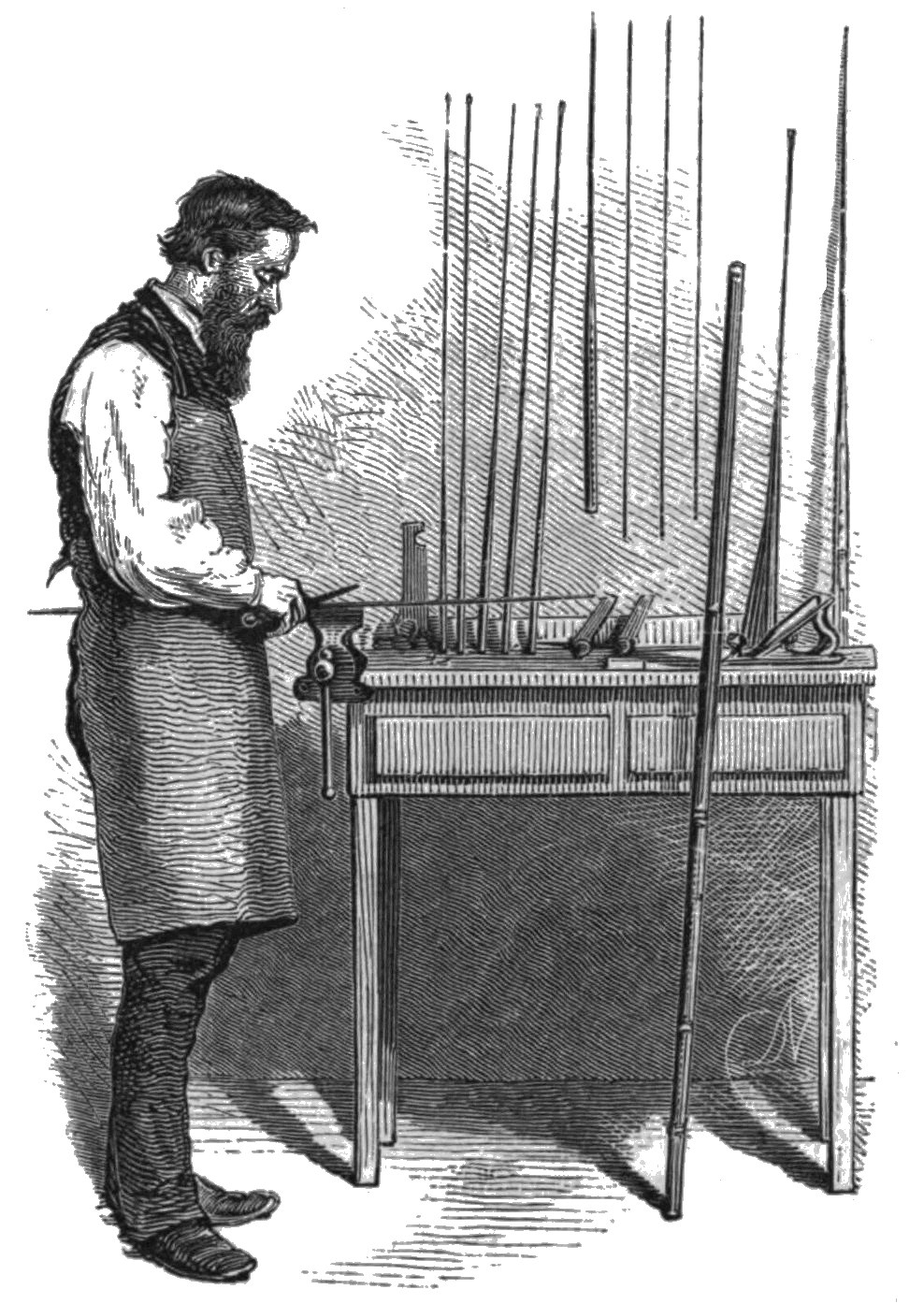
“Making split bamboo rods,” from Scribner’s Monthly, vol. 12 (1876). Public domain, source file. A hundred and fifty years later, the bench still looks a lot like this.
What the builder base looks like right now
Art Weiler died in August 2025. His own business says no new rods will be produced, and his repair and refurbishment work has ended. A customer note on the same site puts his age at 80. Most of the rods he built are still out there being fished, and the person who knew them best can’t touch them again.
Bob Summers has built and repaired bamboo rods since 1956. Full time, by his own shop’s account. That’s seventy years at a bench. I hope somebody is standing next to him taking notes.
In the UK, they’ve measured it. The Heritage Crafts Red List puts split-cane rod making in its endangered category. Its 2025 entry counts between 5 and 10 people earning their main income from the craft, says most of the people who learned it when cane was ordinary tackle have retired or passed away, and notes that the last UK apprenticeship scheme wound up in the 1980s. Those are British numbers. My guess is the American craft is bigger, but it looks like the same shape to me.
Nobody keeps a roster of American cane builders, so there’s no chart. What I have is a few public facts, and they point the same way. That’s a concern, and I’m treating it as one.
Why is it so hard to start a cane shop?
The money is bad, the skill takes years, and the cane comes from one region of China. None of that is a knock on young people.
The money. One maker put the math on his FAQ page as an example: sell a two-piece rod for $900, take off about $150 in materials, and you’re left with $750 of labor. At 60 hours, that’s $12.50 an hour, before the shop, the tools, the insurance, or the time spent answering emails from guys like me. At the 100-plus hours most builders put into a rod, which I broke down in why bamboo fly rods are so expensive, it’s $7.50 an hour at best. There are summer jobs that pay better and involve far fewer calipers.
The skill. It takes years to get good, and the first rods a new builder makes are practice nobody pays for. A one-person shop also runs at one-person speed. I run Rocky Drift Co. by myself, so I know that queue: every email, every photo and every post goes through the same pair of hands, and the line moves when they do. Now picture that line made of bamboo strips planed to the thousandth.
The cane. Rod-grade cane is Tonkin, Pseudosasa amabilis (older books call it Arundinaria amabilis), a bamboo native from southeast China into Vietnam, and rod cane has traditionally come out of Guangdong. Every builder in America is buying poles that crossed an ocean, which I covered in what Tonkin cane is. A cane supplier founded in 2016 sends its people to China to sort through thousands of poles and imports only the ones they picked. You don’t build a business like that for a craft you think is finished.
It isn’t only old guys, either
I promised myself this wouldn’t turn into a eulogy, and the evidence on the other side is real.
Cane has come back from worse. When graphite took over, it nearly killed commercial bamboo, and the craft survived by moving into small shops and home benches. A big part of that was one book. Everett Garrison’s method, finished and published with Hoagy Carmichael in 1977 as A Master’s Guide to Building a Bamboo Fly Rod, opened the door to amateur builders. A lot of today’s small shops trace back to that book.
At least one class fills. The Catskill Fly Fishing Center & Museum’s culm-to-rod class was full for its winter 2025–26 session.
The students aren’t all retirees, either. In 2023 one rod shop reported a notable jump in high-school and college-age students taking its bamboo classes. At a spring cane gathering in Tennessee, one of its organizers has pushed back on the idea that it’s a bunch of old men holding onto their tackle, and anyone can show up. In Michigan, a program called Bamboo Bend has brought eight veterans a year since 2012 together with rodmakers to build their own rods from raw culm to varnish with traditional hand tools. Eight a year isn’t many. It’s eight more people who know how a strip feels one pass before it’s too thin.
Colorado has its own. The Colorado Rodmakers gathering says newcomers, family and friends are always welcome, and it tells people new to the craft to ask lots of questions. I can do that part.
So the craft has an on-ramp. Whether it’s wide enough to replace the builders who carried cane through the last fifty years is the open question, and I’d rather be wrong in the hopeful direction.
What can you actually do about it?
Buy from a living builder, take a class, go to a gathering, get used cane restored, and put the rods you already have back on the water. None of it requires you to become a rodmaker, although a couple of these might talk you into it.
1. Buy from a living small builder. I own more rods than one pair of hands can fish, so I’m in no position to tell anyone to buy another. I’m going to anyway. If you’re going to spend cane money, spend it where it keeps a bench open. My bamboo roundup lists working builders with the price bands to go with them. Order before you need it, because a one-person shop builds at one-person speed. Ask about the taper and why they like it. That’s how the hand knowledge gets passed on.
2. Take a class. As of the museum’s October 2025 update, the Catskill class ran six days with five students per session, and you left with a 7-foot 5-weight you split, flamed and planed yourself. I suspect it sounds peaceful right up until strip number five. Members paid $1,300 and nonmembers $1,500, and the class runs at the same center that keeps the Garrison–Carmichael rod shop on its campus. The next offering was listed as a weekly Saturday class for winter 2026–27, so write to [email protected] for current dates and prices. Closer to home, a builder in Pagosa Springs teaches six-day build-your-own classes, and he’s in the same roundup. The gathering below is where you’ll meet more of the people who teach.
3. Go to a gathering. The Colorado Rodmakers held their 23rd gathering July 16–18 at Chair Mountain Ranch near Marble. Registration was $120 per participating attendee, covering the demos, programs and meals, and capacity is around 85, so it’s a room where you can actually talk to people. The 2027 dates aren’t posted yet, so check coloradorodmakers.org after the new year. Bring a rod if you have one and questions if you don’t. You’ll be the least qualified person in the room, which is also how I feel in most fly shops.
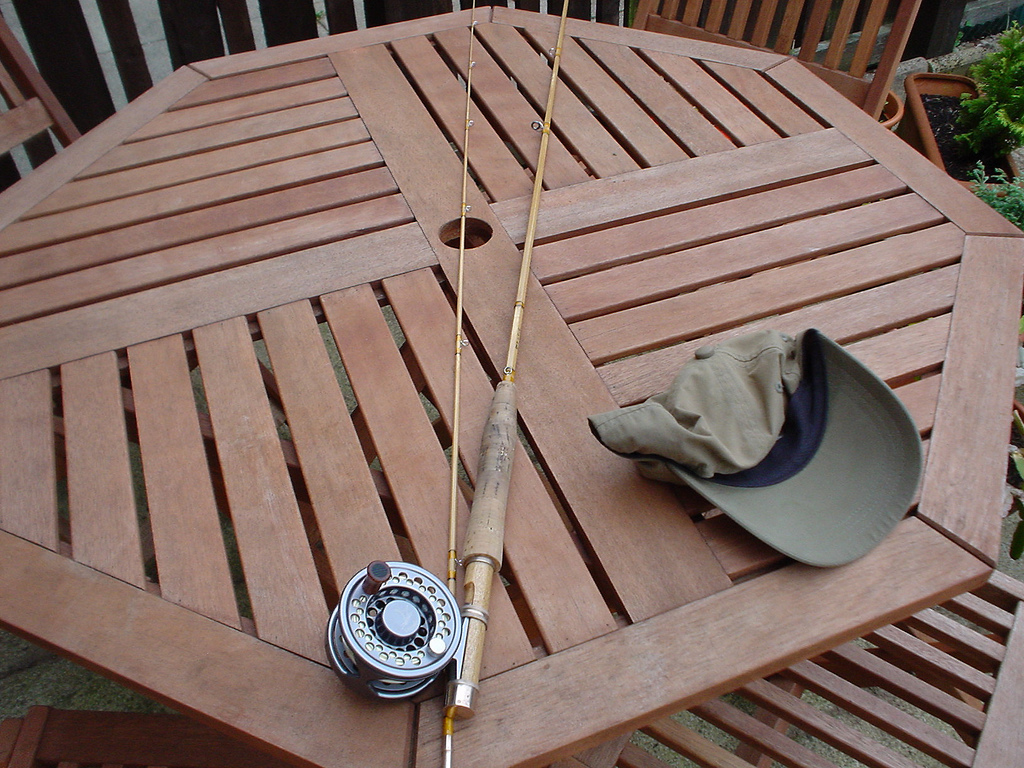
“Bamboo Rod” by aliferste, CC BY 2.0, source file.
4. Get used cane restored by someone who’s still working. Older cane rods turn up used all the time, and a refinish, new wraps or a ferrule refit can put one back on the water. Before you buy one, check three things: ferrules that click or wobble when seated, varnish that’s gone dull, chipped or cloudy, and a set in the tip, a permanent bend that won’t come out. My bamboo rod care guide explains what causes each. Then ask at the gathering, or ask a working builder, who does restoration. Art Weiler’s repair service ending is the reminder: the people who can fix these rods are a finite list. The work keeps an old rod on the water and puts money into a shop that’s still open.


5. Put the rods you already have back on the water. If there’s a cane rod in your closet, or your dad’s, string it up this season. Take it to a blue line where a 7-foot rod is the right tool anyway. Lend it to the friend who keeps asking, then get it back, which is the harder step. When you’re done with it, hand it to somebody who’ll fish it. Builders keep building when people keep seeing cane on the water.
If that sounds small, look at the history of this sport. Every tackle revolution traded some craft for convenience. This is a chance to keep one craft from going all the way.
My take
I don’t think bamboo is dying, and I don’t think it’s safe either. The builders who carried it through graphite’s takeover are getting older, I’m not convinced there are enough coming up behind them, and the knowledge that matters most lives in their hands. I love fishing cane too much to watch that from the bank. A full class and a gathering that just held its 23rd year tell me the on-ramp exists. It just needs traffic. The craft survives if enough of us fish it.
FAQ
Q: Do you have to build rods to go to the Colorado Rodmakers gathering? No. The 2026 gathering had a $40 non-participating registration that covered the meals, next to the $120 full registration. Registration opened January 1 and there were no refunds after July 1, so plan early once the 2027 page goes up.
Next: see how a bamboo fly rod is made, then find a builder in my bamboo roundup.