
In this guide
For the first week I owned a bamboo rod, I treated it like it might press charges. It came out of the tube, I looked at it for a while, and then I mostly left it in the tube — because somewhere along the way I’d absorbed the idea that cane is a delicate, temperamental thing you fish twice a year and otherwise keep behind glass.
That kept me off the water with a rod I’d wanted for years. So here’s the version I wish I’d had, now that there are two in my quiver — a Headwaters Gallatin I’ve fished the South Platte with for a while, and a Madison that just landed. Cane isn’t fragile. It’s specific. It has two real enemies and a short list of small habits, and once you know them you stop tiptoeing and start fishing.
Is a bamboo fly rod really that fragile?
No — it’s just honest about what it wants. David Rogers, whose rods I fish, put it best in the note that came with one of them: bamboo fishes differently, not worse. Care is the same story. A cane rod that’s looked after outlasts almost anything — there are Payne and Garrison rods from the 1950s still catching trout today, which is more than most graphite can promise. A high-modulus tip is stiff, light, and a little brittle; step on it, slam a tailgate on it, and it’s done. Well-kept cane just keeps going.
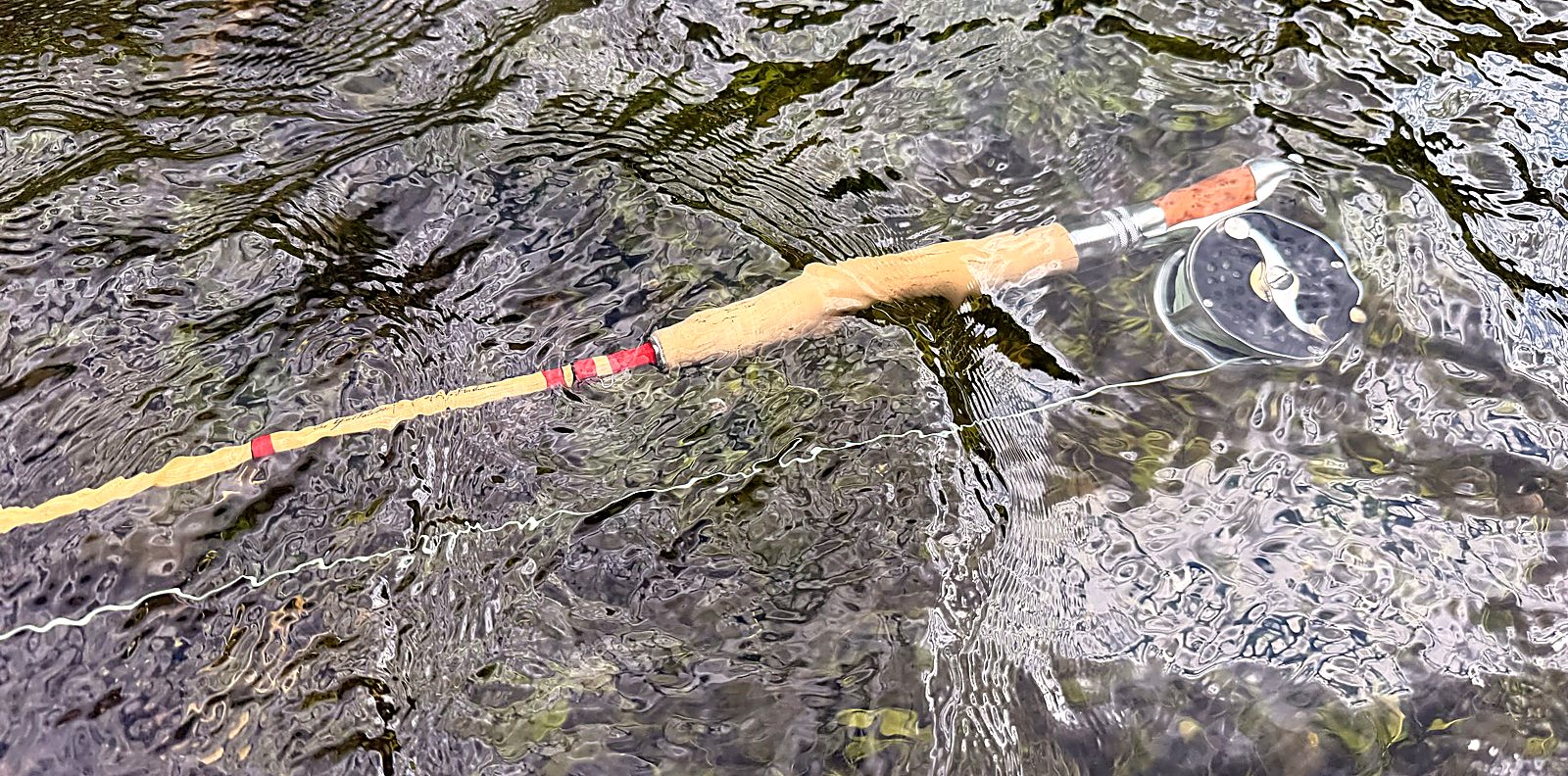
So cane is not the weakling in the room. It has preferences, and unlike most of us, it tells you what they are. Learn them and the whole thing gets easy — the rest of this is really just those preferences, written down.
How do you break in a bamboo fly rod?
You don’t so much break it in as slow yourself down to meet it. The first mistake nearly everyone makes — me very much included — is casting cane the way they cast graphite: hard, fast, forcing the loop out there. Cane loads deeper and slower, and you can feel it happen through the cork, which is half the reason to fish it at all.
So back off. Short, relaxed strokes to start, and let the rod bend and do the work instead of trying to hurry it along. Force the tempo and all you get is a pile of line at your feet and a quiet lecture from the rod. Give it a couple of sessions. By the second or third afternoon the timing clicks, the rhythm turns out to be faster than you were fighting for, and it starts to feel like the thing was built for your hand. It more or less was.
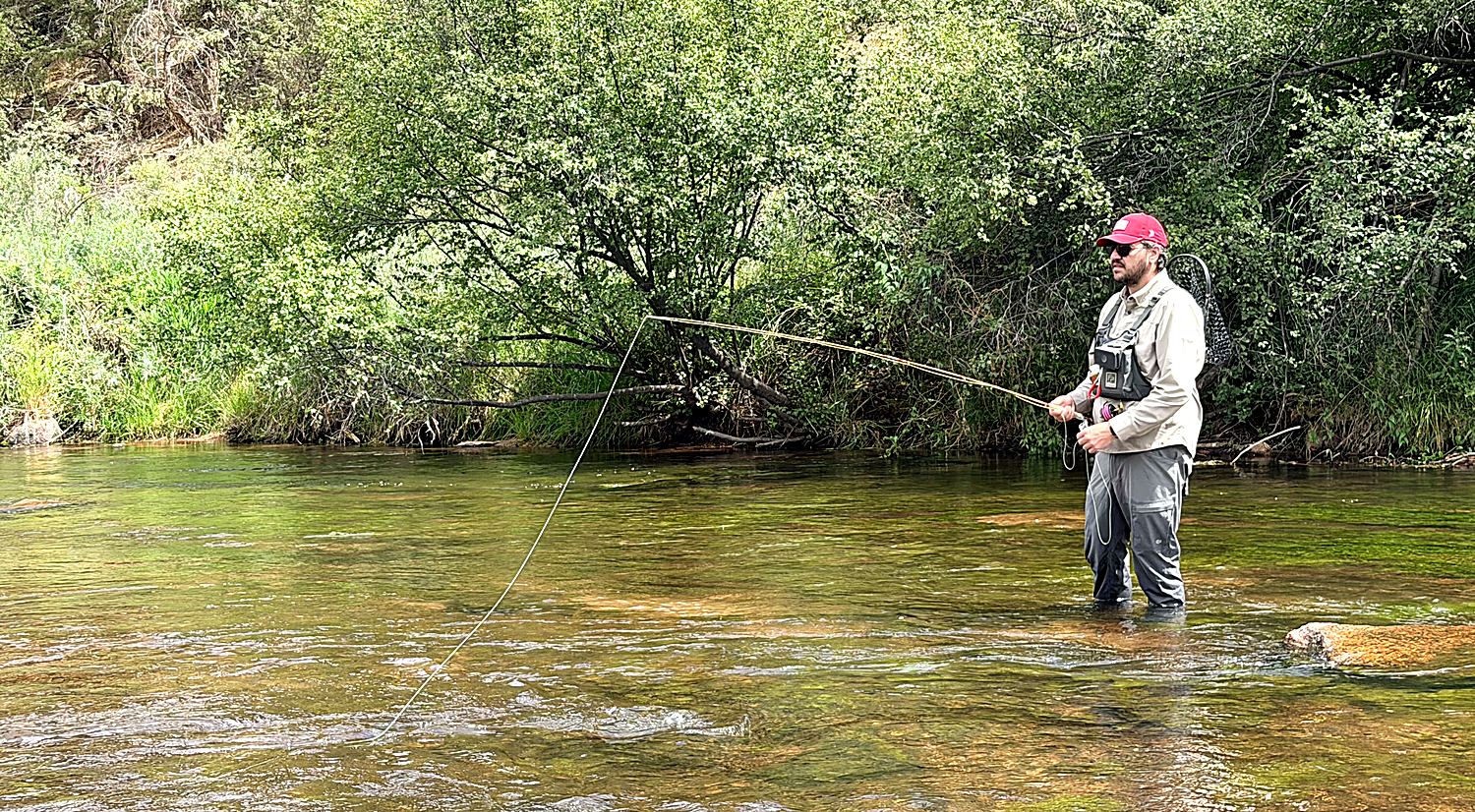
Two small things help while you’re finding it. Cast a line that’s actually matched to the rod — cane likes to feel loaded, and a hair heavier line at short range wakes a slow taper up rather than overpowering it. And fish it close before you fish it far. A bamboo rod’s whole argument is delicate, accurate presentation at short-to-medium range; prove that to yourself in the first hour and you’ll stop trying to make it a distance tool it was never built to be.
What’s the fastest way to ruin a bamboo rod?
Put it away wet. That’s the whole answer, and it’s the one that ends more good cane than anything else.
Moisture is the entire ballgame with bamboo. Trapped damp is what brings mildew up under the varnish, clouds the finish, swells the cane, works the glue lines loose, and quietly delaminates a rod that would otherwise have outlived its owner. It rarely dies in a dramatic snap. It dies slowly, in a dark tube, from water nobody wiped off.
The fix costs thirty seconds. Wipe the rod down and let it dry completely before it goes anywhere near the tube. If I’ve fished it in rain, or the sock got damp, or the day was just muggy, the rod comes home and airs out before it gets put away — draped over the back of a chair for an hour, sections apart, cork drying too. Sealing a wet rod in a tube and forgetting about it isn’t storage. That’s a terrarium.
While you’re at it, give the cork a wipe now and then and let the reel seat dry — grit and salt from your hands live in both, and both sit right where water collects.
Can you leave a bamboo rod in a hot car?
Never. Heat is the second enemy, and this is where living in Colorado bites you.
Heat softens cane, and softened cane takes a set — a permanent bend it won’t come back from — or worse, it opens a glue line. The back window of a truck on a July afternoon in the Springs has killed more good bamboo than any fish ever will. A closed car in the sun climbs past 130°F fast, and a rod tube on the dashboard is an oven with a lid.
So: no hot cars, no dashboards, no leaving the tube on the blacktop while you run in for a breakfast burrito. If the rod has to ride in the truck between spots, it rides on the floor in the shade, not baking in the back window. Cool and dry is the entire rule. Treat the rod roughly the way you’d treat a good cigar — a little heat-and-humidity discipline and it’ll be with you for decades.
How should you store a bamboo fly rod?
The day-to-day stuff is simple; the details are just where rods quietly go wrong.
- Store it strung down, not up. A rod left standing on its tip under its own weight, or leaning in a corner for a month, will remember the position. Cane holds a grudge, and it holds it in the shape of a bend. Lay it flat or hang it from the butt.
- Let it breathe. Pull it out of the tube between trips for a while so any lingering moisture can escape. Long-term, a cloth sock and a ventilated tube beat a sealed, airtight one — you want air moving, not damp trapped. A rack on the wall in a climate-controlled room is ideal. The garage in summer and the attic in winter are both bad ideas for the same reason: wild temperature and humidity swings.
- Rotate your tips. If your rod shipped with two tip sections — most two-tip rods do — alternate them trip to trip. It spreads the wear so one tip doesn’t take the whole season, evens out any set, and keeps a spare honest in case you ever close a car door you shouldn’t have.
- Store it clean and dry, every time. This is the drying rule again, because it’s the one that matters most: the rod that goes into long-term storage damp is the rod you pull out cloudy and sad in the spring.
How do you take care of bamboo rod ferrules?
Carefully, because the ferrules are where good intentions wreck rods. The nickel-silver sleeves that join the sections are a real piece of craftsmanship — if you want to see how much work goes into them, how a bamboo rod gets built is worth a read — and they reward being handled right.
Seat and separate them straight — in line, a clean push and a clean pull, hands close to the joint. Never twist them together or apart. Twisting galls the metal, and a galled ferrule is a loose ferrule, which is a rod that clicks and wobbles itself apart all day. If a joint is sticking, a light touch of ferrule wax helps it seat with that satisfying little pop (and yes, the old trick of running the male ferrule alongside the side of your nose works in a pinch — no, I won’t be taking questions). Keep them clean and dry like everything else; grit in a ferrule is sandpaper.
And if one is genuinely stuck, stop. Warm hands, steady in-line pull, a friend taking the other section behind the knees back-to-back if you have to — but never crank on it and never force it. A snapped ferrule station is not a field repair.
How should you fight a fish with a bamboo rod?
With the butt, not the tip — and this one’s free, because it’s how you should fight a fish on any rod. High-sticking a good one — rod straight up, every bit of the bend crammed into the top few inches — is how tips break, cane or graphite. Drop the rod to the side, put the bend down low where the rod is strong, and let the whole thing plus the reel wear the fish down. A cane rod’s deep, slow flex is a natural shock absorber for light tippet; let it do that job instead of pointing all the load at the one place it’s weakest.
Keep an eye on the varnish while you’re at it. It’s the rod’s raincoat — the actual barrier between your cane and enemy number one. When it goes dull or picks up a chip, get it freshened before water finds the gap; a rod refinished every decade or so is a rod that lasts generations. (An oil-finished rod is easier to touch up in the field but sheds water less well, so it needs the drying rule taken even more seriously.)
My take
I lost the better part of a season to a rod I’d wanted for years because I was convinced bamboo would break if I looked at it wrong. It won’t. Wipe it dry, keep it out of the heat, pull the ferrules straight, don’t store it standing under tension — and it’ll outlast every graphite stick in my garage, and probably me. The care turned out to be the easy part. The hard part was getting over the idea that it needed babying at all.
What’s the short version of bamboo rod care?
Wipe it dry. Keep it cool. Pull the ferrules straight. Don’t leave it in a hot truck, and don’t store it standing under tension. That’s genuinely most of it — a handful of small habits, not a lifestyle.
None of it is about being precious. It’s about not being careless with something worth keeping. These rods were built to fish. So dry it off, put it away right, and go fish yours.