
In this review
Most beginner gear lists on the internet are upsell guides. They want you to buy a $1,200 rod, a $700 reel, and a $500 pair of waders before you’ve caught a single fish. That advice protects shops and brands. It doesn’t protect you.
I’m not the right person to lecture anyone about restraint — I own more rods than I have hands, and “buy once, cry once” is basically my personality. But I learned the expensive way, so you don’t have to. Here’s the actual minimum: the gear you need to fish well your first season, not the gear someone wants to sell you.
The honest minimum, up front
The real starter kit is a 9-foot 5-weight medium-action rod ($200–$400), a sealed-drag reel ($100–$200), matching 5-weight line (~$80), a 9-ft 5X leader with 4X/5X/6X tippet, a dozen flies (Parachute Adams, Pheasant Tail, Hare’s Ear, Wooly Bugger — three each), nippers, hemostats, polarized sunglasses ($80–$200), and a brimmed hat — about $760 total. Skip the waders your first season and the bank fishes fine; add them in season two and you’re at $1,200–$1,300 for a setup that lasts ten years. Everything below is why each piece earns its spot — but that’s the recipe.
The Rod — 9-Foot, 5-Weight, Medium Action
If you buy one rod, it should be a 9-foot, 5-weight, medium-action rod. There is no other defensible choice.
A 9-foot rod gives you enough length to mend line, fight fish, and reach across moving water. A 5-weight casts everything from small dry flies to medium streamers — the broadest range of any line weight. A medium action is forgiving on your timing while you learn.
What to spend: $200 to $400. Echo Carbon XL, Redington Vice, Sage Foundation, Orvis Clearwater. Any of these will outlast you if you don’t break them. Above $400 you’re buying refinement you can’t yet use. Below $200 you’re buying frustration.
The Reel — Don’t Overthink It
For trout fishing on a 5-weight rod, the reel is mostly a line storage device. The drag system matters more in saltwater and big-game fishing than for the trout you’ll be catching.
Get a sealed-drag reel in the $100 to $200 range. Lamson Liquid, Redington Behemoth, Orvis Hydros, Echo Bravo. Don’t spend $500 on a reel for your first year. You can’t yet tell the difference — and I say that as someone who absolutely could not tell the difference for about three years and bought the expensive ones anyway.
Line, Leader, Tippet
- Fly line: Match the rod (5-weight line for a 5-weight rod). Scientific Anglers Amplitude MPX or Rio Gold are the standard for trout. ~$80.
- Leader: 9-foot 5X tapered leader. Buy a pack of three.
- Tippet: 4X, 5X, 6X spools. Trouthunter Fluoro or Rio Fluoroflex. You’ll learn what each is for.
The Flies — A Dozen That Catches Fish Anywhere
You don’t need fifty flies. You need twelve. Three of each:
- Parachute Adams, size 14–16 — the generic dry that works in any mayfly hatch
- Pheasant Tail Nymph, size 16–18 — the universal nymph
- Hare’s Ear Nymph, size 14–16 — caddis larva, scud, or generic buggy fly
- Wooly Bugger in olive or black, size 8–10 — streamer, leech, general aggression fly
Three of each gives you color and depth variety. Twelve flies covers everything from dry-fly hatches to deep nymph rigs to streamer fishing. Add more later when you know what you’re missing.
You can find all four of these at The Fly Fishing Place. 15% off is built into the link with my code RDC.
Wading or No Wading
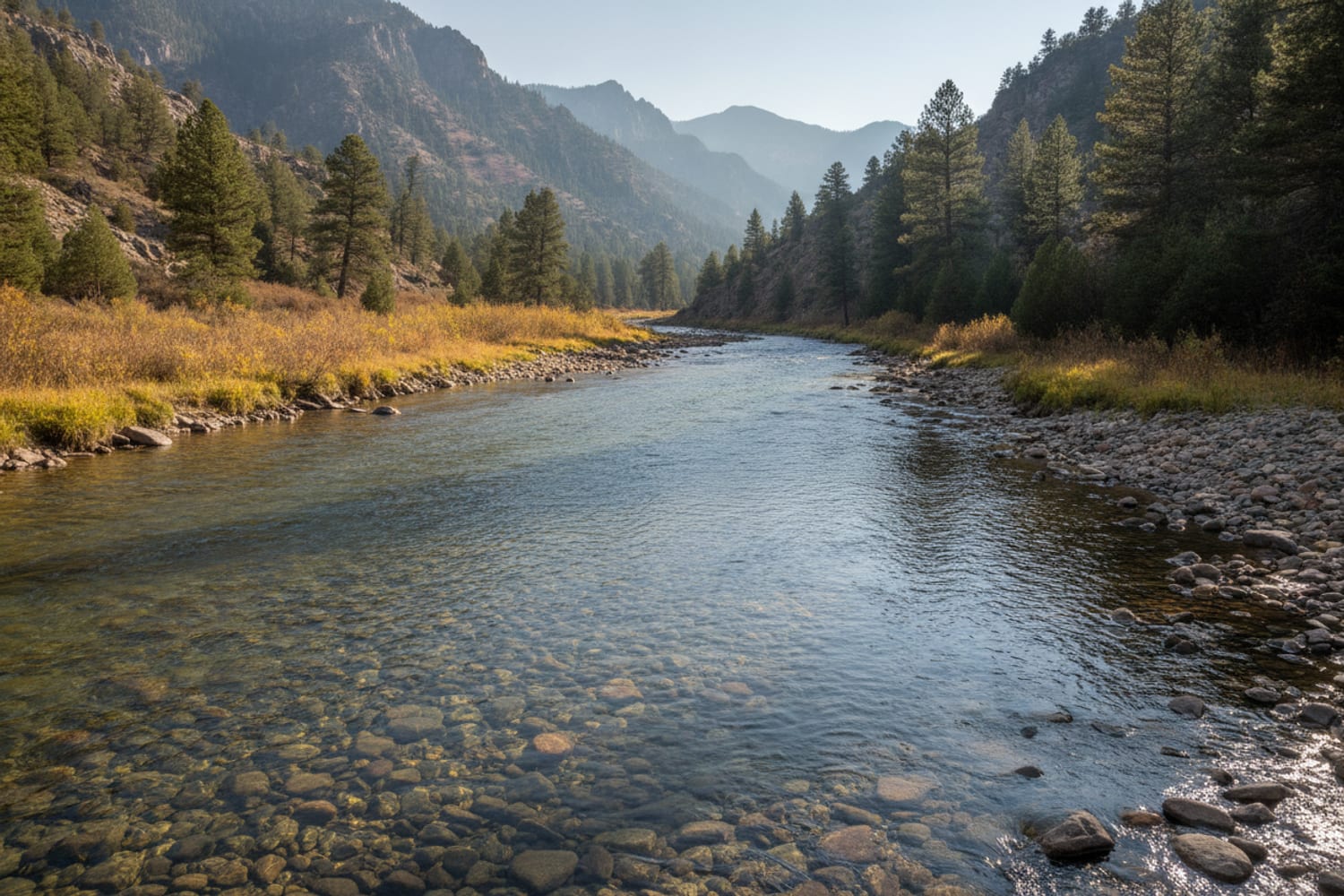
You don’t actually need waders to fly fish. Most beginners do better the first season fishing from the bank, in shorts on summer water, or in rubber boots in winter. Waders cost $200–$400 minimum for something that won’t leak. Save that purchase for season two when you know what you’re doing.
If you’re getting waders anyway: Simms Freestone or Patagonia Swiftcurrent Pack at the entry end, Skwala RS if you want to spend once and not buy again. Pair with rubber-soled wading boots (rubber soles are the standard in Colorado and easier on invasive-species spread). No-frills package: $300–$500 total.
The Two Tools You Actually Need
- Nippers — to cut tippet. A $5 pair will work. A $25 pair will work better.
- Hemostats — to unhook fish without hurting them. A $10 pair from any shop.
That’s it. You don’t need a vest of tools your first year. You’ll add tools as you discover what you actually use.
What You DO Need (That Nobody Sells You)
Polarized sunglasses. Non-negotiable. You can’t see fish in moving water without polarized lenses, and trying to fly fish without seeing the water is like driving in fog. Spend $80–$200 on a real pair — Costa, Smith, Maui Jim, or a quality generic. This is the single most underrated piece of fly fishing gear.
A brimmed hat. Sun protection, glare reduction, and a barrier between the back of your neck and a bad cast. $20 baseball cap or a wide-brim. Either works.
My take
Where I’d actually put the money, in order: rod, fly line, sunglasses. Those three decide whether your first season feels like fly fishing or like punishment. The reel is fourth on purpose — buy the sealed $150 one and move on; it took me three years and several expensive reels to admit I couldn’t feel the difference. If the budget pinches, the waders are what I’d cut — the bank fishes fine all summer. You can’t buy your way past the learning curve, but you can absolutely buy your way into quitting before it flattens.
What NOT to Buy Your First Year
- A second rod. Master the 5-weight first.
- A $700 reel. You can’t yet tell the difference.
- A vest full of tools. You don’t know what tools you need yet.
- Twelve fly boxes. Buy one. Fill it with the dozen above.
- Specialty gear (euro nymphing rod, switch rod, spey kit, saltwater setup). These solve problems you don’t have yet.
The Real Total
Reasonable beginner setup, no shortcuts that you’ll regret:
| Item | Cost |
|---|---|
| Rod | $300 |
| Reel | $150 |
| Fly line | $80 |
| Leader + tippet | $40 |
| Flies (12) | $36 |
| Nippers + hemostats | $30 |
| Polarized sunglasses | $100 |
| Brimmed hat | $25 |
| Total | ~$760 |
Add waders + boots if you want them ($400–$500), and you’re at $1,200 to $1,300 for a complete setup that will serve you for ten years if you don’t break it.
You can do this cheaper. You can do this much more expensive. The total above is the honest middle that I’d put a friend into if they asked.
The First Day
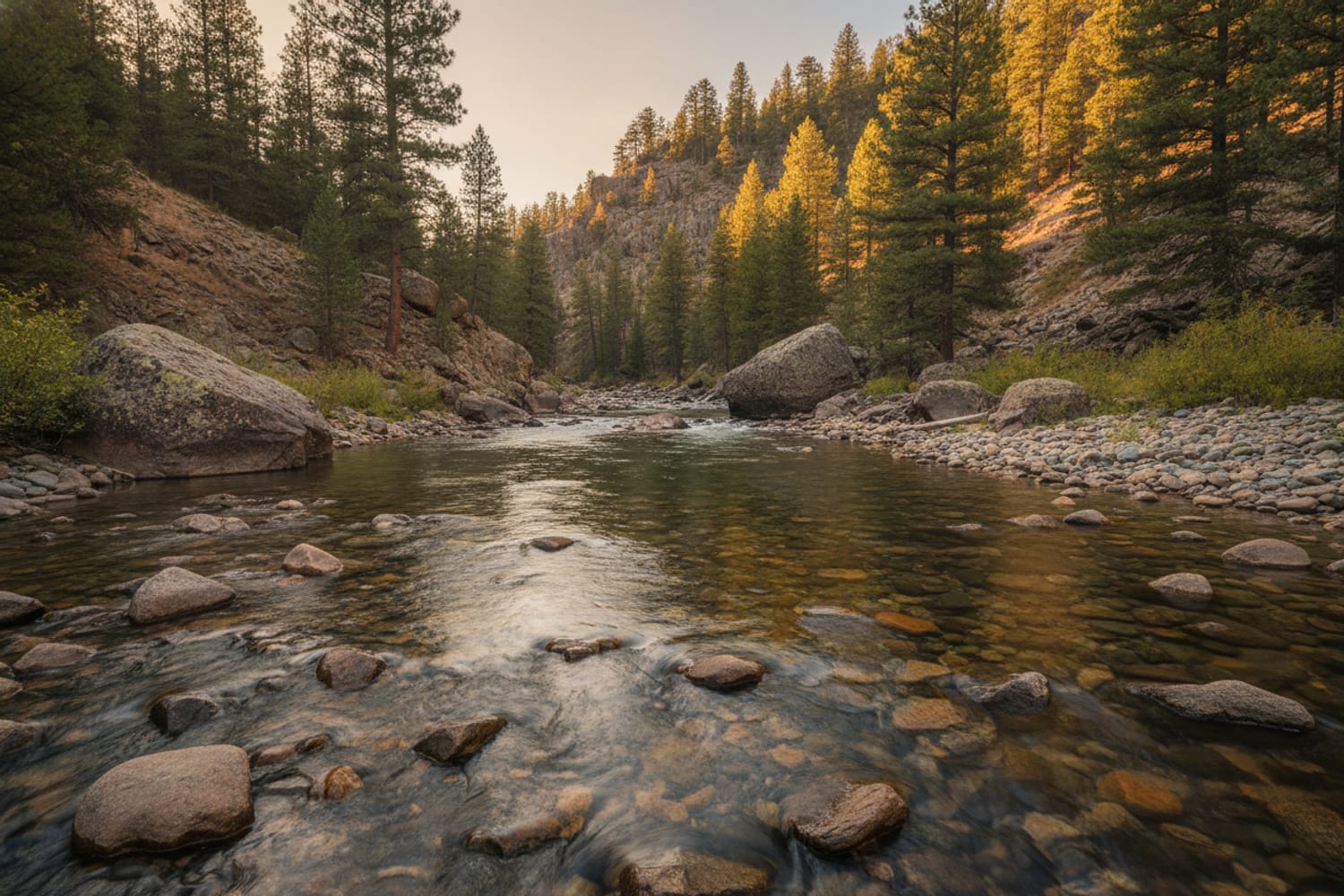
Find a beginner-friendly fishery — a stocked stream, a slower section of a tailwater, a pond. Skip the technical water at first. The Dream Stream is a graduate-school fishery — selective fish, technical water, fast learning curve in the wrong direction. Deckers is a good first river: roadside, readable and easy to wade at normal flows. Start somewhere fish are willing to eat without being fully selective.
Tie on a Pheasant Tail under an indicator at three feet of depth. Cast it across the current and let it drift naturally. When the indicator stops or twitches, set the hook by lifting the rod. Repeat until something eats it.
That’s fly fishing. Everything else is variations on that theme — and a closet that slowly fills up no matter how much you swear it won’t.