
In this review
I stopped at the shop this morning for a few flies and left doing math in the parking lot like a man who’d just been handed a repair estimate.
Nothing exotic. A handful of nymphs, a couple of dries, the sort of restock that used to be a twenty and change. It wasn’t. And it wasn’t the shop gouging me either — I’ve known those guys for years and they looked about as thrilled about the sticker as I did.
So I went and found out why.
What a fly costs now, and what changed
A standard shop fly ran about $2 for roughly twenty-five years. Today it’s $3–$4.50, with premium jigs and streamers hitting $5–$6.75. The jump is recent and it isn’t ordinary inflation — in April 2025 the U.S. put steep reciprocal tariffs on the exact countries where nearly all flies are hand-tied, and by that fall fly companies were passing the cost through to shops. Umpqua stated it was absorbing a 20% tariff and raising prices about 12% to cover part of it.
That’s the whole story in a paragraph. The rest is why it landed so much harder on flies than on everything else in the shop.
Flies were the last honest price in America
Here’s the part that surprised me. Fly prices didn’t creep. They sat still for a generation.
From the mid-1990s until about 2021, a standard shop fly hovered around two bucks. Twenty-five years. Rent tripled, trucks doubled, a decent rod went from $400 to $1,000, and the Pheasant Tail in the bin held at $2 like it had been grandfathered in. I can’t think of another thing I buy that pulled that off. Gas certainly didn’t.
Which means when it finally moved, it moved all at once — and everyone noticed simultaneously, because we’d all been anchored to the same number since the Clinton administration.
Why flies got hit harder than rods
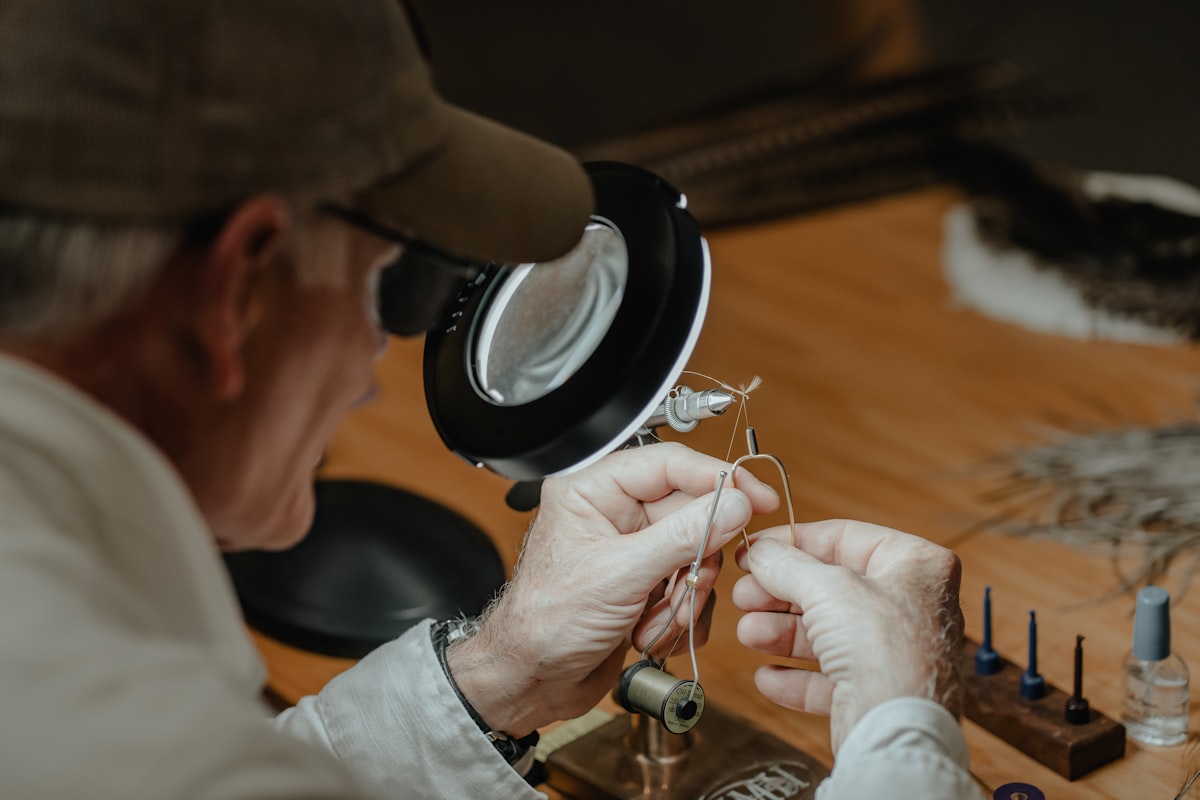
Almost nobody realizes this until someone says it out loud: no machine ties flies. Not one. Every single fly in that bin was tied by a person, by hand, one at a time.
And the overwhelming majority of them were tied overseas — Thailand, Kenya, Sri Lanka, Vietnam, China — in factories where skilled tiers do the work at wages that make a $2 retail price possible in the first place.
That makes a fly almost pure imported hand labor. There’s no domestic factory to shift to, no automation to lean on, no cheaper alloy to swap in. A rod company can move a mandrel. A reel company can change suppliers. A fly is a person with thread, and that person is in Chiang Mai.
So when tariffs landed on those countries, flies didn’t get nudged. They took the hit at close to full strength, because the labor is the product.
The actual numbers
April 2025 reciprocal tariff rates on the tying countries came in at Sri Lanka 44%, Vietnam 46%, and China 104%. Thailand later settled at 19%. All of that sits on top of the standing 9% duty that artificial flies already carried.
Then it worked downhill. By October 2025, the trade press was reporting that dealers were being asked to pay, in some cases, dollars per dozen more than the season before. Umpqua confirmed a 20% tariff and a roughly 12% price increase — meaning they ate about 40% of it themselves. A competitor sourcing from the same country passed through 8%.
Read that again, because it’s the part I didn’t expect: the manufacturers absorbed a real share of it. They could have passed the whole thing along. Most split it. Then it reached your shop as a higher wholesale bill — and a fly shop runs on thin margins, so there’s only so much of that a small business can quietly eat before it has to show up in the bin. That’s the number that made me stand in the parking lot doing arithmetic.
Nobody in that chain is the villain. That’s the frustrating part. There’s genuinely no one to be mad at behind the counter — the shop got handed the same bill you did, just a step earlier.
What it actually costs you
Say a fly went from $2.00 to $3.75. A dozen went from $24 to $45.
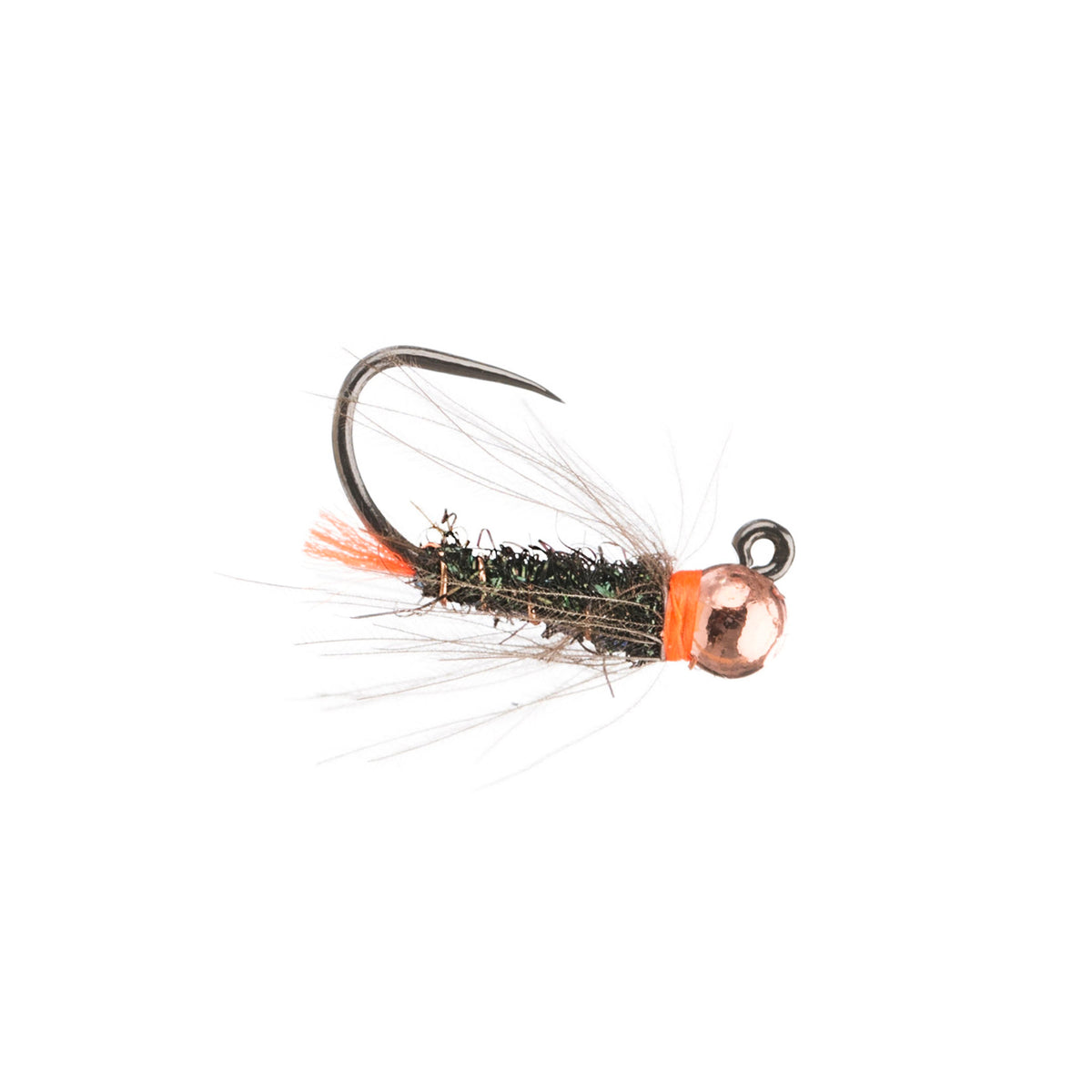
Now be honest about how you fish. If you nymph the South Platte in a canyon, you are going to donate flies to the rocks — that’s not clumsiness, it’s the price of getting deep enough to matter. A dozen tungsten jigs used to be an annoying afternoon. Now it’s a real number.
The pattern that stings most is the one you lose most, which in my box means the Blowtorch and anything with a tungsten bead. Tungsten was already the expensive part before anyone said the word tariff.
So what do you actually do
Buy fewer patterns, deeper. This was true before the tariffs and it’s just louder now. Most of us carry too many patterns in too few sizes when we should carry few patterns in many sizes. My fly box breakdown is built on exactly that idea, and it got cheaper to be right about.
Tie the ones you lose. Not everything — the ones the river eats. If you’re feeding a dozen tungsten jigs to a canyon every season, that’s now the math that finally justifies a vise. If you’ve been circling this, start here and here for what’s actually worth buying.
But don’t kid yourself that tying saves money immediately. It doesn’t. I want to be straight about this because the internet loves pretending otherwise. You will spend more in year one than you would have spent on flies, you will produce a first dozen that look like they were tied during an earthquake, and the savings arrive somewhere in year two — right about when you start buying materials you don’t need because a hackle cape went on sale. Tying is worth doing. Just not as a budgeting strategy.
Buy your losers in bulk, your specialists singly. Deep-discount online shops still sell trout flies well under a dollar, and they’re perfectly adequate for the patterns you’re going to lose anyway. Save the shop money for the technical stuff where the tie quality genuinely shows up in the drift.
And keep buying from your shop. They didn’t do this, they’re absorbing part of it too, and the day they close is the day you find out what their flow report was worth.
Will fly prices come back down?
Probably not much, and not quickly.
Trade terms genuinely can move — Thailand already renegotiated from its April rate down to 19%, so the ceiling isn’t fixed. But two things work against relief reaching the bin. Manufacturers absorbed a chunk of this rather than passing it all through, which means their margin has to heal before any rollback reaches a wholesale sheet. And retail prices are sticky downward everywhere: they go up like a rocket and come down like a feather.
If you’re waiting for $2 flies to return, don’t. The realistic best case is that the climb flattens.
What I’m less sure about
The endpoints here are solid — the long $2 plateau and the 2025 tariff shock are both well documented, and the Umpqua figures come from the trade press, not a forum. The middle years are softer. Shops don’t archive their prices, so a clean “here’s 2023 versus 2024 at the same shop for the same fly” doesn’t really exist publicly. I’ve given you ranges, not a precise curve, on purpose.
The honest version: your flies cost more because the people who tie them live in countries we put tariffs on, the manufacturers ate part of it, your shop ate what its margins allowed, and the rest reached the bin. Nobody behind that counter did this to you. Worth knowing when you’re standing there doing math.
If this pushed you toward the vise, start with what tying actually costs — and if you’d rather just carry less and lose less, here’s the box I actually fish.