
In this review
There’s a specific cold that lives on a high Colorado reservoir in January, and it has almost nothing to do with the number on the thermometer. It’s the wind. It comes across a mile of open ice with nothing to slow it down, finds the one seam in your layers, and sets up shop. Fighting it with a hunting parka and stubbornness is roughly like fighting a house fire with a strongly worded letter. Plenty of people try anyway, quit at noon, drive home with no feeling in their legs, and decide they just don’t love ice fishing that much.
Most of them love it fine. They just need the right suit.
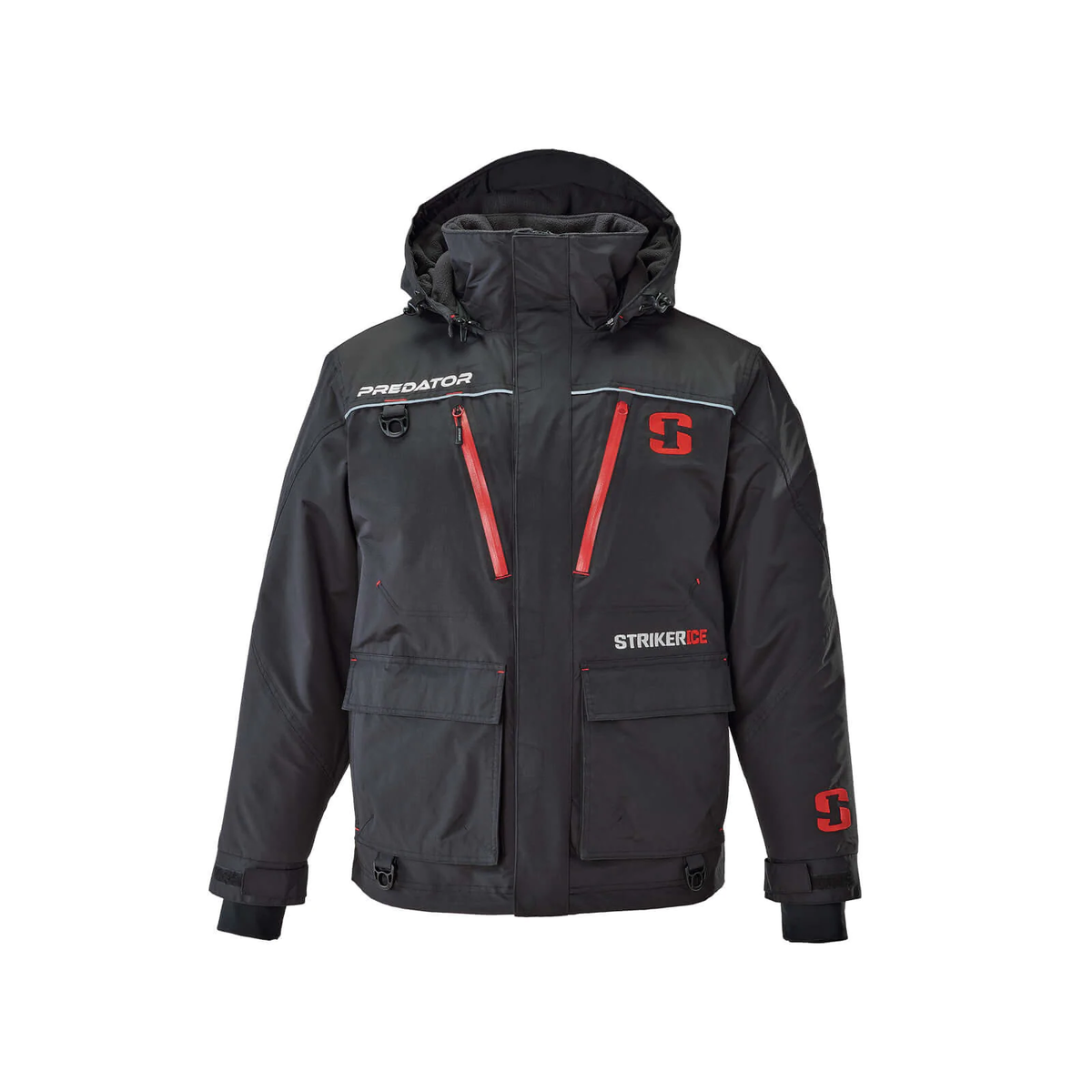
The StrikerICE Predator — jacket and bibs — is the suit I own for hard water, and I’m on the ice most winter weekends. This review is about what it’s built to do, where the money goes, and who should skip it, measured against the work Colorado ice actually asks of a suit: kneeling in slush, drilling more holes than anyone would admit to, and getting sandblasted on the South Park flats.
The short version
The Predator is StrikerICE’s floating jacket-and-bib suit: insulated, fully waterproof, built-in Sureflote flotation, and a vented shell. Here’s the part that matters — it’s genuinely warm. The sealed, wind-stopping shell plus the flotation foam make it warmer than its insulation number suggests, which is what lets you sit over a dead hole at single digits instead of pacing to stay warm. The bonus is that it also breathes — crack the vents on the walk out or while you’re cranking the auger and you dump the heat instead of sweating into a freeze. Warm when you’re still, vented when you’re working. It does both, and it floats.
Roughly $300 for the jacket and $250 for the bibs at MSRP — call it $550 for the suit, and a good bit less when a retailer runs last year’s colorway or ice gear gets gutted on March clearance (both pieces have dipped under $180). It is not cheap. Almost no good hard-water suit is, and the trout have shown no interest in splitting the bill.
What you’re actually buying
Every Striker suit floats, so the real question between their models is warmth and how the suit carries it. The Predator’s trick is that it stays warm — sitting or moving — without turning you into a kneeling marshmallow you can’t crouch in. The wind-stopping shell does a huge amount of the work: out on open ice, blocking the wind matters as much as the fill, and the Predator seals out the gusts that end most people’s days. Then the cross-flow venting lets the heat back out on demand so you’re not soaked the second you stop. Warm, sealed, and breathable in one suit is harder to pull off than the spec sheet makes it sound, and that combination is the reason to pay for this one over a cheaper float suit.
The jacket
Spec line (verified): 100g Thermadex insulation, 5K/5K Hydrapore waterproof-breathable rating, 300D polyester shell with 320D Nylon Tussor reinforcement, 150g built-in Sureflote flotation assist, reinforced wear panels, magnetic storm-flap closure, cross-flow ventilation, and top-loading cargo storage.
A few of those matter more than the others in real use. The magnetic storm flap sounds like a gimmick until your hands are too cold to work a zipper and the front still seals itself with a reassuring series of clicks — that one matters on every single trip. The cross-flow vents are the quiet hero: pop them while you’re cranking an auger and you dump heat before it becomes sweat, then close them and the warmth comes right back. The 5K/5K shell is a genuinely waterproof membrane, which on the ice means slush, blowing snow, and a wet bucket seat don’t soak through to you.
The cut is roomy without being sloppy — space for a midlayer, articulated enough to swing an auger and lean over a hole without the hem riding up your back and letting the wind in, which is the hard-water version of a draft under the door that follows you around all day. The design target is a single-digit day, wind howling, one decent baselayer underneath, and you staying warm whether you’re drilling or parked on a bucket. Everything else on the spec sheet serves that.
The bibs
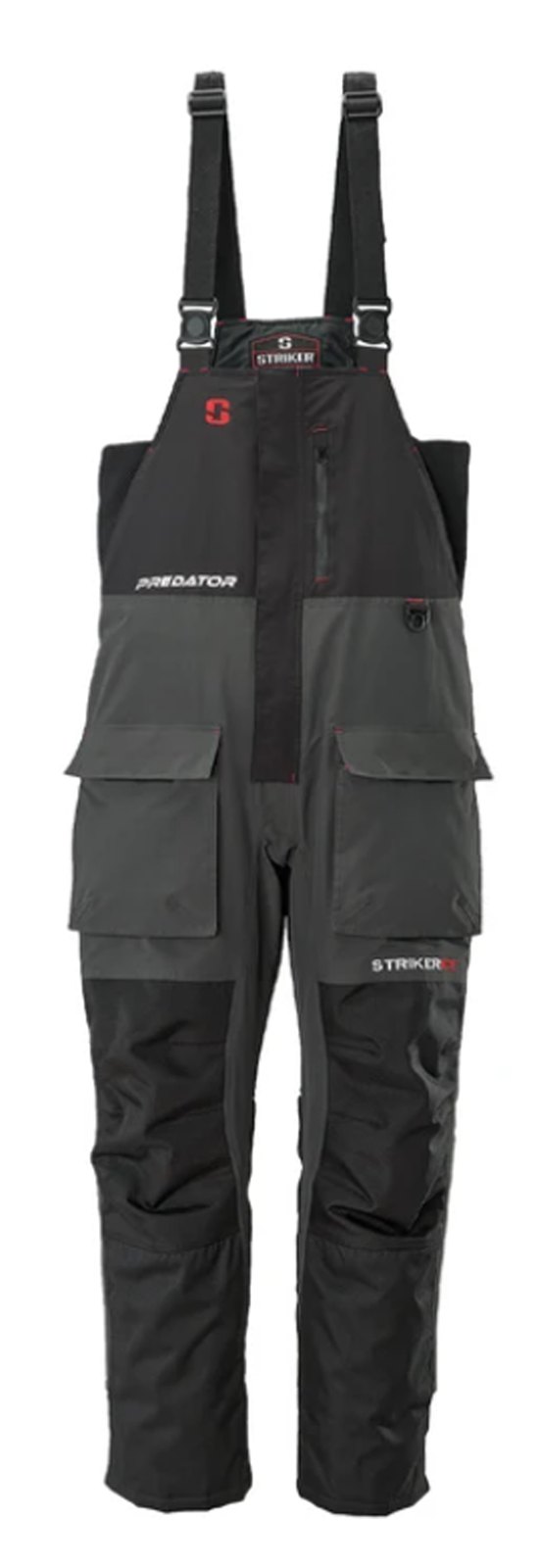
The bibs are where a hard-water suit lives or dies, because the ice is where you kneel, and kneeling is where cheap bibs surrender. The Predator’s answer is its 1680D snakeskin knee panels — a heavy, abrasion-resistant material across the knees and shins that shrugs off the morning crunch and the afternoon slush both. Refrozen chop shreds ordinary nylon when you’re dragging yourself around a hole to land a fish, and this is the material built for exactly that.
Same Sureflote flotation built into the bibs, a high back that keeps the wind off your kidneys when you bend over, and cargo pockets sized for the junk you actually carry — pliers, a spare spool, a fistful of tungsten, and the snack you’ll forget is in there until March. The fit runs true, with room for a fleece bottom layer underneath without binding at the knees — test that with a real crouch before you cut the tags, because it’s the claim most bibs fail.
Is the StrikerICE Predator warm enough for Colorado ice?
Short answer: yes — including when you sit. Sitting still is where most suits lose the argument with a single-digit wind, and two things make it warmer than the insulation number on the tag suggests: the shell stops the wind cold — on open ice that’s half the battle — and the built-in flotation foam adds a layer of its own. Where most insulated suits cook you the moment you start working, the Predator’s vents let you bleed off heat on the auger and the walk, so you stay warm at rest without paying for it in sweat when you move. For Colorado hard water, that combination is exactly what you want.
What it’s actually like out on the ice
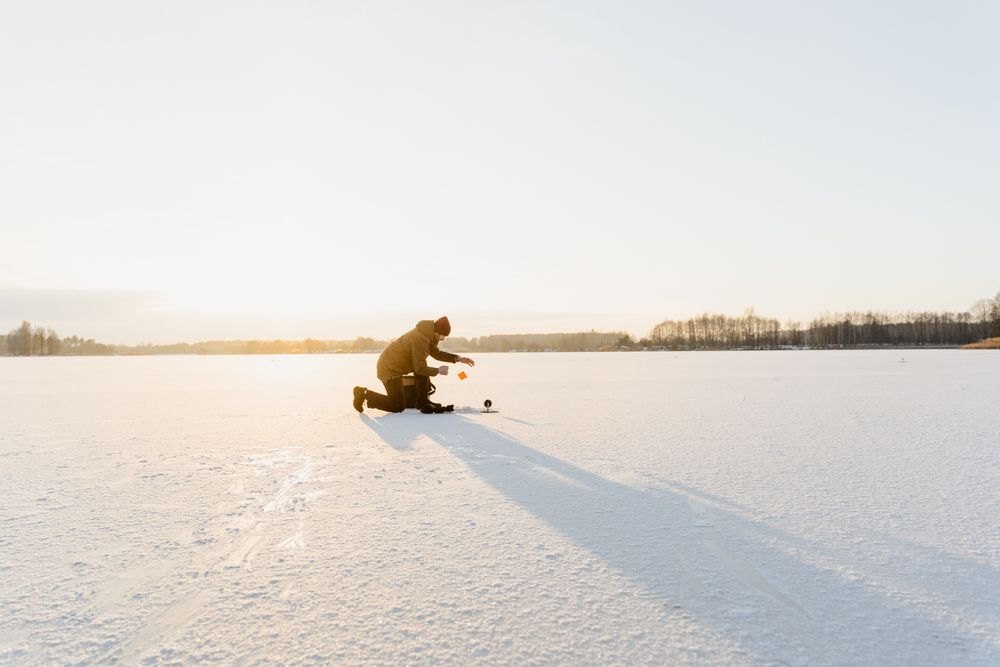
Picture a normal day on Eleven Mile: wind crossing a mile of open ice, and you drilling a line of holes looking for the one with fish under it. Punch a dozen, walk the spread checking each, settle on one when the screen lights up, work it, then move again when it dies. Cranking the auger, crack the vents. Kneeling to clear slush and drop a transducer, the snakeskin takes the abuse. When you settle in over fish and sit, zip up, the magnetic flap clicks shut, the wind goes away, and you stay put — warm — until the bite tells you to move.
When you want to genuinely thaw out — gloves off, re-tie with bare hands, warm up a cold kid — that’s what a shelter and a heater are for, and it’s why I own an Otter hub and a heater. That’s a comfort upgrade, not a rescue from a suit that’s failing. The Predator is built to keep you fishing out in the open; the hub is just the next level of cozy.
Durability is where a $550 suit has to justify itself: the shell should keep beading water, the zippers should keep running, the knees should stay intact, and the magnets shouldn’t give up. Those are the four things that quit first on cheaper suits, usually around the same time your own knees do. Striker’s reputation among the Midwest and Canadian diehards is earned — this is the suit you see on the people who are out there every weekend, not the people posting about it.
A word on the flotation (and what it is not)
The Sureflote foam is flotation assist, not a Coast Guard-approved PFD — Striker says so plainly. It keeps your head up and buys you minutes to get your ice picks into the edge and haul yourself out. It is one link in a self-rescue chain, not the whole thing, and it does not replace picks, a rope, and a partner on shore. I walk through exactly how that chain works in my first-ice safety guide — read it before you trust any float suit, including this one. Buy the flotation because it’s free insurance built into a suit you were going to buy anyway. Don’t buy it as permission to fish bad ice.
Pros and cons
Pros
- Genuinely warm at rest — the shell and flotation foam make it warmer than the insulation number suggests
- The sealed, wind-stopping shell does half the work on open ice; the magnetic flap clicks shut and the gusts just stop
- Cross-flow vents dump heat on the auger and the walk, so warm-when-still doesn’t cost you a sweaty freeze when you move
- 1680D snakeskin knee panels built for kneeling on refrozen chop
- 150g Sureflote flotation built into both pieces — free insurance in a suit you were buying anyway
- Magnetic storm flap seals the front when your hands are too cold to run a zipper
Cons
- Roughly $550 for the pair — real money, and you feel it
- So warm that a mild, calm, sunny afternoon has you working the vents or shedding the jacket, or you’ll cook
- The flotation is assist, not a Coast Guard-rated PFD — it is not a life jacket and won’t stand in for one
- More suit than the occasional angler needs a handful of calm days a season
Who should NOT buy the Predator
I like this suit enough to be clear-eyed about who it’s wrong for:
- The occasional angler. If you get out a handful of calm days a season, this is more suit — and more money — than you need. A value float suit will keep you warm and dry for those trips. The Predator makes sense when you fish hard and fish often.
- The budget-first buyer. Five hundred dollars is real money. You can stay warm, dry, and floating for less; you give up the snakeskin knees, the venting, and some refinement. Fair trade if the dollars are tight.
- Anyone shopping for a PFD. Again: this is flotation assist, not rated flotation. If you need a rated device, buy one — separately.
One honest quirk: because it genuinely is warm, on a mild, sunny, calm afternoon you’ll want to work the vents or shed the jacket, or you’ll overheat. That’s the trade-off for a suit that keeps you warm when the wind comes back up — and on these reservoirs, it always comes back up.
My take
Buy it if you fish the ice most weekends; skip it if you get out a handful of calm days a season. The reason is simple: it’s built to do the two things that usually fight each other. It keeps you warm sitting still over a hole, and it breathes when you’re drilling and walking so you don’t sweat yourself cold. Add built-in flotation and snakeskin knees, and there’s not much left to want. It’s premium gear at a premium price, and for one warm, breathable suit on Colorado ice, it’s the one I’d buy again.