
In this guide
Runoff on the South Platte runs from late April through mid-June depending on the snowpack. In a heavy snow year, flows at Cheesman can run 500–800 CFS — five to eight times the winter baseline. Most of the front-range crowd takes one look at that, racks the rods, and waits for July. I get it. The river looks like a chocolate milkshake doing 35 mph. But waiting it out is a mistake, and I’ll admit I learned that the slow way.
Runoff is fishable. You just have to know where to look and what to throw — and be willing to fish water everyone else is driving past.
A note for 2026. This is a record-low snowpack year, so the river isn’t running like a normal runoff. Denver Water has Antero Reservoir closed and is drawing the upstream reservoirs down to move water through the system, and releases are being managed tighter than usual — don’t count on the big snowmelt surge this guide describes. Some stretches stay low and clear when the calendar says blown-out; others get bumped on a release with no melt behind them. Check the gauge before every trip and fish the water that’s actually in front of you, not the season on paper.
Can you fish the South Platte during spring runoff?
Yes. The main channel blows out for a few weeks, but Cheesman Canyon at 200–300 CFS, the reservoir-fed Dream Stream, tailwaters below reservoirs, and quick-clearing tributaries all stay fishable. Fish the slowed edges with heavy flies and you’ll have the place to yourself.
Understanding the Runoff Cycle
The South Platte’s flow pattern in runoff years:
Late April: Snowmelt begins at lower elevations. Flows start rising from winter levels (50–100 CFS) toward 200–300 CFS. Water is cold and starting to color. The first week of this phase is often the best spring fishing — fish are active, flows are elevated but manageable, and the water hasn’t gone off-color yet.
May: Peak runoff months. Flows can hit 600–900 CFS at Deckers in a high-snow year. Water goes brown with sediment. Traditional nymph and dry-fly fishing becomes nearly impossible in the main channel.
Early June: Flows recede, water begins to clear. By mid-June in a typical year, Cheesman is back to 150–200 CFS with reasonable clarity. This is when the first good hatches of the year arrive.
Late June onward: Summer flows, clear water, full fishability.

Sections That Stay Fishable
The whole game during runoff is finding water that doesn’t blow out. The main channel is a lost cause for a few weeks — so stop staring at it and go find the stuff that stays honest.
Cheesman Canyon in early runoff: The canyon holds fishable conditions longer than the Deckers stretch because it’s canyon-confined water with more rockbed structure. At 200–300 CFS, Cheesman is actually fishing — the fish stack in the slower seams and bank pockets that form in high water. Once flows hit 500+ CFS, the canyon becomes dangerous to wade and you’re done for a few weeks.
The Dream Stream (spring creeks): Spring-fed sections don’t fluctuate with snowmelt the way runoff-fed rivers do. The Dream Stream at Spinney maintains more stable flows through runoff season because it’s fed by the reservoir, which is managed. Check Spinney Mountain Reservoir outflows — when the main South Platte is blown out, Spinney is often fishable and sees fewer anglers.
Tailwater sections below reservoirs: Any section below a reservoir benefits from regulated releases. The Pueblo tailwater on the Arkansas River, for example, doesn’t experience traditional runoff because Pueblo Reservoir buffers the flow.
Smaller tributaries: The upper South Platte tributaries — smaller creeks that clear quickly — can fish surprisingly well during runoff weeks when the main river is off-color. These are smaller fish, but active and often accessible.
High-Water Tactics
When flows are elevated (200–400 CFS at Cheesman), everything you do in low water gets thrown out the window. Here’s what actually works.
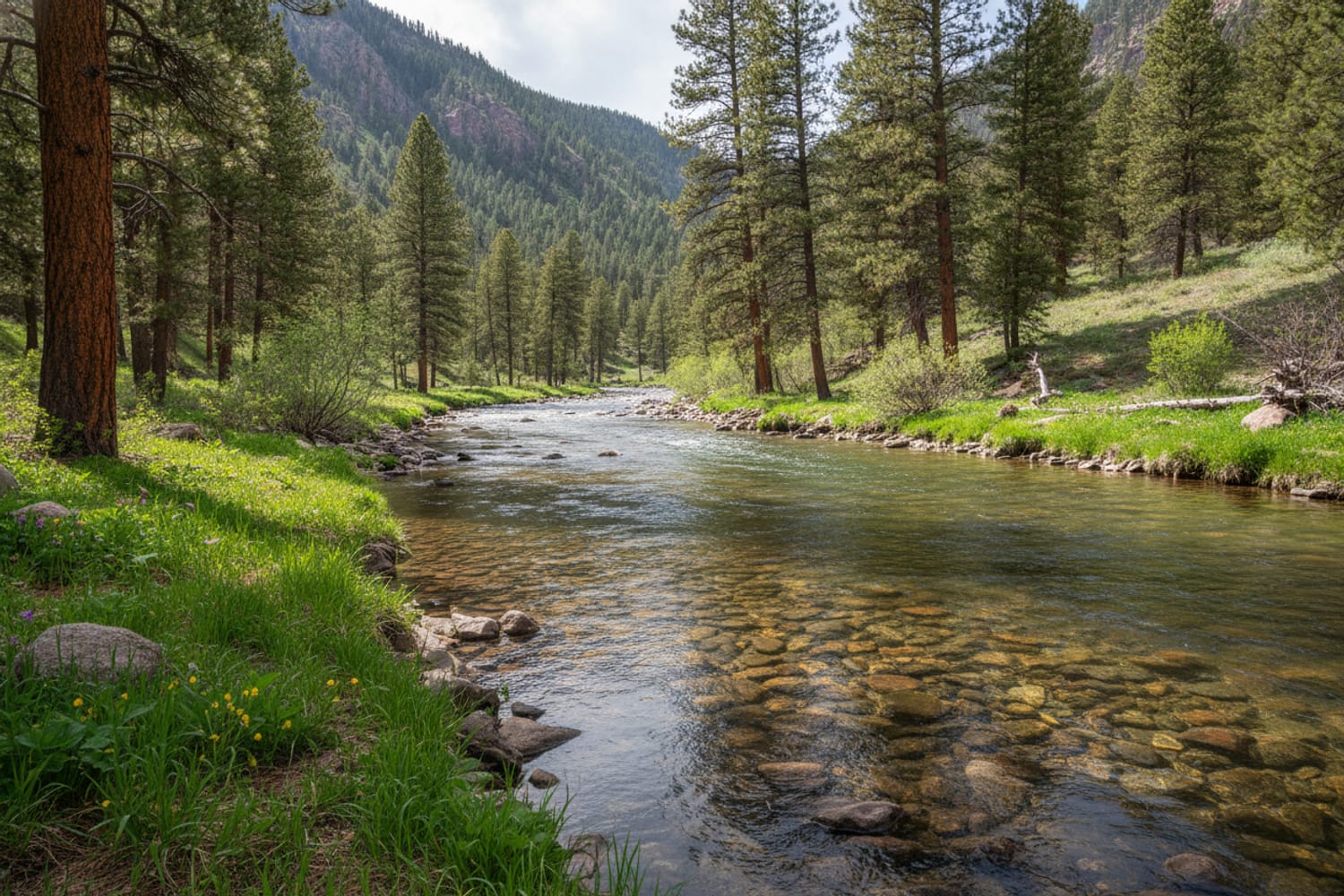
Fish the edges. The main channel is too fast and too deep. The productive water during high flows is 6–18 inches of water along the bank where current has slowed. Fish push to these edges and hold in conditions that would be empty in normal flows. Walk slowly and look for any slowed current adjacent to structure.
Go heavy. You need to get the fly to bottom fast. In normal conditions, a size 16 bead-head nymph is plenty of weight. In high water, you’re running a tungsten-head size 12 Czech nymph with split shot. The fly needs to sink 2–3 feet in 1–2 seconds of drift time. If you’re not getting bottom, you’re not catching fish.
Short-line everything. Long casts across fast current are fighting you in high water. Fish 15–20 feet of controlled line, work the edges systematically, and cover short sections of water with multiple presentations. The tight-line euro nymphing setup excels in high water because you control every inch of the drift.
Large attractors for nymphs. A big stonefly nymph, a Pat’s Rubber Leg, or an outsized hare’s ear gives fish something visible in murky water. I fish a size 8–10 Pat’s as my point fly in high-colored conditions — it’s big enough to see and triggers strikes when more subtle patterns are ignored.
Streamers in the morning. High water in spring means big fish in unusual places. A heavily weighted Slump Buster worked along the bank edges in the first hour of the morning catches fish during runoff that you’d never access in low-water conditions.
My take
Runoff is when my tight-line habit stops looking like a quirk and starts looking like the obvious answer. Short line, heavy fly, total control of the drift — high water is the one season the river plays directly to that game. The window I actually circle on the calendar is that late-April week when flows are climbing but the color hasn’t arrived yet; I’ve cancelled respectable plans for it and regretted nothing. Most of the crowd is waiting for clear water. Let them — the edges are holding fish, and a size 8 Pat’s doesn’t require an apology.
Gear for Runoff
Runoff is the one time of year your gear choices can actually keep you out of the river — the involuntary kind of “in the river.” This is not where you want to find out your setup was a compromise.
Waders: High water means wading where you normally wouldn’t. The Simms G4Z or a similar heavyweight wader is preferable to lightweight designs when you’re going into 2.5 feet of cold fast water. The durability against rocky bottom contact matters.
Wading staff: Not optional during runoff at Cheesman. The current at 300+ CFS on the granite rock floor is significant. A staff is the difference between fishing safely and swimming.
Wading belt: Wear it. If you go down in 300 CFS of snowmelt, a wading belt keeps water out of your waders long enough to get you to the bank. Take it seriously.
Why Runoff Sets Up the Season
The fish you catch in September at Cheesman are partly the product of the spring runoff. High flows move nutrients, sort the riverbed, and redistribute food sources throughout the system. Post-runoff is when the South Platte resets.
Years with strong snowpack runoff tend to produce better hatches later in the summer because the river system gets flushed and recharged. Low-snowpack years with minimal runoff can stress the system through summer heat because the river doesn’t get the cold water recharge.
Paying attention to snowpack in the mountains all winter pays off in understanding what kind of season to expect. Colorado has a great snowpack tracker through the Natural Resources Conservation Service — worth checking in February and March to plan your spring fishing.
So no, the runoff isn’t something to wait out. It’s something to understand, adapt to, and fish — while the rest of the parking lot stays empty and everybody else reorganizes their fly boxes for the third time. For Deckers-specific tactics during May runoff, the Deckers spring runoff guide goes deep on where the fish move and how to rig for elevated flows.